The Critical Role of Capacitors in Power Supply Design
Capacitors convert the rough output from a rectifier into a clean DC supply. The fundamental role of capacitors ensures opti
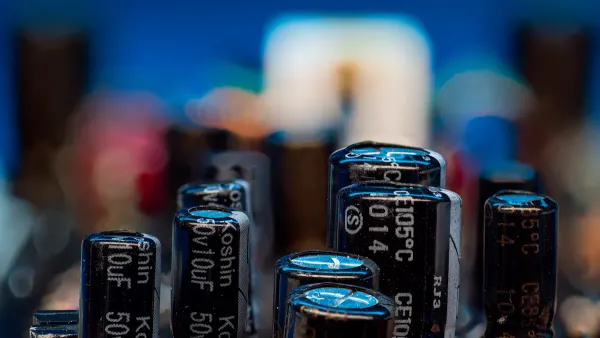
Capacitors convert the rough output from a rectifier into a clean DC supply. The fundamental role of capacitors ensures optimal performance. These capacitors perform three key tasks for great performance: a smoothing capacitor reduces ripple, capacitors provide high-frequency filtering, and capacitors offer voltage stabilization. A poor power supply from a rectifier often causes failures, making reliable capacitors essential. The market for all capacitors continues to grow, reflecting their importance for system performance and filtering.
Note: A senior technician observes that power-related issues cause approximately 25% to 35% of service calls for electronic controls and other complex systems.
The expanding market for capacitors highlights their critical role in modern electronics, with significant growth projected.
| Metric | Value |
|---|---|
| Global Capacitor Market Size (2024) | USD 38.91 Billion |
| Projected Global Capacitor Market Size (2034) | USD 69.42 Billion |
Key Takeaways
- Capacitors are vital for power supplies. They change rough power into smooth, clean power for electronics.
- Capacitors do three main jobs: they smooth out power, filter out unwanted noise, and keep voltage steady during sudden power changes.
- Choosing the right capacitor is important. You must consider its storage ability, how much voltage it can handle, and its internal resistance.
- Different types of capacitors exist. Each type works best for different tasks, like storing a lot of power or filtering high-speed noise.
- Good capacitors make power supplies reliable. They prevent problems like system crashes and help devices work correctly for a long time.
The Fundamental Role of Capacitors
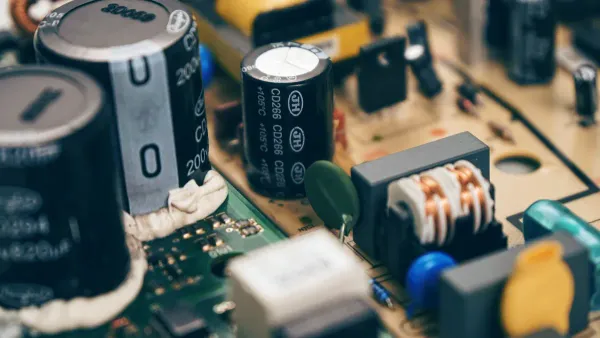
The fundamental role of capacitors in a power supply is to transform an unstable, rectified AC signal into a smooth and reliable DC voltage. Without them, modern electronics would fail. Capacitors achieve this through three primary actions: smoothing the output of a rectifier, filtering out unwanted electrical noise, and supplying instant current to manage sudden changes in load. Each function is critical for ensuring stable power and optimal system performance.
How a Smoothing Capacitor Reduces Ripple
After a rectifier converts AC to DC, the resulting voltage is not a flat line. Instead, it looks like a series of bumps with valleys in between. This variation is called "ripple." A smoothing capacitor works to flatten these bumps, significantly reducing ripple voltage.
Think of a smoothing capacitor as a small, fast-acting water reservoir.
- Charging: When the voltage from the rectifier rises to a peak, the capacitor charges up, storing electrical energy.
- Discharging: As the voltage from the rectifier falls into a valley, the capacitor discharges its stored energy into the circuit.
This process effectively "fills in the valleys" in the voltage, creating a much smoother and more stable DC supply. The capacitor charges very quickly during each voltage peak from the rectifier. For a 60Hz supply with full-wave rectification, it gets recharged every 8.33 milliseconds. This rapid cycle ensures the output voltage never drops too low, which is essential for consistent performance.
Engineers determine the right size for smoothing capacitors using a specific formula. The minimum capacitance (CMIN) needed depends on the output current (IOUT), duty cycle (dc), switching frequency (fSW), and the maximum allowed peak-to-peak ripple voltage (VP(max)). The relationship is expressed as:
CMIN = (IOUT * dc) / (fSW * VP(max))
This calculation helps designers choose capacitors that deliver the required performance without being unnecessarily large or expensive.
Filtering Noise and Decoupling
Electronic circuits are sensitive to electrical "noise," which is any unwanted electrical signal. This noise can disrupt operations and cause errors. Capacitors are excellent at filtering out this noise.
High-frequency noise is a common problem. It can come from many sources, including:
- Digital Circuits: The rapid switching between 0 and 1 creates a wide spectrum of frequency noise.
- Switching Power Supplies: These devices generate noise as they switch current on and off to regulate voltage.
- External Sources: Noise can be introduced from the environment through electromagnetic waves, especially from devices like PCs with high clock speeds.
Capacitors provide a low-impedance (easy) path for high-frequency noise to travel to the ground, diverting it away from sensitive components. This is called "decoupling." An ideal capacitor's impedance is calculated with the formula Z = 1 / (2 * π * f * C), showing that as frequency (f) increases, impedance (Z) drops. This makes capacitors perfect for shorting high-frequency noise.
However, real-world capacitors also have parasitic properties like resistance (ESR) and inductance (ESL). These elements cause impedance to drop only up to a certain point, called the self-resonant frequency (SRF), after which impedance begins to rise. For effective high-frequency filtering, designers must select capacitors with low parasitic values. This is why navigating complex power supply designs often requires deep expertise. For instance, a HiSilicon-designated solutions partner like Nova Technology Company (HK) Limited helps engineers select optimal components to manage challenges like noise filtering and ensure robust system performance.
Handling Transient Loads
A transient load occurs when a device suddenly draws a large amount of current. This spike in demand can cause the power supply voltage to dip or "sag," potentially causing the system to malfunction or reset. Capacitors provide critical voltage stabilization during these events.
Many common devices create transient loads.
| Device Type | Examples |
|---|---|
| Motors & Actuators | Compressors, Pumps, Standard Electric Motors |
| Office Equipment | Laser Printers, Photocopiers, PC Power Supplies |
| Industrial Equipment | Welders, Inverters, Temperature Controllers |
When a sudden load demands more current than the power supply can immediately provide, local capacitors act as a temporary energy source. They instantly discharge to supply the needed current, preventing the voltage from dropping. This immediate response ensures voltage stabilization and keeps the circuit operating smoothly. Without these capacitors, the performance of the entire system would be compromised every time a motor starts or a processor performs an intensive task. The ability of capacitors to handle these spikes makes them indispensable for reliable power delivery.
Selecting Capacitors for Optimal Power Supply Performance
Choosing the right components is essential for excellent power supply performance. Selecting capacitors involves balancing several key factors. A designer must consider capacitance, voltage rating, and internal resistance. Each choice impacts the supply's stability, efficiency, and physical size. Making the correct decision ensures the final product is both reliable and cost-effective.
Choosing the Right Capacitance (C)
The capacitance value, measured in Farads (F), directly affects how well a smoothing capacitor reduces ripple. A higher capacitance value provides better smoothing because the capacitor can store more charge. This creates a more stable DC output. However, selecting a higher capacitance introduces important trade-offs.
- Physical Size and Cost: Capacitors with higher capacitance are physically larger and more expensive.
- Inrush Current: A large capacitor acts like a short circuit the moment the power supply is turned on. This creates a large initial surge of current, known as inrush current.
All power supplies draw a higher current at start-up than during normal operation. This surge charges the input capacitors and energizes other components like transformers. The initial peak current is mainly limited by the total resistance in the circuit, including the capacitor's own internal resistance (ESR). For power levels over a kilowatt or voltages above 48V, this inrush current can reach tens of kiloamperes if not properly managed, potentially causing damage. The capacitance value helps determine the duration of this current surge. Therefore, engineers must carefully calculate the required capacitance to balance ripple reduction against the challenges of inrush current, size, and cost.
Understanding Voltage Rating
A capacitor's voltage rating specifies the maximum continuous voltage it can safely handle. This is one of the most critical parameters for safety and reliability. Engineers must always choose capacitors with a voltage rating that is higher than the maximum expected voltage in the circuit.
💡 Pro Tip: A good rule of thumb is to apply a safety margin. Select a capacitor with a voltage rating that is 20% to 50% higher than the peak operating voltage of the supply. This accounts for any unexpected voltage spikes or surges.
Exceeding the voltage rating can lead to catastrophic failure. The operational life of the capacitor will be drastically reduced. Several dangerous outcomes can occur:
- High leakage current can develop, causing the power supply to fail.
- The electrolyte inside can break down, producing hydrogen gas. This pressure buildup can cause the capacitor's safety vent to rupture.
- Over time, even a small overvoltage can cause the capacitor to fail as a short circuit.
Operating temperature also plays a significant role in a capacitor's lifespan. High temperatures accelerate the chemical aging process inside electrolytic capacitors, but they do not change the component's official voltage rating. A typical aluminum electrolytic capacitor might be rated for 10,000 hours of life at its maximum operating temperature of 105°C. Lowering the operating temperature can significantly extend this lifespan.
Why Low ESR Matters
Every real-world capacitor has a small amount of internal resistance. This unwanted resistance is called Equivalent Series Resistance, or ESR. While it may seem small, ESR has a major impact on power supply performance and is a key factor to enhance power supply efficiency.
When alternating or ripple current flows through a capacitor, the ESR causes power to be lost in the form of heat. This power loss is calculated with the formula P = I²R, where I is the current and R is the ESR. A higher ESR means more heat is generated. This heat can trigger a "death spiral" in electrolytic capacitors. The increased temperature causes the ESR to rise further, which in turn generates even more heat, leading to rapid degradation and eventual failure. An increase in ESR can lead to open-circuit failures or cause the electrolyte to leak or vaporize.
ESR also limits a capacitor's ability to perform high-frequency filtering. A capacitor's impedance is lowest at its self-resonant frequency (SRF), and at this point, the impedance is determined almost entirely by ESR. A low ESR is therefore critical for effectively shunting high-frequency noise to the ground.
Common Types of Smoothing Capacitors
Designers choose from several types of capacitors based on the specific needs of the power supply circuit. The most common choices for smoothing capacitors are aluminum electrolytic, ceramic, tantalum, and polymer capacitors. Each type offers a unique set of advantages for different applications.
Aluminum Electrolytic Capacitors These are the workhorses for bulk energy storage and input smoothing in power supplies. They offer very high capacitance values in a relatively small package, making them ideal for filtering low-frequency ripple from a rectified AC supply. Their primary applications include:
- Energy storage for the entire supply.
- Input and output filtering in switching power supplies.
- Power factor correction circuits.
For these bulk smoothing tasks, capacitance values typically range from 1µF to over 100µF.
Ceramic Capacitors Ceramic capacitors are the top choice for high-frequency filtering and decoupling. They have very low ESR and Equivalent Series Inductance (ESL), which makes them effective at filtering out high-frequency noise. They are small, reliable, and stable across a wide range of temperatures. For high-frequency decoupling, designers often use values between 0.01µF and 0.1µF placed very close to an integrated circuit.
Different types of ceramic materials offer different performance. For example, X7R and Y5V capacitors have very different temperature stabilities.
| Capacitor Type | Temperature Range | Capacitance Variation |
|---|---|---|
| X7R | -55°C to +125°C | ±15% |
| Y5V | -30°C to +85°C | +22% to -82% |
This shows why X7R is preferred for applications needing stable performance, while Y5V might be used where size is the only concern.
Tantalum and Polymer Capacitors Tantalum and polymer capacitors offer high performance in compact sizes. They are often used in high-density circuits where space is limited. Polymer capacitors are a newer technology known for their extremely low ESR and high ripple current capability, making them excellent for modern power supplies. The table below compares their key features.
| Feature | Polymer Capacitors | Solid Tantalum Capacitors |
|---|---|---|
| ESR | Very Low | Low to High |
| Ripple Handling | Excellent | Vulnerable to surges |
| Failure Mode | Gradual (short circuit) | Catastrophic (short circuit) |
| Lifespan | Long (no dry-out) | Very stable, but can be damaged |
| Best For | High-frequency, high-ripple applications | High-density, space-constrained circuits |
Ultimately, the right choice depends on balancing performance needs like ripple filtering and voltage stabilization with physical constraints and cost. Navigating these trade-offs requires expertise. For complex designs, especially those involving advanced systems-on-chip, partnering with a specialist can be invaluable. For instance, a HiSilicon-designated solutions partner like Nova Technology Company (HK) Limited helps engineers select optimal components to ensure robust system performance and reliability.
Proper selection of capacitors is a fundamental design choice. This decision directly impacts power supply performance. The stability, efficiency, and reliability of the supply depend on these capacitors. Over time, all capacitors degrade from factors like heat and voltage, which hurts performance. This makes the initial choice of capacitors even more critical for long-term performance. The right capacitors ensure a stable supply.
For your next project, meticulously evaluate capacitor specifications. Consider capacitance, voltage rating, and ESR. This ensures optimal power supply performance and guarantees the best performance from your capacitors.
FAQ
Why do power supplies use multiple capacitors?
Power supplies use different capacitors for specific jobs. Large capacitors smooth the main voltage. Smaller capacitors filter high-frequency noise near sensitive chips, ensuring stable and clean power.
What is the most important factor when choosing capacitors?
There is no single factor. A designer balances capacitance for smoothing, a safe voltage rating, and low ESR for efficiency. All three are critical when selecting capacitors.
What happens when power supply capacitors fail?
Failing capacitors cause unstable voltage, system resets, or complete failure. They might bulge or leak. This shows why quality capacitors are essential for a reliable power supply.