SV470M250E5R8R1Z00ZZ Capacitor Sourcing Guide: 2026 Market Trends and Authorized Distributor Picks
Expert guide on SV470M250E5R8R1Z00ZZ Capacitor Sourcing Guide: 2026 Market Trends and Authorized Distributor Picks. Technical specs, applications, sourcing tips for engineers and buyers.
Why the SV470M250E5R8R1Z00ZZ Capacitor Is Under Pressure in 2026
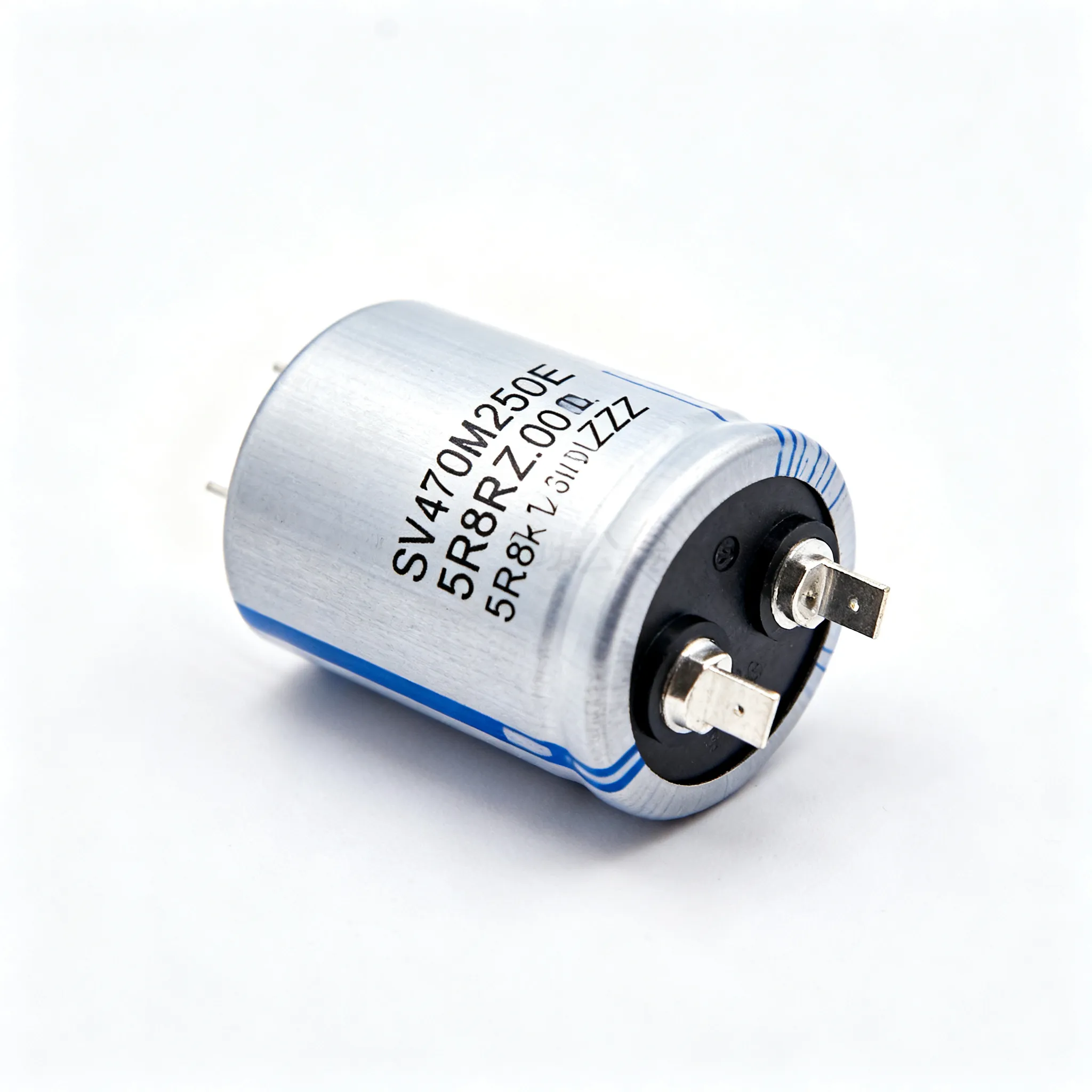
If you’re specifying or buying the SV470M250E5R8R1Z00ZZ today, you’ve already felt the shift. This 470 µF, 250 V aluminum electrolytic capacitor—widely used in industrial power supplies, motor drives, and inverter DC-link stages—is caught in a tightening supply-demand knot that shows no sign of loosening through 2026. Procurement teams who once treated it as a commodity are now treating it as a constrained part, and for good reason.
Across the passive components landscape, allocation on high-voltage electrolytics has become the norm. EE Times has tracked the extended lead times and factory utilization rates that are reshaping how buyers approach aluminum electrolytics. For the SV470M250E5R8R1Z00ZZ, the Yageo SV series has seen lead times stretch from a comfortable 8–10 weeks to 16–26 weeks, depending on the distributor and region. That’s not a temporary blip—it reflects a structural imbalance between demand from energy-efficient motor drives, EV charging infrastructure, and renewable inverters, and the limited capacity expansion in high-voltage foil etching lines.
Three forces are converging. First, raw material availability for anode foil and electrolyte formulations remains tight, particularly for 250 V rated parts that require thicker oxide layers and specialized etching. Second, the industrial automation and HVAC sectors have accelerated their build rates, pulling more bulk capacitance into drives and power-factor-correction stages. Third, many design engineers are consolidating BOMs around a single high-reliability series, and the Yageo SV family—with its 105 °C rating and competitive ripple current—has become a preferred choice, further concentrating demand.
What does this mean for you? If you’re designing a new power stage, you can’t assume that the SV470M250E5R8R1Z00ZZ will be on the shelf when you need 500 pieces for a pilot run. If you’re in production, you need to build buffer stock and qualify second sources now, not when the line stops. The table below distills the key drivers that are reshaping the sourcing landscape for this specific capacitor in 2026.
| Driver | Mechanism | Procurement Impact |
|---|---|---|
| Extended lead times on high-voltage electrolytics | Factory allocation and foil bottleneck for 250 V rated parts | 16–26 week lead times force early ordering and safety stock; spot buys carry premium pricing |
| Rising demand from industrial motor drives and inverters | Accelerated adoption of variable-frequency drives and servo systems | Higher call-off volumes from OEMs crowd out smaller buyers; MOQs may increase |
| Raw material constraints (anode foil, electrolyte) | Limited high-purity aluminum foil capacity and specialty electrolyte supply | Price volatility and potential for series-specific allocation; second-source qualification becomes critical |
| BOM consolidation on Yageo SV series | Designers standardize on a single high-ripple, 105 °C series for multiple power topologies | Demand concentration on SV470M250E5R8R1Z00ZZ increases allocation risk |
| Geopolitical and logistics friction | Freight delays, customs clearance, and regional trade policies | Inconsistent delivery windows; need for multi-region distributor sourcing |
These drivers aren’t theoretical. They’re already visible in the distributor stock alerts you see when you search for the SV470M250E5R8R1Z00ZZ. The part isn’t obsolete—far from it—but it has moved from a “buy when needed” item to a “plan and protect” component. In the next section, we’ll break down exactly what you’re buying when you specify this capacitor, so you can make informed trade-offs when lead times bite.
Decoding the SV470M250E5R8R1Z00ZZ: Key Specifications and Performance Data
Before you cross-reference or negotiate with distributors, you need a crystal-clear picture of what the SV470M250E5R8R1Z00ZZ delivers on the bench and in the field. This isn’t just a 470 µF, 250 V aluminum electrolytic—it’s a component whose lifetime, ripple current capability, and thermal behavior directly influence your power supply’s reliability and mean time between failures (MTBF).
The Yageo SV series is designed for high-ripple, high-temperature environments. The SV470M250E5R8R1Z00ZZ is rated for 105 °C continuous operation, with a nominal capacitance of 470 µF and a standard tolerance of ±20 % (M code). Its rated voltage is 250 V DC, with a surge voltage typically 1.15 times the rated voltage. Endurance at 105 °C with rated ripple current applied is specified at 2,000 to 5,000 hours, depending on the exact sub-series and case size. For a typical snap-in or radial-leaded version in this capacitance-voltage combination, you can expect a ripple current rating in the range of 1.5 A to 2.2 A at 120 Hz and 105 °C, though you must always consult the latest datasheet for your specific lot.
Key parameters that matter for design-in:
- Capacitance: 470 µF ±20 % at 120 Hz, 20 °C
- Rated voltage: 250 V DC
- Operating temperature range: -40 °C to +105 °C (some variants -25 °C minimum)
- Ripple current: Typically 1.5–2.2 A at 105 °C, 120 Hz (check datasheet for frequency coefficient)
- Endurance: 2,000–5,000 hours at 105 °C with rated ripple; longer life at lower temperatures per Arrhenius law
- Leakage current: ≤0.03 CV or 4 µA, whichever is greater, after 5 minutes
- Case size: Varies by terminal style (snap-in, radial); common diameters 22–30 mm, heights 30–50 mm
- Tan δ (dissipation factor): Typically 0.15–0.20 at 120 Hz, 20 °C
These numbers aren’t just datasheet decorations. In a 3-phase inverter DC-link, the ripple current rating determines how much bulk capacitance you need to keep the bus voltage stable without overheating the capacitors. If you substitute a part with lower ripple current capability, you’ll either have to parallel multiple units or accept a shorter field life. The 105 °C rating is particularly important in sealed industrial drives where ambient temperatures can hover above 70 °C. Derating the voltage and temperature according to manufacturer guidelines is non-negotiable; a 250 V capacitor operated at 200 V and 85 °C can see its useful life extended by a factor of 2–4, but only if the ripple current is also managed.
When you’re evaluating cross-references, pay close attention to the case dimensions and terminal style. The SV470M250E5R8R1Z00ZZ may be available in both snap-in and radial leaded packages, and a drop-in replacement must match your PCB footprint and clearance. Always pull the manufacturer’s official drawing—not just the distributor summary—before signing off on an alternate.
Authorized Distributor Picks and Cross-Reference Alternatives for SV470M250E5R8R1Z00ZZ
With lead times stretched, your first call should be to authorized distributors that carry the SV470M250E5R8R1Z00ZZ with full manufacturer traceability. Digi-Key, Mouser, and Farnell (Newark in the Americas) are the primary channels for Yageo SV series parts. These distributors provide date-code visibility, lot tracking, and compliance certificates that you simply won’t get from independent brokers. Checking stock on all three platforms simultaneously—and setting up backorder alerts—is now a standard part of the procurement workflow.
But what if the part is out of stock with a 20-week lead time and your production can’t wait? That’s where a carefully vetted cross-reference list becomes your lifeline. The goal is to find alternatives that match the capacitance, voltage, temperature rating, and ripple current envelope of the SV470M250E5R8R1Z00ZZ while staying within your derating policy. Below are three series from major manufacturers that engineers frequently evaluate as functional replacements. Note that “functional” doesn’t mean “identical”—you must verify ESR, lifetime curves, and case size against your specific operating point.
- Nichicon UHE2A471MHD: 470 µF, 250 V, 105 °C, radial leaded. The UHE series offers low impedance and high ripple current, typically around 2.0 A at 105 °C. Endurance is 10,000 hours at 105 °C, which can be a significant upgrade if your application demands longer life. Check case diameter (often 18–22 mm) against your board layout.
- Panasonic EEU-EE2E471: 470 µF, 250 V, 105 °C, radial. The EE series is designed for high ripple and long life (up to 10,000 hours). Ripple current is comparable, but the ESR may be slightly lower, which can affect control-loop stability in some power supplies. Verify the lead spacing.
- Rubycon 250TXW470M: 470 µF, 250 V, 105 °C, radial. The TXW series is a high-ripple, miniaturized type. Ripple current is around 1.8–2.1 A. Endurance is 10,000 hours. This part is often available through authorized distributors like Digi-Key and Mouser, but stock fluctuates.
When comparing these alternatives, don’t just look at the headline numbers. Pull the full datasheets and examine the ripple current multiplier vs. frequency and temperature. A part that looks equivalent at 120 Hz may fall short at the 20–100 kHz switching frequencies typical of modern inverters. Also, confirm the vent construction and safety approvals if your product requires UL or ENEC recognition. The SV470M250E5R8R1Z00ZZ itself carries the necessary safety marks, but substitutes may not—so check the fine print.
Authorized distributor stock levels for these alternatives can be just as volatile. Use the “notify me” features on Digi-Key, Mouser, and Farnell/Newark to catch incoming shipments. If you’re buying in volume, talk to your distributor’s field application team about scheduled orders and buffer agreements. They can often reserve inventory before it hits the public shelf.
Sourcing the SV470M250E5R8R1Z00ZZ Without Getting Burned: Lead-Time Signals and Quality Checks
When a capacitor like the SV470M250E5R8R1Z00ZZ goes on allocation, the gray market smells opportunity. You’ll see listings from independent brokers offering “new original” stock at a slight markup, often with vague date codes and no chain of custody. This is where your sourcing process either saves your production line or lands you with a batch of relabeled, substandard parts that fail within months.
Start with the signals. Authorized distributors display real-time stock and lead-time estimates that reflect the manufacturer’s committed supply. If you see “0 in stock” with a 20-week lead time on Digi-Key, but a broker claims to have 5,000 pieces ready to ship, treat that as a red flag. Legitimate inventory doesn’t magically appear outside the authorized channel when the factory is backordered. Use the distributor’s date-code verification: when you receive parts, check the lot number and date code against the packing slip and, if possible, against the manufacturer’s lot-traceability portal. Yageo provides lot-level traceability for SV series capacitors through its authorized partners.
Visual inspection is your next line of defense. Apply the criteria from IPC-A-610 for component acceptance. Look for consistent sleeve printing—blurry or misaligned text, uneven gloss, or incorrect font are telltale signs of counterfeits. Examine the lead finish: genuine Yageo SV capacitors have a uniform solder coating with no signs of re-tinning or oxidation. Check the vent stamp on the top of the can; it should be crisp and centered. Any deviation from a known-good sample should trigger quarantine and further testing.
Beyond physical inspection, consider third-party electrical testing for high-value production runs. A simple LCR meter can verify capacitance and ESR at room temperature, but a more thorough test would include leakage current at rated voltage and ripple current capability under load. Some independent labs offer counterfeit detection services that compare the internal construction (foil length, electrolyte composition) against a golden sample. This is overkill for a one-off prototype, but if you’re building 10,000 motor drives, the cost of a single field failure dwarfs the testing expense.
The tables below map out who is most exposed to the current supply squeeze and what concrete actions you can take to protect your supply chain without over-committing capital.
Who Is Affected by SV470M250E5R8R1Z00ZZ Supply Constraints
| Segment / Option | Effect | Notes |
|---|---|---|
| Small-to-medium OEMs with no buffer stock | Line-down risk when lead times spike; forced to pay premium on spot market | Most vulnerable; often lack volume to negotiate allocation |
| Contract manufacturers serving multiple customers | Difficulty forecasting aggregate demand for a shared BOM part | Need to pool requirements and negotiate with distributors early |
| Industrial drive and inverter manufacturers | High consumption of 250 V bulk capacitors; allocation can stall production | Often qualify multiple series but may face footprint constraints |
| Distributors with limited Yageo franchise | Cannot source directly; reliant on secondary channels with higher counterfeit risk | Must verify authorized status on Yageo’s website before purchasing |
| Engineers qualifying a new design | Delayed prototyping if samples are unavailable; risk of designing around an unobtainable part | Should lock in second-source qualification during the design phase |
Mitigation Actions and Timeline Trade-offs
| Action | When to Use | Trade-off |
|---|---|---|
| Place scheduled orders with authorized distributors | When lead times exceed 12 weeks and demand is predictable | Commits capital and storage; reduces flexibility if demand shifts |
| Qualify and purchase a cross-reference alternative | When stock of SV470M250E5R8R1Z00ZZ is zero and production cannot wait | Requires design verification and possibly PCB layout changes; may alter MTBF |
| Increase safety stock to 6–8 weeks of consumption | For production lines with steady run rates and no qualified second source | Increases inventory carrying cost; risk of obsolescence if design changes |
| Engage Yageo field application engineer for allocation guidance | When annual volume exceeds 10k units and you need committed supply | Requires NDA and volume commitment; not available for low-volume buyers |
| Use third-party testing for incoming inspection | When sourcing from a new or non-authorized channel | Adds cost and lead time per lot; may still miss latent defects |
These mitigation strategies aren’t mutually exclusive. The most resilient procurement approach combines scheduled orders with a qualified second source and a modest safety stock. That way, a sudden lead-time extension on the SV470M250E5R8R1Z00ZZ doesn’t force a panic buy from an unknown broker. And if you do need to use an alternative, you’ve already validated it in your circuit, so the transition is seamless.
SV470M250E5R8R1Z00ZZ Sourcing Questions Engineers and Buyers Ask
Q: What are the exact electrical specifications and tolerance of the SV470M250E5R8R1Z00ZZ?
It is a 470 µF, 250 V aluminum electrolytic capacitor with a standard ±20 % tolerance, typically rated for 105 °C operation with a ripple current around 1.5–2 A and an endurance of 2,000–5,000 hours depending on the series datasheet. Always confirm the exact ripple current and endurance for your specific case size and terminal style.
Q: Is the SV470M250E5R8R1Z00ZZ still in active production, and what is the current lead time?
Yes, it remains an active part, but lead times have stretched to 16–26 weeks in 2026 due to allocation on high-voltage electrolytics. Buyers should confirm with authorized distributors and consider buffer stock. The part is not nearing end-of-life, but the supply-demand imbalance requires proactive planning.
Q: Which authorized distributors carry the SV470M250E5R8R1Z00ZZ with full traceability?
Digi-Key, Mouser, and Farnell (Newark) typically stock this Yageo SV series capacitor with full manufacturer traceability and date-code verification. Always check for “authorized distributor” status on the manufacturer’s website before purchasing. Avoid brokers who cannot provide lot-level documentation.
Q: What are the best cross-reference alternatives if the SV470M250E5R8R1Z00ZZ is out of stock?
Drop-in alternatives include Nichicon UHE2A471MHD, Panasonic EEU-EE2E471, and Rubycon 250TXW470M. These match capacitance and voltage, but compare ESR, ripple current, and lifetime curves to ensure they meet your derating requirements. Case dimensions and lead spacing must also be verified against your PCB layout.
Q: How can I verify the authenticity of SV470M250E5R8R1Z00ZZ capacitors and avoid counterfeits?
Inspect date codes, lot numbers, and sleeve printing against known good samples. Use IPC-A-610 criteria for lead finish and vent integrity. Source only from authorized channels, and consider third-party testing for high-value production runs. Any deviation in weight, dimensions, or electrical performance from a golden sample warrants rejection.
Q: Does the SV470M250E5R8R1Z00ZZ comply with RoHS and REACH?
Yes, the Yageo SV series is RoHS-compliant and meets REACH requirements. Always request the latest compliance certificates from the distributor to confirm status for your specific production lot, as formulations can change over time.
References & Further Reading
- EE Times — Electronics Engineering News: Passive component market trends and lead-time analysis.
- IPC Standards: IPC-A-610 acceptability criteria for electronic assemblies.
- Digi-Key Electronics: Authorized distributor for Yageo SV series capacitors.
- Mouser Electronics: Authorized distributor with real-time stock and lead-time data.
- Farnell / Newark: Authorized distributor for Yageo components in EMEA and Americas.
- Yageo Corporation: Official datasheets and authorized distributor locator.
- IC-Online: Mixed BOM sourcing and flexible MOQ options for passive and active components.
Conclusion
The SV470M250E5R8R1Z00ZZ isn’t going away, but the days of same-day shipping are behind us. By understanding the market drivers, verifying specifications, lining up authorized sources, and qualifying at least one cross-reference alternative, you can keep your power designs on track without compromising reliability. When you need to source this capacitor alongside other BOM items, IC-Online can help you consolidate orders and manage minimum order quantities across multiple lines, giving you one less thing to worry about in a tight supply chain.