ZB25VQ64ASIG Flash Memory: 2026 Supply Outlook and Purchasing Guide
Expert guide on ZB25VQ64ASIG Flash Memory: 2026 Supply Outlook and Purchasing Guide. Technical specs, applications, sourcing tips for engineers and buyers.
Why 2026 Is Shaping Up as a Crunch Year for NOR Flash Supply
If you’re specifying or buying ZB25VQ64ASIG in 2026, you’re already feeling the pressure. The global memory supply shortage that began in 2025 has moved beyond DRAM and NAND, tightening the market for SPI NOR flash in ways that directly affect 64‑Mbit devices like the ZB25VQ64ASIG. What started as a capacity crunch in high‑density memory is now cascading into the mid‑density NOR segment that powers everything from industrial controllers to IoT endpoints.
The root cause is structural. Memory manufacturers pulled back on capital expenditure during the 2023–2024 downturn, and the new fabrication capacity that was greenlit in late 2024 and early 2025 won’t meaningfully relieve pressure until late 2026 at the earliest [NAND Research, March 2026]. Meanwhile, demand for NOR flash continues to grow, fueled by edge computing, smart metering, and automotive subsystems that rely on execute‑in‑place (XIP) code storage. The result is a classic supply‑demand imbalance: extended lead times, rising prices, and a scramble for allocation that has already forced some buyers to redesign boards around available parts.
According to Digitimes, the memory industry faces a severe capacity crunch as global manufacturers rush to secure production for 2026, sparking fears of supply chain disruptions [Digitimes, Oct 2025]. While much of the public attention focuses on high‑density DRAM and NAND for AI data centers, the same fab lines produce the mature process nodes used for SPI NOR flash. When those lines are fully loaded with higher‑margin products, NOR output gets squeezed. That squeeze is already visible in the spot market for parts like ZB25VQ64ASIG, where availability has tightened and prices have moved up sharply.
The Munich Eye reports that the ongoing flash memory shortage is expected to shape purchasing decisions and investment strategies throughout 2026 and beyond [The Munich Eye, 2026]. For engineers and procurement professionals, the message is clear: a reactive sourcing approach will leave you exposed. Understanding the supply dynamics, qualifying alternatives, and locking in supply agreements early are no longer optional—they’re essential to keeping production lines running.
In this article, we’ll break down the ZB25VQ64ASIG from a technical and commercial perspective, compare it with the dominant Winbond alternatives, and provide actionable procurement strategies to navigate the 2026 NOR flash market.
ZB25VQ64ASIG at a Glance: Key Specs and Operating Principles
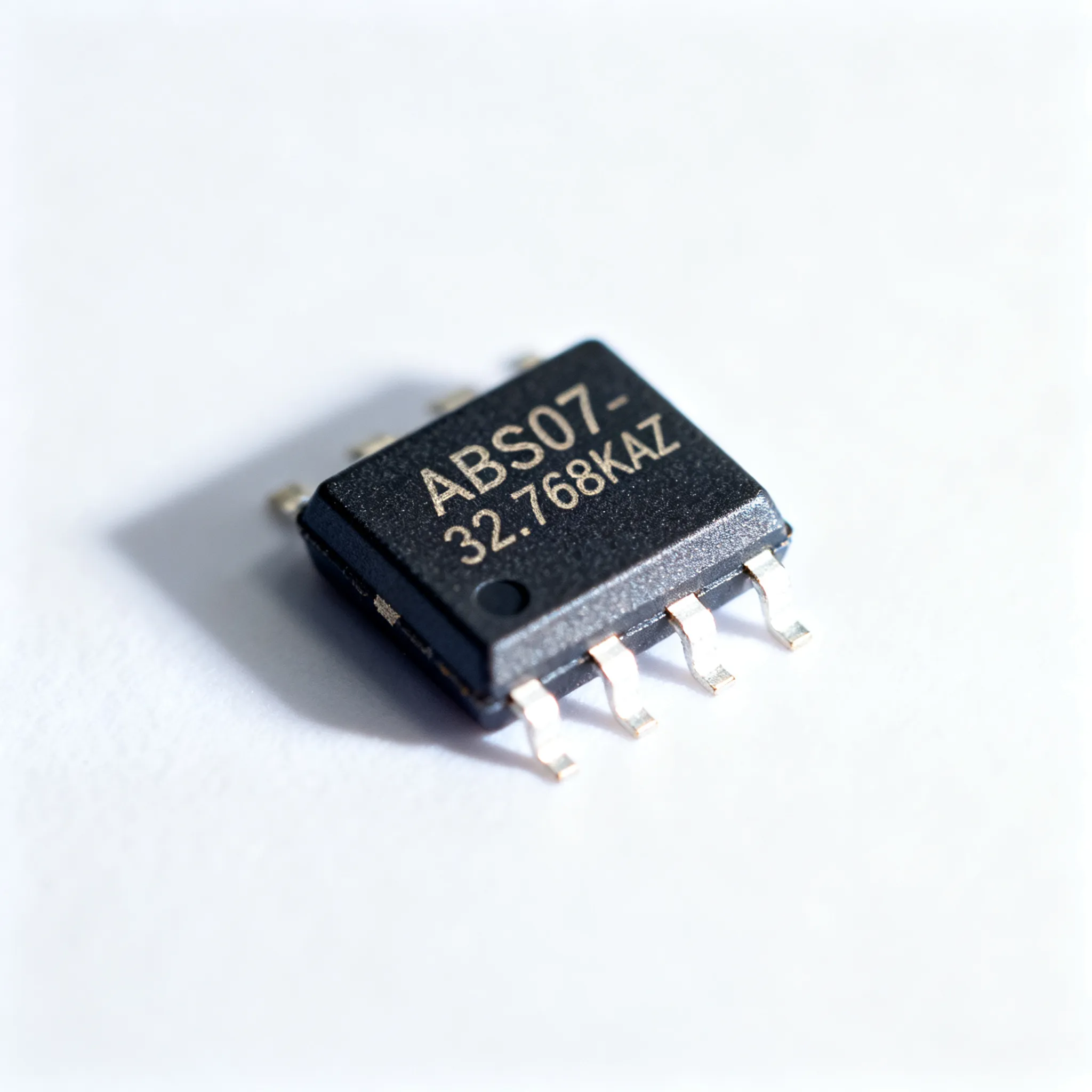
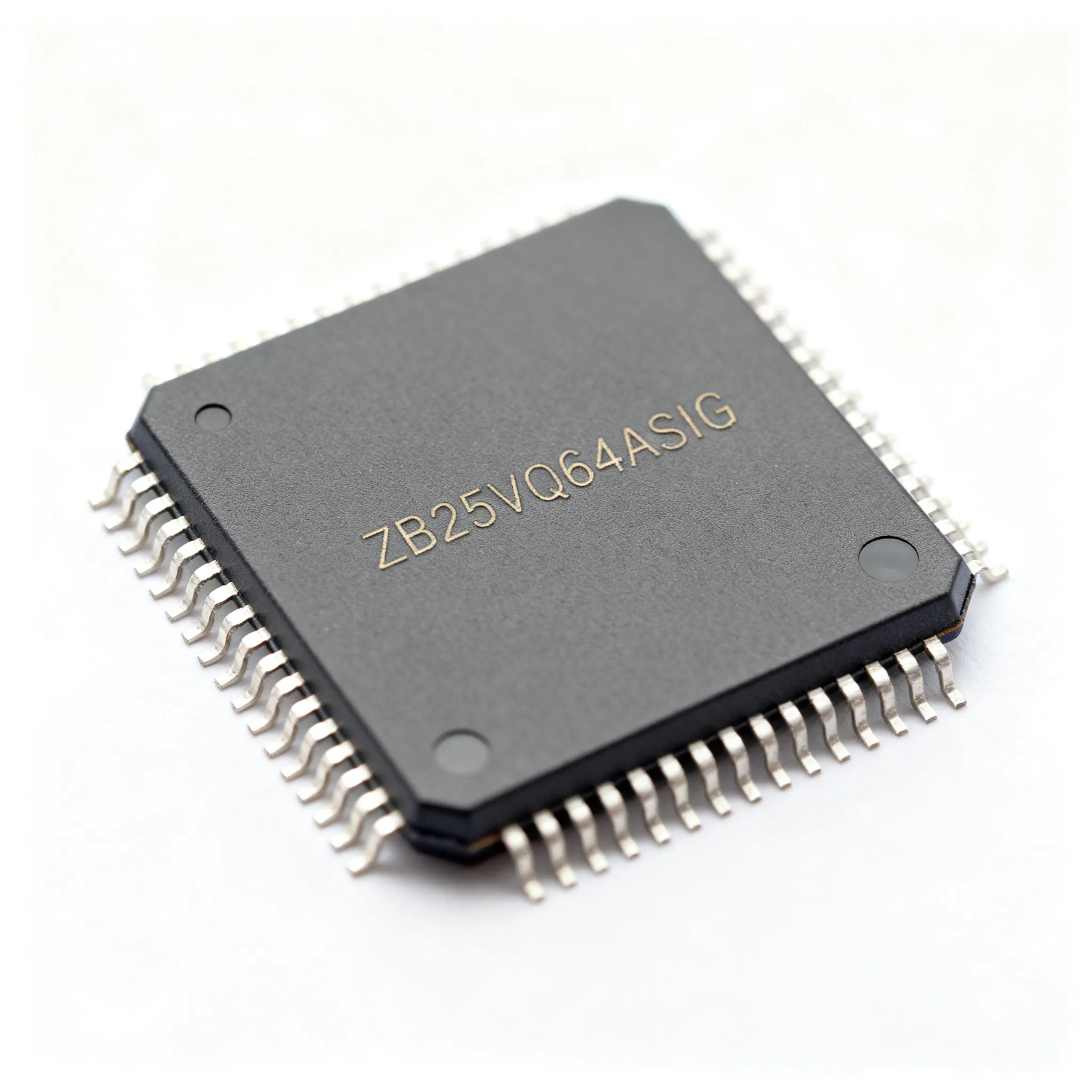
The ZB25VQ64ASIG is a 64‑Mbit (8‑Mbyte) SPI NOR flash memory device manufactured by Zbit Semi. It comes in the industry‑standard SOP‑8 208‑mil (5.28 mm body width) package, making it mechanically compatible with a wide range of existing PCB footprints. Designed for code storage and execute‑in‑place applications, it supports single, dual, and quad SPI interface modes, giving designers the flexibility to trade off pin count against read throughput.
Operating from a single 3.3 V supply (typically 2.7 V to 3.6 V), the device is well‑suited to the 3.3 V rails common in microcontroller‑based systems. The quad SPI mode enables fast read operations essential for XIP, where the CPU fetches instructions directly from flash without first copying them to RAM. This capability reduces system boot time and frees up SRAM, which is particularly valuable in cost‑sensitive embedded designs.
Key electrical and mechanical parameters, drawn from distributor datasheets and manufacturer specifications, are summarized in the table below.
| Parameter | Value / Range | Notes |
|---|---|---|
| Density | 64 Mbit (8 Mbyte) | Organized as 8,192 pages of 256 bytes each |
| Supply voltage (VCC) | 2.7 V – 3.6 V | 3.3 V nominal |
| Interface | Single / Dual / Quad SPI | Standard, Dual, and Quad I/O read modes |
| Maximum clock frequency (single SPI) | 104 MHz (typical) | Check datasheet for exact speed grade; some variants may support 133 MHz |
| Quad SPI read throughput | Up to 416 Mbit/s (52 Mbyte/s) | At 104 MHz quad I/O |
| Package | SOP‑8 208‑mil (5.28 mm body) | Industry‑standard footprint; also available in other packages on request |
| Operating temperature range | -40 °C to +85 °C (industrial) | Extended temperature grades may be available |
| Program/erase cycles | 100,000 cycles (typical) | Per sector; uniform 4‑Kbyte and 64‑Kbyte erase blocks |
| Data retention | 20 years (typical) | At rated temperature |
| Status register & security | Standard status register, block protect bits, 64‑bit unique ID | Supports software and hardware write protection |
Tip: While the table lists typical values, always confirm the exact speed grade and temperature range with the manufacturer’s latest datasheet. The ZB25VQ64ASIG is often used as a cost‑optimized alternative to more expensive branded NOR flash, but its performance envelope must be validated against your system’s timing requirements.
From a system designer’s perspective, the device behaves like a standard SPI NOR flash with the common command set used by Winbond, Macronix, and GigaDevice parts. It supports the essential read, program, erase, and status register operations, and the quad‑enable sequence is typically compatible with the widely adopted QE bit approach. However, subtle differences in the status register layout or the timing of the busy flag can trip up firmware that was written for a specific vendor’s part. We’ll address these compatibility nuances in the FAQ section.
Alternatives to the ZB25VQ64ASIG: Winbond W25Q64 Series and Beyond
In a market where allocation is the norm, single‑sourcing any component is a risk. The ZB25VQ64ASIG sits in a competitive segment dominated by Winbond’s W25Q64 family. Understanding the differences—and the drop‑in compatibility—between these parts is critical for building a resilient BOM.
The SiC MOSFET shortage of 2025–2026 offers a useful parallel. As Utmel noted, engineers who had qualified only one supplier for power discretes faced severe disruptions, while those who had designed in pin‑compatible alternatives could pivot quickly [Utmel, SiC MOSFET Shortage 2026]. The same principle applies to NOR flash: a multi‑source layout that accommodates the ZB25VQ64ASIG and at least one Winbond equivalent can save months of redesign when lead times stretch.
The table below compares the ZB25VQ64ASIG with two widely used Winbond alternatives: the W25Q64JVSSIQ (the current mainstream 64‑Mbit device) and the older W25Q64BVSIG.
| Comparison Metric | ZB25VQ64ASIG (Zbit Semi) | W25Q64JVSSIQ (Winbond) | W25Q64BVSIG (Winbond, legacy) | Selection Note |
|---|---|---|---|---|
| Density | 64 Mbit | 64 Mbit | 64 Mbit | All three offer identical capacity |
| Supply voltage | 2.7–3.6 V | 2.7–3.6 V | 2.7–3.6 V | Electrically interchangeable on 3.3 V rails |
| Package | SOP‑8 208‑mil | SOP‑8 208‑mil (also SOIC‑8, WSON, etc.) | SOP‑8 208‑mil | Footprint‑compatible; verify pin 1 orientation |
| Max clock (single SPI) | 104 MHz (typical) | 133 MHz | 80 MHz | JV offers higher throughput; BVSIG may limit XIP performance |
| Quad SPI read throughput | ~416 Mbit/s | 532 Mbit/s (at 133 MHz) | 320 Mbit/s (at 80 MHz) | Check if your MCU can clock at 133 MHz before choosing JV |
| Command set compatibility | Largely compatible with Winbond commands; minor status register differences | Industry‑standard Winbond command set | Older command set; still widely supported | Firmware may need adjustment for status register polling |
| Supply stability (2026) | Moderate; smaller vendor, may offer better spot availability | Tight allocation; long lead times reported | Limited production; being phased out in favor of JV series | Diversify across Zbit and Winbond to mitigate single‑source risk |
| Typical price position | Cost‑competitive | Moderate premium | Low cost but diminishing availability | ZB25VQ64ASIG can reduce BOM cost if performance requirements allow |
Both the W25Q64JVSSIQ and the older BVSIG are well‑documented. The JV series, in particular, is a high‑performance device that supports up to 133 MHz single SPI and a full quad SPI implementation, making it the benchmark for many designs [Utmel, W25Q64JVSSIQ overview]. The BVSIG, while still available through some channels, is a legacy part with a lower speed grade and is gradually being replaced by the JV family [Lisleapex, W25Q64BVSIG].
From a procurement standpoint, the key takeaway is that the ZB25VQ64ASIG can serve as a direct alternative to the Winbond parts in many applications, provided the system can tolerate the slightly lower maximum clock frequency and any minor command set adjustments. For new designs, laying out the PCB to accept any of these three devices is a straightforward way to build supply chain resilience without increasing board area.
Securing ZB25VQ64ASIG in a Tight Market: Procurement and Design Strategies
With lead times for NOR flash stretching to 20–30 weeks and prices climbing, a passive “buy‑as‑needed” approach is no longer viable. Analyst notes from late 2025 highlighted extended lead times and significant price increases across DRAM and NAND, underscoring a structural shift in the memory supply chain that now extends to NOR [NAND Research, Analyst Note Nov 2025]. For the ZB25VQ64ASIG, the situation is similar: demand from industrial and consumer segments is strong, and new capacity won’t provide relief until late 2026 at the earliest.
So how do you keep your production lines fed? The strategies below combine design‑side and procurement‑side actions that together reduce your exposure to allocation and price spikes.
| Strategy | Benefit | Implementation Note |
|---|---|---|
| Qualify a second source early | Eliminates single‑vendor dependency; enables quick switching when lead times spike | Test both ZB25VQ64ASIG and W25Q64JVSSIQ on your prototype; validate firmware with both |
| Design a multi‑source PCB footprint | Allows BOM substitution without layout changes | Use the SOP‑8 208‑mil footprint; verify pin‑1 orientation and hold/reset functions for all candidates |
| Negotiate NCNR orders with staggered deliveries | Locks in current pricing and guarantees supply for 6–12 months | Work with franchised distributors to place non‑cancellable, non‑returnable orders with flexible delivery windows |
| Build strategic safety stock (2–3 months) | Buffers against sudden allocation cuts or factory shutdowns | Balance inventory carrying costs against the risk of line‑down situations; avoid over‑committing beyond 3 months |
| Use volume price agreements with quarterly reviews | Protects against spot‑market volatility while allowing price adjustments if market softens | Agree on a base price with a formula tied to a public memory price index; review every quarter |
| Engage with authorized distributors for allocation visibility | Provides early warning of supply constraints and access to reserved stock | Share 12‑month rolling forecasts; request quarterly allocation reports |
Key Takeaway: The most resilient approach combines design flexibility with proactive procurement. By making the ZB25VQ64ASIG one of two or three qualified NOR flash devices on your BOM, you can shift orders to whichever vendor has availability without halting production. This strategy has proven effective in previous memory shortages and is even more critical in 2026, when the supply‑demand gap is expected to persist.
From a design perspective, ensure that your firmware does not rely on vendor‑specific features unless absolutely necessary. Stick to the common subset of SPI commands, use the standard Read JEDEC ID sequence to identify the attached device at boot, and implement a fall‑back initialization routine that can handle slight timing differences. This small investment in firmware robustness pays off handsomely when you need to swap parts under pressure.
On the procurement side, don’t underestimate the value of relationships. Buyers who share realistic forecasts and commit to longer‑term agreements are more likely to receive preferential allocation when supply tightens. For mixed BOMs and flexible minimum order quantities, platforms like IC-Online can help aggregate demand across multiple parts, making it easier to meet supplier MOQs without overstocking.
ZB25VQ64ASIG Sourcing FAQ: Answers for Engineers and Buyers
Below are the questions we hear most often from senior engineers and procurement leads who are evaluating or actively sourcing the ZB25VQ64ASIG in today’s constrained market.
- Q: What is the current lead time for ZB25VQ64ASIG, and how is it expected to change through 2026?
- Lead times have stretched to 20–30 weeks as of early 2026 due to the broader memory capacity crunch. The 12–18‑month timeline for new fabrication facilities means that decisions made by memory manufacturers in 2024 and early 2025 determine available capacity through late 2026. New capacity additions will not meaningfully relieve pressure until late 2026 at the earliest, so expect extended lead times to persist through the year [NAND Research, March 2026]. Buyers should plan for 20+ week lead times and avoid relying on spot market availability for production volumes.
- Q: Is the ZB25VQ64ASIG a drop‑in replacement for the Winbond W25Q64 series?
- Electrically and mechanically, yes—both are 64‑Mbit SPI NOR flash in SOP‑8 208‑mil packages operating at 3.3 V. The pinout is identical, and the basic command set is compatible. However, always compare the exact command set, status register layout, and timing parameters in the datasheet, as minor differences can affect existing firmware. For example, the way the busy bit is polled or the quad‑enable sequence may differ slightly. We recommend testing the ZB25VQ64ASIG with your production firmware and verifying all erase, program, and read operations before committing to a BOM change.
- Q: How are flash memory shortages affecting ZB25VQ64ASIG pricing, and what can I do to lock in costs?
- Prices have risen sharply due to supply constraints and high demand across all memory types. The global memory supply shortage that started in 2025 has driven rapid price escalation, and NOR flash has not been immune [Wikipedia, 2025–present memory shortage]. Buyers are securing better terms by placing non‑cancellable, non‑returnable (NCNR) orders with longer lead times or negotiating volume price agreements with quarterly price reviews instead of relying on spot buys. Locking in a fixed price for a 6‑month delivery window can protect against further increases while giving the supplier the commitment they need to reserve capacity.
- Q: Can I use the same PCB footprint for ZB25VQ64ASIG and alternative NOR flash parts?
- Yes, the SOP‑8 208‑mil footprint is an industry standard. Many 64‑Mbit NOR flash devices from Winbond, GigaDevice, and Macronix share the same pinout, allowing a multi‑source layout. Verify pin 1 orientation and any subtle differences in hold/reset functions before finalizing the BOM. In most cases, the same land pattern can accommodate the ZB25VQ64ASIG, W25Q64JVSSIQ, and other compatible parts without modification.
- Q: How can I verify the authenticity of ZB25VQ64ASIG when purchasing from non‑franchised distributors?
- Request full traceability documentation, inspect date codes and marking consistency against known genuine samples, and perform electrical verification on a sample lot—checking ID register values, read performance, and erase times—before accepting the shipment. Counterfeit NOR flash is less common than for high‑value ICs, but the current shortage increases the risk. A simple test: read the manufacturer ID and device ID registers and compare them with the values published in the official datasheet. Any discrepancy is a red flag.
- Q: Will the SOP‑8 208‑mil package for the ZB25VQ64ASIG remain available through 2027?
- There are no announced end‑of‑life notices for this package from Zbit Semi, and the wide adoption of SOP‑8 208‑mil in industrial and consumer designs suggests it will remain in production. However, given the current supply environment, it’s prudent to confirm with the manufacturer and consider qualifying a secondary package option if design flexibility allows. The SOP‑8 208‑mil is a mature, high‑volume package that is unlikely to disappear abruptly, but proactive communication with your supplier is always wise.
References & Further Reading
- 2025–present global memory supply shortage – Wikipedia
- Memory & Flash Crisis: March 2026 Update – NAND Research
- Memory capacity shortage sparks 2026 supply chain scramble – Digitimes
- Global Flash Memory Shortage Drives Up Prices – The Munich Eye
- ZB25VQ64ASIG – JLCPCB Part Detail
- ZB25VQ64ASIG – Semiconductor Boutique
- Call Notes: Memory Market Supply Constraints and Rising Prices (Nov 2025) – NAND Research
- SiC MOSFET Shortage 2026: Supply, Lead Times & Alternatives – Utmel
- W25Q64JVSSIQ: Overview, Features, and Datasheet – Utmel
- W25Q64BVSIG – Lisleapex
- 25Q64 Datasheet – Winbond (Datasheet4U)
- IC-Online – Electronic Components Sourcing Platform
For mixed BOM procurement and flexible MOQ options on the ZB25VQ64ASIG and compatible NOR flash devices, visit IC-Online.