Buffer amp explained simply for electronics fans
You often hear about the buffer amp in electronics because it helps keep your signal strong and clear. A buffer wo
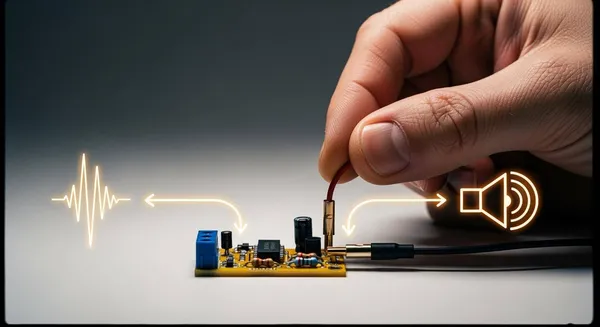
You often hear about the buffer amp in electronics because it helps keep your signal strong and clear. A buffer works like a bodyguard for your circuit—it stands between sensitive parts and demanding loads, making sure nothing gets overloaded or distorted. When you use a buffer, you isolate different stages, prevent power loss, and stop unwanted changes in the signal. Imagine trying to push a heavy door with a weak hand; a buffer acts like a strong arm that does the hard work for you. Think about times when your circuits seemed weak or unstable—a buffer could be the solution.
Key Takeaways
- Buffer amplifiers keep your signal strong and clear by copying the input signal without changing its voltage.
- Using a buffer prevents signal distortion and overload, ensuring stable performance in audio and sensor circuits.
- Buffering op amps isolate different stages of your circuit, protecting sensitive components from interference.
- High input impedance and low output impedance of buffer amplifiers help maintain signal integrity and prevent loss.
- Incorporate buffer amplifiers in your projects to enhance performance and reliability across various electronic applications.
Buffer amp basics
Unity gain and signal copying
When you use a buffer amp, you keep your signal strong and unchanged. Buffering op amps work by copying the input signal to the output without increasing or decreasing the voltage. This is called unity gain. The output voltage matches the input voltage, so you do not lose any part of your signal. In practical circuits, unity gain in a buffer amplifier helps you preserve the original signal shape and level. This means you avoid distortion and keep your signal integrity high.
Buffering op amps act like mirrors for your signal. They do not make the signal bigger, but they make sure it stays clear and accurate as it moves through your circuit. You often use a buffer amplifier when you want to connect a weak signal source to a device that needs more current. The buffer amp does not boost the voltage, but it can provide more current to the next stage. This is why you see buffering op amps in many audio and sensor circuits.
Tip: If you notice your signal gets weaker or distorted when you connect it to another device, try using a buffer amplifier. Buffering can solve many signal performance problems.
Impedance transformation
Buffering op amps also help with impedance transformation. This means they match the resistance between different parts of your circuit. A buffer amplifier has a very high input impedance and a very low output impedance. This feature lets you connect a high-impedance source to a low-impedance load without losing signal strength.
Here is a simple table showing typical impedance values for buffer amplifiers in consumer electronics:
| Parameter | Value Range |
|---|---|
| Input Impedance | Megaohms (MΩ) to Gigaohms (GΩ) |
| Output Impedance | Less than 100 ohms |
When you use buffering op amps, you draw very little current from your signal source. This protects the source from overload and keeps the signal clean. The low output impedance of the buffer amplifier allows you to send the signal to the next stage without loss. Buffering is especially important in high-frequency circuits, where signal loss and distortion can happen easily.
- Buffering op amps perform impedance transformation, which is crucial for high-frequency performance.
- They maintain high input impedance, so the source does not get overloaded.
- Buffering reduces signal distortion when you connect to low-impedance loads.
- The low output impedance of the buffer amplifier ensures strong current flow to the load, preserving signal integrity.
You can think of a voltage buffer amplifier as a bridge. It connects two parts of your circuit that would not work well together on their own. Buffering op amps keep your signal safe and strong, no matter what comes next in your design. If you want reliable performance and high signal integrity, always consider using a buffer amplifier.
Buffering op amps are a key part of many electronic designs. You will find them in audio systems, sensor interfaces, and even in operational amplifiers used for filtering. Buffering gives you the flexibility to connect different circuits without worrying about signal loss or poor performance. Whether you use a current buffer amplifier or a voltage buffer amplifier, you improve the overall performance of your project.
Why buffer amps matter
Signal isolation
You want your signal to travel through your circuit without interference. Buffering op amps help you achieve this by isolating different stages. When you use a buffer amplifier, you prevent one part of your circuit from affecting another. This isolation keeps your signal clean and stable, even if you connect many devices together.
Here is a table that shows how buffering op amps isolate signal paths in multi-stage circuits:
| Characteristic | Description |
|---|---|
| Input Impedance | High (e.g., βRE for BJT or 1/gm for MOSFET) |
| Output Impedance | Low |
| Function | Isolates stages without significant gain |
Buffering works like a wall between two rooms. You can play music in one room without disturbing the other. Buffering op amps let you build complex circuits with many stages, and each stage stays protected. You keep your signal strong and avoid unwanted changes.
Preventing overload
Weak signal sources can get overloaded if you connect them directly to heavy loads. Buffering op amps solve this problem by transforming impedance and providing isolation. When you use a buffer amplifier, you make sure the load from the next circuit does not interfere with your signal source. This keeps your signal safe and preserves its integrity.
Buffering op amps have high input impedance and low output impedance. High input impedance means the buffer amplifier draws very little current from your signal source. Low output impedance means the buffer amplifier can drive the next stage easily. You protect your signal source from overload and keep your circuit working well.
If you notice your signal source gets weaker or distorted, buffering can help. Buffering op amps prevent overload and keep your signal clear.
Stable signal output
You want your circuit to deliver a stable signal output, even when the load changes. Buffering op amps give you this stability. When you use a buffer amplifier, you make sure the output voltage stays the same as the input voltage, no matter what load you connect. This is important for signal integrity and overall performance.
Buffering also helps you avoid signal loss. The buffer amplifier acts as a strong link between your signal source and the load. You get reliable performance in audio, sensor, and RF circuits. Buffering op amps keep your signal steady, so you do not have to worry about drops or distortion.
- Buffering improves performance in every stage of your design.
- Buffering op amps maintain signal integrity by isolating, protecting, and stabilizing your signal.
- Buffering gives you the confidence to connect different circuits without losing quality.
You see buffering op amps in operational amplifiers, voltage buffer amplifier designs, and current buffer amplifier circuits. Buffering is a key part of modern electronics. You can trust buffering op amps to keep your signal strong and your performance high.
Buffer amp uses
Audio and sensor circuits
You often see buffer amplifiers in audio systems and sensor circuits. Buffering op amps play a key role in preserving signal integrity and improving performance. In audio setups, you use a buffer amplifier to keep your signal clear and strong. Buffering prevents signal degradation and maintains dynamic range. You can connect microphones, turntables, or other sources without worrying about loading effects. Buffering op amps help you drive long cables and difficult loads, such as speakers or headphones, without losing signal quality.
- Source isolation: Buffering op amps prevent the load of one device from affecting another.
- Line driving: Buffer amplifiers enable long cable runs without signal attenuation.
- Impedance bridging: Buffering matches high-impedance outputs to low-impedance inputs.
- Reducing crosstalk: Buffering op amps isolate channels in multi-channel systems.
- Driving difficult loads: Buffer amplifiers provide the necessary current for challenging impedance speakers.
In sensor circuits, buffering op amps maintain signal integrity in harsh environments. You use a buffer amplifier to prevent loading effects that can distort sensor readings. Buffering ensures accurate data transmission between sensors and processing units. This is crucial for real-time monitoring and decision-making in industrial applications.
Active filters
Buffering op amps improve performance and efficiency in active filter circuits. You use a buffer amplifier to separate filter stages and maintain signal integrity. Buffering prevents unwanted interaction between stages. You can design filters with precise frequency response because buffering keeps the signal stable. A voltage buffer amplifier or current buffer amplifier helps you achieve reliable signal management. Buffering op amps allow you to build complex filters without signal loss or distortion.
Tip: Buffering op amps make your filter circuits more robust and easier to design. You get stable performance and clear signal output.
RF applications
Buffering op amps are essential in RF circuits. You use a buffer amplifier to handle high-speed signals and prevent signal degradation. Buffering isolates sensitive RF stages and protects them from overload. You maintain signal integrity and avoid frequency offset. Buffering op amps provide low output impedance, which is important for driving antennas or other RF loads. You can trust a voltage follower or buffer amp to deliver stable signal performance in demanding RF environments.
Buffering op amps support signal management in every application. You see buffer amplifiers in audio, sensor, filter, and RF circuits. Buffering improves performance and efficiency across your designs.
Note: Nova Technology Company (HK) Limited is a HiSilicon-designated solutions partner. The company specializes in integrated circuit solutions, chip-level system integration, and advanced application scenarios for the semiconductor industry.
Buffer amp in electronics
Hobbyist projects
You often use a buffer in hobbyist projects to improve circuit performance. Buffering helps you maintain signal integrity when you connect different circuit stages. You avoid unwanted interactions and keep your signal clear. A buffer amplifier gives you high input impedance and low output impedance, which protects your source and drives your load efficiently.
- You use a buffer in audio circuits to keep sound quality high.
- Buffering prevents loading effects in sensor circuits, so you get accurate readings.
- A buffer helps you drive loads that need more current than your source can provide.
- You isolate input from output, which stops signal degradation.
Buffering makes your electronics projects more reliable. You can experiment with operational amplifiers, build active filters, and connect sensors without worrying about signal loss. You see better performance and efficiency in every stage.
Professional applications
In professional electronics, you rely on buffer amplifiers to ensure stable signal management. Buffering isolates your source from the load, so you prevent feedback and maintain signal integrity. You use different amplifier configurations to match your needs.
| Configuration | Voltage Gain | Current Gain | Input Impedance | Output Impedance |
|---|---|---|---|---|
| Common Emitter | Medium | Medium | Medium | Medium |
| Common Collector | Low | High | High | Low |
| Common Base | High | Low | Low | High |
- Common Emitter amplifiers work well for voltage amplification.
- Common Collector (Emitter Follower) acts as a voltage buffer and keeps output steady.
- Common Base functions as a current buffer amplifier for special cases.
Buffering supports performance and efficiency in audio amplifiers, sensor interfaces, and analog-to-digital converters. You keep your signal strong and avoid problems from changing load impedance. Buffer amplifiers help you build reliable systems for demanding applications.
Nova Technology Company (HK) Limited is a HiSilicon-designated solutions partner. The company specializes in chip-level solutions, system integration, and advanced application scenarios for the integrated circuit industry. You benefit from their expertise in semiconductor technology when you design electronics with high performance.
Buffering is a common topic in electronics because it solves real problems. You improve circuit performance, protect your signal, and build reliable designs. Whether you work on hobby projects or professional systems, a buffer gives you the tools to achieve stable and efficient signal management.
You now understand that buffer amplifiers protect your signal and keep it clear. You see their value in audio, sensors, filters, and RF circuits. Buffer amps prevent loading effects, preserve signal integrity, and provide isolation between stages.
- Buffer amplifiers transfer voltage signals without changing their magnitude.
- They stop signal degradation in multi-stage systems.
- You find them in audio, medical, industrial, and automotive electronics.
Learning about buffer amps helps you spot issues like distortion, oscillation, or voltage offsets. You improve circuit design and troubleshooting skills.
| Misconception | Correction |
|---|---|
| Feedback loops are too slow | Feedback corrects errors in real time |
| Too much feedback is bad | Higher feedback improves performance |
| Higher slew rates are always better | Typical audio needs lower slew rates |
You build better circuits when you understand buffer amplifiers.
FAQ
What is the main purpose of a buffer amp?
You use a buffer amp to keep your signal strong and stable. It copies the input signal to the output without changing its voltage. This prevents signal loss and protects sensitive parts of your circuit.
How does a buffer amp prevent signal distortion?
A buffer amp has high input impedance and low output impedance. This means it does not load your signal source. You get a clean, undistorted signal even when you connect multiple stages.
Can you use a buffer amp in audio circuits?
Yes, you can. Buffer amps help you keep audio signals clear. They let you connect sources like microphones or instruments to mixers and amplifiers without losing quality.
What is the difference between a voltage buffer and a current buffer?
A voltage buffer copies voltage from input to output. A current buffer copies current. You choose the type based on your circuit’s needs.
Do buffer amps increase signal strength?
No, buffer amps do not increase voltage. They provide current gain, which lets you drive heavier loads without changing the signal’s voltage.