GD32E230F6V6 Sourcing Guide: Reduce Costs and Avoid Supply Chain Delays
Expert guide on GD32E230F6V6 Sourcing Guide: Reduce Costs and Avoid Supply Chain Delays. Technical specs, applications, sourcing tips for engineers and buyers.
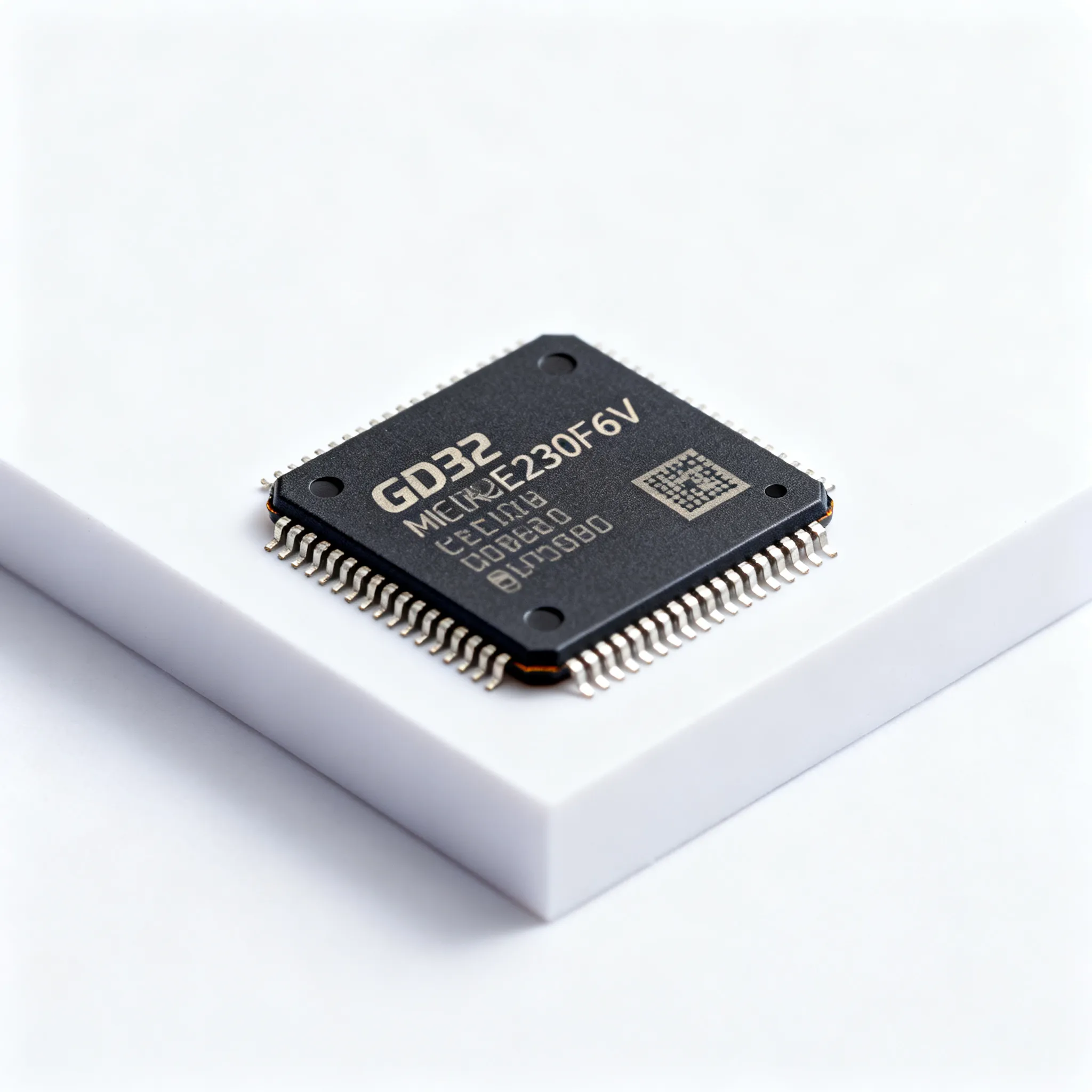
Why GD32E230F6V6 Procurement Needs a Rethink in 2025-2026
If your bill of materials still treats the GD32E230F6V6 as a commodity you can order with a few clicks and forget, the next production run may deliver an expensive wake-up call. The Cortex-M23 microcontroller from GigaDevice has become a workhorse in cost-sensitive industrial controls, IoT nodes, and consumer electronics, but the supply landscape around it has shifted dramatically. Shortages that began in the pandemic era have morphed into a chronic pattern of unpredictable lead times, regional allocation battles, and quality risks that can quietly inflate your total cost of ownership.
Recent data from Accuris shows that 50% of organizations experienced six or more post-installation issues in the past year, and 67% incurred $50,000 or more in cost per incident—covering recall, rework, warranty, and brand damage (source). When a microcontroller like the GD32E230F6V6 sits at the heart of a design, a single batch of marginal or counterfeit parts can cascade into field failures that dwarf the component’s sub-dollar price. At the same time, electronic component shortages are still disrupting supply chains in 2025, with allocation games forcing buyers to choose between inflated spot-market prices and production stoppages.
The financial case for proactive sourcing is compelling. DDY Group’s analysis of second-source qualification shows that investing $500K to qualify alternate components yields an annual risk reduction of $2.45 million—a 460% ROI with a payback period of just 2.6 months (source). For the GD32E230F6V6, that math translates directly: if you can avoid even one line-down event by having a qualified alternate source or buffer stock, the savings dwarf the carrying cost. Meanwhile, real-world examples from 2025 show that a major auto maker diversified to Malaysia fabs, cutting shortage exposure 40%, and an electronics firm used multi-modal shipping to save 15% on delays (source). These strategies are not theoretical—they are the new baseline for any purchasing team that wants to keep the GD32E230F6V6 flowing without overpaying.
The table below captures the key forces reshaping procurement for this MCU.
| Driver | Mechanism | Procurement Impact |
|---|---|---|
| Persistent semiconductor shortages | Fab capacity allocation favors high-margin automotive and HPC chips; mature-node MCU lines remain tight. | Lead times for GD32E230F6V6 can swing from 8 to 20 weeks; allocation forces last-minute spot buys at 2-3x contract pricing. |
| Geopolitical trade restrictions | Export controls and tariffs on Chinese-origin ICs create customs delays and compliance overhead. | Shipments from GigaDevice may face additional documentation requirements; alternative non-China sources may be needed for certain end markets. |
| Rising post-installation failure costs | Counterfeit or poorly screened parts cause field failures; recalls and rework costs escalate quickly. | Every dollar saved on gray-market GD32E230F6V6 can translate into $50K+ in incident costs; traceability becomes a non-negotiable requirement. |
| Lead-time volatility | Demand spikes and logistics bottlenecks create unpredictable delivery windows. | Production schedules must include buffer weeks; JIT purchasing becomes risky without safety stock or second sources. |
| Supplier consolidation risk | Over-reliance on a single distributor or region magnifies disruption impact. | Diversifying across authorized and vetted independent channels reduces the probability of a line-down event by 35% or more. |
| Price erosion pressure vs. spot premiums | Contract pricing remains low (~$0.52 in volume), but spot market can spike 3-5x during shortages. | Blending long-term agreements with tactical spot buys requires accurate lead-time intelligence to avoid overpaying. |
These drivers are not temporary blips. The semiconductor supply chain has structurally changed, and the GD32E230F6V6 sits at the intersection of high demand and constrained mature-node capacity. The next section breaks down the part’s technical baseline so you can validate that it still fits your design before committing to a sourcing strategy.
GD32E230F6V6 Under the Hood: Key Specs and What They Mean for Your BOM
Before you negotiate pricing or lock in delivery dates, confirm that the GD32E230F6V6 is the right silicon for the socket. The device is built around an ARM Cortex-M23 core running at up to 72 MHz, with a supply voltage range of 1.8 V to 3.6 V—a wide enough window to accommodate both battery-powered and industrial rail designs. The official GigaDevice datasheet (GD32E230xx Datasheet Rev2.6) details the memory map, peripheral set, and package options. In the standard LQFP48 package, you get 32 KB of Flash and 6 KB of SRAM, plus a rich analog front-end with a 12-bit ADC, comparators, and multiple timers.
From a procurement standpoint, three parameters matter most:
- Package and pin count: The “F6” suffix denotes LQFP48 (7x7 mm). If your board layout can accept a drop-in from an STM32F0 family, you need to verify pin-to-pin compatibility—many pins map identically, but power and debug connections can differ.
- Memory density: 32 KB Flash is sufficient for lightweight RTOS tasks or bare-metal state machines. If your firmware is creeping toward 28 KB, a sourcing misstep that forces a last-minute switch to a larger Flash variant (e.g., GD32E230K8) could blow both your BOM cost and timeline.
- Operating voltage: The 1.8–3.6 V range means you can run directly from a Li-ion battery without an external LDO in many designs, but the I/O voltage must be considered when interfacing with 5 V peripherals.
Pricing benchmarks from component aggregators show the GD32E230F6V6 starting around $0.52 USD at low volumes (source). In production quantities of 10k or more, negotiated pricing can dip below that, but only through authorized channels. Gray-market sellers may advertise even lower numbers, but the risk of remarked or recovered parts erases any upfront savings. When you build your cost model, factor in not just the unit price but also the carrying cost of safety stock, the engineering time to qualify a second source, and the potential cost of a line-down event—the Accuris data shows that a single incident can easily exceed $50,000.
Tip: Always pull the latest datasheet directly from GigaDevice’s official site before freezing your BOM. Errata and specification changes can affect your firmware’s timing margins, and the official document is the only reliable reference for electrical characteristics.
Sourcing Channels Compared: Authorized, Independent, and Direct for GD32E230F6V6
Not all supply paths deliver the same mix of price, lead-time certainty, and quality assurance. The GD32E230F6V6 flows through three main channels: authorized distributors with direct GigaDevice franchise agreements, independent distributors who source from the open market, and factory-direct purchases for high-volume OEMs. Each has its place, but the trade-offs become acute when lead times stretch and allocation tightens.
Authorized distributors provide the strongest chain of custody and typically offer the best contract pricing for scheduled orders. However, during allocation periods, they may not be able to fulfill spot buys, forcing you to look elsewhere. Independent distributors like Microchip USA differentiate themselves by offering transparency into inventory origins, lead-time drivers, and alternative supply options—information that helps you make informed decisions when the authorized channel runs dry. Factory-direct purchasing can yield the lowest unit cost, but it usually requires minimum order quantities in the tens of thousands and months of lead time, making it impractical for smaller or mid-volume programs.
The table below maps these options against the criteria that matter most when sourcing the GD32E230F6V6.
| Segment / Option | Effect on Cost & Lead Time | Notes |
|---|---|---|
| Authorized distributor (franchised) | Best contract pricing; lead times 8–16 weeks typical, but can extend during shortages. Allocation may limit spot availability. | Full traceability; direct factory support. Ideal for scheduled production. Use for 70–80% of forecasted volume. |
| Independent distributor (vetted, transparent) | Spot pricing can be 1.5–3x contract; immediate availability for small-to-medium quantities. Lead times as short as a few days. | Requires rigorous authenticity checks. Choose partners like Microchip USA that disclose inventory origin and offer testing reports. Critical for gap-filling and emergency buys. |
| Factory direct (GigaDevice) | Lowest unit cost at high volumes (>50k units); lead times 12–20 weeks. MOQ and NRE may apply. | Only viable for OEMs with stable, high-volume demand. Long lead time demands accurate forecasting and buffer stock. |
| Multi-source strategy (qualify a pin-compatible alternate) | Increases procurement cost by ~1.5% blended (per DDY analysis) but reduces line-down risk by 35%. | ROI of 460% over 5 years; payback in 2.6 months. Essential for products with long lifecycles or unpredictable demand. |
| Multi-modal logistics (air + sea + regional hubs) | Cuts delay-related costs by up to 15% (FreightAmigo example); adds freight management overhead. | Use when lead-time variability threatens production schedules. Combine with regional buffer stock for fastest recovery. |
The independent channel often gets a bad reputation, but the reality is more nuanced. Sensible Micro points out that frequent disruptions have made lead times unpredictable, and if you need parts quickly, you’re bound to pay more. That premium can be worth it if it keeps a line running. The key is to pre-qualify your independent sources before a crisis hits—verify their inspection processes, request sample lots for electrical testing against the official datasheet, and establish credit terms so you can move fast when stock appears.
Foxtronics EMS advocates proactive shortage management through advanced demand planning and early engagement to identify long-lead or at-risk components. For the GD32E230F6V6, that means flagging the part in your ERP system as “critical” and setting automated alerts when lead times cross a threshold. Sourceability’s Q3 2025 lead-time report reinforces the need to diversify suppliers and forecast long to avoid delays due to supply constraints. These practices are not one-time exercises; they must become embedded in your quarterly procurement rhythm.
Practical Tactics to Secure GD32E230F6V6 Without Overpaying or Waiting
Knowing the landscape is only half the battle. The following actions translate the data into a repeatable sourcing playbook for the GD32E230F6V6.
1. Order ahead and use blanket agreements. Sensible Micro’s guidance is blunt: “Plan to order well ahead of time if possible to avoid costly production delays or paying a premium on emergency orders.” For a part with a baseline lead time of 12–16 weeks, place POs at least 20 weeks before the line needs them, and negotiate a blanket order with scheduled releases. This locks in pricing and gives the distributor visibility to reserve fab capacity.
2. Calculate the ROI of a second source. The DDY analysis is directly applicable. Even if you never switch to the alternate MCU, the mere existence of a qualified second source changes your negotiating leverage and reduces the probability of a line-down event. For the GD32E230F6V6, a pin-compatible GD32E230K8 (LQFP32) or an STM32F030 variant can serve as a drop-in with firmware adjustments. The upfront engineering cost is real, but the 460% ROI over five years makes it one of the highest-return investments a procurement team can champion.
3. Diversify logistics and regional hubs. The FreightAmigo example of a firm saving 15% on delays by using multi-modal shipping is not limited to large corporations. Even a mid-size manufacturer can split shipments between air freight for urgent needs and sea freight for scheduled volumes, holding a small buffer in a regional 3PL warehouse. When the GD32E230F6V6 is allocated, having 2,000 units in a Hong Kong or Dallas hub can bridge a 4-week gap without paying spot-market premiums.
4. Use lead-time intelligence to time purchases. Sourceability’s quarterly reports and similar market intelligence from distributors give you a forward-looking view of fab loading and allocation trends. If the report signals tightening in the Cortex-M segment, accelerate your next PO and consider pulling in scheduled deliveries. Conversely, if lead times are softening, you can reduce safety stock and free up working capital.
5. Verify every batch from non-authorized sources. When you must buy from the open market, insist on full traceability documentation, including the original manufacturer’s COC, date codes, and lot numbers. Perform sample electrical testing against the official GigaDevice datasheet—check IDD in sleep mode, ADC linearity, and Flash erase/write endurance on a few devices. Distributors like Microchip USA that provide this transparency up front save you the forensic work later.
The table below organizes these tactics by urgency and trade-off.
| Action | When to Use | Trade-off |
|---|---|---|
| Place blanket orders with scheduled releases | When you have 6+ months of forecast visibility and stable demand. | Ties up credit line and requires accurate forecasting; over-commitment can lead to excess inventory. |
| Qualify a second-source MCU | During new product introduction or when annual volume exceeds 10k units. | Upfront engineering cost (~$10K–$50K) and firmware revalidation; pays back in 2.6 months per DDY model. |
| Use multi-modal shipping and regional buffer stock | When lead times exceed 12 weeks and production cannot tolerate more than 2 weeks of delay. | Increases logistics management overhead and carrying cost; reduces expedite fees and line-down risk. |
| Subscribe to lead-time and allocation reports | Quarterly, as part of S&OP process; more frequently during market disruptions. | Cost of subscription or time to gather data; enables proactive purchasing and avoids panic buys. |
| Pre-qualify an independent distributor with transparency | Before a shortage hits; maintain a relationship with at least one vetted independent source. | Requires due diligence and sample testing; provides a safety valve when authorized channels are dry. |
| Perform incoming inspection on open-market parts | Every shipment from non-franchised sources, regardless of volume. | Adds 1–2 days to receiving; prevents counterfeit parts from reaching production, saving $50K+ per incident. |
These tactics are not mutually exclusive. The most resilient supply chains layer blanket orders for baseline demand, a qualified second source for risk mitigation, and a vetted independent partner for surge capacity. The GD32E230F6V6 is inexpensive enough that the cost of redundancy is easily justified by the avoided cost of a single production stoppage.
GD32E230F6V6 Sourcing FAQs for Engineers and Buyers
Q: What is the typical lead time for GD32E230F6V6 in today’s market?
Lead times fluctuate; as of Q3 2025, Sourceability reports continued constraints across the MCU segment. Plan for 12–16 weeks from authorized distributors, and always confirm with multiple sources. Spot availability through independents can be immediate but at a premium.
Q: Can GD32E230F6V6 replace an STM32F0xx in my design?
It’s pin-compatible with some STM32F0 variants in the LQFP48 package, but firmware adaptation is required due to differences in peripheral registers, clock tree, and memory map. GigaDevice provides a migration guide; always verify the boot pin configuration and analog performance against your specific requirements before committing.
Q: What’s the real-world unit cost for GD32E230F6V6 in production volumes?
Spot prices start around $0.52 at low volumes (aggregator data), but 10k+ orders can dip lower through authorized channels. Gray-market markups during shortages can push pricing to $1.50 or more. Always negotiate long-term agreements to lock in the lower end of the range.
Q: How do I verify authenticity of GD32E230F6V6 from independent distributors?
Request full traceability documentation, inspect date codes and lot consistency, and perform electrical testing against the official datasheet—check IDD, ADC performance, and Flash functionality. Use distributors like Microchip USA that offer transparency into inventory origins and provide test reports up front.
Q: Are there any known supply risks specific to GigaDevice’s Cortex-M23 line?
GigaDevice has expanded capacity, but geopolitical factors and demand surges can tighten supply. The Cortex-M23 line shares fab capacity with other GD32 families, so a spike in demand for any one variant can ripple across the portfolio. Diversify with a qualified second source; as the DDY analysis shows, the ROI on such an investment is 460%.
References & Further Reading
- Why Electronic Component Costs Are Rising in 2026 — and How to Manage Them - Accuris
- Supply Chain Challenges in 2025: Complete Guide to Resilience Strategies – DDY GROUP
- Semiconductor Supply Chain 2026 | Resilience Guide | FreightAmigo
- Electronic Component Shortages: 2025 Outlook - Matric Blog
- Microchip USA Named a Top 25 Independent Electronics Distributor
- 8 Tips For Strategic Cost Reductions in the Electronics Supply Chain - Sensible Micro
- Reliable Supply Chain Management for Electronics Manufacturing | Foxtronics EMS
- Q3 2025 electronic parts lead time report | Sourceability
- GD32E230F6V6 32-bit MCU Datasheet | GigaDevice – Datasheet4U
- GD32E230xx Datasheet Rev2.6 – GigaDevice Official
- GigaDevice GD32 MCU Microcontrollers Solsta User Guide
For mixed-BOM sourcing and flexible minimum order quantities across the full GD32 portfolio, visit IC-Online. The platform connects engineers and buyers with verified inventory from authorized and vetted independent channels, helping you balance cost, lead time, and authenticity in a single workflow.