Why Nanofarad to Microfarad Matters in Modern Hardware
Nanofarad to microfarad conversion ensures accurate capacitor selection, preventing circuit errors and boosting reliability in modern electronic hardware.
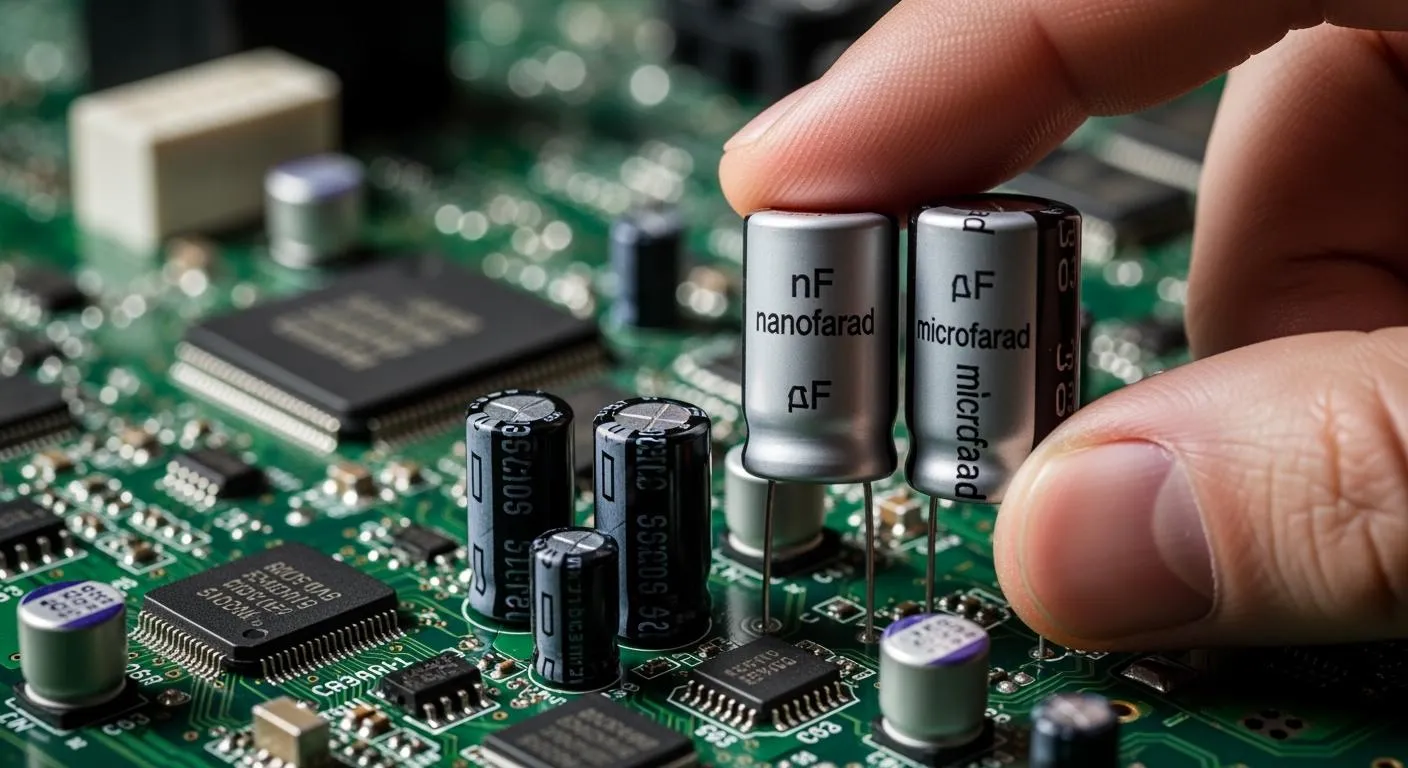
You often face the need to convert nanofarad to microfarad when working with electronic circuits. This step affects which capacitor you choose and how your project performs. Imagine you select a capacitor with the wrong value because you misread the units—your circuit could fail, or troubleshooting might become confusing. Accurate conversion helps you avoid common mistakes and keeps your designs reliable.
Key Takeaways
- Understanding the difference between nanofarad and microfarad is crucial for selecting the right capacitor in electronic circuits.
- Accurate conversion between nanofarad and microfarad prevents circuit failures and performance issues.
- Always double-check your capacitor values and calculations to ensure reliable circuit operation.
- Use mobile apps or online calculators for quick and accurate capacitance conversions.
- Selecting the correct capacitor based on application needs enhances circuit stability and performance.
Nanofarad to Microfarad Basics

Capacitance Units Explained
You often see the standard unit of capacitance as the farad in electronic circuits. The farad is a large measurement, so you use smaller units like nanofarad and microfarad for most practical applications. A nanofarad capacitor stores a small amount of charge, which makes it useful for high-frequency circuits and fine-tuning signals. You use a microfarad capacitor when you need more charge storage, such as in power supply circuits or audio systems.
The standard unit of capacitance helps you compare different capacitors easily. In electronic design, you select the right capacitor based on the measurement you need. Nanofarad and microfarad values appear on many capacitor labels. You must understand these units to avoid mistakes in component selection. The standard unit of capacitance also helps you communicate clearly with other engineers and follow datasheets.
You find nanofarad capacitors in oscillators, signal processing, and noise suppression. Microfarad capacitors work well in energy storage, power smoothing, and coupling AC signals. The standard unit of capacitance ensures you can match the right capacitor to the right circuit.
Tip: Always check the measurement on the capacitor before using it in your project. This step prevents errors and keeps your circuit reliable.
Conversion Formula and Ratio
You need to convert between nanofarad and microfarad often. The standard unit of capacitance makes this process simple. One microfarad equals 1,000 nanofarads. One nanofarad equals 0.001 microfarads. You can use these formulas for conversion:
- To convert nanofarad to microfarad:
Divide the nanofarad value by 1,000. - To convert microfarad to nanofarad:
Multiply the microfarad value by 1,000.
Here is a quick reference table:
| Nanofarad (nF) | Microfarad (µF) |
|---|---|
| 1 | 0.001 |
| 10 | 0.01 |
| 100 | 0.1 |
| 220 | 0.22 |
| 470 | 0.47 |
| 1000 | 1 |
If you add 220 nanofarad and 0.47 microfarad directly, you might get the wrong answer. You must convert both values to the same standard unit of capacitance before adding. This habit prevents errors in measurement and keeps your electronic circuits working as expected.
The standard unit of capacitance guides you in every step of capacitor selection, measurement, and conversion. You build better circuits when you master these basics.
Importance of Accurate Conversion
Circuit Performance Impact
You must pay close attention to nanofarad to microfarad conversion when you design or repair electronic circuits. Even a small mistake in farad units can cause major problems. For example, a real-world case involved a 22nF capacitor being replaced with a 2.2nF part in a USB interface EMI suppression circuit. This error caused the device to exceed regulatory limits for conducted emissions between 10MHz and 100MHz. The wrong farad value led to poor performance and failed compliance tests.
You often see that incorrect capacitor conversion results in miscalculations. These mistakes can lead to the selection of the wrong component. Instability in power supply regulation is another common problem. You might notice timing errors in circuits or even complete circuit failure. Unstable operation, excessive noise, or mismatched filtering can all result from errors in farad conversion.
Accurate conversion between nanofarad and microfarad ensures that you select the right capacitor for each application. When you use the correct farad value, you maintain the stability of power supplies and signal processing circuits. Engineers use precise farad calculations to optimize circuit performance. Errors in capacitance values can affect both signal integrity and power delivery. Manufacturing tolerances in real-world components can also change the total farad value, which impacts how your circuit works.
Note: Always double-check your farad calculations before installing a capacitor. This habit helps you avoid costly mistakes and keeps your electronic projects running smoothly.
Troubleshooting and Reliability
When you troubleshoot electronic circuits, confusion between nanofarad and microfarad values can make the process much harder. You may find incorrect signal processing, unstable power supply regulation, or even complete circuit failure. Mismatches in circuit performance, instability, or wrong filtering characteristics often point to errors in farad conversion. Timing errors and incorrect frequency response can also occur. You might see excessive or insufficient power regulation if you use the wrong farad value.
Accurate conversion plays a key role in the reliability of electronic devices, especially in industrial applications. You need to convert values like 2000 nF to 2 µF or 750 nF to 0.75 µF to ensure you select the right capacitor. This practice prevents malfunctions and keeps circuits efficient and stable. Correct conversion between nanofarads and microfarads ensures proper filtering in power supply circuits. This step stabilizes DC output and prevents voltage instability. Misunderstanding farad values can lead to unstable operation and excessive noise, which reduces the reliability of your circuit over time.
You improve long-term performance by making sure every farad calculation is correct. Accurate capacitor conversion helps you maintain the quality and stability of your electronic designs. When you follow these steps, you build circuits that last and perform as expected.
Capacitor Applications in Hardware

You encounter many applications of capacitance in modern hardware. Capacitor applications span a wide range of electronic devices, from smartphones to industrial controllers. You need to understand where nf capacitors fit in these systems and why selecting the correct farad value matters for each application. Nova Technology Company (HK) Limited, a HiSilicon-designated solutions partner, specializes in chip-level solutions and system integration. Their expertise supports advanced IC industry applications, where precise nf capacitors selection ensures optimal performance in both consumer and industrial electronic systems.
Power Supply and Filtering
You see nf capacitors used in power supply circuits to stabilize voltage and filter out unwanted noise. Microfarad capacitors play a crucial role in ensuring stable power delivery and smooth energy flow. These capacitors in electronic devices help extend device lifespan by reducing stress on sensitive components. Nanofarad capacitors, on the other hand, are effective for high-frequency filtering and interference suppression. You often find them in output filtering stages, where they block high-frequency noise and protect circuits.
Here is a table that shows how nf capacitors serve different applications in power supply filtering:
| Capacitor Type | Application Description |
|---|---|
| Nanofarad | Effective for high-frequency filtering, commonly used in output filtering and interference suppression. |
| Microfarad | Used for larger energy storage, ensuring smooth and stable power flow, reducing stress on electrical parts. |
You must choose the correct farad value for each application. If you select the wrong nf capacitors, you risk voltage instability or excessive noise. Applications of capacitance in power supply filtering depend on matching the right capacitor to the circuit’s needs.
Tip: Always check the datasheet for recommended nf capacitors values in your application. This step helps you avoid common mistakes.
Timing and Signal Processing
You rely on nf capacitors for timing and signal processing applications. These circuits require precise capacitance values to ensure accurate timing, filtering, and signal integrity. For example, timing circuits use nf capacitors to set delay times. Smaller capacitance values create shorter delays, while larger values result in longer delays. In audio and radio equipment, nf capacitors determine cutoff frequencies in filters, shaping how signals pass through the system.
The table below highlights the performance differences between nanofarad and microfarad capacitors in these applications:
| Capacitor Type | Key Characteristics | Applications |
|---|---|---|
| Nanofarad | Effective in high-pass filtering, blocks low frequencies | Audio equalization, signal processing |
| Microfarad | Allows more AC flow, beneficial for smoothing voltage fluctuations | Power supply filtering, noise reduction |
You must select the correct nf capacitors for each application. Applications of capacitance in timing and signal processing depend on matching the farad value to the circuit’s requirements. If you use the wrong nf capacitors, you may see inaccurate timing or poor signal quality.
Remember, the right nf capacitors selection ensures your electronic applications perform as designed.
Practical Tips for Engineers and Hobbyists
Quick Conversion Methods
You can convert between farad units quickly with a few simple techniques. When you work with nanofarad and microfarad values, you need to remember the basic formulas. Divide the nanofarad value by 1,000 to get microfarad. Multiply the microfarad value by 1,000 to get nanofarad. These formulas help you avoid confusion and errors in your electronic projects.
Here is a table that shows the fastest manual calculation techniques:
| Conversion Direction | Formula | Example |
|---|---|---|
| nF to µF | µF = nF ÷ 1000 | 2200 nF = 2.2 µF |
| µF to nF | nF = µF × 1000 | 0.47 µF = 470 nF |
| nF to µF | µF = nF × 0.001 | 1000 nF = 1 µF |
You can use mobile apps and online calculators for fast and accurate farad conversions. Popular apps include ElectroDroid, Electronics Toolbox, EveryCircuit, and Electrical Engineering Toolkit. These tools support capacitance conversion, resistor codes, and other electronic calculations. For web-based solutions, DigiKey Capacitance Converter and RapidTables Capacitance Converter offer reliable results. All About Circuits Converter and OmniCalculator provide extra educational content and practical examples.
Tip: Always double-check your farad calculations with a calculator or app before selecting components. This habit helps you avoid costly mistakes.
Selecting the Right Capacitor
You need to consider several factors when you select a capacitor for your hardware project. The right farad value depends on your application. For filtering rectified voltage, you need higher capacitance. For signal noise filtering, lower capacitance works best. You should also check the voltage rating. Choose a capacitor with a voltage rating 20-50% higher than your circuit’s maximum voltage.
The table below summarizes important criteria for selecting capacitors:
| Criteria | Description |
|---|---|
| Capacitance Value | Match the farad value to your application’s needs. |
| Voltage Rating | Pick a rating 20-50% above your circuit’s maximum voltage. |
| Tolerance | Use low tolerance for sensitive circuits, wider tolerance for coupling. |
| Equivalent Series Resistance | Low ESR is best for power supply filtering. |
| Dielectric Material | Choose based on performance needs (ceramic, tantalum, aluminum electrolytic, or film). |
| Temperature Considerations | Make sure the capacitor works within your application’s temperature range. |
| Size and Package | Select a size that fits your design and assembly requirements. |
You improve reliability and performance when you follow these guidelines. Always read datasheets and use trusted tools for farad conversions. This practice ensures your electronic circuits work as designed.
You now see why nanofarad to microfarad conversion matters in every hardware project. Accurate conversion helps you select the right capacitor, which keeps your circuits stable and reliable.
- Nanofarad to microfarad conversion lets you interpret schematics and build circuits with confidence.
- You avoid performance issues in high-frequency circuits by using the correct values.
Always double-check your calculations and unit choices. When you follow these best practices, you improve your designs and reduce troubleshooting time.
FAQ
What is the difference between nanofarad and microfarad?
You use nanofarad (nF) and microfarad (µF) to measure capacitance. One microfarad equals 1,000 nanofarads. You see nF for smaller values and µF for larger ones in electronic circuits.
How do I quickly convert nanofarad to microfarad?
Divide the nanofarad value by 1,000.
Example: 2200 nF ÷ 1000 = 2.2 µF.
Why does capacitor value accuracy matter in hardware?
You ensure circuit stability and performance with accurate capacitor values. Wrong values can cause noise, timing errors, or device failure. Always double-check your conversions.
Can I use a 1 µF capacitor instead of a 1000 nF capacitor?
Yes, you can. 1 µF equals 1000 nF. You must confirm the voltage rating and tolerance match your circuit’s requirements.
What tools help with capacitance conversion?
You can use mobile apps like ElectroDroid or online calculators such as DigiKey Capacitance Converter. These tools make conversions fast and reduce errors.