Reliability Testing for Electrolytic Capacitors vs Ceramic Capacitors
Understanding Capacitor Types Capacitors are essential components in electronic circuits, serving various functions such as energy storage, filte
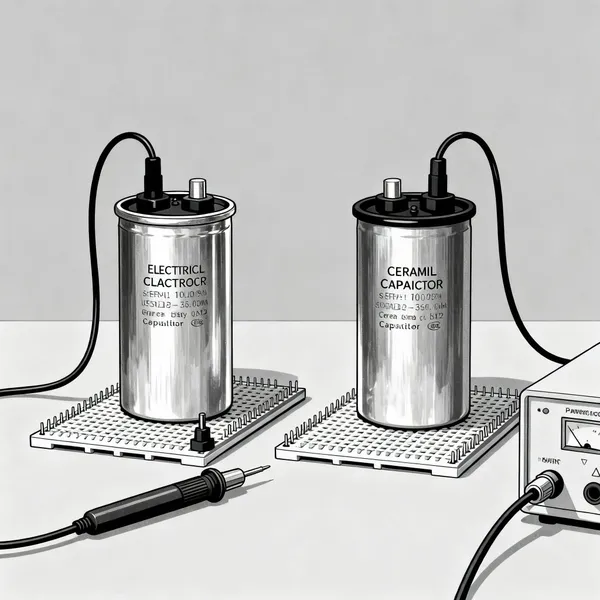
Understanding Capacitor Types
Capacitors are essential components in electronic circuits, serving various functions such as energy storage, filtering, and signal coupling. Two prevalent types are electrolytic capacitors and ceramic capacitors, each with distinct characteristics and applications.
Electrolytic capacitors are polarized components that typically offer high capacitance values, making them ideal for power supply applications where energy storage is crucial. However, they are sensitive to voltage and temperature, which can affect their reliability.
Ceramic capacitors, on the other hand, are non-polarized and are known for their stability and low equivalent series resistance (ESR). They are widely used in high-frequency applications and in situations where size and reliability are paramount.
The selection of the appropriate capacitor type is critical in PCBA (Printed Circuit Board Assembly) design, as it can significantly impact the performance and longevity of the final product.
Reliability Testing Methodologies
Reliability testing is vital for ensuring that capacitors perform as intended over their operational lifespan. Standard testing procedures vary between electrolytic and ceramic capacitors, reflecting their different failure modes.
For electrolytic capacitors, typical tests include:
- Endurance Testing: Conducted at elevated temperatures and voltages to accelerate the degradation of the electrolyte and predict lifespan.
- Ripple Current Testing: Evaluates the capacitor's ability to handle fluctuating currents without overheating.
- Temperature Cycling: Assesses the capacitor's performance under varying temperature conditions.
Ceramic capacitors undergo a different set of tests, including:
- Voltage Breakdown Testing: Determines the maximum voltage the capacitor can withstand before failure.
- Capacitance Drift Testing: Measures changes in capacitance under stress to ensure stability over time.
- Thermal Shock Testing: Evaluates the capacitor's resilience to sudden temperature changes, which can lead to mechanical failure.
Key Differences in Reliability
The reliability of electrolytic and ceramic capacitors is influenced by their construction and material properties. A significant difference lies in their failure mechanisms. Ceramic capacitors typically fail due to mechanical cracking and dielectric breakdown, while electrolytic capacitors often fail from electrolyte drying out or leakage.
Environmental factors also play a crucial role in the reliability of these components. For example, high temperatures can accelerate aging in electrolytic capacitors, whereas ceramic capacitors may experience capacitance drift in extreme conditions. The role of ceramic capacitors in enhancing reliability cannot be overstated, as they often perform better in demanding environments.
Choosing the Right Capacitor for Your Application
When selecting between electrolytic and ceramic capacitors, several criteria must be considered:
- Application Requirements: High-capacitance applications often favor electrolytic capacitors, while low-capacitance, high-frequency applications benefit from ceramics.
- Reliability vs. Cost: In critical applications where reliability is paramount, investing in higher-quality components like nova capacitors may be justified.
- Specific Use Cases: Examples include using ceramic capacitors in RF applications and electrolytics in power supply circuits.
Understanding these factors will help designers make informed decisions that prioritize reliability without compromising performance.
Reliability Standards and Guidelines
Adhering to industry standards is essential for ensuring the reliability of capacitors. Organizations such as IPC and IEEE provide guidelines that outline best practices for testing and evaluating electronic components.
Following NIST guidelines can further enhance testing accuracy, ensuring that reliability assessments are consistent and comparable across different manufacturers. Companies like Texas Instruments and Analog Devices implement rigorous testing protocols to guarantee compliance with these standards.
Common Challenges and Solutions
Both electrolytic and ceramic capacitors face common challenges that can impact their reliability. Identifying these failure modes is crucial for mitigating risks:
- Electrolytic capacitors may suffer from leakage and reduced lifespan due to environmental stressors.
- Ceramic capacitors can experience mechanical cracking, especially in PCBA environments where flexing occurs.
To address these issues, it’s essential to implement solutions such as:
- Using resistors to limit inrush current, thereby protecting capacitors from damage during power-up.
- Employing surface-mount technology (SMT) with careful soldering process control to avoid thermal damage.
- Conducting reliability testing that includes both electrical parameters and environmental stressors to cover different failure mechanisms.
Testing Workflow: 1. Select capacitor type based on application needs. 2. Perform incoming inspection for quality assurance. 3. Conduct endurance and thermal cycling tests. 4. Analyze results for potential failure modes. 5. Implement design improvements based on findings.
FAQ
- What are the main differences in reliability between electrolytic and ceramic capacitors?
- Electrolytic capacitors are more prone to leakage and have shorter lifespans.
- Ceramic capacitors typically offer better temperature stability and lower ESR.
- Failure mechanisms differ, with electrolytics failing due to chemical breakdown and ceramics due to mechanical stress.
- How do environmental factors affect capacitor reliability?
- High temperatures can accelerate the aging of electrolytic capacitors.
- Ceramic capacitors may experience capacitance drift in extreme conditions.
- Humidity and moisture can impact both types, particularly electrolytics.
- When should I choose electrolytic capacitors over ceramic ones?
- Choose electrolytic capacitors for high-capacitance applications.
- They are preferable when voltage ratings exceed ceramic options.
- Consider cost-effectiveness in large-scale applications.
- What are the best practices for testing capacitor reliability?
- Follow IPC and IEEE standards for testing protocols.
- Utilize thermal cycling and endurance tests to assess performance.
- Incorporate regular testing in the PCBA development lifecycle.
- Can nova capacitors improve reliability in my design?
- Nova capacitors offer advanced materials that enhance performance.
- They can reduce failure rates in critical applications.
- Consider them for high-reliability sectors like aerospace and automotive.
- What role do resistors play in capacitor reliability?
- Resistors can limit inrush current, protecting capacitors from damage.
- They help manage voltage levels across capacitors in a circuit.
- Proper resistor selection can enhance overall circuit reliability.