Unlocking AC Power The Science of DC Inverters
An inverter's primary function is to convert the one-way street of Direct Current (DC) into the two-way, oscillating flow of

An inverter's primary function is to convert the one-way street of Direct Current (DC) into the two-way, oscillating flow of Alternating Current (AC). This conversion is crucial for powering everyday devices. The global market for these devices highlights their importance.
| Metric | Value |
|---|---|
| Market Size (2023) | USD 46.57 billion |
| Projected Market Size (2032) | USD 209.74 billion |
| CAGR (2024-2032) | 18.62% |
Analogy: Imagine rapidly flipping a light switch on and off to make the light flicker. An inverter does something similar with electricity, but thousands of times per second using electronic switches.
This rapid switching chops up the steady DC flow. The science behind a dc to ac inverter is in how those chops are precisely controlled. This control creates the smooth, wave-like AC power our appliances need. The process to convert dc voltage to ac is the key that unlocks the potential of DC sources.
Key Takeaways
- An inverter changes DC power from batteries or solar panels into AC power for home appliances.
- Inverters use fast electronic switches and special filters to create smooth AC power, like what comes from the wall.
- Modern inverters are very efficient, turning almost all DC power into usable AC power.
- Inverters are important for solar homes, electric cars, and backup power systems.
How to Convert DC Voltage to AC
Understanding how to convert DC voltage to AC is key to unlocking the power of batteries and solar panels for everyday use. The process is a clever combination of high-speed switching and precise signal shaping. At its heart, an inverter performs this conversion by taking a steady, one-way current and transforming it into the oscillating, two-way current that powers our world.
Understanding DC and AC Power
Direct Current (DC) is electricity that flows in a single, constant direction. It is the type of power stored in batteries and generated by solar panels. Common sources of DC power include:
- Automotive and marine batteries
- Solar panel arrays
- Portable power banks
Alternating Current (AC), on the other hand, reverses its direction periodically. This is the standard form of electricity delivered to homes and businesses from the power grid. The characteristics of this AC power, specifically its voltage and frequency, vary by region.
| Region | Voltage (AC) | Frequency (Hz) |
|---|---|---|
| North America | 110-120V | 60 |
| Europe | 220-240V | 50 |
An inverter is the essential bridge between these two forms of electricity, making it possible to run standard appliances from a DC source.
The Core Principle: Switching DC Flow
The fundamental job of a dc to ac inverter is to mimic alternating current by manipulating a direct current source. It achieves this through a process of rapid switching. Imagine a circuit with four switches arranged in an "H" shape, known as an H-bridge. The DC power source is connected to the top and bottom of the H, and the output device (the load) is connected across the middle.
By rapidly opening and closing these switches in a specific sequence, the inverter can change the direction of the current flowing through the load.
- First, two diagonal switches close, allowing current to flow in one direction.
- Then, those switches open, and the other two diagonal switches close, causing the current to flow in the opposite direction.
This back-and-forth action creates a basic alternating current. Modern inverters perform this switching thousands of times per second, with high-frequency models operating at 50 kHz or more. This high-speed operation is crucial for efficiency and for creating a clean power output. The result of this initial step is a rough, blocky waveform known as a modified sine wave. While functional for simple devices, this type of power is not ideal for sensitive electronics.
Shaping the AC Wave with PWM
To transform the blocky output into the smooth, clean power our appliances prefer, a more sophisticated technique is needed. This is where Pulse Width Modulation (PWM) comes in. PWM is a smart method to control the output voltage of the inverter by adjusting the duration of the electrical pulses.
How PWM Works: Instead of just switching the current fully on and off, the inverter's controller sends out a series of short, rapid pulses. The width of these pulses—the amount of time they are "on" versus "off" in each cycle—is varied.
- To simulate the peak of an AC sine wave, the pulses are made wider (longer "on" time).
- To simulate the parts of the wave near zero, the pulses are made narrower (shorter "on" time).
This process generates a high-frequency signal that, on average, follows the shape of a perfect sine wave. A final filtering stage, typically using components like inductors and capacitors, smooths out these rapid pulses. The filter removes the high-frequency noise, leaving only the clean, low-frequency AC sine wave. This method is highly effective and contributes to the overall efficiency of the dc to ac inverter.
The quality of the final AC output is often measured by its Total Harmonic Distortion (THD). A lower THD means the power is cleaner and more stable. This is where a quality inverter truly shines.
| Waveform Type | Total Harmonic Distortion (THD) |
|---|---|
| Pure Sine Wave | < 3% |
| Modified Sine Wave | ~ 40% |
By using advanced PWM techniques, a modern inverter can produce a pure sine wave with very low distortion, ensuring the safe and efficient operation of everything from laptops to medical equipment. This ability to precisely convert DC voltage to AC power is what makes these devices so indispensable.
Anatomy of a DC to AC Inverter
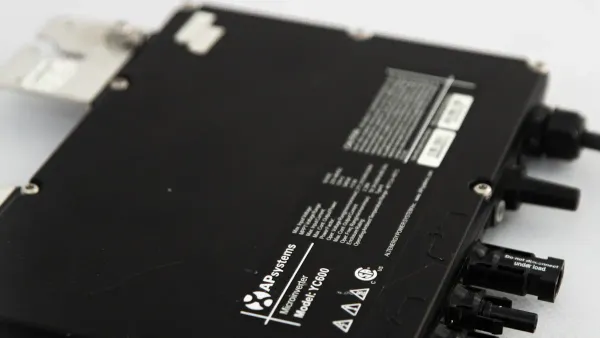
An inverter operates like a highly coordinated team. It has a brain to make decisions, muscles to perform the heavy lifting, and shapers to refine the final product. Understanding these core components reveals how a dc to ac inverter masterfully converts a simple DC input into the versatile AC power that runs our world. Each part plays a critical role in the device's overall performance and efficiency.
The Brains: Microcontroller Logic
The microcontroller unit (MCU) is the intelligent core of the inverter. This tiny computer acts as the command center, making all the critical decisions. Its primary job is to generate the precise Pulse Width Modulation (PWM) signals that control the switching process. The MCU uses sophisticated algorithms to create a clean sine wave, ensuring high efficiency.
Common methods the microcontroller uses include:
- Lookup Tables: The MCU references a pre-stored table of sine wave values to quickly generate the PWM pattern.
- Mathematical Functions: Advanced MCUs calculate the sine wave values in real-time using mathematical formulas. This method produces a smoother and more accurate AC output.
- Control Loops: The most advanced inverters use a closed-loop system. The MCU constantly compares the output AC voltage to a perfect sine wave reference. It then adjusts the PWM signals instantly to correct any errors, ensuring stable power.
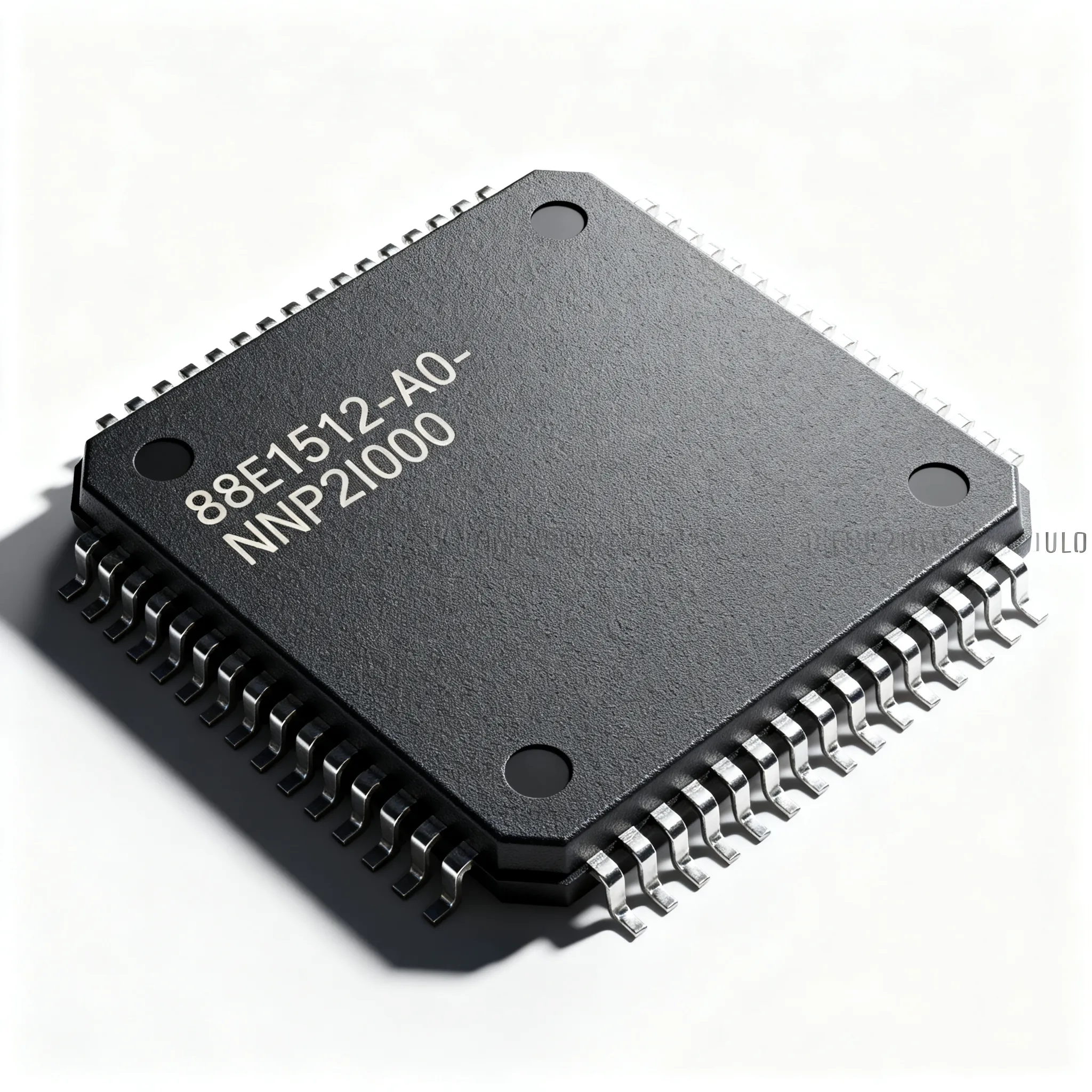
Note: The complex chips that perform these functions, such as those designed by HiSilicon, form a sophisticated technology ecosystem. This ecosystem includes authorized solution partners like Nova Technology Company (HK) Limited, who help integrate this powerful logic into final products.
Beyond generating PWM signals, the MCU manages many other tasks to ensure the safe and efficient operation of the dc to ac inverter:
- System Monitoring: It uses Analog-to-Digital Converter (ADC) inputs to sense output voltage, current, and temperature, protecting the inverter from overloads and overheating.
- Communication: The MCU handles communication protocols, allowing the inverter to connect with other devices, like battery management systems or monitoring software.
- Fault Detection: It constantly checks for problems. It can shut the system down safely if it detects a critical fault, preventing damage to the inverter and connected appliances.
- Data Processing: It performs complex mathematical operations, such as Clark/Park transformations, which are essential for advanced motor control applications.
The Muscle: MOSFET & IGBT Switches
The "muscle" of the inverter consists of powerful electronic switches. These components do the physical work of chopping up the DC current based on commands from the microcontroller. The two most common types of switches are MOSFETs and IGBTs. The choice between them depends on the inverter's intended application.
MOSFETs (Metal-Oxide-Semiconductor Field-Effect Transistors) are known for their incredibly fast switching speeds. This speed is possible because they are unipolar devices, meaning they use only one type of charge carrier (electrons). Their speed makes them ideal for high-frequency inverters, which are often smaller, lighter, and have high efficiency.
IGBTs (Insulated-Gate Bipolar Transistors) are hybrid devices that combine the simple gate control of a MOSFET with the high-current and high-voltage capability of a bipolar transistor. While slower than MOSFETs, IGBTs can handle immense power. This makes them the go-to choice for high-power applications. For example, large solar farms rely on IGBTs in their inverters to convert thousands of volts of DC power from solar panels into grid-ready AC power with minimal energy loss, maximizing efficiency. A single power inverter in these settings must handle extreme electrical loads.
The table below summarizes the key differences.
| Feature | MOSFETs | IGBTs |
|---|---|---|
| Switching Speed | Very Fast (Hundreds of kHz to MHz) | Slower (Typically below 20 kHz) |
| Power Handling | Lower Voltage, Lower Current | High Voltage (>1000V), High Current (Hundreds of Amps) |
| Best For | High-frequency, low-power applications (e.g., small appliances, computers) | High-power, lower-frequency applications (e.g., EVs, solar farms, industrial motors) |
| Efficiency | High efficiency in high-frequency designs | High efficiency in high-power designs |
The Shapers: Filters and Transformers
The raw output from the switching stage is a choppy, high-frequency square wave. It is not suitable for powering most electronics. This is where the "shapers"—filters and transformers—come in. Their job is to smooth and condition this rough output into a clean, usable AC sine wave.
First, the choppy signal passes through an LC filter, which consists of an inductor (L) and a capacitor (C).
- The Inductor: An inductor is a coil of wire that resists changes in current. It smooths out the sharp, blocky pulses from the switches, effectively averaging them.
- The Capacitor: A capacitor stores and releases electrical energy. It absorbs voltage peaks and fills in the valleys, further smoothing the waveform and reducing ripple.
Together, these components filter out the high-frequency noise created by the PWM switching, leaving behind the desired low-frequency (50 or 60 Hz) sine wave. The filter's design is critical for the efficiency and quality of the dc to ac inverter.
After filtering, the smooth AC signal may go to a transformer. The transformer's role is simple but essential: it adjusts the voltage level. It can step up a low voltage (like 12V from a battery) to a higher voltage (like 120V or 230V for household appliances). Inverters use two main types of transformers, which defines the inverter type.
- Low-Frequency (LF) Inverters: These use a large, heavy iron-core transformer. They are extremely robust and excellent at handling high-surge loads from devices like pumps and power tools.
- High-Frequency (HF) Inverters: These use smaller, lighter ferrite transformers. They are more compact and generally less expensive, making them suitable for powering electronics like computers and small appliances.
Through this process of intelligent control, powerful switching, and careful shaping, an inverter transforms raw DC power into the clean and stable AC power that modern life depends on.
Real-World Inverter Applications

Inverters are essential devices in many modern technologies. They bridge the gap between DC power sources and the AC-powered world. From renewable energy to electric transportation, the inverter plays a vital role.
Powering Homes with Solar Energy
A solar inverter is the heart of a home solar panel system. It converts the DC electricity from solar panels into AC electricity for household appliances. The efficiency of this process is crucial for maximizing the energy harvested.
- Modern solar inverters typically have a CEC efficiency rating between 95% and 98%.
- String inverters, a common choice, achieve 96% to 98% efficiency.
- Premium models can exceed 98.5% efficiency, wasting very little energy.
These systems use a technology called Maximum Power Point Tracking (MPPT). MPPT helps the inverter draw the most power possible from the panels, even as sunlight conditions change. This optimization improves the overall energy yield.
| Feature | Microinverters | String Inverters |
|---|---|---|
| Location | One per solar panel | One for multiple panels |
| Shade Impact | Shading on one panel does not affect others | Shading on one panel can reduce the whole system's output |
| Failure Impact | Only one panel stops working | The entire system goes down |
Driving Modern Electric Vehicles
Electric vehicles (EVs) rely on a powerful inverter to drive the motor. This device takes DC power from the high-voltage battery and converts it into three-phase AC power to spin the wheels. These inverters handle immense electrical loads, often operating at 450-850 volts.
The inverter also enables regenerative braking. When the driver slows down, the motor acts as a generator. The inverter then reverses its function, converting AC back into DC to recharge the battery. New technologies like Silicon Carbide (SiC) semiconductors are making the EV power inverter smaller and more efficient, which helps increase the vehicle's driving range.
Ensuring Uninterrupted Backup Power
An Uninterruptible Power Supply (UPS) provides emergency power during an outage. The inverter inside a UPS is key to its function. It stays on standby until it detects a power loss. Then, it instantly draws DC power from a battery and converts it to AC power for connected devices.
Did You Know? A good UPS inverter switches from grid power to battery power in less than 10 milliseconds. This rapid switchover protects sensitive electronics like computers from shutting down or losing data.
These backup systems come in various sizes. Home and office UPS units typically range from 350 VA to 10,000 VA, protecting everything from a single computer to an entire office network.
A dc to ac inverter uses an intelligent controller to command high-speed switches, slicing a steady DC input into carefully timed pulses. Filters and transformers then smooth these pulses into the clean AC sine wave that powers modern life. This process to convert dc voltage to ac is highly efficient.
A modern inverter achieves 95-98% efficiency, losing very little energy when changing DC to AC.
This elegant conversion by the dc to ac inverter is the critical link. It unlocks the potential of DC sources like batteries and solar panels. The future power inverter makes sustainable and versatile AC energy a reality.
FAQ
What is the main job of a DC to AC inverter?
An inverter's main job is to change Direct Current (DC) into Alternating Current (AC). DC power flows in one direction, like from a battery. AC power changes direction periodically, which is what most home appliances use. The inverter makes this energy conversion possible.
Why is a pure sine wave inverter better?
A pure sine wave inverter produces clean and stable AC power. This power is very similar to the electricity from the power grid. It allows sensitive electronics, like computers and medical devices, to run safely and efficiently without risk of damage from poor power quality.
Can an inverter store power?
No, an inverter itself does not store power. It only converts power from a DC source, such as a battery or solar panel array. The battery is the component that stores the electrical energy for the inverter to use when needed.
💡 Tip: Always pair your inverter with a DC power source that has enough capacity for the appliances you want to run.