What Is a Microfarad and Its Connection to Capacitance
What is a microfarad? It measures capacitance, showing how much charge a capacitor stores—key for selecting components in electronics.
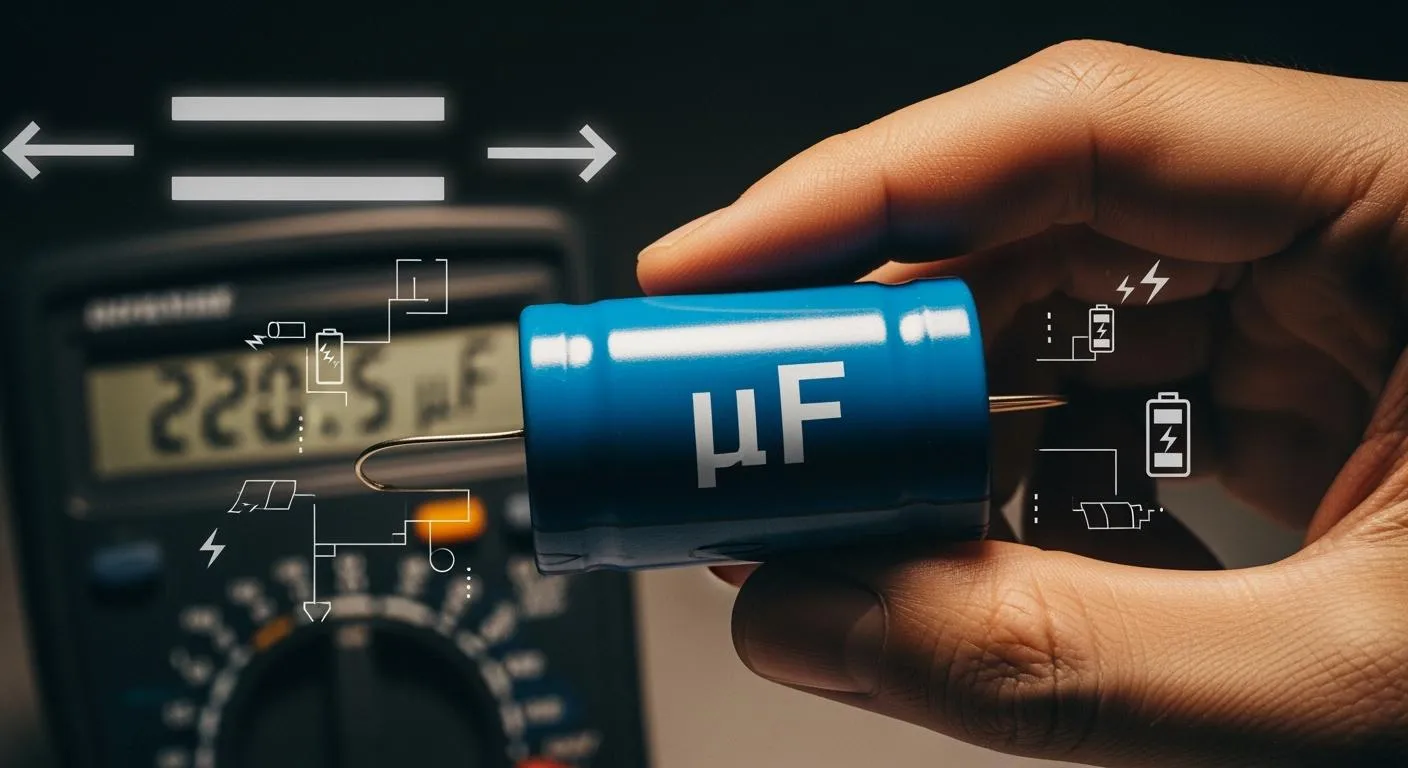
You might wonder what is a microfarad and why it matters in electronics. A microfarad measures capacitance, which tells you how much charge a capacitor can store. This unit equals one millionth of a farad. Capacitors with microfarad values help keep voltage steady in power supply circuits, protect audio equipment, and smooth out energy delivery. Understanding microfarads lets you choose the right capacitor for your project. This fundamental concept in electronics affects how circuits perform and keeps devices running safely.
- Microfarad (µF) is used to measure larger capacitors.
- Capacitors rely on capacitance, measured in microfarads, to filter signals and store energy.
Key Takeaways
- A microfarad (μF) measures capacitance, showing how much charge a capacitor can store. It equals one millionth of a farad.
- Capacitors with microfarad values stabilize voltage, filter signals, and store energy in electronic circuits.
- Microfarads are commonly used in power supplies, audio systems, and timing circuits for reliable performance.
- Choosing the correct microfarad value ensures proper circuit function, prevents malfunctions, and extends device lifespan.
- Understanding microfarads helps you select, troubleshoot, and replace capacitors effectively in various applications.
What Is a Microfarad

Microfarad Definition
You often encounter the term "microfarad" when you work with capacitors in electronic circuits. If you ask what is a microfarad, you find that it is a unit of capacitance. One microfarad equals one millionth of a farad, or 0.000001 farad. This value is written as 1 μF. You can see how this compares to other units in the table below:
| Unit | Definition |
|---|---|
| 1 μF | One millionth (10⁻⁶) of a farad |
| 1 μF | 0.000 001 F |
| 1 μF | 1000 nF |
| 1 μF | 1000000 pF |
Capacitance measures how much electric charge a capacitor can store. You use microfarads to describe the capacity of capacitors in most consumer electronics. The microfarad is a practical unit because the farad is too large for typical circuits. You rarely see capacitors rated in whole farads unless you work with specialized energy storage systems.
Tip: Capacitors labeled as μF or MFD both represent microfarads. Always check the label to select the correct capacitor for your circuit.
Microfarad vs Farad
If you wonder what is a microfarad compared to a farad, you need to understand the scale. The farad is the standard unit of capacitance, but it is much larger than what you use in everyday electronics. Microfarads, nanofarads, and picofarads are all subunits of the farad. You see microfarads most often in audio and power supply circuits. Nanofarads are common in timing and signal processing. Picofarads are used for very small capacitance needs, such as radio frequency circuits.
| Unit | Common Usage |
|---|---|
| Microfarad | Used in audio and power supply circuits |
| Nanofarad | Common for timing, filtering, and signal processing |
| Picofarad | Utilized for very small capacitance needs in radio frequency circuits |
You find that microfarads are the most practical unit for capacitors in consumer devices. Capacitors with microfarad values help stabilize voltage, filter signals, and store energy. You see them in:
- Electrolytic capacitors for converting AC to DC and ensuring stable power flow.
- Audio systems for signal coupling and maintaining sound quality.
- Power supply filtering to smooth voltage ripple and stabilize DC output.
- Energy storage systems for smoothing power delivery.
- Timing and oscillator circuits for controlling delays.
Capacitance values are labeled directly on capacitors. You see numbers like 1 μF, 10 μF, or 100 μF. This labeling helps you select the right capacitor and prevents circuit malfunctions.
Note: Understanding the relationship between microfarads, nanofarads, and picofarads is essential. You need to match the unit of capacitance to your application to ensure proper circuit function.
The microfarad has a historical origin in early electrostatic experiments. Scientists used Leyden jars to measure capacitance before the farad became the standard unit. The farad was officially defined in 1946 and adopted into the International System of Units in 1960. This standardization made it easier for you to compare and select capacitors for electronic projects.
If you work in the integrated circuit industry, you know that selecting the right capacitor value is crucial for chip-level solutions and system integration. Capacitors with microfarad values play a key role in filtering, energy storage, and timing functions in ICs.
Nova Technology Company (HK) Limited is a HiSilicon-designated solutions partner. The company specializes in professional semiconductor solutions, focusing on chip-level integration and system applications. You can rely on Nova Technology Company (HK) Limited for advanced capacitor selection and system design in the IC industry.
Capacitance Explained

Capacitance Meaning
Capacitance describes how much electric charge you can store in a capacitor for a given voltage. You use this concept to understand how capacitors work in electronic circuits. Capacitance measures the ability of a system to store and release energy. When you increase capacitance, you allow a capacitor to hold more charge. Think of capacitance like the size of a container: a larger container holds more water, just as a higher capacitance holds more electric charge. This property is essential for energy storage in many devices.
Capacitance Units
You measure capacitance in farads. The farad is the standard unit in the International System of Units. However, one farad is very large for most electronic applications. You often use microfarads, nanofarads, and picofarads instead. One microfarad equals one millionth of a farad. You see microfarads used in power supplies, audio systems, and signal filtering. Most circuits require capacitance values much smaller than one farad, so microfarads are practical for everyday devices.
| Unit | Symbol | Value in Farads |
|---|---|---|
| Farad | F | 1 |
| Microfarad | μF | 0.000001 |
| Nanofarad | nF | 0.000000001 |
| Picofarad | pF | 0.000000000001 |
Capacitance in Circuits
Capacitance affects how electronic circuits behave. You rely on capacitors to filter signals, store and release energy, and control timing. Capacitors manage electrical energy and help stabilize power in circuits. They play a vital role in signal processing and frequency control. When you select a capacitor, the microfarad value determines how much energy storage you get. The energy stored in a capacitor follows the formula E = ½CV². If you increase the microfarad value, you increase the energy storage at the same voltage. Capacitors charge and discharge quickly, making them useful for many applications. You see them in power supplies, audio equipment, and timing circuits.
Tip: Always check the microfarad value when choosing a capacitor. The right capacitance ensures your circuit performs as expected.
- Capacitance is essential for filtering signals.
- Capacitors help store and release energy for power stability.
- Capacitance controls timing and impacts circuit performance.
Capacitor Applications
Capacitor Function
You use a capacitor in almost every electronic device you own. Capacitors store and release electric charge, which helps manage voltage and energy storage in circuits. When you turn on a device, capacitors smooth out voltage spikes and keep the circuit running safely. You find capacitors in power supplies, audio systems, and even in timing circuits. They filter out noise, stabilize voltage, and protect sensitive components from sudden changes. In circuits that convert AC to DC, electrolytic capacitors with specific capacitance values ensure a steady flow of power. This extends the lifespan of your devices by reducing stress on electrical parts.
Common types of capacitors rated in microfarads include:
- Ceramic capacitors for high-frequency filtering.
- Electrolytic capacitors for power supply filtering and energy storage.
- Tantalum capacitors for reliable performance in medical and industrial systems.
- Supercapacitors for rapid energy storage and release in backup power applications.
Microfarad Uses
You see microfarad values marked on capacitors in many real-world devices. Here are some practical examples:
- Power supply circuits use electrolytic capacitors with microfarad ratings to smooth voltage and prevent fluctuations.
- Audio equipment relies on precise capacitance to maintain sound quality and filter unwanted signals.
- Supercapacitors with high microfarad values provide quick bursts of energy storage for memory backup and emergency power.
- Timing circuits use capacitors to control delays and oscillations.
You select a capacitor with the right microfarad value to match the needs of your circuit. This ensures proper operation and prevents malfunctions.
Tip: Always check the microfarad value before replacing a capacitor in any device.
Microfarad Value Impact
The value of capacitance in a capacitor directly affects how your circuit works. Larger capacitance values lower capacitive reactance, allowing more AC to pass through. This is important for filtering and stabilizing voltage. Different capacitance values also set the cutoff frequency in filters, which shapes the sound in audio devices and controls signals in communication systems. Capacitors help with impedance matching, improving power transfer and reducing signal loss. In motor control and oscillators, capacitors shift the phase of AC signals for precise timing.
Choosing the correct microfarad value is critical. The right capacitor ensures smooth voltage, prevents failures, and keeps all components working as designed. Supercapacitors offer high capacitance for advanced energy storage, making them essential in backup and high-power applications.
Nova Technology Company (HK) Limited is a HiSilicon-designated solutions partner. The company specializes in professional semiconductor solutions for the integrated circuit industry. You can rely on Nova for chip-level system integration, advanced capacitor selection, and energy storage solutions in demanding application scenarios.
Choosing Microfarad Values
Selection Factors
When you select a capacitor for your project, you need to consider several important factors. The right microfarad value ensures your circuit works as intended and avoids costly mistakes. Here are the main points to keep in mind:
- Purpose of the Circuit: Decide if you need the capacitor for filtering, timing, or energy storage. Power supplies often require larger capacitance, while radio frequency circuits use smaller values.
- Frequency: High-frequency circuits need smaller capacitors. Low-frequency circuits often use larger ones.
- Voltage Rating: Always choose a capacitor with a voltage rating higher than the maximum voltage in your circuit. This prevents breakdown and extends the component’s life.
- Tolerance: Some applications need precise capacitance. Others can handle more variation.
- Environmental Conditions: Temperature and humidity affect performance. Select capacitors rated for the conditions your circuit will face.
- ESR (Equivalent Series Resistance): Lower ESR means less energy loss and better efficiency.
- Dielectric Material: The material inside the capacitor impacts its performance and stability.
Tip: Always check the datasheet for recommended values and specifications before making your choice.
Application Needs
Different applications require different microfarad values. You must match the capacitor to your circuit’s needs:
- Power-supply filtering uses electrolytic capacitors with high capacitance for smooth voltage.
- Coupling and decoupling circuits often use ceramic capacitors, which work well at high frequencies.
- Bypassing applications may need ceramic capacitors for high frequencies or aluminum and tantalum types for low frequencies.
- Energy storage applications benefit from capacitors with greater microfarad values.
You should also consider the operating temperature. High temperatures can increase ESR and reduce the lifespan of the capacitor. Always select components rated for the expected environment.
Common Mistakes
Many people make errors when choosing capacitors. Avoid these common pitfalls:
- Ignoring the drop in capacitance under voltage in ceramic capacitors.
- Using aluminum electrolytic capacitors for high-frequency filtering, which can cause poor noise suppression.
- Picking odd or non-standard values, making sourcing and assembly harder.
- Overlooking the size and footprint, which can complicate your circuit layout.
Replacing a 2.25 µF capacitor with a 2.5 µF one may seem minor, but it can change motor speed, torque, and current, leading to early failure and poor performance.
Always verify the microfarad value with a digital multimeter before installation. Power off the circuit, discharge the capacitor, and measure it outside the circuit for the most accurate reading.
You now see how microfarads connect capacitance and the role of a capacitor in every electronic device. A microfarad measures how much charge a capacitor can store. This value affects how a capacitor filters signals, stabilizes circuits, and supports audio quality. When you understand microfarads, you select the right capacitor for each application and avoid common mistakes.
- A capacitor with the correct microfarad value improves circuit stability.
- Knowing how to read microfarad values helps you troubleshoot and replace capacitors.
- Mastering unit conversions prevents errors in circuit design.
If you want to learn more, explore tutorials that explain how a capacitor works, how to measure capacitance, and how to use capacitors in real circuits.
FAQ
What does the symbol μF mean on a capacitor?
You see μF on a capacitor label. This symbol stands for microfarad, which measures how much electric charge the capacitor can store. One microfarad equals one millionth of a farad.
Can you replace a capacitor with a different microfarad value?
You should always match the microfarad value when replacing a capacitor. Using a different value can change how your circuit works. This may cause poor performance or even damage your device.
Why do some capacitors use nF or pF instead of μF?
You find nF (nanofarad) and pF (picofarad) on capacitors with smaller capacitance. These units help you select the right size for high-frequency or sensitive circuits. Microfarads suit larger, energy-storing applications.
How do you read the microfarad value on a capacitor?
You look for numbers followed by μF, MFD, or uF on the capacitor body. For example, “10μF” means the capacitor has a value of ten microfarads. Always check the label before installation.