Buy Electronic Components Online: A Step-by-Step Guide for Engineers
Introduction In today's fast-paced electronics industry, the demand for precision, performance, and quick turnaround times has never been higher. Ac
Introduction
In today's fast-paced electronics industry, the demand for precision, performance, and quick turnaround times has never been higher. According to the Semiconductor Industry Association, global semiconductor revenue reached an impressive $595.2 billion in 2024, marking a 19% year-over-year increase. This surge underscores the critical role that efficient sourcing of electronic components plays in meeting market demands. For engineers, purchasing electronic components online offers convenience, a broad selection, and often more competitive pricing compared to traditional methods.
Technical Overview
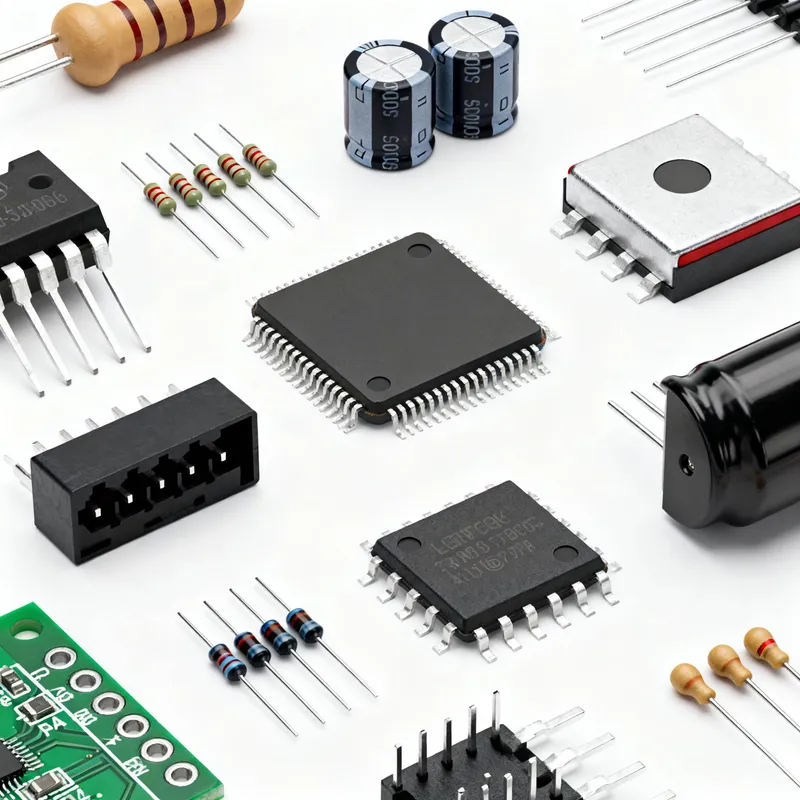
Understanding the technical specifications and architecture of electronic components is crucial for engineers. Components such as microcontrollers, resistors, and capacitors form the backbone of electronic circuits. Microcontrollers, for example, integrate a processor, memory, and input/output peripherals on a single chip, streamlining complex circuit designs. A typical microcontroller might feature an ARM Cortex-M architecture, with clock speeds ranging from 48 MHz to 120 MHz, flash memory between 64KB and 512KB, and RAM from 8KB to 128KB.
Key Specifications Table
| Component Type | Specification | Range |
|---|---|---|
| Microcontroller | Clock Speed | 48 MHz - 120 MHz |
| Microcontroller | Flash Memory | 64KB - 512KB |
| Resistor | Resistance | 1Ω - 10MΩ |
| Capacitor | Capacitance | 1pF - 10μF |
Applications & Use Cases
Electronic components are integral to countless applications across various industries. Here are a few notable examples:
1. Consumer Electronics
Microcontrollers are extensively used in smartphones, tablets, and smartwatches, providing the computational power necessary for these devices to function efficiently.
2. Automotive Industry
Advanced driver-assistance systems (ADAS) rely heavily on sensors and microcontrollers to enhance vehicle safety and efficiency.
3. Industrial Automation
Programmable logic controllers (PLCs) and sensors are vital in automating manufacturing processes, reducing human error and increasing productivity.
4. Internet of Things (IoT)
IoT devices utilize various sensors and communication modules to collect and transmit data, facilitating smart city and home applications.
Selection & Sourcing Guide
When selecting electronic components, engineers must consider factors such as compatibility, performance, and cost. Here are some tips for effective sourcing:
- Determine the technical requirements of your project, including power consumption, size, and environmental conditions.
- Use parametric search tools available on distributor websites to filter components based on your specifications. For example, DigiKey Electronics offers comprehensive datasheets and search capabilities.
- Consider authorized distributors like IC Online for competitive pricing and reliable delivery of components.
FAQ
1. What factors should I consider when selecting a microcontroller?
Consider clock speed, memory capacity, input/output options, and power consumption based on your project's requirements.
2. How can I ensure the components I purchase are genuine?
Purchase from authorized distributors such as IC Online to ensure authenticity and quality.
3. What are the benefits of purchasing electronic components online?
Online purchasing offers broader selection, competitive pricing, and the convenience of quick search and comparison.
4. How do I find components that are in stock?
Utilize distributor websites with real-time inventory tracking, like DigiKey Electronics, to ensure availability.
5. What should I do if a component is out of stock?
Consider alternative components with similar specifications, or contact the distributor for lead times and potential substitutes.