Capacitance Formula A Guide for 2026
The fundamental capacitance equation is C = Q/V. This simple equation defines capacitance. It measures a capacitor
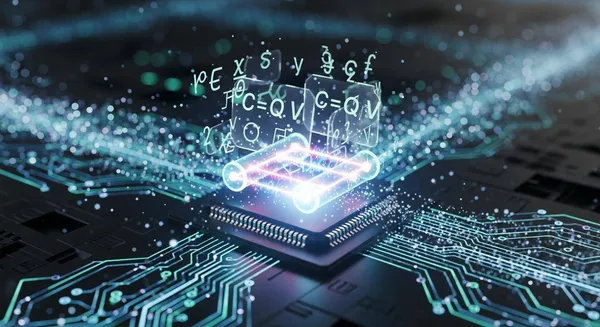
The fundamental capacitance equation is C = Q/V. This simple equation defines capacitance. It measures a capacitor's ability to hold an electric charge (Q) at a specific voltage (V). This core concept of capacitance is what powers many of our favorite gadgets. The capacitance formula makes instant camera flashes and responsive touchscreens possible.
The role of the capacitor is expanding. The market is projected to grow significantly, showing the rising importance of understanding capacitance and this key capacitance equation, C = Q/V.
| Metric | Details |
|---|---|
| Market Size in 2025 | USD 41.23 Billion |
| Market Size by 2035 | USD 73.18 Billion |
| Growth Rate from 2026 to 2035 | CAGR of 5.91% |

Understanding this relationship between charge, voltage, and capacitance is the first step to mastering modern electronics.
Key Takeaways
- The main capacitance formula is C = Q/V. It shows how much charge (Q) a capacitor holds at a certain voltage (V).
- Capacitors store electrical energy. They power things like camera flashes and smartphone touchscreens.
- A capacitor's physical design affects its capacitance. This includes the size of its plates and the material between them.
- Capacitors are in many everyday devices. They help with smartphone screens, computer memory, and clean power supplies.
- Capacitors release energy quickly. This makes them different from batteries, which release energy slowly.
Understanding the Capacitance Vormula
The core capacitance equation, C = Q/V, is simple yet powerful. It connects three critical concepts: charge, voltage, and capacitance. Understanding each part of this equation reveals how a capacitor works at a fundamental level. Let's break down each variable.
Q (Charge): The Stored Energy
Charge (Q) represents the amount of electrical energy stored in a capacitor. Think of it as the "stuff" that a capacitor holds. When you connect a capacitor to a power source, electrical charge accumulates on its plates. This stored charge is directly related to the energy the capacitor can release. The relationship is clear: more charge means more stored energy. This is why a fully charged capacitor can power a camera flash, releasing its stored energy in an instant. The fundamental capacitance equation helps us quantify this stored charge.
V (Voltage): The Electrical Pressure
Voltage (V) is the electrical potential difference between the capacitor's two plates. You can imagine voltage as the "pressure" that pushes the charge into the capacitor. A higher voltage can force more charge onto the plates. This potential difference represents the work required to move a charge from the positive plate to the negative plate. Without voltage, the charge would have no reason to accumulate. This makes voltage a crucial part of the capacitance formula.
Key Concept: A capacitor's voltage is a measure of the electrical potential energy per unit of charge. A higher voltage across the same capacitor means it holds more energy for the same amount of capacitance.
C (Capacitance): The Storage Limit
Capacitance (C) is the intrinsic property of a capacitor that defines its ability to store charge. It is a measure of "how much" charge a capacitor can hold for a given voltage. A capacitor with a large capacitance can store a lot of charge at a low voltage, while one with small capacitance needs a higher voltage to store the same amount of charge. The capacitance is determined by the capacitor's physical design. Generally, a physically larger capacitor has a higher capacitance. This defining property is what the capacitance formula and the capacitance equation c = q/v ultimately describe. This simple equation links a capacitor's physical limit to the electrical conditions.
How a Capacitor is Engineered

The C = Q/V equation tells us how a capacitor behaves, but what gives a capacitor its specific capacitance value in the first place? The answer lies in its physical construction. Engineers design capacitors using a different but related capacitance equation that focuses on physical traits: C = ε(A/d). This powerful equation reveals how the geometry and materials of a capacitor determine its ability to store charge. Let's explore these physical factors.
Plate Area (A) and Distance (d)
At its core, a simple capacitor consists of two conductive plates. The capacitance is directly influenced by the size of these plates and the distance between them.
- Plate Area (A): Think of the plate area as the capacitor's storage real estate. A larger plate area provides more surface to hold electric charge. The relationship is straightforward; if you double the plate area of a capacitor while keeping everything else the same, you effectively double its capacitance. This allows it to store twice the charge for the same voltage.
- Distance (d): The distance between the plates also plays a critical role. When the plates are closer together, the attractive force between the positive and negative charges on opposite plates becomes stronger. This attraction makes it easier to pack more charge onto the plates.
Analogy: Imagine trying to stack magnets. The closer you bring them, the stronger the pull. Similarly, closer capacitor plates increase the electrical attraction, boosting the overall capacitance.
This relationship is a key part of the physical capacitance equation.
The Dielectric Material (ε)
The space between a capacitor's plates is not empty. It is filled with an insulating material called a dielectric. This material serves two essential purposes.
First, it acts as a physical barrier. The dielectric prevents the conductive plates from touching, which would cause a short circuit and prevent any charge from being stored.
Second, it acts as a capacitance "booster." The dielectric material, represented by its permittivity (ε) in the equation, reduces the strength of the internal electric field. This makes it easier to push more charge onto the plates at a given voltage, significantly increasing the total capacitance. Different materials have different permittivity values, allowing engineers to fine-tune a capacitor for specific needs. This makes the dielectric a crucial component in modern capacitor design.
Capacitance in Everyday Tech
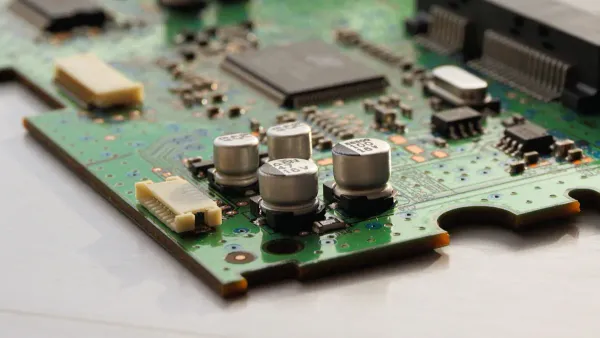
The principles of capacitance are not just for textbooks. They are the invisible engine driving many of the devices we use daily. From the smartphone in your pocket to the computer on your desk, capacitors are essential components. They make our interactions with technology seamless and efficient. This section explores how the fundamental concept of capacitance powers our modern world of consumer electronics.
Smartphone Touchscreen Sensing
Every time you tap or swipe on your smartphone, you are interacting with a grid of tiny capacitors. Modern smartphone screens use a technology called Projected Capacitive Technology (PCT). This system creates a matrix of conductive rows and columns. Each intersection in this grid functions as a miniature capacitor with a specific, measurable capacitance.
When your finger approaches the screen, it changes the local electric field. Your finger acts in two ways to alter the capacitance at that point:
- As a Dielectric: The human body contains a lot of water, which has a high dielectric constant. Your finger increases the system's overall dielectric constant, boosting the capacitance.
- As a Conductor: Your conductive skin acts like a second capacitor plate. This creates a "finger cap" that couples with the sensor, further increasing the total capacitance.
The smartphone's processor constantly monitors the capacitance of every point on the grid. It detects the location of your touch by identifying where this change in capacitance occurs. This method allows for precise multi-touch gestures. Innovations like 'in-cell' technology integrate these capacitors directly into the display itself. This makes the smartphone thinner and brings your finger visually closer to the on-screen action.
Energy Stored in a Capacitor: Flashes & Chargers
Capacitors excel at storing and releasing energy quickly. This ability is perfect for devices that need a sudden burst of power.
A classic example is a camera flash. A typical DSLR camera flash capacitor stores a significant amount of energy. For instance, a standard speedlight holds around 75 joules. The process involves charging a capacitor over a few seconds using the camera's battery. When you take a picture, the circuit allows for the rapid discharging of a capacitor. This releases all that stored energy in a fraction of a second, creating a brilliant flash of light.
This principle of rapid charging and discharging is also revolutionizing how we power our consumer electronics. Supercapacitors, a high-capacity type of capacitor, are at the forefront of this change. Unlike batteries that rely on slow chemical reactions, supercapacitors store charge directly on their plates.
Supercapacitors vs. Batteries A key difference is power density versus energy density. Supercapacitors have high power density for quick energy delivery, while batteries have high energy density for long-term storage.
| Feature | Supercapacitors | Lithium-ion Batteries |
|---|---|---|
| Charge Time | 1-10 seconds | 1-10 hours |
| Cycle Life | Over 1 million cycles | Several thousand cycles |
| Ideal Use | Quick power bursts, fast charging | Sustained energy output |
This makes supercapacitors ideal for applications like electric buses that can recharge in seconds at a stop. For consumer electronics, this technology promises power banks that can reach 95% charge in minutes, not hours.
Computer Memory (DRAM)
Your computer's temporary memory, or DRAM (Dynamic Random-Access Memory), relies on billions of microscopic capacitors. Each tiny capacitor is a data-storage workhorse. The concept is simple yet brilliant:
- A charged capacitor represents a digital "1".
- An empty (discharged) capacitor represents a digital "0".
The capacitance of a single DRAM cell is incredibly small, typically around 30 to 40 femtofarads (fF). Because this charge is so minuscule, it naturally leaks away over time. To prevent data loss, the computer's memory controller must perform a "refresh" operation. This process involves periodically reading the charge in each capacitor and rewriting it, restoring the "1s" before they fade into "0s." This refresh cycle usually happens every 64 milliseconds, ensuring your data remains intact while the computer is on.
Developing these advanced memory systems requires deep expertise in chip-level design and system integration. Companies like Nova Technology Company (HK) Limited, a HiSilicon-authorized solutions partner, are pivotal in this space. Their proficiency in semiconductor solutions helps drive the development of application scenarios for complex components like DRAM and advanced power management systems, pushing the boundaries of what's possible in consumer electronics.
Power Supply and Audio Filtering
Capacitors are the unsung heroes of clean, stable power. Inside almost every electronic device is an AC-to-DC power supply that converts the alternating current from your wall outlet into the direct current the device's components need. This conversion process initially creates a pulsating DC voltage. A "smoothing" capacitor is used to fix this. It charges up during the voltage peaks and releases energy during the troughs, effectively smoothing out the ripples to provide a steady DC voltage. Capacitors used for this purpose on a PC motherboard often have values between 270-470µF.
This filtering ability is also crucial for high-quality audio. Unwanted electrical noise can create an annoying "hum" in speakers or headphones. Capacitors act as filters to solve this problem.
- They allow high-frequency signals (like noise) to pass through to the ground.
- They block low-frequency or DC signals (the desired audio signal).
By strategically placing a capacitor in an audio circuit, engineers can divert the unwanted noise away from the audio path. This ensures the only thing you hear is clean, clear sound. This application of discharging a capacitor to shunt noise is fundamental to modern audio design.
The capacitance formula, C = Q/V, is more than an abstract equation. It is a core principle defining how electronics store and use energy. This simple equation explains the instant power of a camera flash and the responsive touch of a smartphone screen. Understanding this relationship between charge, voltage, and capacitance is key. The miniaturization of the capacitor continues to push technology forward. Smaller capacitor designs with higher capacitance enable the development of advanced wearable devices. Appreciating the C = Q/V capacitance formula is essential for understanding the technology of today and innovating for tomorrow.
FAQ
What is the unit of capacitance?
The standard unit of capacitance is the Farad (F), named after scientist Michael Faraday. One Farad represents a very large capacitance. Therefore, you will more commonly see smaller units in electronics.
- Microfarad (µF): One-millionth of a Farad.
- Nanofarad (nF): One-billionth of a Farad.
- Picofarad (pF): One-trillionth of a Farad.
Does increasing voltage change a capacitor's capacitance?
No, increasing the voltage does not change the physical capacitance. The capacitance C is a fixed property based on the capacitor's design. According to the formula C = Q/V, increasing voltage V simply allows the capacitor to store more charge Q.
Why is a dielectric important for capacitance?
A dielectric material is crucial for two reasons. First, it prevents the capacitor's plates from touching. Second, it increases the overall capacitance. Different materials boost capacitance by different amounts, allowing engineers to design for specific needs. This makes achieving a higher capacitance possible.
How is capacitance different from a battery's capacity?
Capacitance and battery capacity both relate to energy storage, but they work differently.
Capacitance: Stores energy in an electric field and can release it almost instantly. It is ideal for quick power bursts. Battery Capacity: Stores energy through chemical reactions and releases it slowly over a longer period.