Choosing the Right MOSFET Driver: A Practical Guide for Engineers in 2026
Expert guide on Choosing the Right MOSFET Driver: A Practical Guide for Engineers in 2026. Technical specs, applications, sourcing tips for engineers and buyers.
Introduction
In the fast-evolving world of electronics, the selection of the right MOSFET driver is crucial for optimizing the performance of power electronics systems. As of 2026, the global semiconductor industry has reached unprecedented heights, with revenues soaring to $595.2 billion, reflecting a year-over-year increase of 19% as reported by the Semiconductor Industry Association. This growth underscores the importance of making informed decisions when selecting components like MOSFET drivers, which are pivotal in applications ranging from industrial automation to renewable energy systems.
Technical Overview
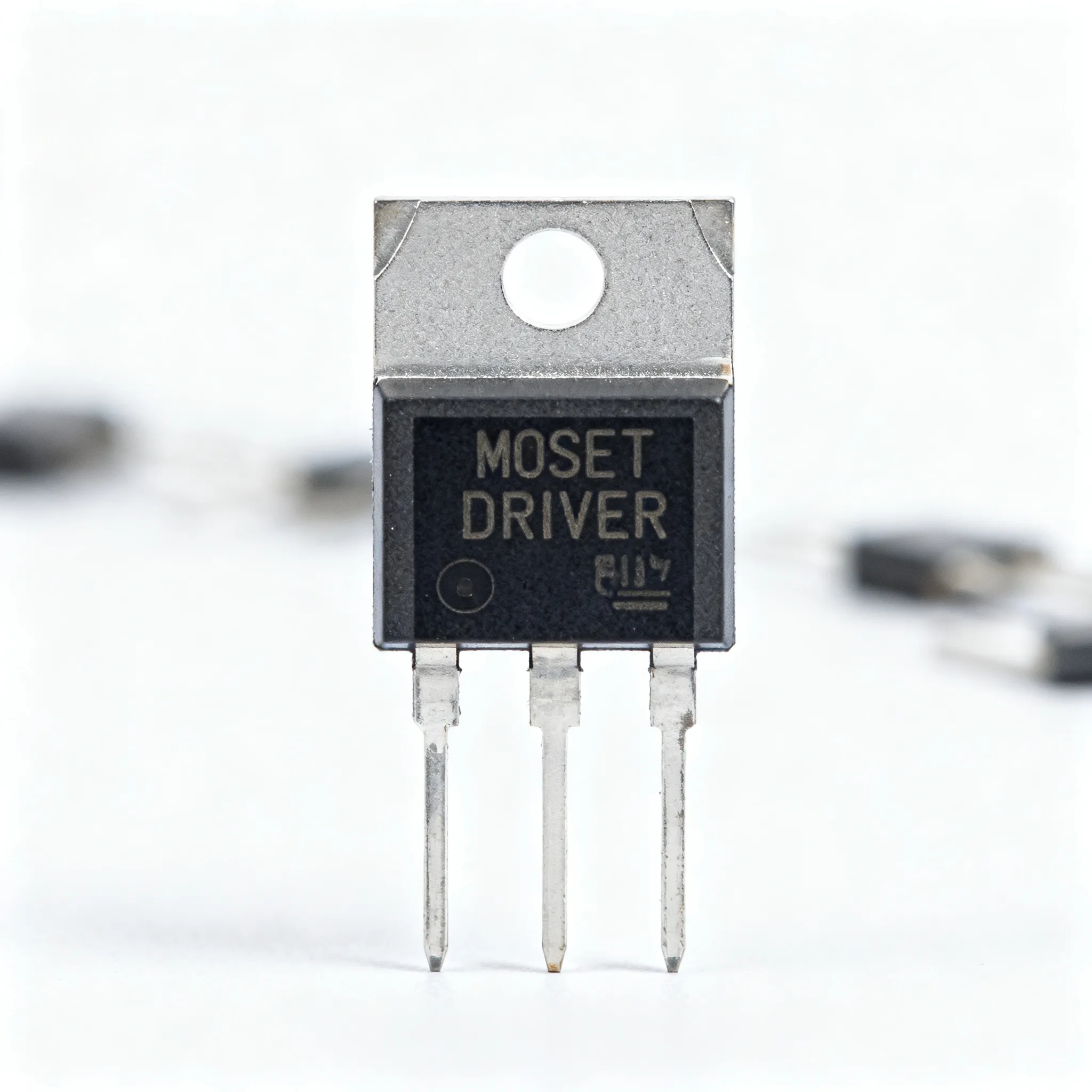
MOSFET drivers serve as critical interfaces between low-power control circuits and high-power MOSFETs. They are designed to provide the necessary gate drive current to switch the MOSFETs efficiently, minimizing switching losses and ensuring reliable operation. Key parameters to consider when selecting a MOSFET driver include gate drive voltage, peak output current, and propagation delay. Understanding these parameters is essential for engineers to design systems that meet performance and reliability standards. The driver must also be compatible with the system's voltage levels and capable of handling the thermal and mechanical stress inherent in high-power applications.
Detailed Specifications
| Parameter | Value | Units | Notes |
|---|---|---|---|
| Gate Drive Voltage | 4.5 - 18 | V | Typical range for logic-level MOSFETs |
| Peak Output Current | 6 | A | High current for fast switching |
| Input Threshold Voltage | 1.5 | V | Ensures compatibility with low-voltage logic |
| Propagation Delay | 50 | ns | Critical for high-frequency applications |
| Supply Current | 1.2 | mA | Low quiescent current for efficiency |
| Output Rise Time | 12 | ns | Fast rise time reduces switching losses |
| Output Fall Time | 10 | ns | Ensures quick turn-off of MOSFET |
| Operating Temperature Range | -40 to 125 | °C | Industrial grade temperature range |
| Package Type | SOIC-8 | Common package for easy handling | |
| ESD Protection | 2 | kV | Ensures robustness against electrostatic discharge |
| Parameter | Value | Units | Notes |
|---|---|---|---|
| Junction-to-Ambient Thermal Resistance | 50 | °C/W | Indicates thermal performance |
| Junction-to-Case Thermal Resistance | 15 | °C/W | Critical for heat dissipation |
| Maximum Junction Temperature | 150 | °C | Maximum allowable temperature |
| Package Weight | 0.5 | g | Important for lightweight designs |
| Lead Temperature (Soldering, 10s) | 260 | °C | Maximum temperature for soldering |
| Moisture Sensitivity Level | Level 1 | No special handling required | |
| Package Dimensions | 4.9 x 3.9 x 1.5 | mm | Compact size for space-constrained applications |
| Pin Count | 8 | Pins | Standard SOIC package |
| Application | Recommended Driver Model | Notes |
|---|---|---|
| High-Frequency Switching | MIC4422 | Low propagation delay, high current |
| Battery-Powered Devices | UCC27511 | Low power consumption |
| Automotive Systems | NCV51561 | Wide temperature range, robust design |
| Solar Inverters | IR2110 | High voltage capability |
| Motor Drives | MAX4420 | High current capacity, fast switching |
The above tables provide a comprehensive overview of the electrical, thermal, and application-specific specifications of MOSFET drivers. These specifications are crucial for ensuring compatibility and performance in various applications. For example, the gate drive voltage and peak output current are vital for determining the driver's ability to switch the MOSFETs effectively. Similarly, thermal resistance parameters are essential for assessing the driver's ability to dissipate heat, which is critical in power-intensive applications.
Design Considerations
When designing a system that incorporates a MOSFET driver, several critical factors must be considered. Firstly, the gate drive voltage must be compatible with the MOSFET's requirements. A mismatch can lead to incomplete switching or excessive power dissipation. Secondly, the peak output current should be sufficient to charge and discharge the MOSFET gate capacitance quickly, minimizing switching losses and electromagnetic interference (EMI).
Thermal management is another crucial aspect. The driver must have adequate thermal resistance to prevent overheating, which can degrade performance and reliability. Additionally, the package type and size must align with the design constraints, especially in compact or portable applications. The operating temperature range should also be considered, particularly in environments with extreme temperatures, such as automotive or industrial settings.
Another consideration is the driver's propagation delay, which affects the overall switching speed of the system. For high-frequency applications, a low propagation delay is essential to maintain efficiency and performance. Moreover, the driver must have robust protection features, such as ESD protection and short-circuit protection, to ensure longevity and reliability in harsh environments.
Step-by-Step Guide
- Determine the Application Requirements: Identify the specific requirements of your application, such as voltage levels, current capacity, and switching frequency. This will help narrow down the list of suitable MOSFET drivers.
- Review Electrical Specifications: Examine the electrical specifications, such as gate drive voltage, peak output current, and propagation delay, to ensure compatibility with your system's needs.
- Assess Thermal Management Needs: Consider the thermal and mechanical specifications, including thermal resistance and operating temperature range, to ensure the driver can handle the heat dissipation requirements.
- Evaluate Protection Features: Check for essential protection features like ESD protection, short-circuit protection, and over-temperature shutdown to enhance reliability.
- Verify Package Compatibility: Ensure that the package type and size fit within the design constraints of your application. Consider factors like pin count and package dimensions.
- Prototype and Test: Build a prototype to test the selected MOSFET driver in a real-world scenario. Monitor performance metrics such as switching speed, thermal behavior, and EMI.
- Iterate and Optimize: Based on testing results, make necessary adjustments to optimize performance. This may involve selecting a different driver model or adjusting circuit parameters.
- Finalize Design: Once the driver meets all performance and reliability criteria, finalize the design for production, ensuring compliance with industry standards and regulations.
Common Issues & Solutions
Designing with MOSFET drivers can present several challenges. Here are some common issues and their solutions:
- Insufficient Gate Drive Voltage: This can lead to incomplete MOSFET switching. Ensure the driver provides adequate voltage range for the MOSFET being used.
- Excessive Heat Generation: If the driver heats up excessively, consider improving thermal management through better heatsinking or selecting a driver with lower thermal resistance.
- Propagation Delay Mismatch: This can cause timing issues in high-frequency applications. Select a driver with lower propagation delay and test thoroughly in the application.
- EMI Concerns: Fast switching speeds can generate EMI. Use proper layout techniques and filtering to minimize interference.
- ESD Damage: Protect against electrostatic discharge by using drivers with built-in ESD protection and following proper handling procedures.
Applications & Use Cases
MOSFET drivers are used in a wide range of applications. In solar inverters, they facilitate efficient energy conversion by driving high-voltage MOSFETs. In automotive systems, drivers like the NCV51561 are chosen for their robust design and wide temperature range, making them ideal for harsh environments. Battery-powered devices benefit from drivers like the UCC27511, which offer low power consumption and efficiency. High-frequency switching applications, such as in telecommunications, require drivers like the MIC4422 for their low propagation delay and high current capability.
Selection & Sourcing Guide
When selecting and sourcing MOSFET drivers, it's essential to consider both technical specifications and availability. Utilize resources like IC Online to find authorized distributors with competitive pricing and fast delivery options. Ensure the selected driver is in stock and verify the datasheet for detailed specifications to confirm compatibility with your application.
FAQ
- What is a MOSFET driver? A MOSFET driver is a circuit used to drive the gate of a MOSFET, enabling efficient switching by providing sufficient gate drive current and voltage.
- Why is gate drive voltage important? Gate drive voltage determines the ability of the driver to fully turn on the MOSFET, affecting switching efficiency and power loss.
- How do I choose the right driver for high-frequency applications? Look for drivers with low propagation delay and high peak output current to ensure fast and efficient switching.
- What thermal considerations are important for MOSFET drivers? Assess thermal resistance and ensure adequate heat dissipation to prevent overheating and ensure reliability.
- How can I reduce EMI in my design? Use proper layout techniques, shielding, and filtering to minimize electromagnetic interference.
- What protection features should I look for in a MOSFET driver? Essential features include ESD protection, short-circuit protection, and over-temperature shutdown.
- Can I use any MOSFET driver for automotive applications? No, select drivers with wide temperature ranges and robust designs suitable for automotive environments.
- How do I verify compatibility with my MOSFET? Check the datasheet for gate drive voltage, peak output current, and other specifications to ensure compatibility.
- What is the role of propagation delay in a MOSFET driver? Propagation delay affects the timing of switching events, critical for high-speed applications.
- Where can I find reliable MOSFET drivers? Use authorized distributors like IC Online to source reliable components.
Conclusion
In conclusion, selecting the right MOSFET driver is a critical step in designing efficient and reliable power electronic systems. By understanding and analyzing the detailed specifications, engineers can ensure that the chosen driver meets the specific needs of their applications. Whether for high-frequency switching, automotive systems, or renewable energy solutions, the right MOSFET driver enhances performance and contributes to the overall success of the project.