

DRV8332DKDR Obsolescence Risk Checklist: Verify Lifecycle and Request Allocation via RFQ
DRV8332DKDR lifecycle and obsolescence risk checklist. What to verify before redesign or last-time-buy — without assuming drop-in replacements.
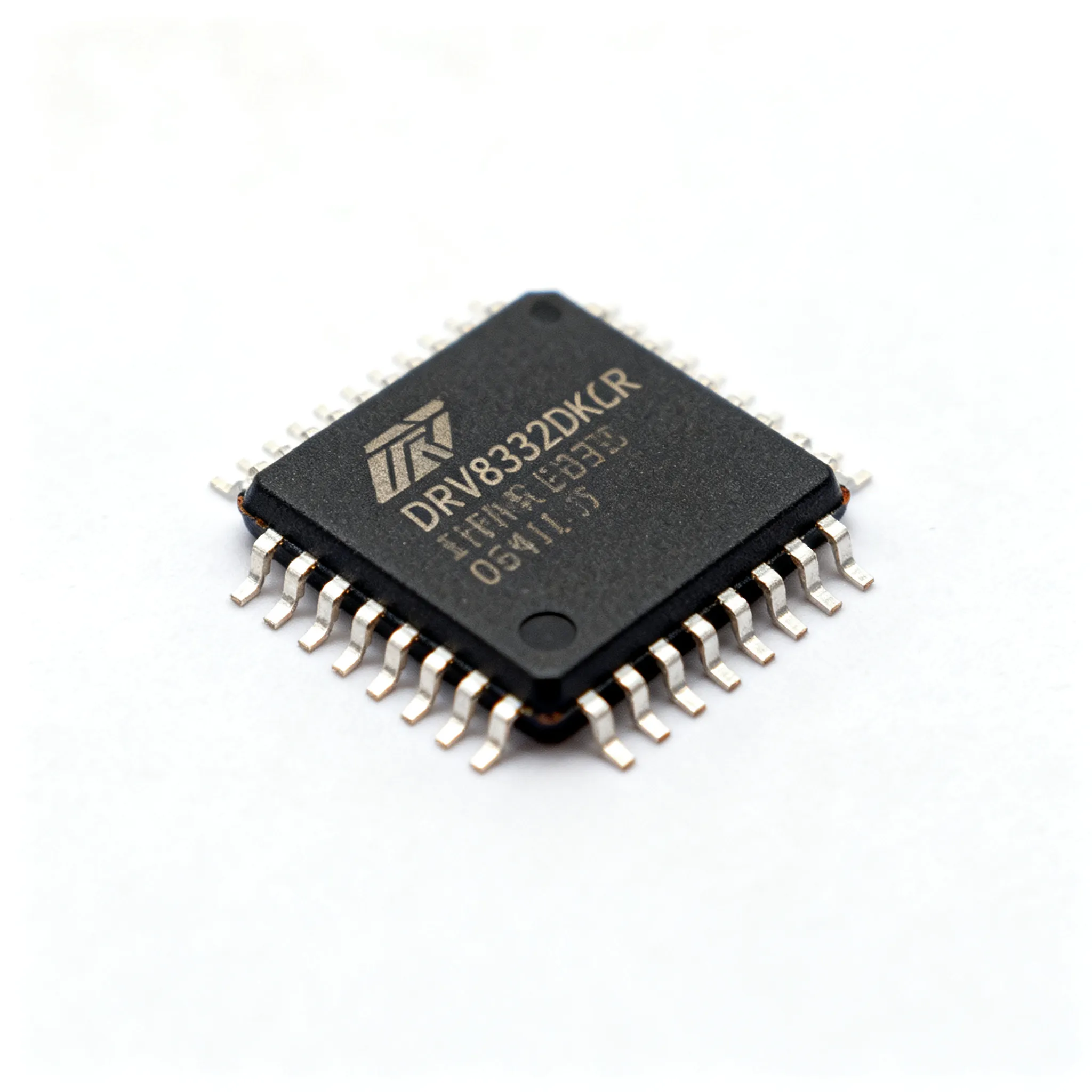
When a Motor Driver’s Lifecycle Flips from LIFEBUY to Obsolete
You’ve qualified a motor-control design around the DRV8332DKDR—a 70-V, 13-A peak three-phase PWM motor driver with integrated FETs—and now your purchasing team comes back with a status you didn’t want to see. Distributor flags are changing from “orderable” to “obsolete,” and your production schedule has no room for a last-minute architecture shift. The DigiKey product page now explicitly states “Obsolete and no longer manufactured” for the DRV8332DKDR, while Octopart’s aggregated lifecycle field was updated to LIFEBUY only a year ago. That fast transition from LIFEBUY to full obsolescence catches many industrial and automation teams off guard.
Making the situation more treacherous, certain PCB assembly platforms continue to display parametric data and even suggest inventory. The JLCPCB part detail page for the DRV8332DKDR still lists the 8-A continuous rating, HSSOP-36 package, and ROHS compliance—creating a dangerous false sense of availability. Buyers who rely on such cached listings risk building BOMs on thin air. This section is the wake-up call: a long-qualified motor driver can vanish from the authorized supply chain faster than a typical redesign cycle, leaving you scrambling for allocation or a proven alternative.
| Driver | Mechanism | Procurement Impact |
|---|---|---|
| LIFEBUY-to-Obsolete transition gap | TI moves a part from LIFEBUY to OBSOLETE with a short notice window; aggregators may lag by months. | You risk shipping product with a part that cannot be re ordered, forcing an emergency lot buy with no price protection. |
| Aggregator data latency | Platforms like Octopart aggregate distributor feeds that are not synchronized with the manufacturer’s PCN system. | Engineers see “LIFEBUY” or “ACTIVE” and continue to approve BOMs, unaware the part is already obsolete at the source. |
| PCB assembly platform cache | Libraries such as JLCPCB’s parts database retain parametric records long after the part disappears from authorized channels. | False sense of supply—production planning relies on a part number that cannot be procured through legitimate channels. |
| No official drop-in migration guide | TI has not published a single “replace with X” document for the DRV8332DKDR. | Engineering must manually compare electrical, thermal, and package parameters across multiple datasheets, delaying the mitigation timeline. |
| Integrated FET architecture lock-in | The DRV8332DKDR embeds all gate drive and power FETs in a single HSSOP package, meaning alternative topologies (gate driver + external FETs) require board re-spin. | Rapid migration is impossible; either you find finite supply or you commit to a multi-month redesign. |
Each of these drivers compounds the core problem: the DRV8332DKDR is no longer merely “recommended for existing designs”—it has become a procurement time bomb. The rest of this article breaks down exactly what lifecycle states mean, how to evaluate alternatives without betting on a perfect drop-in, and what an allocation-driven RFQ checklist should look like when a motor driver has moved past LIFEBUY.
Decoding TI’s Lifecycle Statuses and the DRV8332DKDR Trail
Texas Instruments, like most major semiconductor manufacturers, uses a tiered product lifecycle communication system. Understanding these statuses is not just an academic exercise; it determines whether you can still place production orders, whether you should trigger a last-time-buy, or whether you must immediately freeze the BOM and start redesign. Drawing on the Rockwell Automation lifecycle framework as a conceptual model—which similarly maps product states from active through discontinued—we can trace the trajectory of the DRV8332DKDR from a volume device to a line item that is gone.
The original 28-page DRV8332DKDR datasheet describes a three-phase PWM motor driver rated for 8 A continuous, 13 A peak, with an integrated bootstrap diode and overcurrent protection. When it was in ACTIVE status, you could order through TI’s authorized distribution network with standard lead times and full traceability. Once a product enters LIFEBUY, TI issues a Product Change Notification (PCN) stating the last date to place orders and the final shipment window. During this period, the part is still manufactured but only for non-cancelable, non-returnable orders. After the LIFEBUY window closes, TI moves the part to OBSOLETE, at which point no new silicon is produced and authorized distribution stock is finite. The DRV8332DKDR has now crossed that line: DigiKey marks it as obsolete, while Octopart’s aggregated life-cycle field, last updated when the part was still in LIFEBUY, persists as a historical artifact.
Procurement and engineering teams often misinterpret the aggregator snapshot. Just because Octopart still lists “LIFEBUY” does not mean that authorized distribution can secure new units. You must verify directly through a TI authorized distributor’s internal system or via TI’s product folder. The rule is simple: if a single authorized source declares OBSOLETE, treat the part as allocation-only, subject to strict quantity limits and often with a premium attached to any remaining factory-packaged lots.
Key procurement vocabulary:
- ACTIVE: In production; standard ordering and lead-time rules apply.
- LIFEBUY: Last-time-buy window open; non-cancelable orders only; PCN defines final order date.
- OBSOLETE: No further manufacturing; supply limited to distributor hold stock or surplus channels.
The DRV8332DKDR trail from active to obsolete underscores the importance of subscribing to PCN alerts. Without that practice, you are relying on third-party aggregator timestamps—a gamble that can leave a high-volume motor drive BOM unprotected.
Evaluating DRV8332DKDR Alternatives Without Gambling on a Drop-in
Once a part reaches the OBSOLETE state, the natural instinct is to search for a pin-compatible replacement. For the DRV8332DKDR, that search can lead down a dangerous path because no single TI device is an exact form-fit-function substitute across all parameters. The DRV8332DKD appears at first glance to be an identical twin—same silicon, same 70-V rating, same 8-A continuous current. However, the DKD variant is the tube-packaged version (HSSOP-36 “DKD” suffix versus the reel-packed “DKDR” suffix), and its availability is also fading. Some distributors may still hold small quantities, but you cannot assume board-level compatibility: the thermal pad footprint may introduce soldering profile differences, and the lack of tape-and-reel packaging forces a change in your pick-and-place process. As a general principle, treat the DKD as a finite bridge, not a long-term replacement.
The DRV8308RHAR is often mentioned in the same conversation, but it represents a different architectural choice. While the DRV8332DKDR is a fully integrated motor driver with on-chip power MOSFETs, the DRV8308RHAR is a three-phase gate driver with SPI control designed for trapezoidal or sinusoidal BLDC commutation. It requires external N-channel MOSFETs, meaning your board must accommodate additional power-stage components, adjust gate-drive routing, and re-evaluate thermal management. The DRV8308RHAR can be an effective solution for a ground-up redesign, but calling it a “replacement” without qualification testing invites reliability failures.
| Option | Effect | Notes / Verification Required |
|---|---|---|
| Secure residual DRV8332DKD stock | Buys time—identical electrical specs, same HSSOP-36 outline. | Check tube vs. reel compatibility; verify date codes and request CoC; use only if board soldering profile tolerates tray variation. |
| Redesign around DRV8308RHAR | Enables modern gate-driver architecture, but requires external FETs and layout changes. | Compare datasheets: on-resistance, dead-time settings, SPI register map; factor in re-qualification cost for EMI and thermal. |
| Adopt a newer TI integrated motor driver (e.g., DRV8316 or DRV8323 families) | Future-proofs the design with active lifecycle and better efficiency. | Package differences (QFN vs. HSSOP) and voltage ratings may not be 1:1; evaluate full motor-drive system including current sensing and protection features. |
| Last-time-buy (LTB) via authorized surplus channels | Secures enough DRV8332DKDR inventory to cover remaining production until redesign is complete. | Strict traceability to authorized TI distribution is non-negotiable; avoid open-market parts without X-ray or decapsulation testing. |
Any alternative path requires rigorous evaluation. Consulting the DRV8332DKD datasheet side-by-side with the DRV8332DKDR datasheet reveals that electrical specs are identical, but note that the DKD’s thermal resistance (junction-to-ambient) may exhibit subtle differences due to the leadframe orientation in the tube. Similarly, the original Texas Instruments material highlights the 80-mΩ RDS(on) per FET and the overcurrent protection threshold, data points you will need when screening the DRV8308RHAR’s gate-drive capability with external MOSFETs. Never assume a “drop-in” based on functional similarity alone; always verify package, pinout, firmware initialization sequences, and thermal derating curves against your actual operating conditions.
A Procurement Checklist for RFQ Allocation When a Part is Already Obsolete
Obsolete status transforms the standard RFQ into an allocation request. Rather than asking, “What is your price and lead time?” you are negotiating a reservation of the last known factory or distributor-held lots. The DRV8332DKDR cannot be ordered through TI’s standard channel; any remaining pieces exist in far corners of the supply network. This section provides a step-by-step verification flow that combines engineering sanity checks with procurement rigor.
Start by cross-referencing lifecycle data on multiple independent platforms, not just one aggregator. Check Octopart’s aggregated view, but then validate directly with a TI authorized distributor. If the distributor’s internal system shows zero stock and no future shipments, the part is effectively gone via authorized channels. That does not mean you have no options, but it does mean every subsequent offer must be scrutinized for traceability and authenticity.
Tip: A listing on a PCB assembly platform like JLCPCB does not guarantee actual inventory. Such platforms often pull data from public libraries and may not remove entries after a part is discontinued. Always request a current inventory screenshot with date code and lot code before moving forward.
When you locate a source that claims to have stock, shift your procurement language to allocation terms. The RFQ should explicitly ask for:
- A committed allocation quantity that the supplier will reserve for your purchase order.
- A guaranteed delivery window, not an estimate.
- Disclosure of the full date code range and lot traces—never accept “mixed lots” without a detailed breakdown.
- A certificate of conformance (CoC) tracing back to Texas Instruments or an authorized TI distributor.
- High-resolution photos of the physical parts, including the top-side marking and the HSSOP-36 thermal pad orientation, to compare against the datasheet.
When a supplier cannot or will not provide a traceable CoC, treat the offer as high-risk. The disappearance of the DRV8332DKDR from authorized channels naturally pushes demand into the gray market, where recycled, remarked, or substandard components can enter the supply chain. A rigorous allocation checklist is your first line of defense against building a product with unknown silicon.
| Action | When to Use | Trade-off / Risk |
|---|---|---|
| Verify lifecycle across ≥3 independent sources | Whenever aggregator status shows LIFEBUY, ACTIVE, or OBSOLETE but supply seems available. | Time-consuming; aggregator lags can create false confidence, leading to downstream BOM errors. |
| Request allocation with lot-specific traceability | Upon identifying a supplier claiming remaining stock. | May require minimum order quantity commitment; supplier may not hold allocation without a non-cancelable PO. |
| Demand a manufacturer-origin certificate of conformance | Before issuing payment for any quantity above sample level. | Gray market brokers rarely provide original CoC; asking this question reveals source legitimacy instantly. |
| Perform physical sample inspection before production ramp | When first engaging a new source, even if documentation appears clean. | Adds 5-10 business days; but avoids a whole reel of counterfeits that could damage reputation and downstream reliability. |
| Negotiate allocation-backed delivery window and penalties | For any quantity critical to a production milestone. | Some surplus sellers operate on “as-is, where-is” terms; late deliveries may not have contractual recourse, so pre-negotiate late-shipment clauses. |
This checklist is not a theoretical exercise; it is a direct response to the DRV8332DKDR obsolescence scenario. When a three-phase motor driver that you’ve used in dozens of motor control cards suddenly disappears, your only lever is rigorous allocation discipline. Download the last-known datasheet revision from All About Circuits to ensure your inspection benchmarks match the manufacturer’s final published specifications.
DRV8332DKDR Obsolescence & Allocation: Questions Engineers and Buyers Ask
Q: Why does Octopart still show a LIFEBUY status for the DRV8332DKDR when DigiKey says it is obsolete?
A: Octopart aggregates distributor feeds and manufacturer lifecycle APIs, but these feeds are not always updated simultaneously. The last update for the DRV8332DKDR was approximately one year ago, reflecting the part’s entry into LIFEBUY. Texas Instruments has since moved the part to OBSOLETE, and DigiKey’s live catalog reflects that change. Always cross-check directly with the manufacturer’s Product Change Notification system or an authorized distributor’s internal status, rather than relying on a single aggregator timestamp.
Q: Is the DRV8332DKD a pin-compatible evaluation candidate (verify before adopting) for the DRV8332DKDR?
A: Electrically, the two devices share identical ratings and die. The DKD variant is packaged in tubes, while the DKDR suffix indicates tape-and-reel. Both use the HSSOP-36 package with the same pinout, but subtle differences in leadframe finish and thermal pad co-planarity can affect reflow soldering when switching from reel to tube formats. Additionally, the DKD variant is itself nearing obsolescence. Verify board-level soldering profiles and confirm that your EMS partner accepts tube-packaged parts before releasing the DKD into production. Do not assume a candidate for evaluation (verify pinout and firmware) without physical verification.
Q: What does ‘allocation’ mean in an RFQ when a part is obsolete?
A: Allocation is a supplier’s commitment to reserve a specific quantity of remaining stock for your purchase order, often with a defined delivery window and unique lot or date code traceability. It is not a standard purchase order with flexible scheduling; it is a binding reservation that protects your production while you implement a redesign or execute a last-time-buy. In exchange, you typically commit to a non-cancelable order. For the DRV8332DKDR, allocation from authorized sources is the only safe path to secure genuine parts.
Q: Can I trust a DRV8332DKDR listing on a PCB assembly platform that still shows inventory?
A: Usually not. Platforms like JLCPCB maintain component libraries that may retain part entries long after the part is discontinued. The displayed parameters are cached and do not reflect live stock. If you see such a listing, contact the seller directly, request high-resolution photos of the date code and lot markings, and demand a certificate of conformance tracing back to TI. If the seller cannot provide that documentation, assume the listing is either a placeholder or—worse—a path to counterfeit or recycled components.
Q: How should I adjust my BOM risk assessment when the DRV8332DKDR goes obsolete mid-project?
A: Immediately flag the DRV8332DKDR as “Not Recommended for New Design” in your PLM system. Quantify the number of boards you must build for current commitments and secure allocation for that quantity plus a buffer. While procurement works to lock in the allocation, engineering should begin evaluating a modern motor-driver IC—such as the DRV8308RHAR or a device from the DRV8323 family—and plan for re-qualification testing. Coordinate procurement and engineering timelines to avoid a dead-end BOM where production continues without an approved path forward.
Q: Are there any official TI migration guides for the DRV8332DKDR?
A: Texas Instruments often publishes PCN documents that suggest replacement paths, but for the DRV8332DKDR no single official migration guide has been broadly distributed. While the DRV8332DKD is the closest variant, it is subject to the same lifecycle pressures. The DRV8308RHAR offers a different architecture and requires manual comparison of gate-drive timing, dead-time insertion, and SPI registers. Engineering teams should combine the original DRV8332DKDR datasheet with the alternative device datasheets to build their own migration matrix, rather than waiting for an official drop-in recommendation that may never arrive.
References & Further Reading
- DigiKey DRV8332DKDR product page – Obsolete status
- Octopart DRV8332DKDR aggregated lifecycle data
- JLCPCB DRV8332DKDR parametric listing
- Rockwell Automation product lifecycle reference model
- DRV8332DKDR original TI datasheet (28 pages)
- DRV8332DKDR vs. DRV8332DKD comparison
- DRV8308RHAR vs. DRV8332DKDR specification comparison
Related Articles
 Blog
Where Starter Solenoid Relay Diagrams Appear in Common Electronics
A starter solenoid relay diagram appears in automotive, industrial, appliance, and DIY electronics to map wiring and troubleshoot no-crank issues.
 Blog
How OEM Buyers Can Navigate the Semiconductor Shortage with Smarter Sourcing Strategies
Practical guide for buyers and engineers: How OEM Buyers Can Navigate the Semiconductor Shortage with Smarter Sourcing Strategies. Sourcing, risk, and selection notes.
 Blog
Fixing EVAP Leaks by Checking Electronic Hardware
Learn how to fix EVAP leak by checking electronic hardware: scan codes, test purge and vent valves, inspect wiring, and confirm with a smoke test.
 Blog
The Complete Potentiometer Wiring Guide for Engineers
Complete potentiometer wiring guide for engineers: learn voltage divider and variable resistor modes, pin identification, soldering tips, and troubleshooting.
 Blog
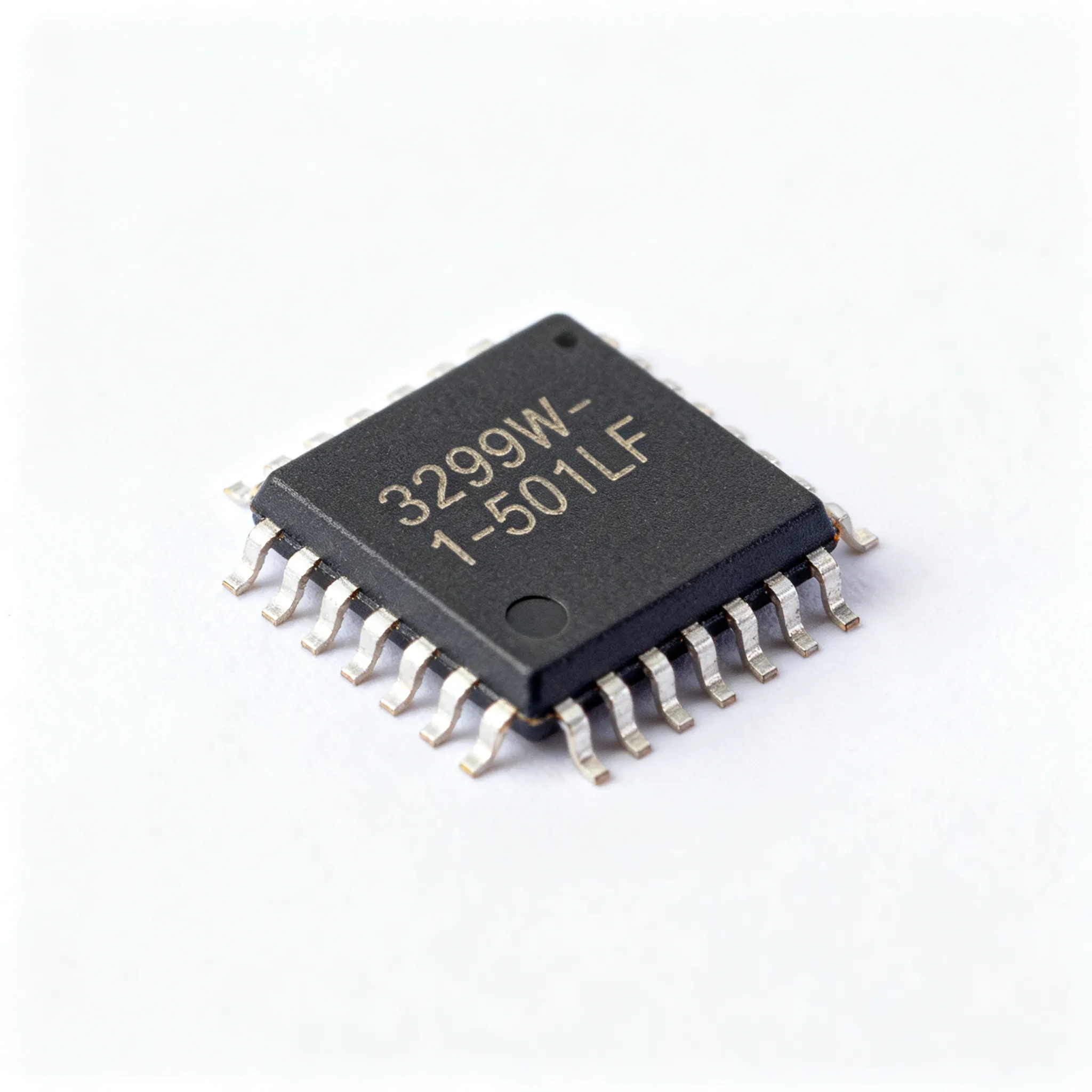
3299W-1-501LF: Package, Pinout, and How Buyers Verify Incoming Lots
3299W-1-501LF pinout, package, and datasheet limits buyers actually check — plus lot inspection notes. Request a quote on IC-Online; no invented stock claims.
 Blog
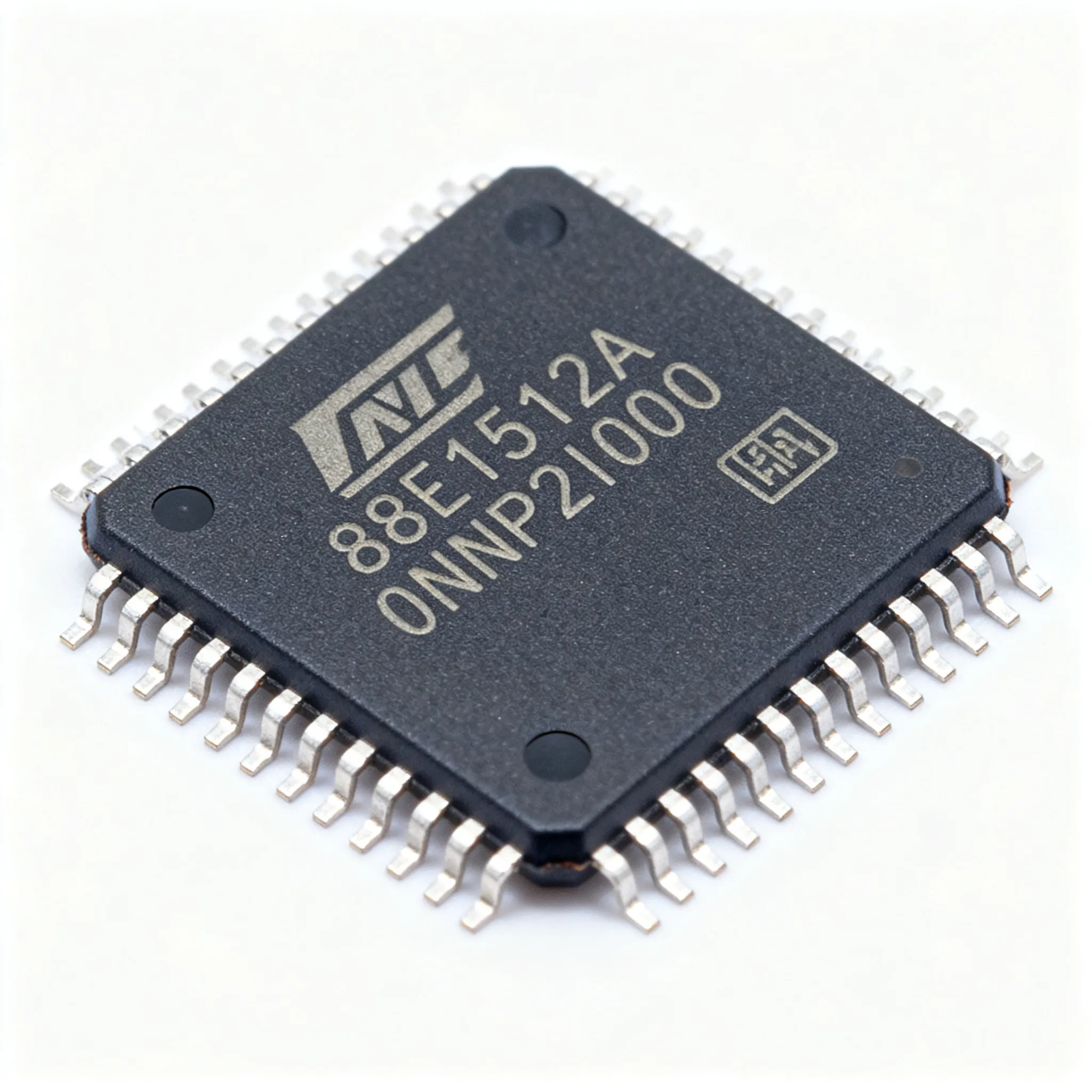
88E1512A0NNP2I000 Supply Risk Assessment: What to Ask Before You Buy
What to verify on 88E1512A0NNP2I000 before you buy: date code, CoC, test evidence, and allocation-backed lead time. Ask these RFQ questions on IC-Online.