Interactive Glow Stick Electronics: LED Drivers, MCUs, and Cost-Effective Sourcing
Interactive Glow Stick Electronics: LED Drivers, MCUs, and Cost-Effective Sourcing
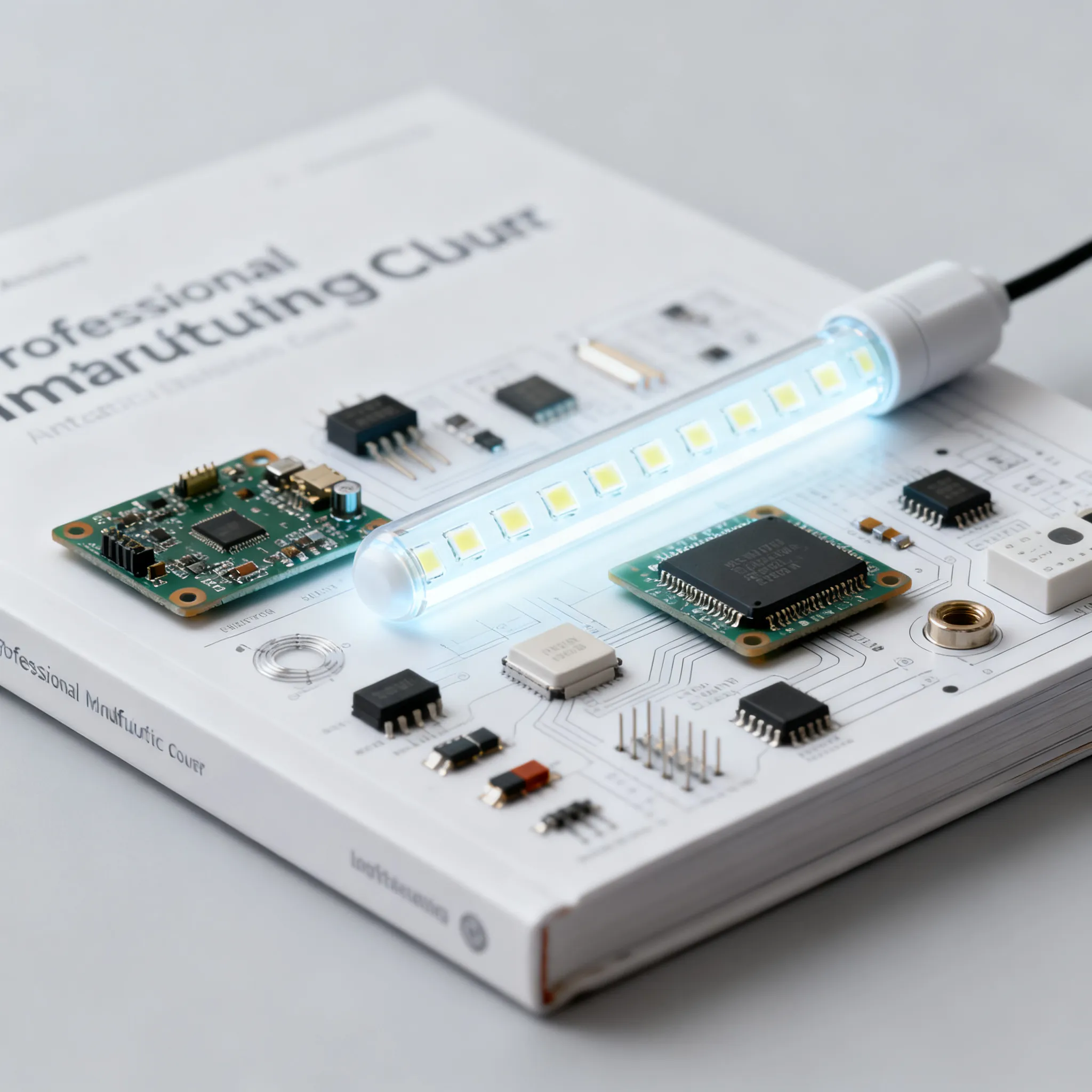
The Supply Chain Squeeze: Why MCU Lead Times and LED Driver Shortages Matter for Glow Sticks
You might not think a glow stick—even a smart, interactive one—would be exposed to the same supply chain turbulence as a vehicle instrument cluster. But the underlying bill of materials (BOM) shares a core dependency: microcontrollers (MCUs) and LED drivers. When Stellantis had to recall 65,348 Ram trucks over a software error that could blank the instrument panel display, it was a stark reminder that even mature embedded display technology can fail at scale. In the glow stick world, a display glitch isn’t a safety recall—it’s a dead product that kills brand reputation and triggers a line-down scramble.
Those same MCUs and smart driver ICs at the heart of automotive clusters are now powering interactive glow sticks for concerts, festivals, and wearable safety lighting. The result? Your sourcing decisions are competing with far larger, established markets. Average MCU lead times rose to 13–14 weeks in August 2025, driven by surging demand in EVs, AI, and industrial automation. The trouble is concentrated on mature nodes (40 nm and above) where roughly 70% of automotive and industrial MCUs are manufactured—and where many low-cost, battery-friendly glow stick MCUs still live. Suppliers are not investing heavily in new 90 nm or 180 nm capacity because the ROI doesn’t justify it. That means your sub-$0.50 ARM Cortex-M0+ could be stuck in allocation for months.
The 2026 outlook remains cautious, with lead times for high-demand analog ICs, power discretes, and microcontrollers expected to stay elevated. LED drivers are particularly vulnerable because they often sit on similar legacy process nodes and share fab capacity with power management ICs. For an interactive glow stick that needs one MCU and at least one LED driver (or multiple channels), the supply chain risk compounds. A single missing component can delay the entire assembly. Understanding these dynamics before you lock in a design is no longer optional—it’s the difference between hitting a festival season launch and watching your shelf space go to a competitor.
Inside Interactive Glow Sticks: How MCUs and LED Drivers Create Dynamic Light Effects
An interactive glow stick is far more than a chemical light stick with a battery. It’s a tiny embedded system where a microcontroller orchestrates color, brightness, and motion-responsive patterns, while an LED driver translates digital commands into precise analog drive signals. The LED itself is a current-driven device with a narrow PN-junction voltage window. As Utmel’s fundamental guide explains, a slight deviation in voltage or current can cause the LED to dim, shift color, or fail prematurely. The LED driver’s job is to regulate that current regardless of battery voltage sag, temperature, or LED forward voltage binning.
The MCU generates high-resolution pulse-width modulation (PWM) waveforms that the driver converts into analog current. Microchip’s LED driver portfolio covers both simple linear drivers and more complex inductive boost designs, but for a glow stick, the choice often comes down to a few critical parameters. Simultaneously, interfacing techniques such as current-limiting resistors, transistor-based constant-current sinks, and register-controlled dimming must be weighed against color accuracy, power efficiency, and PCB real estate. The MCU’s integrated PWM peripherals can drive simple RGB LEDs directly, but once you add white channels, addressable strips, or need 16-bit smooth fades, a dedicated driver becomes essential.
The table below lays out the key parameters that define the visual performance and power budget of a battery-powered interactive glow stick. These are the numbers you’ll evaluate across datasheets, regardless of whether you choose a discrete driver IC or an MCU with built-in high-current outputs.
| Parameter | Typical Range for Glow Stick | Unit / Notes |
|---|---|---|
| Grayscale resolution | 12–16 bit | 12-bit minimal for visible color mixing; 16-bit required for smooth low-brightness fades |
| LED current per channel | 5–30 mA | For small indicator-class LEDs; high-brightness RGBW may need up to 60 mA |
| Number of channels | 3–4 (RGB/RGBW) | Addressable protocols (WS2812) reduce driver channel count; MCU handles timing |
| Dimming method | PWM, analog, hybrid | PWM dominant for color mixing; analog dimming avoids audible noise at low frequencies |
| Supply voltage range | 1.8–5.5 V | Single Li-ion cell (3.0–4.2 V) or 2× AAA alkaline (1.8–3.0 V) typical |
| Quiescent current | <5 µA (standby) | Critical for battery life when glow stick is off but awaiting button press |
| Interface to MCU | I²C, SPI, or direct PWM | I²C common for configuration; PWM for direct dimming control |
| Package size | 2×2 mm to 4×4 mm QFN/SOT | Smaller packages enable slimmer stick form factors |
Tip: Do not assume a 12-bit PWM output from your MCU delivers 12-bit visual smoothness. The LED driver’s internal clock, output slew rate, and any nonlinearity in the LED’s luminous flux vs. current curve will erode perceived resolution. Always test low-duty-cycle fades on real hardware early in prototyping.
Comparing LED Driver Topologies for Portable Interactive Lighting
Choosing the right driver architecture for a glow stick is a balancing act between BOM cost, board space, thermal performance, and color fidelity. Linear drivers are simple and cheap but burn excess voltage as heat, which can be a dealbreaker in a sealed plastic tube with no airflow. Switching (inductive) drivers deliver high efficiency, especially when boosting a low battery voltage to a higher LED string voltage, but they add inductor cost, EMI, and layout complexity. Then there’s the question of whether to integrate the driver function into the MCU or use a standalone IC. For fine-pitch visual effects and smooth gradients, 16-bit grayscale has become the standard, and not all MCU-integrated PWM blocks can achieve that without help from external current-control circuitry.
On the miniaturization front, automotive-grade ISELED solutions pack a complete LED driver, communication interface, and proximity sensing into a 5×5 mm package. While overkill for a disposable glow stick, the technology shows what’s possible when you need maximum function in minimum space. For consumer products, Microchip’s backlighting and general-purpose driver families offer a middle ground, with options ranging from 4-channel linear sinks to I²C-controlled RGBW drivers with on-chip EEPROM for calibration. The comparison table below outlines four representative approaches you’ll encounter when designing a battery-powered interactive glow stick, highlighting where each shines and where it falls short.
| Comparison Metric | Linear Current Sink (e.g., TLC59108) | Inductive Boost Driver (e.g., MP3302) | MCU-Integrated PWM (e.g., STM32G0) | Smart RGBW Driver (e.g., IS31FL3194) |
|---|---|---|---|---|
| Efficiency at Li-ion voltage | 60–75% (depends on Vf match) | 85–92% | Depends on external resistor losses | 80–90% (charge pump or bypass) |
| BOM cost (excluding MCU) | Low; few passives | Medium; inductor + diode | Lowest; just resistors | Medium; integrated, few external parts |
| Grayscale depth | 12–16 bit (PWM) | Analog dimming via VFB; limited range | Up to 16-bit, but at low duty cycles may flicker | 8–14 bit, often with gamma correction |
| Channel count | 8–16 channels | 1 string (boost); multiple strings with MUX | MCU-limited (usually 4–6 PWM pins) | 4 channels (RGBW) typically |
| Package size | TSSOP/QFN, 4×5 mm | SOT-23-5/6, 2.9×1.6 mm | MCU package (QFN/UFQFPN) | QFN 2×2 mm to 3×3 mm |
| Thermal risk in sealed tube | High; wasted power = heat | Low; high efficiency | Medium; depends on LED current and resistor Pd | Low–medium; good efficiency |
| Diagnostics | Open/short LED detection | None typically | None | Open/short detection, temp warning |
For a glow stick that must run for 8–12 hours on a single coin cell or AAA battery, the efficiency advantage of a switching driver can be decisive. But if the product is a disposable, low-cost give-away, the MCU-integrated PWM approach with a few resistors might be the only way to meet a sub-$1.00 BOM target. Key takeaway: The driver topology directly dictates the thermal limits of the enclosure. A linear driver dropping 2 V at 20 mA per channel for 4 channels generates 0.16 W of heat, which in a sealed plastic tube can raise the internal temperature 15–20°C above ambient, potentially degrading battery life and LED color stability.
Sourcing Smart: How to Avoid Lead-Time Traps and Control BOM Cost
Procurement for interactive glow sticks often starts with an engineer’s preferred MCU and a specified driver, but the real job is ensuring those parts actually arrive when you need them. The mature-node capacity crunch means that even high-volume, seemingly mundane parts can disappear from the market overnight. The first rule: align with authorized distributors for both MCUs and LED drivers. Avoid the spot market for production BOMs unless you have a fully vetted second source and in-house inspection capability. USB stick LED buying guides may seem far removed from component sourcing, but they reinforce a fundamental truth: verify real-world specs against datasheet claims before committing to a production run. The same applies to your LED driver—test its actual current accuracy and thermal behavior in your prototype enclosure.
To build a resilient supply chain, follow these actionable steps:
- Lock in a pin-compatible backup MCU early. If you’re using an STM32G0, qualify an equivalent from NXP’s LPC800 series or a Microchip AVR-DB family. Ensure the firmware can be recompiled with minimal changes, and keep the hardware abstraction layer (HAL) clean.
- Monitor mature-node fab capacity signals. When 180 nm or 90 nm fabs report high utilization, lead times for popular MCUs and simple LED drivers can spike. Use distributor dashboards and data from lead-time tracking services to forecast your orders.
- Consider pre-programmed MCUs from distribution. Many distributors can program firmware directly into an MCU before shipping, which can save weeks of third-party programming if your regular source is constrained. Ensure the firmware image is rigorously tested across all variant lots.
- Evaluate alternative LED driver topologies that share pinouts. If a Linear Technology driver is on allocation, a functionally similar part from Diodes Incorporated or Onsemi with a compatible footprint might be a drop-in. Verify electrical specs, especially quiescent current and dimming linearity.
- Check RoHS compliance and material content proactively. RoHS-compliant driver lists help you filter parts, but also verify that the specific package variant you’re ordering is in compliance—some older packages may still contain lead finishes.
On the design side, Microchip’s intelligent lighting reference designs give you firmware-ready hardware that can significantly accelerate development. They often include example code for color mixing, battery management, and wireless control, which can be adapted to a glow stick form factor. Use these as a baseline, but don’t assume the reference design’s BOM is optimized for cost. You’ll likely need to substitute a cheaper inductor, a smaller MCU, or eliminate the wireless module to hit your target.
The table below summarizes the sourcing lead-time buffers you should plan for in 2026, based on current trends and allocation patterns. These are conservative, real-world numbers that reflect the reality of mature-node shortages.
| Component Category | Typical Lead Time (2026 estimate) | Recommended Buffer | Risk Factor |
|---|---|---|---|
| Low-cost MCU (Cortex-M0+, 40 nm+ node) | 13–18 weeks | 16–20 weeks | High; capacity constrained by automotive and industrial demand |
| LED driver (linear, 4–16 channel) | 10–14 weeks | 12–16 weeks | Medium; can spike if fab space is reallocated |
| LED driver (switching, boost) | 12–16 weeks | 14–18 weeks | Medium; inductor and discrete components may add parallel constraints |
| Addressable LEDs (WS2812B-compatible) | 6–10 weeks | 8–12 weeks | Low–medium; but custom color bins may extend lead times |
| Pre-programmed MCU | Add 2–4 weeks to base MCU lead time | Plan accordingly | Depends on programming house capacity |
Note: Always confirm the quoted lead time with your supplier at the time of order, and include a 2–4 week buffer for customs, in-circuit testing, and any rework. The numbers above are averages; a specific distributor may have stock while another is on allocation, so maintain multiple supplier relationships.
Interactive Glow Stick Electronics: Your Toughest Sourcing Questions Answered
Senior engineers and commodity managers face a unique set of challenges when the goal is a product that’s both visually compelling and absurdly cost-sensitive. The following six questions capture the real-world trade-offs that shape design and purchasing decisions for interactive glow sticks. The answers are based on field experience with high-volume consumer electronics programs where every penny counts and reliability is non-negotiable.
Q: Which MCU families offer the best balance of cost, peripheral set, and power for a battery-powered glow stick?
Look for low-power ARM Cortex-M0+ or RISC-V MCUs with integrated PWM generators capable of at least 12-bit resolution, at least 32 KB flash, and a wide supply voltage range (1.8–5.5 V). Families like STM32G0, Microchip AVR-DB, and NXP LPC800 are common starting points. The STM32G0, for example, offers multiple 16-bit timers, a low-power UART for bootloading, and a 12-bit ADC for battery monitoring—all in a 3×3 mm package. The AVR-DB series adds core independent peripherals that can run animations without CPU intervention, extending battery life. RISC-V options like the WCH CH32V003 are emerging at extremely low cost but require careful evaluation of the toolchain and pin-to-pin compatibility with backup parts. Don’t just look at the MCU price; factor in the development ecosystem maturity and long-term availability. A 10-cent MCU that becomes obsolete in 12 months will cost you far more in re-engineering than a 50-cent part with a guaranteed 10-year lifecycle.
Q: How do I ensure an LED driver is compatible with RGBW or addressable LED strips in a glow stick?
For RGBW analog mixing, check the driver’s channel count, per-channel current capability, and grayscale resolution. You need at least four independent channels, each capable of sinking or sourcing the LED’s nominal current (typically 20 mA). A 12-bit PWM resolution is the minimum for acceptable color mixing without visible stair-stepping; 16-bit is preferred for smooth fades at low brightness. The driver must also support the desired dimming frequency—above 400 Hz to avoid audible capacitor whine and flicker. For addressable LEDs (WS2812-style), the MCU often handles the timing directly, but the driver must still provide a clean power rail and may include level-shifting if the MCU’s GPIO voltage doesn’t match the LED data input. Microchip’s IS31FL3194, for instance, offers 4-channel 256-step (8-bit) PWM with gamma correction, which works well for simple effects but may not satisfy discerning users. If you need deeper color control, look at the TLC5947 (24-channel, 12-bit) or the PCA9685 (16-channel, 12-bit) with I²C control.
Q: When does it make sense to use a discrete LED driver IC instead of the MCU’s built-in PWM outputs?
Discrete drivers become necessary when you need higher current per channel (beyond the MCU’s GPIO sink capability), constant-current regulation, LED open/short diagnostics, or when the MCU lacks sufficient PWM channels and resolution. In a glow stick with 4 RGBW LEDs, you’d need 16 PWM channels at 16-bit resolution—most MCUs can’t deliver that without external multiplexing or bit-banging, which consumes CPU cycles and can cause flicker during animation updates. A dedicated driver also offloads the CPU, allowing the MCU to enter low-power sleep states while the driver continues to hold a static pattern. This is critical for battery life. Additionally, constant-current drivers compensate for LED forward voltage variations and battery sag, maintaining consistent brightness across the entire voltage range—something a simple resistor-limited GPIO output cannot achieve.
Q: What are the minimum lead-time buffers I should plan for MCU and LED driver orders in 2026?
With average MCU lead times hovering around 13–14 weeks and mature-node capacity tight, plan for at least 16–20 weeks for low-cost MCUs. For niche LED drivers not on allocation, assume 12–16 weeks. These buffers account for typical order-to-ship cycles, potential customs delays, and the time needed for incoming inspection. If a part is on allocation, you may need to add 4–6 weeks of negotiation and allocation confirmation. Always confirm with your suppliers and consider second-source qualification for any part that exceeds 16 weeks consistently. For commodity drivers like the TLC59108, you can sometimes find stock at distributors, but that stock evaporates quickly when a fab line goes down. Building a 20-week buffer into your MRP is not conservative—it’s realistic.
Q: How can we mitigate firmware supply chain risks when sourcing MCUs for interactive glow sticks?
Maintain a hardware abstraction layer (HAL) that isolates hardware-specific register accesses. This allows you to recompile the firmware for a different MCU with minimal changes. Lock in a pin-compatible backup MCU early in the design phase—for example, if you’re using an STM32G030, qualify the G070 or a pin-compatible NXP LPC812 as a second source. Use open-source toolchains (GCC, CMake) where possible to avoid vendor lock-in on IDEs. Pre-programmed MCUs from distributors can derisk last-minute shortages, but verify that the firmware image is compatible across die revisions and voltage variants. A common pitfall: a firmware compiled for a specific STM32G0 revision may rely on a hardware bug fix not present in an earlier revision, causing random crashes. Thorough regression testing across all approved variants is essential.
Q: Are there open-source alternatives to proprietary LED driver ICs that can reduce BOM cost?
Yes, but they come with trade-offs. For very high-volume, cost-sensitive builds, a discrete constant-current circuit using an op-amp, a MOSFET, and a few resistors can replace a simple driver for a single channel. For multiple channels, you can bit-bang PWM from a low-cost MCU with very few GPIOs, using external shift registers to expand outputs. The Charlieplexing technique allows n pins to drive n(n-1) LEDs, but it requires complex software and limits brightness. These approaches save $0.10–0.30 per driver IC, but they add PCB area, increase firmware complexity, and often degrade color accuracy. The break-even point is typically at volumes above 500k units, where the driver IC cost dominates the BOM. For most interactive glow sticks under 100k units, the reliability and development time saved by using a dedicated driver IC far outweigh the marginal cost savings.
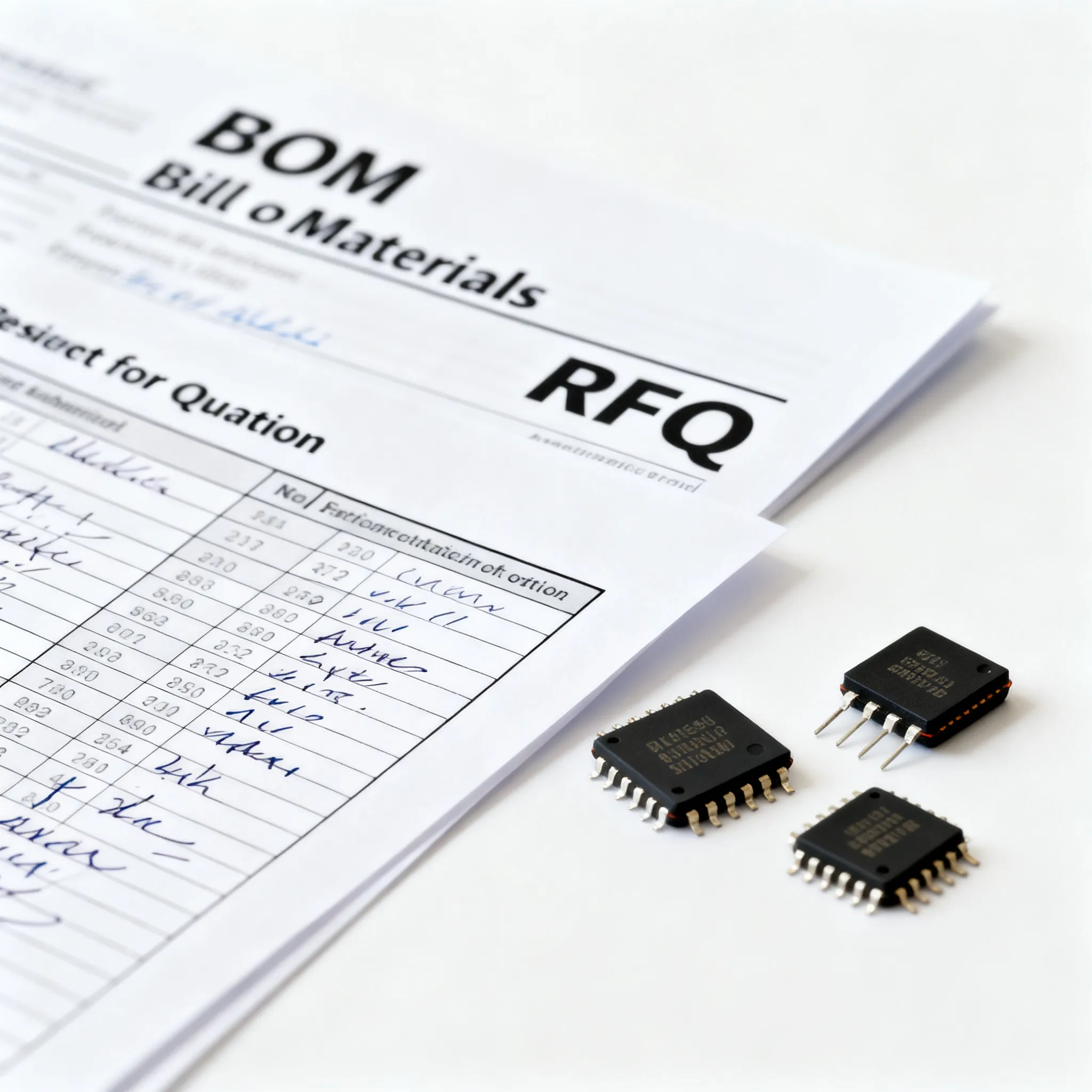
Need components or PCBA support for Interactive Glow Stick products? IC-Online helps smart-device OEMs with sourcing and board-level supply — see our Smart Device Solutions or contact our team for a BOM review.
References & Further Reading
- Ram Recalls 65,348 Trucks Over Instrument Cluster Failure – MoparInsiders
- MCU Lead Time Crisis in 2026: Which Suppliers Are Falling Behind – Fusion Worldwide
- 2026 Electronic Component Shortages Outlook – STHL-PCBA
- LED Drivers and Backlighting – Microchip Technology
- LED Driver: Function, Types, and Application – Utmel
- LED Display Driver IC: Types, Key Specs & How to Choose – LEDinCloud
- Automotive LED Drivers – Electronics Maker
- The Ultimate LED Interfacing Guide for Microcontrollers – Number Analytics
- RoHS Compliant LED Drivers – GlobalSpec
- LED Light USB Stick Guide – Alibaba Buying Guides
- LED Lighting – Microchip Intelligent Lighting Solutions
When you’re ready to translate these design insights into a concrete BOM, IC-Online provides direct access to mixed component sourcing with flexible minimum order quantities. Whether you’re qualifying a second-source MCU or hunting down a hard-to-find LED driver, the platform’s cross-reference tools and real-time inventory data can help you avoid the lead-time traps that derail production schedules. The interactive glow stick market rewards teams that master the semiconductor supply chain as skillfully as they tune a 16-bit color fade. Plan your buffers, qualify your backups, and keep your firmware agile—that’s the formula for a design that shines when it matters.