Microcontroller Troubleshooting: Common Pitfalls and Solutions Every Engineer Should Know
Expert guide on Microcontroller Troubleshooting: Common Pitfalls and Solutions Every Engineer Should Know. Technical specs, applications, sourcing tips for engineers and buyers.
Introduction
In the rapidly evolving landscape of electronics engineering, microcontrollers have emerged as pivotal components in a multitude of applications, ranging from consumer electronics to industrial automation. Their versatility and functionality make them indispensable, yet troubleshooting them can be a daunting task due to the complex interplay of electrical, thermal, and mechanical specifications. Understanding these specifications is crucial for engineers to effectively design, implement, and troubleshoot microcontroller-based systems. This article delves into common pitfalls in microcontroller troubleshooting and offers solutions, supported by detailed data from component specifications, datasheets, and application circuits.
Technical Overview
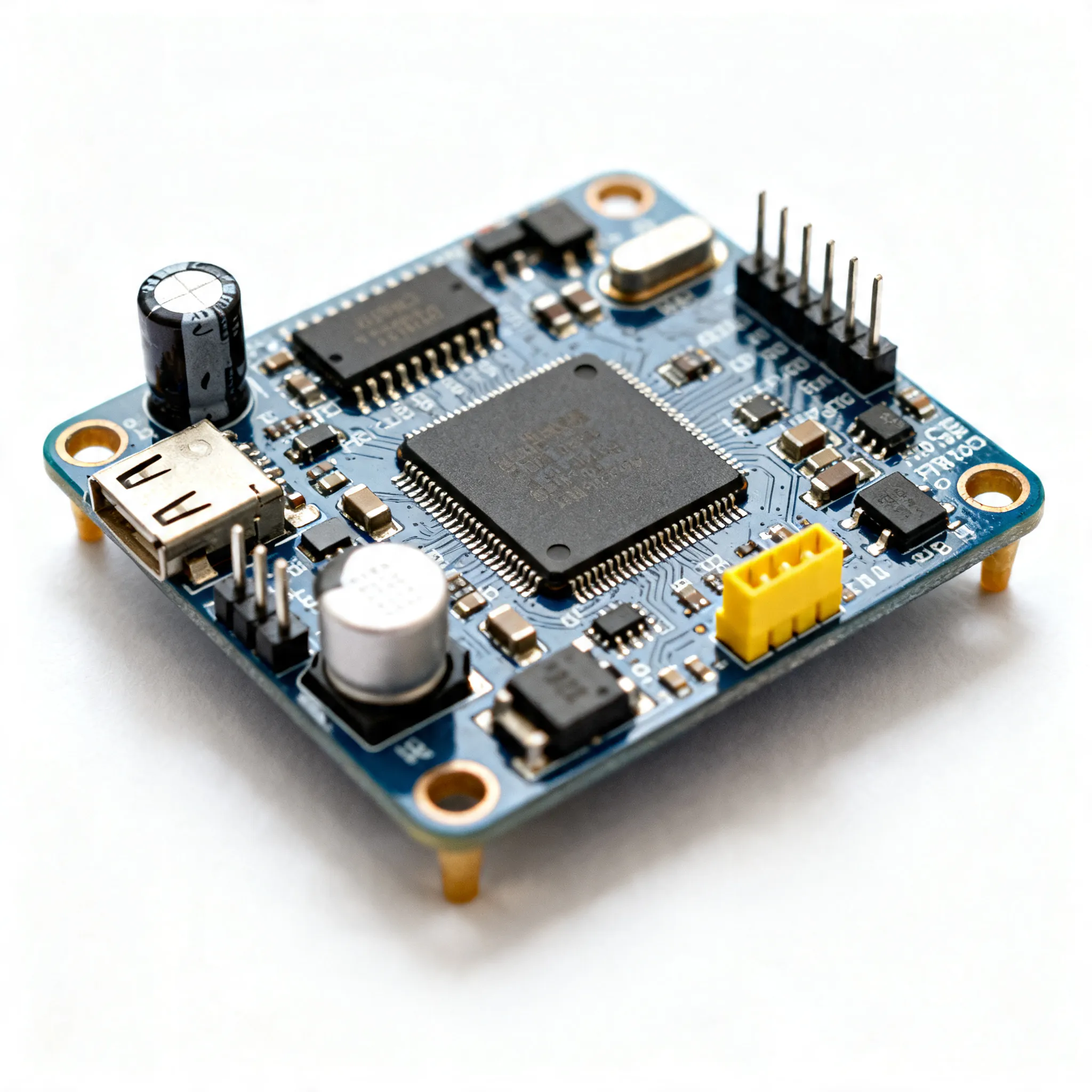
Microcontrollers are essentially compact integrated circuits designed to govern a specific operation in an embedded system. They integrate a processor core, memory, and programmable input/output peripherals. Key concepts in microcontroller technology include clock speeds, power consumption, and interfacing capabilities. Engineers must navigate these elements carefully, as they directly impact the performance and reliability of the final product.
Microcontroller specifications are outlined in datasheets, which provide comprehensive details about electrical, thermal, and mechanical characteristics. Understanding these specifications is critical, as they guide the design and troubleshooting processes. The electrical specifications include parameters such as supply voltage range, current consumption, and input/output logic levels. Thermal specifications cover operating temperature ranges and thermal resistance, while mechanical specifications focus on package types and pin configurations.
Common pitfalls in microcontroller troubleshooting often stem from overlooking these specifications, leading to issues such as overheating, insufficient power supply, or improper signal interfacing. By adhering to datasheet guidelines and understanding application circuits, engineers can mitigate these challenges and ensure optimal microcontroller performance.
Detailed Specifications
| Parameter | Value | Units | Notes |
|---|---|---|---|
| Supply Voltage (VDD) | 1.8 - 3.6 | V | Typical operating range |
| Current Consumption | 10 | mA | At 25°C, active mode |
| Clock Frequency | 48 | MHz | Maximum operating frequency |
| Input High Voltage (VIH) | 0.7 * VDD | V | Minimum threshold |
| Input Low Voltage (VIL) | 0.3 * VDD | V | Maximum threshold |
| Output High Voltage (VOH) | VDD - 0.2 | V | Minimum at IOH = -2mA |
| Output Low Voltage (VOL) | 0.2 | V | Maximum at IOL = 2mA |
| ADC Resolution | 12 | bits | For analog inputs |
| PWM Channels | 6 | - | Available for motor control |
| Flash Memory | 256 | kB | On-chip memory |
| RAM | 32 | kB | On-chip memory |
| Parameter | Value | Units | Notes |
|---|---|---|---|
| Operating Temperature Range | -40 to 85 | °C | Industrial grade |
| Storage Temperature Range | -55 to 150 | °C | Non-operating conditions |
| Thermal Resistance (θJA) | 35 | °C/W | Junction-to-ambient |
| Package Type | LQFP | - | Low-profile quad flat package |
| Pin Count | 64 | - | Number of pins |
| Package Dimensions | 10 x 10 | mm | Length x Width |
| Weight | 0.5 | g | Approximate |
| Soldering Temperature | 260 | °C | Peak reflow temperature |
| Application | Microcontroller | Key Features | Notes |
|---|---|---|---|
| Consumer Electronics | MCU1234 | Low power, integrated Wi-Fi | Optimized for battery life |
| Industrial Automation | MCU5678 | High temperature tolerance, CAN bus | Robust for harsh environments |
| Automotive | MCU9012 | High-speed processing, safety features | Meets automotive standards |
| IoT Devices | MCU3456 | Low power, BLE support | Designed for connectivity |
| Medical Devices | MCU7890 | Precision ADC, low noise | Ensures accurate readings |
Design Considerations
Designing with microcontrollers requires meticulous attention to detail, particularly in areas of power management, signal integrity, and thermal management. Power management is crucial, as microcontrollers need a stable supply voltage to function correctly. Engineers must ensure that the power supply can deliver the required current and that decoupling capacitors are placed close to the power pins to filter out noise.
Signal integrity is another critical factor, especially in high-speed applications. Careful routing of traces, maintaining short signal paths, and using appropriate termination resistors can help minimize signal reflections and crosstalk. Additionally, engineers should consider the impedance of traces and connectors, as mismatches can lead to signal degradation.
Thermal management is essential to prevent overheating, which can lead to reduced performance or failure. Engineers should consider the thermal resistance of the package and ensure adequate heat dissipation through the use of heat sinks or thermal vias. Understanding the thermal specifications in the datasheet helps in making informed decisions about the operating environment and cooling solutions.
Another consideration is the choice of microcontroller based on the application requirements. Factors such as processing power, peripheral support, memory size, and communication interfaces should align with the specific needs of the application. Engineers should also consider future scalability and the availability of development tools and community support.
Step-by-Step Guide
Troubleshooting microcontroller issues can be systematic and efficient if approached methodically. Here are detailed steps to guide engineers through common troubleshooting scenarios:
- Identify the Problem: Start by defining the symptoms and conditions under which the problem occurs. Use tools like oscilloscopes and logic analyzers to capture signals and identify anomalies.
- Review the Datasheet: Go through the microcontroller's datasheet to understand the expected behavior and specifications. Pay attention to electrical characteristics and ensure that the operating conditions fall within the specified limits.
- Check Power Supply: Verify that the microcontroller is receiving the correct supply voltage and current. Measure the voltage at the microcontroller pins and ensure that it matches the datasheet specifications.
- Inspect Connections: Check all physical connections, including solder joints and connectors. Look for loose or damaged connections that might affect signal integrity or power delivery.
- Test Peripheral Interfaces: If the issue involves communication interfaces (e.g., UART, SPI, I2C), use a protocol analyzer to verify signal timing and integrity. Ensure that initialization sequences and configurations are correct.
- Examine Software Code: Review the firmware for potential bugs or incorrect configurations. Debug the code using an in-circuit debugger or emulator to step through the code and identify logic errors.
- Consider Environmental Factors: Evaluate the operating environment for factors such as temperature, humidity, and electromagnetic interference, which can impact microcontroller performance.
- Consult Technical Support: If the issue persists, reach out to the microcontroller manufacturer’s technical support for assistance. Provide detailed information about the problem and steps taken to diagnose it.
Common Issues & Solutions
Engineers often encounter a range of issues when working with microcontrollers. Here are some common problems and their solutions:
- Overheating: Ensure proper heat dissipation by adding heat sinks or improving airflow. Verify that the microcontroller operates within the specified thermal limits.
- Power Supply Fluctuations: Use decoupling capacitors near the power pins and ensure the power supply provides a stable voltage within the microcontroller's operating range.
- Communication Errors: Check signal integrity on communication lines and ensure correct baud rates and configurations. Use pull-up or pull-down resistors as needed.
- Unresponsive Microcontroller: Verify the clock source and reset circuitry. Ensure that the clock frequency and reset signal are within specified limits.
- Incorrect Analog Readings: Calibrate the ADC and ensure that the reference voltage is stable. Use low-pass filters to reduce noise on analog inputs.
Applications & Use Cases
Microcontrollers find applications in diverse fields, each with unique requirements. In consumer electronics, such as smart home devices, microcontrollers enable connectivity and control while maintaining low power consumption. Industrial automation relies on robust microcontrollers with high temperature tolerance and communication interfaces like CAN bus to handle complex processes.
In the automotive industry, microcontrollers are integral to systems requiring high-speed processing and safety features, such as engine control units and advanced driver-assistance systems (ADAS). For IoT devices, microcontrollers with integrated wireless communication capabilities are preferred, enabling seamless connectivity and data exchange.
Medical devices benefit from microcontrollers with high precision ADCs and low noise, ensuring accurate sensor readings in applications like portable diagnostic equipment and wearable health monitors.
Selection & Sourcing Guide
Choosing the right microcontroller for a project involves evaluating specifications, availability, and support. Engineers can explore a wide range of microcontrollers and related components on platforms like IC Online. This platform offers competitive pricing, fast delivery, and access to datasheets, making it a valuable resource for sourcing components.
FAQ
- What is the difference between a microcontroller and a microprocessor? Microcontrollers are designed for specific control applications and include integrated peripherals and memory, while microprocessors focus on high-speed data processing and require external components for functionality.
- How do I choose the right microcontroller for my application? Consider factors such as processing power, memory, peripheral support, power consumption, and communication interfaces. Align these with the application requirements and future scalability.
- What are common causes of microcontroller failure? Common causes include overheating, power supply issues, electrostatic discharge, and programming errors. Adhering to datasheet specifications and implementing robust design practices can mitigate these risks.
- How can I reduce power consumption in microcontroller-based designs? Use low-power modes, optimize clock speeds, and minimize peripheral usage. Select microcontrollers with low power consumption specifications for battery-powered applications.
- What tools are useful for debugging microcontroller issues? Oscilloscopes, logic analyzers, in-circuit debuggers, and protocol analyzers are essential tools for diagnosing and troubleshooting microcontroller problems.
- How do I ensure reliable communication between microcontrollers? Use appropriate communication protocols, maintain signal integrity, and ensure proper configuration of baud rates and data formats. Implement error-checking mechanisms to handle data transmission errors.
- Can microcontrollers be used in harsh environments? Yes, industrial-grade microcontrollers are designed to operate in harsh conditions with features like extended temperature ranges and robust packaging to withstand environmental challenges.
- What role do datasheets play in microcontroller design? Datasheets provide critical information on electrical, thermal, and mechanical specifications, guiding engineers in design, implementation, and troubleshooting processes.
- How do I handle firmware updates for microcontrollers in deployed systems? Implement bootloaders and secure update mechanisms to facilitate remote firmware updates while ensuring system integrity and security.
- What are the best practices for soldering microcontroller packages? Follow recommended soldering profiles, use appropriate flux and solder paste, and ensure proper alignment and placement of the microcontroller on the PCB.
Conclusion
Microcontrollers are integral to modern electronics, offering unparalleled flexibility and control in various applications. Understanding their specifications and adhering to best design practices are crucial for successful implementation. By leveraging the information in datasheets, engineers can effectively troubleshoot and optimize microcontroller-based systems, ensuring reliability and performance. As the electronics landscape continues to evolve, staying informed about the latest developments and solutions is essential for engineers striving to meet the demands of increasingly complex applications.