Who’s Still Making Moves in China’s Semiconductor Market?
Infineon, a leading German semiconductor company, has also expressed its intention to ramp up local production in China. CEO Jochen Hanebeck revealed in a recent interview that Infineon is focusing on localizing its chip production to better meet the needs of Chinese customers.
As China continues to be one of the world’s largest semiconductor markets, global semiconductor companies are increasingly focused on strengthening their foothold in the region. Recently, several major international semiconductor manufacturers have made strategic announcements about expanding their operations and partnerships in China, underscoring the country’s importance in the global semiconductor supply chain.
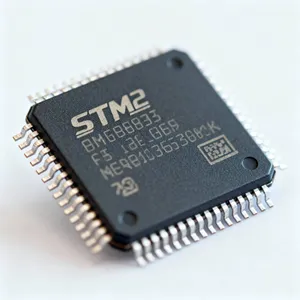
1. STMicroelectronics (STMicro): Partnering with Huahong Semiconductor
In late November, STMicroelectronics (STMicro) announced that it would outsource its 40nm MCU foundry business to Huahong Semiconductor, a partnership that has captured significant attention in the industry.
-
Why It Matters: This collaboration allows STMicro to expand its market share in China, while Huahong Semiconductor can enhance its supply chain capabilities and help drive the development of related industries in China. This, in turn, supports the broader growth of China's semiconductor sector.
-
STMicro’s China Strategy: As one of the largest semiconductor markets, China has become essential for international firms looking to expand their global footprint. The partnership with Huahong is part of STMicro’s strategy to strengthen its position in the country.
2. Infineon: Localizing Production in China
Infineon, a leading German semiconductor company, has also expressed its intention to ramp up local production in China. CEO Jochen Hanebeck revealed in a recent interview that Infineon is focusing on localizing its chip production to better meet the needs of Chinese customers.
-
Local Production: Infineon’s move is in response to the demand from Chinese customers for localized production, particularly for parts that are difficult to replace. Hanebeck emphasized the importance of moving some production to China to ensure a stable and secure supply chain for Chinese clients.
-
Current Operations in China: Infineon has had a strong presence in China since 1995, with a significant manufacturing facility in Wuxi, which is now one of Infineon’s largest global production sites. The Wuxi plant focuses on packaging and testing power semiconductors, a key area for Infineon’s products, especially in the electric vehicle (EV), renewable energy, and industrial sectors.
-
Future Growth: Infineon projects that the Greater China region will account for a third of its global revenue and expects the market to grow by 680 billion RMB by 2025.
-
3. NXP Semiconductors: Building a Chinese Chip Supply Chain
NXP Semiconductors, a global leader in automotive, industrial, and consumer semiconductors, has long been committed to the Chinese market. Recently, NXP announced a major development involving its joint venture with VIS, a leading foundry, which is constructing a 12-inch wafer fab in Singapore.
-
VSMC Foundry: The joint venture, VSMC, will produce semiconductors for applications such as power management, analog, and mixed-signal devices, with a focus on industrial and automotive products. The initial production from the fab is expected to begin in 2027, with full-scale production projected by 2029.
-
China Strategy: While expanding in Singapore, NXP is also actively seeking to expand its supply chain in China. The company aims to cater to the needs of customers in China, the largest market for electric vehicles (EVs) and telecom products.
-
NXP’s Long History in China: NXP has been present in China for 38 years and has 14 offices, 6 R&D centers, and a state-of-the-art testing and packaging facility in Tianjin, acquired from Freescale in 2015. The Tianjin site has seen continued expansion, including the recent upgrade to its testing and packaging production lines.
-
China’s Role in NXP's Growth: Andy Micallef, NXP's Executive Vice President, emphasized that NXP is working closely with partners to build a Chinese supply chain to meet local customer demand for localized products.
-
Key Takeaways
Strategic Localization: Companies like Infineon and NXP are increasingly localizing production in China to meet the demands of local customers and enhance supply chain security.- Key Markets: China is becoming an essential market for many semiconductor companies due to its leadership in sectors like electric vehicles (EVs), telecommunications, AI, and consumer electronics.
- Long-Term Investment: Many global semiconductor companies are making long-term investments in China, recognizing its role as a critical player in the global semiconductor supply chain.
-