Annual Production to Reach 6 Million Units: Xinci Technology's Ceramic Substrate Project Officially Launched
January 2025 – Xinci Technology has announced the official commencement of production for its ceramic substrate project in Jinyi New District, Zhejiang Province. The project marks a significant milestone for the semiconductor materials sector in China.
January 2025 – Xinci Technology has announced the official commencement of production for its ceramic substrate project in Jinyi New District, Zhejiang Province. The project marks a significant milestone for the semiconductor materials sector in China.
Project Overview
Investment: ¥1 billion
Facility Size: Approx. 32,000 square meters
Production Target: 6 million DPC (Direct-Plated Copper) ceramic substrates annually
Projected Annual Revenue: ¥900 million
The project was initially signed in March 2023 and completed equipment commissioning and trial operations by November 2024, signaling readiness for large-scale production.
Key Product: DPC Ceramic Substrates
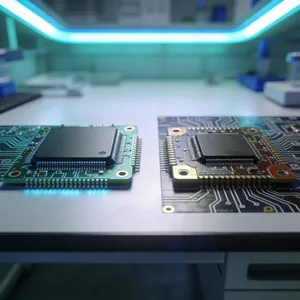
DPC ceramic substrates are essential in the semiconductor power device industry. These substrates significantly enhance device performance and thermal management capabilities, which are crucial for high-power and high-efficiency applications.
Technical Highlights:
Material: High-thermal-conductivity ceramic substrates
Processes: Combines thin-film metallization, photolithography, vertical interconnects, and 3D stacking technologies.

Applications:
High-power LED lighting
Semiconductor lasers (VCSEL)
5G communication modules (PA)
Insulated-gate bipolar transistors (IGBT)
MEMS sensors
Concentrated photovoltaic (CPV) systems
Xinci Technology’s 3D-formed DPC ceramic substrates are highly regarded for their innovative integration of multiple core semiconductor technologies, making them an ideal choice for third-generation semiconductor power device packaging and next-generation wafer-level packaging.
Industry Impact
The official launch of this high-capacity facility is expected to:
- Strengthen China’s position in semiconductor materials manufacturing.
- Boost local semiconductor ecosystem development, including downstream industries like high-power LEDs and 5G communication modules.
- Foster technological advancement in third-generation semiconductor applications, including electric vehicles, renewable energy systems, and high-frequency communication devices.