Case Study: Implementing the MAX31855 Thermocouple-to-Digital Converter in Industrial Temperature Monitoring Systems
Expert guide on Case Study: Implementing the MAX31855 Thermocouple-to-Digital Converter in Industrial Temperature Monitoring Systems. Technical specs, applications, sourcing tips for engineers and buyers.
Introduction
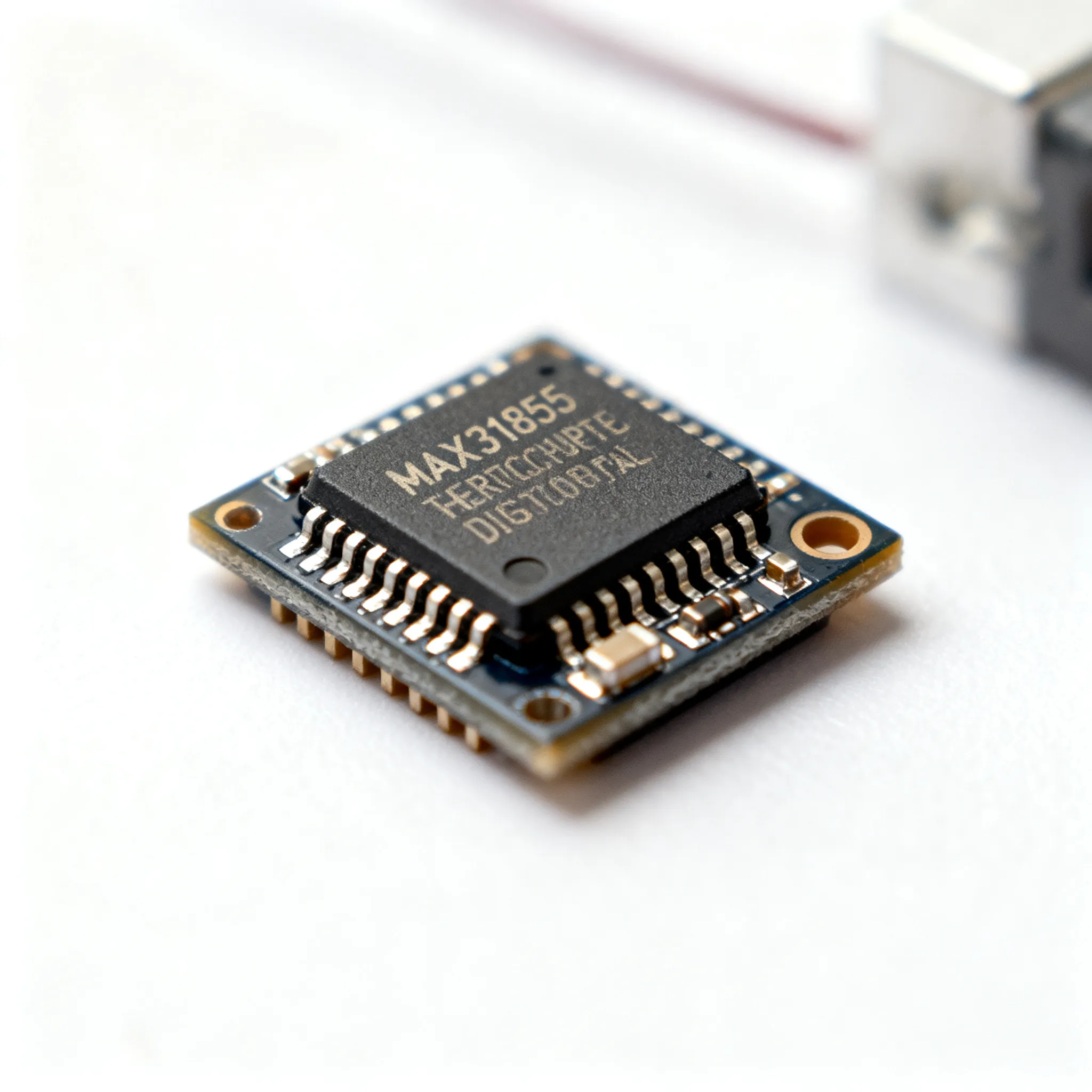
In the realm of industrial temperature monitoring, precision and reliability are paramount. The MAX31855 thermocouple-to-digital converter serves as a critical component in ensuring accurate temperature measurements across a variety of applications. With the increasing demand for more efficient and reliable industrial systems, understanding the specifications, applications, and integration of this converter is essential for engineers and system designers. This article delves into the specifics of the MAX31855, its electrical and thermal properties, and its application in real-world scenarios, providing a comprehensive guide for its implementation.
Technical Overview
The MAX31855 is a sophisticated thermocouple-to-digital converter designed to work with K-type thermocouples. It provides cold-junction compensation and digitizes the signal from the thermocouple, outputting the data through a simple SPI-compatible interface. This converts the analog signal into a digital format that can be easily processed by a microcontroller or other digital systems. With a temperature range of -200°C to +1350°C, this component is well-suited for a variety of industrial applications, from manufacturing processes to HVAC systems.
The converter's internal circuitry includes a high-precision ADC that ensures the accuracy of temperature readings. It also features integrated fault detection, which identifies issues such as open thermocouple connections and shorts to ground or VCC. These features make the MAX31855 a robust choice for demanding environments where reliability and accuracy are critical.
Detailed Specifications
| Parameter | Value | Units | Notes |
|---|---|---|---|
| Supply Voltage (VCC) | 3.0 to 3.6 | V | Typical operation at 3.3V |
| Operating Temperature Range | -40 to +125 | °C | Ambient temperature range |
| Thermocouple Temperature Range | -200 to +1350 | °C | For K-type thermocouples |
| Resolution | 0.25 | °C | 14-bit resolution |
| Conversion Time | 100 | ms | Typical conversion time |
| SPI Clock Frequency | 5 | MHz | Maximum speed |
| Cold-Junction Compensation Error | ±2 | °C | Typical error |
| Standby Current | 1.1 | µA | Low power consumption |
| Input Impedance | 60 | MΩ | High input impedance |
| Fault Detection | Yes | - | Open/short detection |
| Parameter | Value | Units | Notes |
|---|---|---|---|
| Package Type | SOIC-8 | - | Standard package |
| Package Dimensions | 4.9 x 3.9 | mm | Width x Length |
| Thermal Resistance (Junction to Ambient) | 120 | °C/W | Typical value |
| Weight | 0.06 | g | Approximate weight |
| Mounting Style | SMD | - | Surface mount device |
| Lead Finish | Matte Tin | - | RoHS compliant |
| Moisture Sensitivity Level (MSL) | 1 | - | Unlimited floor life |
| Pin Count | 8 | - | Standard pin count |
| Application | MAX31855 | Alternative Solutions | Notes |
|---|---|---|---|
| Industrial Automation | Highly suitable | MAX6675 | MAX31855 offers better resolution |
| HVAC Systems | Excellent choice | AD8495 | Better cold-junction compensation |
| Consumer Electronics | Good fit | LM35 | LM35 simpler but less accurate |
| Automotive | Applicable | AD595 | AD595 simpler integration |
| Aerospace | Highly suitable | None | Unique high-temp range |
The electrical specifications of the MAX31855 highlight its wide operational scope and precision. Its low power consumption and high input impedance make it ideal for battery-operated devices and sensitive measurements. The thermal and mechanical specifications ensure it can withstand harsh environments, while the application comparison table illustrates its versatility across different sectors, providing a balanced view of its capabilities against alternative solutions.
Design Considerations
When integrating the MAX31855 into industrial temperature monitoring systems, several design considerations must be accounted for to ensure optimal performance. Firstly, the power supply voltage must remain within the specified range of 3.0 to 3.6V to avoid damaging the device or compromising its accuracy. A stable power supply with minimal noise is crucial, as fluctuations can lead to erroneous temperature readings.
The placement of the thermocouple is another critical factor. For accurate cold-junction compensation, the thermocouple must be physically close to the MAX31855. This minimizes temperature gradients that could introduce errors. Additionally, the thermocouple wires should be as short as possible and shielded to reduce electromagnetic interference (EMI), which can affect the accuracy of the temperature measurements.
In terms of interfacing, the MAX31855 utilizes a simple SPI-compatible interface, which allows for seamless integration with a wide range of microcontrollers and digital systems. It is essential to ensure that the SPI clock frequency does not exceed the 5 MHz limit to maintain data integrity. Pull-up resistors may be necessary on the SPI lines to prevent floating inputs, which can cause communication errors.
Thermal management is also a key consideration. While the MAX31855 has a high junction-to-ambient thermal resistance, it is advisable to use thermal vias or a heat sink if the ambient temperature approaches the upper limit of the device's operating range. This helps dissipate heat and maintain the integrity of the temperature readings.
Step-by-Step Guide
- Component Selection: Choose the MAX31855 as the thermocouple-to-digital converter for your application. Verify that the temperature range and accuracy meet your system requirements.
- Power Supply Design: Design a stable 3.3V power supply. Use a low-noise linear regulator to minimize power supply noise that could affect the accuracy of the MAX31855.
- Thermocouple Placement: Position the K-type thermocouple close to the MAX31855 to ensure accurate cold-junction compensation. Use short, shielded cables to minimize EMI.
- SPI Interface Setup: Connect the SPI lines (MISO, SCK, CS) from the MAX31855 to the microcontroller. Ensure the SPI clock frequency is set below 5 MHz.
- PCB Design: Design the PCB layout with attention to thermal management. Include thermal vias or a small heat sink if necessary.
- Software Development: Write the software to initialize the SPI interface and read temperature data from the MAX31855. Implement error handling for open/short detection.
- Testing and Calibration: Test the system under various temperature conditions to verify accuracy. Calibrate if necessary to account for any system-level offsets.
- Deployment: Once verified, deploy the system in the field. Monitor performance to ensure reliability and accuracy over time.
Common Issues & Solutions
Implementing the MAX31855 can present several challenges. Here are some common issues and their solutions:
- Power Supply Noise: If temperature readings are unstable, check for noise in the power supply. Use additional filtering or switch to a linear regulator.
- EMI Interference: EMI can cause incorrect readings. Ensure the thermocouple cables are shielded and routed away from noisy components.
- Cold-Junction Compensation Errors: Incorrect compensation can occur if the thermocouple is too far from the MAX31855. Reposition the thermocouple closer to the device.
- SPI Communication Errors: If data is corrupted, check the SPI clock frequency and ensure pull-up resistors are used on the SPI lines.
- Open/Short Detection: If faults are detected, inspect the thermocouple connections for continuity and proper insulation.
- Thermal Management: If the device overheats, improve thermal management by adding heat sinks or increasing airflow around the device.
Applications & Use Cases
The MAX31855 is widely used in various industrial applications. In manufacturing, it monitors critical process temperatures, ensuring product quality and safety. In HVAC systems, it provides precise temperature control for efficient energy use. In the automotive industry, it monitors engine and exhaust temperatures, contributing to vehicle performance and emissions compliance. Aerospace applications benefit from its high-temperature range, allowing for accurate monitoring in extreme environments. These diverse use cases highlight the MAX31855's versatility and reliability.
Selection & Sourcing Guide
When selecting the MAX31855, ensure it meets the specific requirements of your application, including temperature range, accuracy, and interface compatibility. For sourcing, visit IC Online, an authorized distributor offering competitive pricing and fast delivery. Their extensive inventory and parametric search tools simplify the selection process, ensuring you find the right component for your needs.
FAQ
- What is the maximum temperature range of the MAX31855? The MAX31855 supports a temperature range of -200°C to +1350°C for K-type thermocouples.
- Can the MAX31855 work with other types of thermocouples? The MAX31855 is specifically designed for K-type thermocouples. Other models are available for different thermocouple types.
- How does the MAX31855 handle cold-junction compensation? The MAX31855 includes an internal sensor for cold-junction compensation, automatically adjusting for temperature variations at the cold junction.
- What is the resolution of the MAX31855? The MAX31855 offers a resolution of 0.25°C, providing precise temperature measurements.
- How is the MAX31855 powered? It requires a supply voltage of 3.0 to 3.6V, typically operating at 3.3V.
- Can the MAX31855 be used in battery-operated devices? Yes, its low power consumption makes it suitable for battery-operated applications.
- What communication protocol does the MAX31855 use? The MAX31855 uses an SPI-compatible interface for communication with a microcontroller.
- How does the MAX31855 detect faults? It includes integrated fault detection for open thermocouples and shorts to ground or VCC.
- What package type is the MAX31855 available in? The MAX31855 is available in an SOIC-8 package, suitable for surface mount applications.
- Is the MAX31855 RoHS compliant? Yes, the MAX31855 is RoHS compliant, featuring a matte tin lead finish.
Conclusion
The MAX31855 thermocouple-to-digital converter is a versatile component that offers precise temperature measurement capabilities for various industrial applications. Its robust electrical and thermal specifications, along with its ease of integration and fault detection features, make it an ideal choice for engineers and system designers. By understanding its specifications and design considerations, you can effectively implement the MAX31855 in your temperature monitoring systems, ensuring accuracy and reliability in demanding environments.