Choosing the Right Microcontroller Board for Your Next Project: A Practical Guide
Expert guide on Choosing the Right Microcontroller Board for Your Next Project: A Practical Guide. Technical specs, applications, sourcing tips for engineers and buyers.
Introduction
In the rapidly evolving field of electronics engineering, selecting the right microcontroller board is crucial for the success of your project. Whether you are developing an IoT device, an industrial automation system, or a consumer electronic product, the choice of microcontroller can significantly impact the performance, cost, and development time of your project. With the global semiconductor market projected to reach $595.2 billion by 2026, understanding the nuances of microcontroller selection is more important than ever. This guide provides a comprehensive overview of how to choose the right microcontroller board by examining component specifications, datasheets, and application circuits.
Technical Overview
Microcontrollers are the brains of modern electronic devices, integrating a processor, memory, and input/output peripherals on a single chip. They come in various architectures, including ARM, AVR, and PIC, each offering unique advantages. Key principles to consider when selecting a microcontroller include processing power, power consumption, peripheral compatibility, and development ecosystem.
For instance, ARM Cortex-based microcontrollers are renowned for their high processing power and energy efficiency, making them ideal for battery-operated devices. On the other hand, AVR microcontrollers are appreciated for their simplicity and extensive community support, which can be beneficial for rapid prototyping and educational purposes. Understanding these core concepts will help you align the microcontroller's capabilities with your project's requirements.
Detailed Specifications
When evaluating microcontrollers, electrical, thermal, and mechanical specifications are critical. Below are tables detailing these specifications for a selection of popular microcontroller boards.
| Parameter | Value | Units | Notes |
|---|---|---|---|
| Operating Voltage | 3.3 - 5.5 | V | Common range for microcontrollers |
| Supply Current | 10 - 50 | mA | Varies with processing load |
| CPU Speed | 16 - 120 | MHz | Depends on architecture |
| Flash Memory | 32 - 512 | KB | For code storage |
| SRAM | 2 - 64 | KB | For data storage |
| EEPROM | 0 - 4 | KB | Non-volatile memory |
| GPIO Pins | 10 - 54 | Pins | General Purpose Input/Output |
| ADC Channels | 4 - 16 | Channels | Analog to Digital Converter |
| PWM Channels | 2 - 12 | Channels | Pulsed Width Modulation |
| Communication Interfaces | UART, SPI, I2C | N/A | Standard communication protocols |
| Parameter | Value | Units | Notes |
|---|---|---|---|
| Operating Temperature | -40 to 85 | °C | Industrial grade |
| Storage Temperature | -65 to 150 | °C | Standard for microcontrollers |
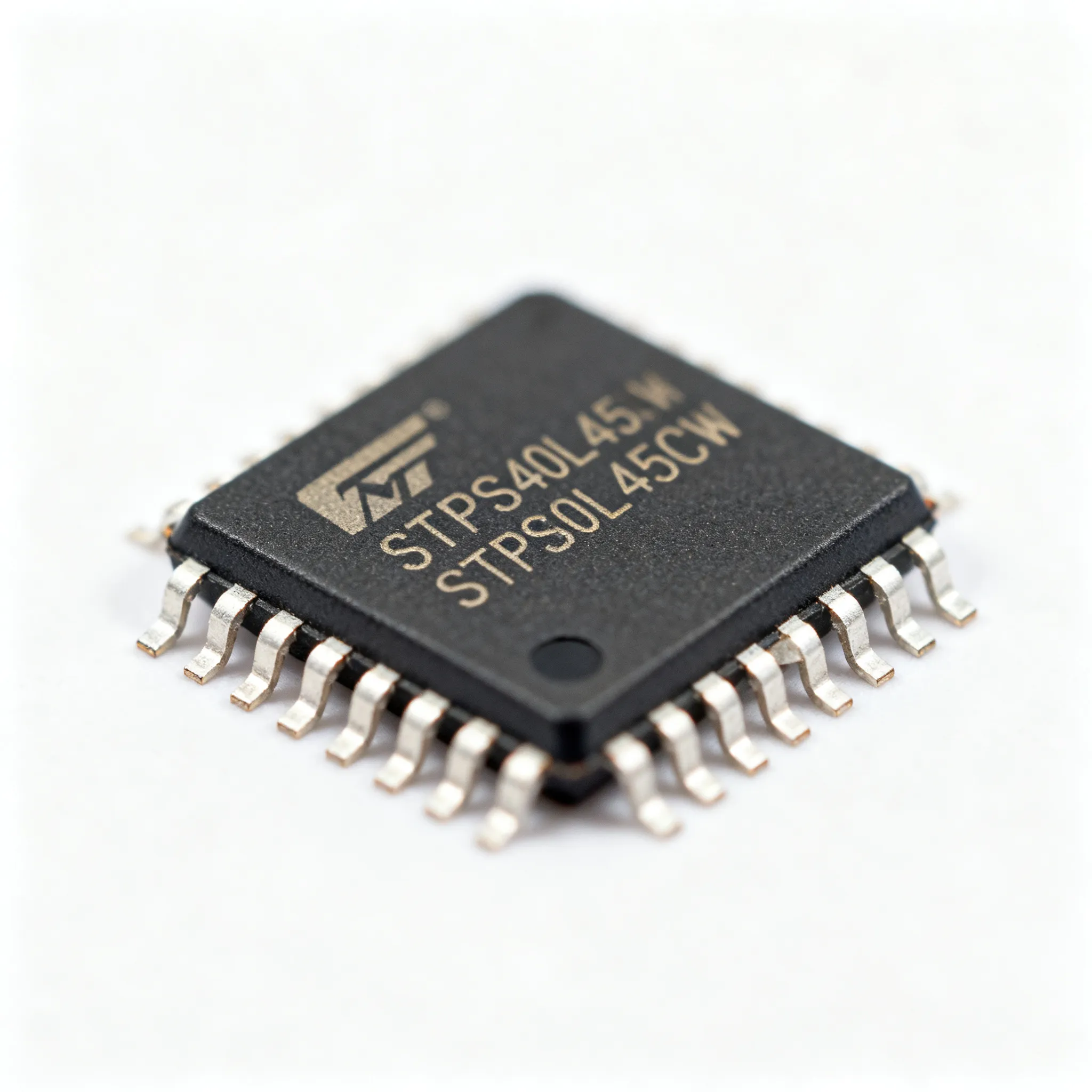
| Package Type | TQFP, QFN | N/A | Depends on the model |
| Package Size | 7x7 to 12x12 | mm | Square dimensions |
| Pin Pitch | 0.5 - 1.27 | mm | Distance between pins |
| Weight | 1 - 2 | g | Varies with package type |
| MTBF | 100,000 | Hours | Mean Time Between Failures |
| ESD Protection | 2 | kV | Electrostatic discharge protection |
| Application | Recommended Microcontroller | Notes |
|---|---|---|
| IoT Devices | ESP32-WROOM-32 | Built-in WiFi and Bluetooth |
| Industrial Automation | STM32F407VG | High processing power and robust I/O |
| Consumer Electronics | ATmega2560 | Large community and extensive libraries |
| Robotics | Tiva-C TM4C123G | Rich peripheral set and real-time capabilities |
| Wearable Technology | nRF52840 | Low power consumption and BLE support |
The tables above provide a snapshot of the critical specifications to consider when choosing a microcontroller. Electrical specs focus on the operational capabilities, such as CPU speed and memory capacity. Thermal and mechanical specs ensure the microcontroller can withstand environmental conditions and physical constraints. Finally, the application comparison table aligns specific microcontroller models with common use cases, aiding in the selection process.
Design Considerations
When designing a project with a microcontroller, several practical guidelines should be considered. First, determine the processing and memory requirements based on your application. For instance, applications requiring complex computations or large data handling may benefit from a microcontroller with higher CPU speeds and more substantial memory.
Power consumption is another critical factor. For battery-powered applications, select a microcontroller with low power modes and efficient power management features. Consider the availability of development tools and community support, as these can significantly reduce development time and troubleshooting efforts.
Furthermore, evaluate the compatibility of peripheral interfaces. Ensure the microcontroller supports the communication protocols and peripheral devices your project requires, such as sensors, actuators, and displays. Check the datasheets for detailed pin configurations and electrical characteristics to avoid conflicts and ensure proper operation.
Lastly, consider the scalability and future-proofing of your design. Choose a microcontroller platform that offers a range of models with varying capabilities, allowing you to upgrade or downgrade as project requirements evolve. This flexibility can save costs and time in future iterations of your product.
Step-by-Step Guide
Follow these steps to select the right microcontroller board for your project:
- Define Project Requirements: Clearly outline the technical specifications and constraints of your project, including processing needs, power consumption, and peripheral interfaces.
- Research Microcontroller Options: Use resources like DigiKey and IC Online to search for microcontrollers that meet your requirements.
- Analyze Datasheets: Carefully examine the datasheets of shortlisted microcontrollers to understand their electrical, thermal, and mechanical specifications.
- Evaluate Development Ecosystem: Consider the availability of development tools, libraries, and community support for each microcontroller option.
- Prototype and Test: Acquire evaluation boards or samples of the selected microcontrollers and conduct prototyping to validate their performance in your application.
- Optimize Design: Based on test results, optimize your design for performance, power efficiency, and cost-effectiveness.
- Finalize Selection: Choose the microcontroller that best aligns with your project's requirements and constraints.
- Plan for Production: Work with distributors to ensure the availability and pricing of the selected microcontroller for production-scale orders.
Common Issues & Solutions
Here are some common challenges faced when working with microcontrollers and solutions to address them:
- Insufficient Memory: If your application exceeds the microcontroller's memory capacity, consider optimizing code or selecting a microcontroller with more memory.
- Power Consumption: For projects exceeding power budgets, explore low-power microcontroller options and implement power-saving modes.
- Peripheral Conflicts: Conflicts between peripherals can be resolved by carefully reviewing pin configurations and using external multiplexers if necessary.
- Development Delays: To mitigate delays, leverage development kits and community resources to accelerate learning and troubleshooting.
- Supply Chain Issues: Collaborate with authorized distributors like IC Online to ensure reliable component sourcing and mitigate supply chain disruptions.
Applications & Use Cases
Microcontrollers are used in a wide range of applications, from simple consumer electronics to complex industrial systems. In IoT devices, microcontrollers like the ESP32-WROOM-32 provide wireless connectivity and processing power for data acquisition and transmission. In industrial automation, the STM32F407VG offers robust processing capabilities and extensive I/O for controlling machinery and processes.
In consumer electronics, the ATmega2560 is popular for its versatility and ease of use, making it a favorite among hobbyists and educators. Robotics applications often leverage the Tiva-C TM4C123G for its real-time processing capabilities and rich peripheral set. Wearable technology benefits from microcontrollers like the nRF52840, which offer low power consumption and Bluetooth connectivity for seamless user experiences.
Selection & Sourcing Guide
When selecting and sourcing microcontrollers for your project, it's essential to work with trusted distributors. IC Online is an authorized distributor that offers a wide range of electronic components, competitive pricing, and fast delivery. Utilize their platform to search for microcontrollers that meet your design specifications and ensure a reliable supply chain for production.
FAQ
Here are some frequently asked questions about microcontroller selection:
- What is the most important factor when selecting a microcontroller? It depends on the application, but power consumption and processing capability are often critical.
- How do I ensure compatibility with existing systems? Check the communication interfaces and peripheral support in the microcontroller's datasheet.
- Can I use multiple microcontrollers in a single project? Yes, multiple microcontrollers can be used for complex applications requiring distributed processing.
- What tools are available for microcontroller development? Integrated Development Environments (IDEs) like Arduino IDE and Keil uVision are popular choices.
- How can I extend the lifespan of my microcontroller? Implement proper thermal management and adhere to recommended operating conditions.
- Are there alternatives to traditional microcontrollers? Yes, FPGA and SoC solutions offer alternatives with different benefits.
- How do I handle obsolescence issues? Work with distributors to secure a last-time buy or transition to newer models.
- What are the security considerations for microcontroller-based designs? Implement secure boot, encryption, and regular firmware updates to protect against vulnerabilities.
- Can microcontrollers be used in harsh environments? Yes, select industrial-grade microcontrollers with extended temperature ranges and robust packaging.
- How do I choose between ARM, AVR, and PIC architectures? Consider factors like processing power, power efficiency, and community support.
Conclusion
Choosing the right microcontroller board is a crucial step in the success of your electronics project. By understanding the specifications, evaluating design considerations, and leveraging the right resources, you can make informed decisions that align with your project's needs. Whether you are developing IoT devices, consumer electronics, or industrial systems, the right microcontroller will enhance performance, efficiency, and reliability. Utilize trusted distributors like IC Online to ensure a smooth sourcing process and successful project execution.