Counterfeit IC Risk Mitigation: Authenticity and Traceability for Procurement Teams
Procurement checklist: authenticity, traceability, and quality documentation to request with your component RFQ.
Why Counterfeit ICs Are Spiking and What It Means for Your BOM
The counterfeit threat isn’t theoretical—it’s accelerating. ERAI reported a 25% increase in counterfeit parts in 2024 compared to 2023, the highest volume since 2015 source. With semiconductor lead times projected to reach 40 weeks in early 2026, procurement teams are being squeezed between urgency and risk. More organizations are shifting to verified franchise distributors even at higher unit costs to mitigate exposure source.
A single counterfeit IC slipping into a mission-critical system can cascade into field failures, safety recalls, and multi-million-dollar liability. The cost isn’t just the component—it’s the rework, the reputational damage, and the potential loss of certification. This is why defense, aerospace, and medical programs now mandate lab verification per AS6081/AS6171 source, and why commercial teams are adopting encrypted digital signatures and advanced inspection to protect their BOMs source.
Below, the key drivers reshaping procurement’s counterfeit risk landscape are mapped to their mechanism and direct impact on your buying decisions.
| Driver | Mechanism | Procurement Impact |
|---|---|---|
| Extended semiconductor lead times | Supply-demand imbalance forces buyers to seek non-traditional sources. | Increases exposure to gray market and unauthorized brokers; requires tighter vetting of every alternate source. |
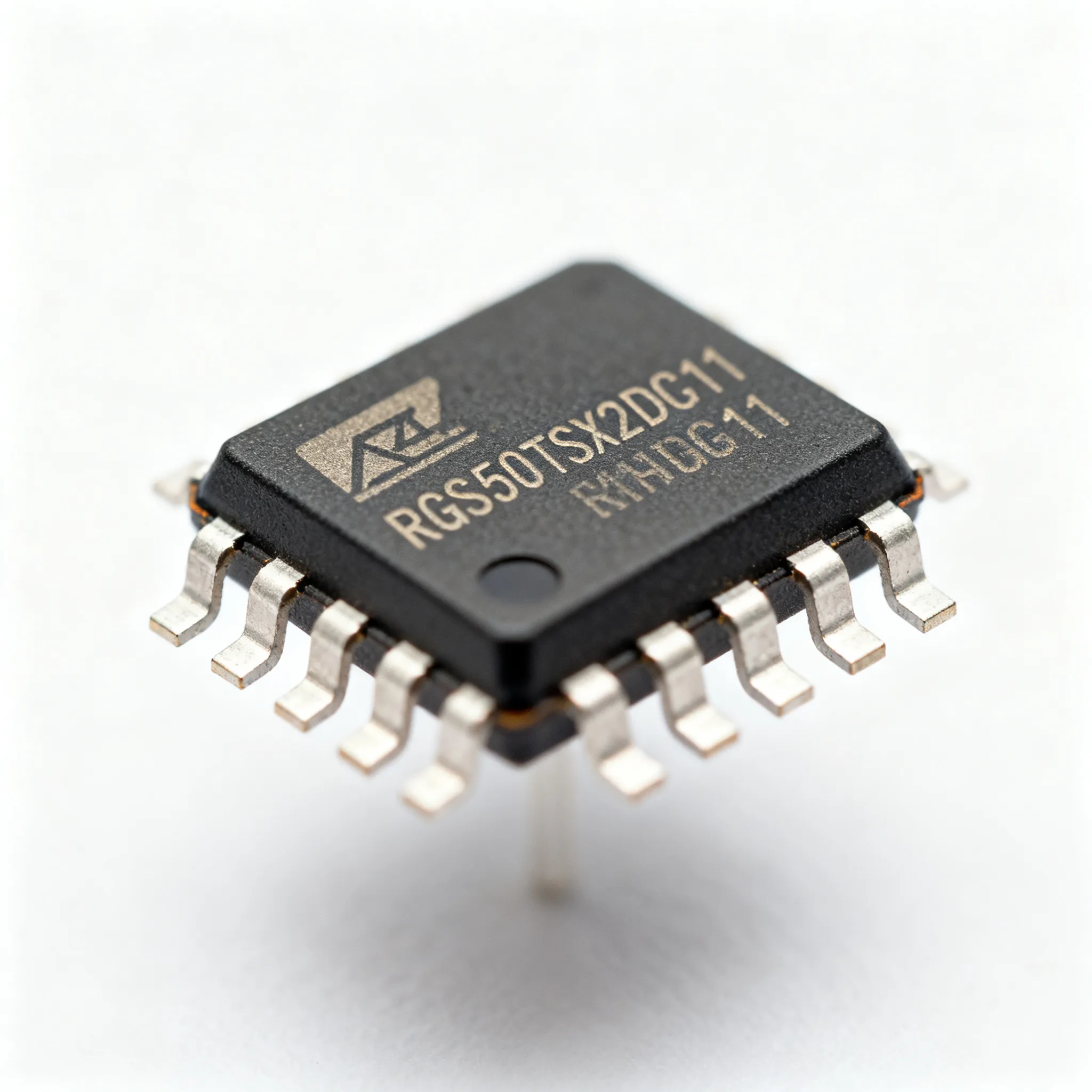
| Rise of sophisticated remarking and blacktopping | Counterfeiters use laser etching and chemical treatments to pass visual checks. | Visual inspection alone is no longer sufficient; mandates X-ray and decapsulation for high-risk parts. |
| Growth of e-waste recycling operations | Salvaged ICs are cleaned, re-marked, and sold as new. | Demands full traceability documentation and date/lot code verification before acceptance. |
| Pressure to reduce BOM cost | Unusually low pricing becomes a red flag for counterfeit or substandard parts source. | Shifts evaluation from unit price to total cost of ownership, including testing and failure risk. |
| Regulatory mandates in defense and medical | AS6081/AS6171 compliance becomes a contractual requirement. | Procurement must qualify labs and distributors with accredited certifications; non-compliance can void contracts. |
| Adoption of blockchain and digital signatures | Immutable custody records can complement physical inspection source. | Teams can demand cryptographically signed certificates of conformance, but must still verify physical authenticity. |
The takeaway: counterfeit risk is no longer a niche concern. It’s a procurement-wide challenge that demands a layered strategy—from sourcing lane selection to post-receipt inspection. The rest of this article provides that framework.
How Counterfeit Components Infiltrate the Supply Chain and What Authenticity Really Means
Counterfeits don’t just appear; they enter through predictable channels. Excess inventory sold without traceability, unauthorized distributors blending reclaimed parts with new stock, and even recycled e-waste processed into “refurbished” ICs are common vectors. Authenticity, therefore, goes far beyond a visual check—it requires understanding the component’s full pedigree from wafer fab to final test.
The most frequent failure modes include:
- Remarking: Original markings are chemically removed and replaced with a higher-grade or more desirable part number.
- Blacktopping: A thin polymer coating is applied over the original marking, then laser-etched with new information.
- Die salvage: Functional die are extracted from scrapped assemblies, re-packaged, and sold as new.
- Ghost shift parts: Unauthorized production runs using original masks or test programs, often without the same quality controls.
Detecting these requires a layered approach that escalates in cost and confidence. The table below summarizes the primary methods, referencing industry guidance on risk-based mitigation source source.
| Detection Method | What It Reveals | Typical Cost & Time | Confidence Level |
|---|---|---|---|
| External visual inspection (30x–100x microscope) | Surface anomalies, sanding marks, inconsistent font, blacktopping edges. | Low; minutes per part | Low—can miss expertly remarked parts |
| X-ray imaging | Internal construction: die size, bond wire count, lead frame anomalies, missing or extra wires. | Moderate; 15–30 min per lot | Medium—good for structural mismatches, but not die markings |
| Decapsulation (chemical or laser) + die inspection | Die markings, manufacturer logos, date codes, process technology nodes. | High; hours to days, destructive | High—definitive for die-level authenticity |
| Electrical testing (curve trace, functional ATE) | Parametric deviations, out-of-spec performance, missing features. | Moderate to high; depends on test coverage | High for functional verification, but won’t catch cosmetic counterfeits with correct die |
| X-ray fluorescence (XRF) / material analysis | Lead finish composition, RoHS compliance, plating inconsistencies. | Moderate; minutes per part | Medium—useful for detecting non-conforming materials |
Tip: A risk-based strategy starts with visual inspection and photo logging for all high-risk receipts, then escalates to X-ray sampling for parts with known counterfeiting history. Decapsulation is reserved for FPGAs, processors, and any component where die marking verification is mandated by AS6171 source. Quarantine all suspect parts until evidence proves authenticity—treat them as counterfeit until cleared.
Sourcing Lanes Compared: Franchised, Independent, and Gray Market Risks
Not all procurement paths carry the same counterfeit risk. The lane you choose directly determines the traceability, testing guarantees, and recourse you have when a suspect part is found. The table below compares the three primary sourcing lanes on the metrics that matter most to procurement teams.
| Comparison Metric | Franchised Distributor | Authorized Independent Distributor | Broker / Gray Market | Selection Criteria & Failure Boundary |
|---|---|---|---|---|
| Traceability to OEM | Full, with manufacturer-certified chain of custody | Partial; may include OEM surplus with documented pedigree | Often absent or unverifiable | Require full traceability for any safety-critical or high-reliability BOM line |
| Testing guarantees | Manufacturer’s warranty; no third-party test needed | May offer in-house or third-party testing to AS6171 upon request | Rarely offered; buyer assumes all verification cost | Demand test reports within 90 days for any non-franchised source |
| Lead-time flexibility | Constrained by allocation; confirm via RFQ | Can source hard-to-find and EOL parts quickly | Fastest but highest risk | Use for quick-turn RFQs only when paired with quarantine and inspection source |
| Total cost of ownership | Higher unit price, lowest risk cost | Moderate price; add testing and inspection costs | Lowest unit price, potentially catastrophic failure cost | Evaluate complete cost and risk, not just purchase price source |
| Compliance with AS6081/AS6171 | Inherent for franchise lines | Must be verified; request accreditation certificate | Unlikely | Mandatory for defense and medical; verify via accreditor’s database |
Who bears the brunt of these risks? The following segments are disproportionately affected, and their mitigation strategies differ.
| Segment / Option | Effect of Counterfeit Infiltration | Notes |
|---|---|---|
| Defense & aerospace | Mission failure, national security breach, contract termination | AS6081/AS6171 mandatory; lab verification non-negotiable source |
| Medical devices | Patient safety risk, FDA recall, liability | Apply defense-grade testing protocols voluntarily; full traceability required |
| Automotive (ADAS, powertrain) | Functional safety compromise, massive recall costs | Adopt risk-based testing; use SiliconExpert to forecast counterfeiting potential source |
| Industrial high-reliability | Unplanned downtime, warranty claims | Quarantine and photo-log all high-risk receipts; escalate to X-ray for known counterfeited families |
| Low-volume, high-mix commercial | Intermittent failures erode brand trust | Minimum viable inspection process: visual checklist, X-ray sampling, risk matrix escalation |
An unusually low price remains the most reliable red flag. When a quote seems too good to be true, require the supplier to include test and inspection language in the PO, and verify their accreditation before committing. Quick-turn RFQs from vetted partners can reduce exposure, but never bypass the quarantine step source.
AS6081/AS6171 and Beyond: When Testing Is Mandatory and When It’s Smart Business
For defense and aerospace procurement, SAE standards AS6081 (for distributors) and AS6171 (for test laboratories) are contractual requirements, not optional guidelines. These standards define the processes for detecting suspect counterfeit parts and ensuring authenticity through a risk-based approach source. Even if you’re not in a regulated industry, applying the same principles can protect high-reliability industrial and automotive systems from costly field failures.
The core requirements translate into four actionable steps for any procurement team:
- Quarantine suspect parts immediately. Until authenticity is verified, treat every non-franchised receipt as suspect. Isolate physically and in your ERP.
- Require Certificates of Conformance (CoC) with traceability. A CoC alone is not enough—demand documentation that links the lot back to the OEM’s test records.
- Adopt a risk-based testing strategy. Not every resistor needs X-ray. Use a risk matrix that considers part complexity, sourcing lane, and application criticality to decide when to escalate to decapsulation or third-party lab testing source.
- Verify distributor certifications. If a distributor claims AS6081 accreditation, request a copy of the certificate, check the scope, and validate it through the accreditor’s online database. Do not rely on a logo on a website.
The table below outlines when to apply each mitigation action and the trade-offs involved.
| Action | When to Use | Trade-off |
|---|---|---|
| Visual inspection + photo logging | All high-risk receipts, regardless of volume | Low cost, but won’t catch sophisticated blacktopping; must be paired with escalation criteria |
| X-ray sampling (e.g., 10% of lot) | Parts with known counterfeiting history, or when visual flags appear | Adds moderate cost and time; effective for structural anomalies but not die markings |
| Decapsulation and die verification | FPGAs, processors, ASICs, and any part where AS6171 compliance is required | Destructive, high cost, longer lead time; provides definitive authenticity proof |
| Third-party lab testing to AS6171 | Defense, medical, or when contractual liability demands independent verification | Highest cost and schedule impact; shifts liability and provides auditable reports |
| Blockchain-based custody tracking | Pilot programs for high-value, long-lifetime programs | Immutable records but doesn’t verify physical part; must complement physical inspection source |
Commercial teams can adopt a scaled version: quarantine, photo log, and a risk matrix that triggers X-ray or decapsulation only when a part’s failure would cause a safety or warranty crisis. The key is to document your process and apply it consistently—this alone deters many gray-market suppliers who cannot meet traceability requirements.
Procurement-Focused Questions on Counterfeit IC Risk Mitigation
Senior engineers and buyers face pointed questions when balancing cost, lead time, and authenticity. Below are the answers that translate standards and inspection techniques into daily procurement practice.
Q: How do I verify a distributor’s claims of AS6081 certification?
A: Request a copy of the certification from an accredited body (e.g., ANSI-ASQ National Accreditation Board). Check the scope of accreditation to ensure it covers the specific component categories you’re buying. Then verify the certificate through the accreditor’s online database—don’t rely on a PDF. Also review the distributor’s documented counterfeit mitigation procedures and ask for their last audit report. A legitimate distributor will provide these without hesitation.
Q: When is X-ray inspection enough, and when must I decap?
A: X-ray reveals internal construction anomalies like missing bond wires, inconsistent die sizes, or lead frame differences. It’s sufficient for screening many commercial and industrial parts where structural integrity is the primary concern. Decapsulation becomes necessary when X-ray is inconclusive, for high-risk components (FPGAs, processors, ASICs), or when full die marking verification is required per AS6171. If the application is safety-critical or the part’s failure could cause a recall, decap is the right call.
Q: What contractual language should our POs include to shift liability?
A: Include clauses that require full traceability documentation back to the OEM, a warranty that parts are authentic and not refurbished without explicit consent, right of return for any suspect parts at the supplier’s expense, and indemnification against damages caused by counterfeit components. If the part will be used in a regulated system, specify that testing must be performed to AS6171 and that test reports be provided within 90 days of shipment. This language makes the cost of non-compliance clear to the supplier before they accept the order.
Q: How do we handle EOL parts without opening the door to counterfeits?
A: Use authorized aftermarket suppliers who can demonstrate proven traceability—many OEMs have approved lists. Execute a last-time-buy directly from the manufacturer when possible. If you must source from the gray market, engage a certified test lab to authenticate the stock before it enters your inventory. Always quarantine and test before accepting; never let a tight deadline override the inspection protocol.
Q: Can blockchain-based traceability actually work for ICs?
A: Pilot programs exist, but widespread adoption is limited. Blockchain can immutably record custody transfers from fab to distributor, making it harder to insert counterfeits into the documented chain. However, it doesn’t verify the physical part—a sophisticated counterfeiter could swap a component while maintaining the digital record. For now, blockchain must be combined with physical inspection and secure marking (e.g., encrypted digital signatures) to be effective. Treat it as a complementary tool, not a replacement for lab verification.
Q: What’s the minimum viable inspection process for a low-volume, high-mix environment?
A: Start with a visual inspection checklist and photo logging for every high-risk receipt. Add X-ray sampling (e.g., 5–10% of each lot) for parts with known counterfeiting history. Quarantine all suspect parts until verified. Use a simple risk matrix—scoring part complexity, sourcing lane, and application criticality—to decide when to escalate to decapsulation or third-party testing. This approach keeps costs manageable while catching the majority of common counterfeits.
References & Further Reading
- ERAI 2024 counterfeit increase report and lead time forecast
- Astute Group: Counterfeit electronics surge disrupts supply chains
- Summit Interconnect: Securing supply chain integrity with digital signatures
- AAA CTL: Counterfeit mitigation services to AS6081/AS6171
- AGS Devices: Counterfeit components – risks, detection, and avoidance
- Lockheed Martin: Counterfeit risk mitigation guidance
- DLA: Counterfeit risk mitigation parts standardization
- Masline: Detection methods and supply chain best practices
- TechBullion: Inside the detection playbook and hidden costs
- DigiSource: Counterfeit component risk management with SiliconExpert
Counterfeit risk mitigation is not a one-time audit—it’s a continuous discipline woven into every RFQ, every receipt, and every supplier relationship. The tools and standards exist; the missing piece is often a documented, risk-based process that procurement and engineering teams execute together. Start with the sourcing lane comparison, implement the minimum viable inspection for your environment, and escalate testing where the cost of failure justifies it.
Ready to secure your next BOM? Request a quote or upload your BOM on IC-Online to connect with vetted suppliers who can meet your traceability and inspection requirements—whether you need franchised lines, hard-to-find parts, or full AS6171 lab verification. No generic stock promises, just allocation-sensitive sourcing with the documentation you need to keep counterfeits out of your supply chain.