A Guide to How EPROM Works in Everyday Terms
An e prom retains data without power by trapping electrons in a floating gate. Shining UV light through its quartz window resets the chip to store new data.
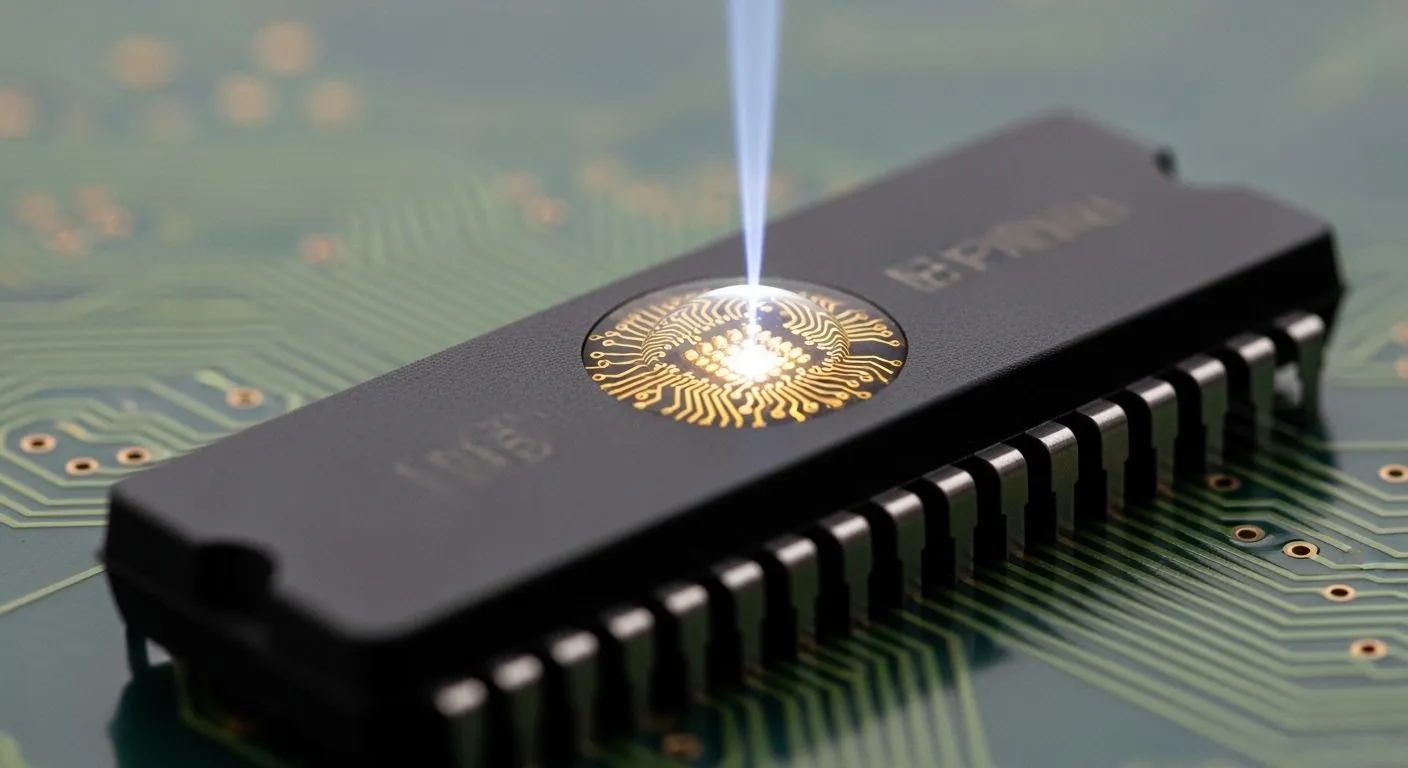
An eprom or Erasable Programmable Read-Only Memory is a non-volatile memory chip. It holds your data storage intact even when you turn off the power. Imagine keeping a digital notebook locked behind a quartz window. You write electronic notes onto the chip, and they stay safe inside. When you need a fresh start, you shine bright ultraviolet light through the glass to wipe the eprom clean. As an authorized HiSilicon solutions partner, Nova Technology Company (HK) Limited delivers expert integrated circuit designs. Silicon systems evolved from classic e prom parts into handy eeprom designs. Today, smart eeprom tech powers many daily electronics!
Key Takeaways
- EPROM chips save your digital data safely even after you turn off the main power source.
- Special ultraviolet light shines through a clear quartz window to erase old data from EPROM memory.
- Modern EEPROM technology lets you change specific data parts electrically without removing chips from circuit boards.
- Flash memory builds on classic chip ideas to move large digital files quickly inside modern electronic devices.
Understanding EPROM and Floating Gate Basics

How Electrons Get Trapped in an E PROM Chip
You can view an e prom cell as a locked water dam. Inside the transistor, a floating gate sits surrounded by insulating walls. High voltage pushes electrons into the gate, trapping them like water behind a dam.
Flash memory works by adding or removing electrons to and from a floating gate. A bit's 0 or 1 state depends on whether the floating gate is charged or uncharged. When electrons are present, current cannot flow through the transistor, representing a binary 0. When electrons are removed, current flows, representing a binary 1. The presence or absence of electrons on the floating gate creates a threshold voltage shift in the transistor, which directly determines the current flow and thus the binary state.
This trapped charge gives the eprom chip solid data retention.
Since the FG is surrounded by highly resistive material, the charge contained in it remains unchanged for long periods of time, typically longer than 10 years in modern devices.
Your eprom retains data without power. Modern eeprom parts build on this, but classic eprom chips rely on this gate.
Using UV Light as an Optical Eraser
To reset an e prom cell, you cannot send an electrical wipe signal like an eeprom device. Instead, you shine ultraviolet light through quartz glass onto an eprom chip to clear trapped charge.
UV-C is the shortest wavelength and the highest energy.
The BK manual states: “When the eraser is working, the power lamp (LED) will light up, the wavelength of the UV lamp operates at 253.7nm (2537 Angstroms). Intel recommends this value for the erasure of their EPROM’s.”
The recommended erasure procedure is exposure to UV light at 253.7 nm of at least 15 Ws/cm2, usually achieved in 20 to 30 minutes with the lamp at a distance of about 2.5 cm.
High-energy photons give electrons enough power to escape the barrier. Once freed, your eprom resets to binary 1, leaving the eprom clean.
Key Physical Features and Real-World Usage
The Purpose of the Quartz Glass Window
Look at your classic e prom chip. You will notice a clear window right in the center. Manufacturers build this window out of fused quartz rather than regular glass or plastic. Standard glass blocks ultraviolet rays, so high-energy light cannot pass through it to reach the silicon.
A quartz low pressure mercury UV-C lamp is the same technology as a normal fluorescent bulb, but without the special Erbium coating inside that converts UV into visible light and with quartz instead of glass, because glass blocks the transmission of UV.
Engineers select quartz for an eprom package due to specific material traits:
- The quartz window transmits ultraviolet light at the required wavelength of 253.7 nm to clear trapped charge.
- Ceramic packaging matches the thermal expansion rate of quartz, preventing physical failure during temperature cycles.
- The transparent fused quartz window keeps the silicon chip visible for full light exposure.
This special structure protects solid data retention inside the eprom cell.
Off-Board Erasure and Programming Voltages
Writing data to an eprom requires high electrical power. You cannot write new data using standard logic levels. Instead, you apply a high programming voltage called Vpp to push electrons onto floating gates. CMOS EPROMs, such as the 27C256 eprom, require a Vpp of 12.5V during programming operations. You must also raise the supply voltage Vcc to 6V during this writing process.
You must pull the eprom chip out of its circuit board to erase it inside a dedicated UV box. This off-board wiping process takes significant time and manual labor. Newer chip designs solved this exact engineering hassle. An eeprom chip allows fast electrical byte-level erasing right inside your system board. An eeprom runs on normal voltage without needing any external light sources, making the original eprom design obsolete for daily use. However, understanding this foundational eprom technology helps you appreciate modern non-volatile memory.
Comparing EPROM vs EEPROM and Flash
Electrical Byte Erasure in EEPROM Chips
You no longer need to pull memory chips off system boards to clear trapped data. Engineers replaced the classic eprom with flexible electrical technology. An eeprom allows you to wipe individual memory cells using targeted electric signals. You can update single bytes while leaving the remaining contents intact. The eeprom relies on Fowler-Nordheim tunneling. This quantum effect moves electrons through a thin silicon dioxide layer without causing structural damage. Classic eprom components lacked this electrical feature.
Nova Technology Company (HK) Limited serves as an authorized HiSilicon solutions partner. We deliver advanced integrated circuit designs and system integration solutions. When comparing eeprom vs. eprom mechanics, byte erasure offers total flexibility for small firmware updates. | Feature | EPROM | EEPROM | | --- | --- | --- | | Erasure mechanism | UV light | Electrical signals | | Erasure granularity | Full chip (entire memory) | Individual bytes | | In-circuit reprogramming | No, requires chip removal | Yes, can remain on board | | Package type | Ceramic with quartz window | Standard plastic packages |
Your modern devices rely on eeprom memory for fast parameter tuning. An eeprom maintains critical settings during power loss. Modern eeprom chips handle thousands of write cycles reliably without physical degradation.
Block-Level Erasure in Modern Flash Drives
Flash architectures evolved from earlier eeprom memory designs to handle large file transfers. While standard eeprom chips alter individual bytes, flash memory erases entire memory blocks at once. This structural change drastically improves overall write performance.
NAND flash memory used in modern USB drives typically has block sizes of 64KB or larger.
When analyzing eeprom vs. flash memory efficiency, block erasure provides a huge speed advantage. Flash requires block erasure before programming, consuming more power than an eeprom. However, erasing multiple bytes in one single operation enables high-density data storage for modern solid-state drives.
You can write large files smoothly across high-capacity flash chips. Early eprom products established the basic floating gate structure, but modern silicon designs favor electric wipes.
Classic eprom tech changed how you save data. An e prom cell relies on a floating gate. High voltage traps electrons inside this gate. UV light gives electrons energy to escape, clearing your eprom part.
Modern designs evolved past early eprom limits. An eeprom board uses electrical signals instead of light. You can reprogram an eeprom easily. An eeprom device updates single bytes. An eeprom unit speeds tweaks. Engineers rely on eeprom systems for changes. Today, eeprom technology offers flexibility. Compact eeprom circuits run smoothly. Every eeprom module handles rewrites. Modern eeprom memory simplifies firmware tasks. Standard eeprom chips deliver endurance. Flash memory builds on earlier concepts to improve data storage.
FAQ
How does an eeprom differ from classic UV memory?
An eprom requires clear UV light to wipe data off-board. In contrast, an eeprom lets you erase data electrically. You can update an eeprom inside your machine easily. An eeprom handles rewrites quickly, while an eprom takes up to 30 minutes to reset.
Can an eeprom retain data without power?
Yes! An eeprom stores your information safely when you turn off power. Devices rely on eeprom tech to save settings. An eeprom unit holds data for years. Your system uses eeprom circuits for stable data retention, so an eeprom never loses critical boot details.
What makes eeprom memory different from flash storage?
You alter single bytes when writing to an eeprom. Flash memory erases large blocks of data at once instead. Standard eeprom hardware offers fine control for small file tweaks. Therefore, an eeprom works great for microcontrollers, while flash handles big storage tasks.
Why do modern eeprom chips use electrical signals instead of UV light?
UV light requires a quartz window on an eprom package. Today, modern eeprom chips eliminate that expensive glass. You send simple electric pulses to erase an eeprom directly. An eeprom saves space, while an eeprom cuts hardware costs and an eeprom speeds up board updates.