Proven Obsolete Semiconductor Sourcing Strategies to Avoid Production Stoppages
Practical guide for buyers and engineers: Proven Obsolete Semiconductor Sourcing Strategies to Avoid Production Stoppages. Sourcing, risk, and selection notes.
Why Obsolete Semiconductors Are a 2025 Production-Line Emergency
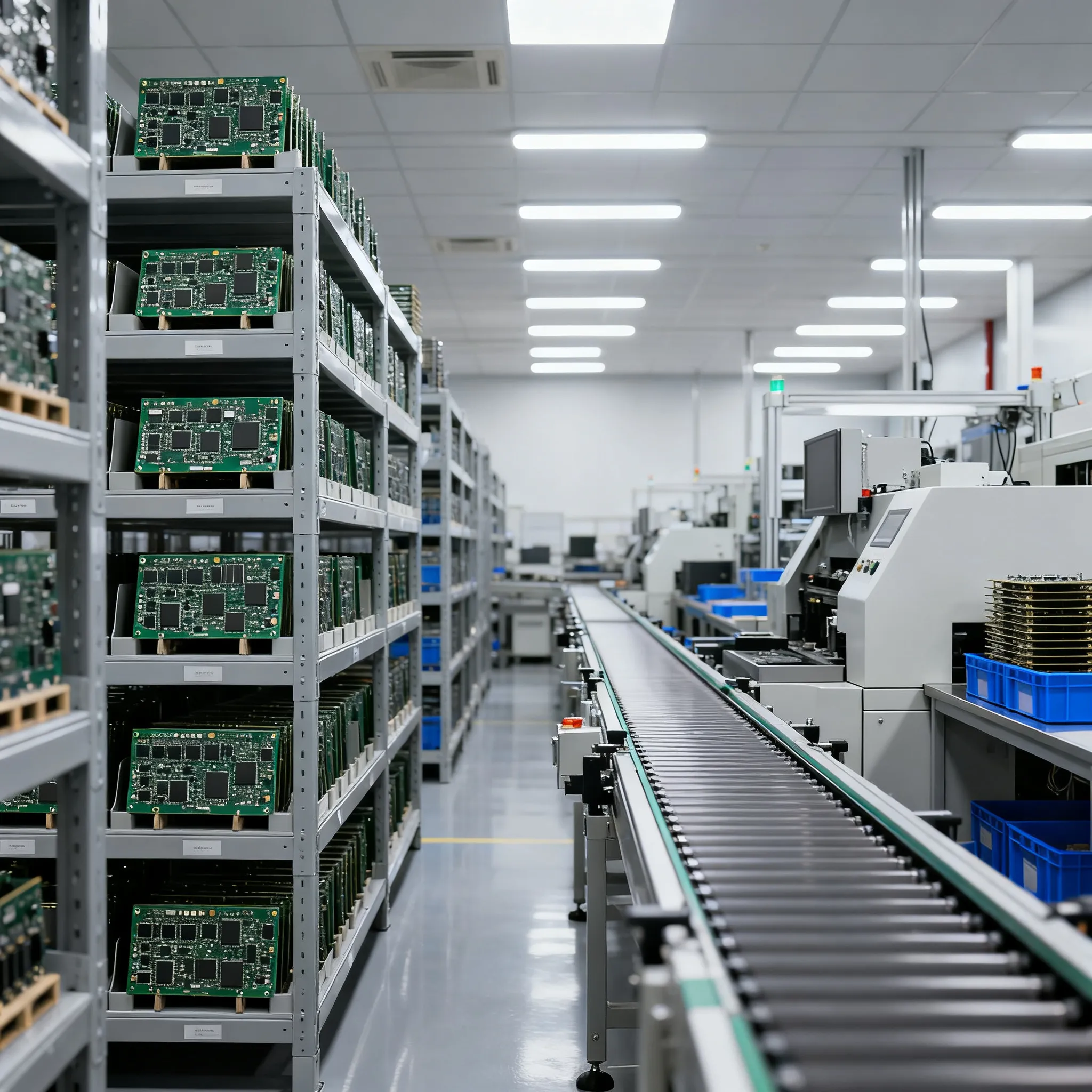
If your production line still treats semiconductor obsolescence as a rare event, 2025 will prove you wrong. The days of occasional EOL notices and manageable last-time buys are over. As RandTech bluntly states, “Semiconductor shortages are no longer an occasional disruption—they are a permanent feature of a high-stakes global economy” (RandTech, 2025). This isn’t hyperbole. Over the past 12 months, we’ve seen a sharp acceleration in component obsolescence driven by fab consolidation, automotive electrification demands, and manufacturers pruning legacy nodes to chase higher-margin chips.
The consequences hit procurement and engineering teams simultaneously. A single EOL notice on a mature microcontroller or power management IC can idle an entire production run. Sourceability’s analysis confirms that “component obsolescence is rising” and that reactive sourcing is no longer sufficient (Sourceability, 2024). In one documented case, a mid-sized industrial controls manufacturer lost six weeks of production because a legacy FPGA was discontinued with only a 90-day notice. The scramble for open-market parts introduced counterfeit devices that passed initial visual inspection but failed under thermal cycling, leading to field returns and a costly recall.
Counterfeit infiltration is the hidden cost of panic buying. When authorized channels dry up, buyers turn to independent brokers where traceability is often thin. GDCA warns that “each [sourcing option] has its risks in terms of counterfeits, reliability, and performance” (GDCA). In 2024, a defense subcontractor discovered that 15% of a batch of obsolete ADCs sourced from an unvetted broker were remarked rejects. The financial damage went far beyond the component cost: line-down time, rework, and requalification ate into margins. These aren’t isolated incidents. They’re the new normal for any organization that hasn’t built a proactive obsolescence management plan.
The AllPCB team reinforces this urgency, noting that successful procurement now demands “diversified sourcing, strategic partnerships with electronic component distributors, and exploring alternative component options” (AllPCB, 2025). The message is clear: you can’t rely on a single channel or a reactive mindset. The following sections lay out the proven strategies that keep production moving when the datasheet says “NRND” and the distributor says “zero stock.”
The Sourcing Landscape for Discontinued ICs: Channels, Costs, and Counterfeit Risk
When a semiconductor goes obsolete, you have four primary avenues to secure inventory: authorized distributors executing last-time buys, independent brokers holding residual stock, excess inventory aggregators, and legacy equipment manufacturers who specialize in continuing production of discontinued parts. Each channel comes with a distinct profile of lead time, unit cost, counterfeit risk, and traceability. Understanding these trade-offs is the foundation of any effective sourcing strategy.
Authorized distributors remain the safest route for last-time buys (LTB). You place a final order directly with the component manufacturer, often with extended lead times of 12–20 weeks, and receive factory-fresh, fully traceable parts. The unit cost is typically at or near standard pricing, but you must commit to a lifetime buy quantity upfront. This ties up capital and warehouse space. For many mid-volume producers, that financial burden is unacceptable.
Independent brokers offer immediate availability from stock, sometimes at multiples of the original price. The counterfeit risk, however, is significant. Parts may be reclaimed, re-marked, or stored improperly. Without rigorous incoming inspection, you’re gambling. Excess inventory aggregators—platforms that pool surplus from OEMs and CMs—can offer a middle ground: better pricing than brokers, some traceability, but inconsistent availability and often no warranty. Finally, legacy equipment manufacturers like GDCA provide authorized, tested replacements built to the original specifications, with full warranty and traceability, but at a higher unit cost and with manufacturing lead times that can stretch to several weeks.
The table below quantifies these differences based on industry data and field experience.
| Sourcing Channel | Typical Lead Time | Relative Unit Cost | Counterfeit Risk | Traceability Level |
|---|---|---|---|---|
| Authorized Distributor (Last-Time Buy) | 12–20 weeks | 1× (standard) | Very Low | Full manufacturer CoC, date/lot codes |
| Independent Broker | Immediate to 1 week | 2×–10× (market-driven) | High | Variable; often only broker CoC |
| Excess Inventory Aggregator | 1–4 weeks | 1.5×–4× | Moderate | Partial; OEM surplus documentation may be available |
| Legacy Equipment Manufacturer | 4–12 weeks (manufacturing) | 2×–5× | Very Low | Full traceability, warranty, test reports |
Key takeaway: If your production volume is high and predictable, the last-time buy through authorized distribution is the gold standard for cost and authenticity. For lower volumes or uncertain demand, the legacy manufacturer model offers a compelling blend of security and flexibility without the capital lock-up. The broker channel should be a last resort, and only with a rigorous verification protocol in place—a topic we’ll explore in detail later.
AnySilicon underscores that obsolete semiconductors “can be sourced through brokers, excess inventory, and global supplier networks” (AnySilicon), but the burden of due diligence falls entirely on the buyer. The next section compares the three overarching strategies that emerge from these channel options.
Broker, Legacy Manufacturer, or Redesign: Choosing a Long-Term Sourcing Strategy
When an IC goes obsolete, you’re really choosing among three strategic paths: continue buying through the open market (brokers), partner with a legacy equipment manufacturer to secure a dedicated supply, or commit to a board redesign that eliminates the obsolete part entirely. The right choice depends on your production volume, product lifecycle, certification constraints, and risk tolerance. The comparison matrix below draws on insights from AnySilicon, AllPCB, GDCA, and Enicstra to help you evaluate these options side by side.
| Comparison Metric | Independent Broker (Open Market) | Legacy Equipment Manufacturer (e.g., GDCA) | Board Redesign with Modern IC |
|---|---|---|---|
| Speed to Secure Supply | Fast (days) — if stock exists | Moderate (weeks to months) — requires manufacturing run | Slow (months) — design, layout, requalification |
| Unit Cost (Relative) | High and volatile; 2×–10× original | Moderate; 2×–5× original, stable pricing | Low long-term; modern IC at standard pricing, but NRE high |
| Supply Continuity | Unpredictable; stock may vanish overnight | Guaranteed as long as legacy manufacturer supports the part | Excellent; modern ICs have long production horizons |
| Counterfeit Mitigation | Poor unless rigorous in-house testing is applied | Excellent; parts are newly manufactured and tested | Excellent; new parts from authorized distribution |
| Certification / Regulatory Impact | High risk; traceability gaps can fail audits | Low risk; full documentation and warranty | Potentially high; redesign may trigger recertification (FCC, CE, UL) |
| Capital Outlay | Per-order; no upfront investment | Moderate; may require a minimum order or contract | High; engineering time, tooling, test development |
The broker path is tempting when a line is down and you need parts yesterday. But as GDCA notes, “each has its risks in terms of counterfeits, reliability, and performance, and they are not guaranteed to be around for the length of time that you’ll actually need those sources” (GDCA). For products with long field service lives—medical devices, industrial controllers, defense systems—the broker model is unsustainable.
Legacy equipment manufacturers flip the equation. Companies like GDCA specialize in “manufacturing, engineering, and sourcing discontinued electronics” (GDCA). They often hold or acquire the original die, test programs, and packaging specifications, enabling them to produce form-fit-function replacements under license or through reverse engineering. This approach provides authorized, warrantied parts that keep your existing design intact. It’s particularly attractive when recertification costs are prohibitive.
Redesign is the nuclear option. Enicstra points out that “when semiconductor manufacturers stop producing specific chips or circuit boards, PLC manufacturers lose the ability to build modules even if customer demand remains strong” (Enicstra). If your product volume justifies the NRE and you can absorb the requalification timeline, moving to a modern, widely available IC eliminates obsolescence risk for years. AllPCB reinforces that “exploring alternative component options” is a core pillar of resilient procurement (AllPCB). The key is to run the total cost of ownership: a $50k redesign may be cheap compared to a single line-down event that costs $200k per day.
Verifying Obsolete ICs and Building a Proactive Obsolescence Plan
Even the best sourcing strategy collapses without a robust verification protocol. Counterfeiters have become adept at sanding, re-marking, and re-packaging ICs to pass casual inspection. For obsolete parts sourced outside authorized channels, you need a layered defense. Start with full traceability documentation: certificates of conformance, distributor chain records, and date/lot code consistency. Automa’s guide emphasizes that “requesting full traceability documentation including certificates of conformance and distributor chain records” is the first line of defense (Automa, 2025).
Next, electrical testing against the original datasheet specifications is the most reliable verification step for functional integrity. For high-value semiconductors—FPGAs, processors, precision ADCs—third-party labs can perform X-ray inspection to reveal die inconsistencies and decapsulation analysis to confirm the die markings and structure. The table below summarizes the verification techniques you should apply based on part criticality and sourcing channel.
| Verification Method | What It Detects | When to Apply | Typical Turnaround |
|---|---|---|---|
| Visual / Microscopic Inspection | Sand marks, inconsistent font, bent leads, oxidation | All incoming broker parts | Minutes |
| X-ray Inspection | Die size, wire bond anomalies, missing die | High-value ICs, suspect lots | 1–2 days (lab) |
| Decapsulation & Die Analysis | Die markings, manufacturer logo, process node | Critical parts, forensic verification | 3–5 days |
| Electrical Parametric Testing | Functional specs (VIH, VOL, IDD, timing) | All parts before production use | Hours to days (depends on test coverage) |
| Traceability Documentation Review | Supply chain gaps, date/lot mismatches | Every broker or aggregator purchase | Hours |
Verification is your safety net, but proactive obsolescence management prevents you from needing the net in the first place. The cornerstone is a BOM risk management tool that monitors product change notifications (PCNs) and end-of-life (EOL) announcements across all your suppliers. Z2Data’s best practices note that “PCNs and EOLs are essential because they allow customers to plan and prepare for the eventual obsolescence of a particular semiconductor product” (Z2Data). By integrating such a tool into your PLM or ERP system, you can receive automated alerts the moment a part’s lifecycle status changes from “Active” to “Not Recommended for New Design” or “EOL.”
Beyond monitoring, assign a risk score to each BOM line based on the part’s lifecycle stage, number of alternate sources, and criticality to the product. High-risk items should trigger a predefined workflow: evaluate last-time buy quantities, engage a legacy manufacturer for a continuity agreement, or initiate a redesign feasibility study. Sourceability’s research reinforces that proactive risk scoring and cross-referencing alternate sources are no longer optional (Sourceability). When you combine real-time monitoring with a verified alternate sourcing network, you transform obsolescence from a crisis into a manageable logistics exercise.
Tip: For products with 10+ year service commitments, establish a relationship with a legacy specialist like GDCA early. Even if you don’t need parts today, having a pre-negotiated manufacturing agreement can cut lead times from months to weeks when an EOL hits.
Sourcing Obsolete Semiconductors: Questions from the Field
Q: How can I quickly verify that an obsolete IC is not counterfeit?
A: Request full traceability documentation, including certificates of conformance and distributor chain records. Electrical testing against original datasheet specs is most reliable; for high-value parts, use third-party X-ray or decapsulation analysis. Automa’s guide confirms that “electrical testing against original technical specifications is the most reliable verification step” (Automa).
Q: When should I opt for a last-time buy instead of relying on the open market?
A: If the component is critical with no drop-in replacement and you can forecast lifetime demand, a last-time buy secures supply at standard cost. However, it ties up capital and storage; for lower volumes or uncertain demand, a legacy manufacturer partnership may be more flexible. GDCA highlights that last-time buys “are not guaranteed to be around for the length of time that you’ll actually need those sources” if your forecasts are off (GDCA).
Q: What are the risks of sourcing from independent brokers?
A: Counterfeit risk is high; parts may be reclaimed, remarked, or fail under stress. Mitigate by working only with brokers who provide full traceability and allow independent testing. AnySilicon notes that brokers and excess inventory are common channels but require rigorous due diligence (AnySilicon).
Q: How do I set up proactive obsolescence monitoring for my BOM?
A: Use a BOM risk management tool like Z2Data that tracks PCN and EOL announcements across suppliers. Cross-reference with lifecycle status and alternate sources. Z2Data’s best practices emphasize that “PCNs and EOLs are essential because they allow customers to plan and prepare” (Z2Data).
Q: Is it worth redesigning a board just to replace an obsolete semiconductor?
A: Redesign costs can be high but may be justified if the part is critical, volumes are large, and the replacement offers better availability. Evaluate total cost of ownership including requalification. Enicstra’s guide underscores that obsolescence can force a redesign when “PLC manufacturers lose the ability to build modules” (Enicstra).
Q: How can legacy equipment manufacturers help with obsolete parts?
A: Companies like GDCA specialize in manufacturing, engineering, and sourcing discontinued electronics, offering authorized, tested replacements with full warranty and long-term support. They provide a bridge between last-time buys and full redesigns (GDCA).
References & Further Reading
- Navigating the Semiconductor Shortage: Proven Component Procurement Strategies for 2025 – AllPCB
- Strategies for Managing Obsolete Semiconductors – GDCA
- Strategic Sourcing Strategies to Overcome Semiconductor Shortages in 2025 – RandTech
- Component Obsolescence is Rising – Sourceability
- Obsolete Semiconductors: Sourcing, Replacement & Supply Solutions – AnySilicon
- Complete Guide to Sourcing Discontinued PLC Parts in 2025 – Enicstra
- Semiconductor Obsolescence Management Best Practices – Z2Data
- Obsolete Parts Sourcing: A Complete Guide for 2026 – Automa
Conclusion: Obsolete semiconductor sourcing is no longer a niche skill—it’s a core competency for any engineering or procurement team that wants to keep production lines running. The strategies outlined here—diversifying channels, vetting legacy manufacturers, implementing rigorous verification, and building proactive BOM monitoring—form a repeatable defense against the permanent shortage economy. For engineers and buyers managing mixed BOMs with both active and discontinued parts, a platform like IC-Online can streamline sourcing with flexible MOQs and a global network of verified suppliers, helping you bridge the gap between last-time buys and long-term redesigns.