Ranking the Top Bluetooth Modules for Embedded Systems
The Nordic nRF5340 is the top Bluetooth module for 2025. It provides excellent Bluetooth connectivity for many Internet of T
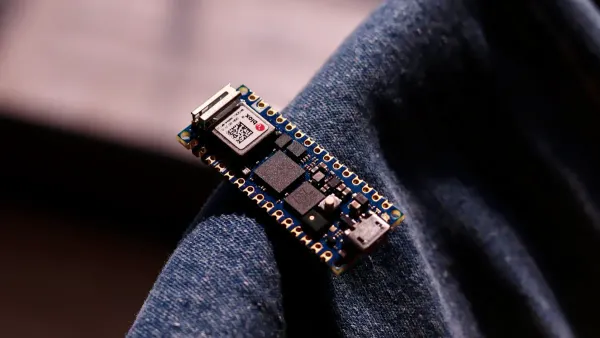
The Nordic nRF5340 is the top Bluetooth module for 2025. It provides excellent Bluetooth connectivity for many Internet of Things (IoT) devices. While it leads, other highly rated Bluetooth solutions for embedded systems are better for specific tasks. These unique solutions power many IoT devices. The world of IoT requires diverse Bluetooth options for different systems. Many IoT devices use specialized Bluetooth technology. Finding the right IoT solutions for your IoT project is vital. The success of any IoT application depends on the correct IoT hardware.
Key Takeaways
- The Nordic nRF5340 is a top Bluetooth module. It has two cores for strong performance. It is good for complex devices like advanced audio equipment.
- The Espressif ESP32-C3 is a good choice for low-cost projects. It has both Wi-Fi and Bluetooth. It works well for smart home devices and hobby projects.
- The Silicon Labs EFR32BG22 uses very little power. It helps devices run for years on a small battery. It is best for sensors and medical devices that need long battery life.
- The Texas Instruments CC2640R2F is very stable and reliable. It is good for smart home products like connected lights. It provides steady connections.
- Choosing the right Bluetooth module depends on your project's needs. Think about power use, how fast it needs to be, and how much it costs. This helps you pick the best one.
Top 5 Highly Rated Bluetooth Solutions for Embedded Systems
Choosing the right module is critical for any project in the Internet of Things. The market offers many highly rated Bluetooth solutions for embedded systems. Each one has unique strengths. This guide breaks down the top five options to help developers select the best fit for their specific needs. These solutions power countless connected devices worldwide.
1. Nordic nRF5340
The Nordic nRF5340 stands out as a premier choice for high performance applications. Its dual-core architecture is a key differentiator. This design allows for powerful processing while maintaining efficient connectivity. It is one of the most advanced Bluetooth solutions available for complex IoT systems.
The module separates tasks between two processors. This separation optimizes performance for demanding IoT devices.
- Application Core: A full-featured Arm Cortex-M33F core runs at up to 128 MHz. It handles complex application logic and digital signal processing.
- Network Core: A secondary Arm Cortex-M33 core operates at 64 MHz. It manages the Bluetooth radio stack, ensuring reliable connectivity.
The nRF5340 includes an on-chip Flash node for storage. It also features an on-chip Nordic VMC (Volatile Memory Controller) to manage its memory resources effectively. This high performance architecture makes it ideal for advanced edge computing tasks.
Key Specifications:
- MCU: Dual-core Arm Cortex-M33 (128 MHz application processor + 64 MHz network processor)
- Memory: 1 MB Flash / 512 KB RAM
- Bluetooth: Bluetooth 5.3, Bluetooth Low Energy, LE Audio, Direction Finding
- Power: Excellent low-power performance for its feature set
Pros & Cons:
- ✅ Pros: Unmatched processing power with dual-core design. Supports next-generation LE Audio. Advanced security features.
- ❌ Cons: Higher cost compared to simpler modules. The complexity can be overkill for basic IoT devices.
Ideal Applications: This module excels in sophisticated IoT devices requiring significant processing power. It is perfect for professional audio equipment, advanced wearables, and complex industrial sensors that process data at the edge.
2. Espressif ESP32-C3
The Espressif ESP32-C3 is a versatile and cost-effective powerhouse. It combines Wi-Fi and Bluetooth connectivity in a single chip. This makes it a go-to for many Internet of Things projects that need multiple wireless options. The ESP32-C3 provides robust security solutions to protect connected devices from remote and physical attacks.
Its technical profile is impressive for its price point.
- MCU: A single-core, 32-bit RISC-V processor running up to 160 MHz.
- Memory: 400 KB of SRAM and typically 4 MB of flash.
- Connectivity: Integrated 2.4 GHz Wi-Fi and Bluetooth 5 (LE) with long-range support.
- I/O: 22 programmable GPIOs support various peripherals like ADC, SPI, and I2C.
Note: The ESP32-C3 supports secure boot, flash encryption, and hardware acceleration for cryptographic algorithms, providing strong protection for sensitive data.
Comparison with nRF5340: While the nRF5340 offers superior dual-core processing for high performance Bluetooth tasks, the ESP32-C3 provides an unbeatable combination of Wi-Fi and Bluetooth connectivity at a lower cost. The nRF5340 lacks integrated Wi-Fi, which complicates designs needing both. However, for pure Bluetooth Low Energy applications focused on low power, Nordic's solutions generally consume less current.
Ideal Applications: The ESP32-C3 is perfect for smart home devices, simple IoT sensors, and hobbyist projects where both Wi-Fi and Bluetooth are needed. Its low cost makes it one of the best IoT solutions for mass-market connected products.
3. Silicon Labs EFR32BG22
The Silicon Labs EFR32BG22, often called the BG22, is the champion of ultra-low power. It is designed for IoT devices that must operate for years on a single coin cell battery. This makes it one of the top highly rated Bluetooth solutions for embedded systems where power efficiency is the primary concern.
The BG22 achieves its remarkable efficiency through a combination of hardware and software optimizations.
- MCU: A high-performance 32-bit ARM Cortex-M33 core running up to 76.8 MHz.
- Memory: Up to 512 kB of flash and 32 kB of RAM.
- Power Consumption: It boasts an active current of only 26 μA/MHz and a deep sleep current as low as 1.40 μA with full RAM retention.
| Feature | Specification |
|---|---|
| MCU Core | ARM Cortex-M33 |
| Core Frequency | 76.8 MHz |
| Flash Memory | 512 kB |
| RAM Memory | 32 kB |
| RX Current | 3.6 mA |
| TX Current (0 dBm) | 4.1 mA |
Comparison with nRF5340: The nRF5340 is built for high performance, while the BG22 is built for endurance. The nRF5340's dual-core architecture consumes more power, making it unsuitable for long-life, battery-powered devices where the BG22 excels. If your application needs to process large amounts of data quickly, the nRF5340 is the better choice. If it needs to last for a decade on a battery, the BG22 is the clear winner.
Ideal Applications: The BG22 is the best bluetooth module for environmental sensors, asset tags, smart locks, and medical wearables. Any application where changing the battery is difficult or impossible is a perfect use case for this ultra-low-power Bluetooth solution.
4. Nordic nRF52840
The Nordic nRF52840 is a mature and widely adopted System-on-Chip (SoC). It set the standard for high-end Bluetooth connectivity before the nRF5340 arrived. It remains one of the most popular and highly rated Bluetooth solutions for embedded systems due to its robust feature set, extensive documentation, and strong community support. It is a reliable choice for many IoT systems.
This module provides a balanced mix of performance, features, and power efficiency.
- MCU: An ARM® Cortex®-M4F processor optimized for ultra-low power operation.
- Memory: 1 MB of Flash and 256 kB of RAM.
- Protocol Support: It supports Bluetooth 5, Thread, Zigbee, ANT, and NFC, making it extremely versatile for various IoT technology protocols.
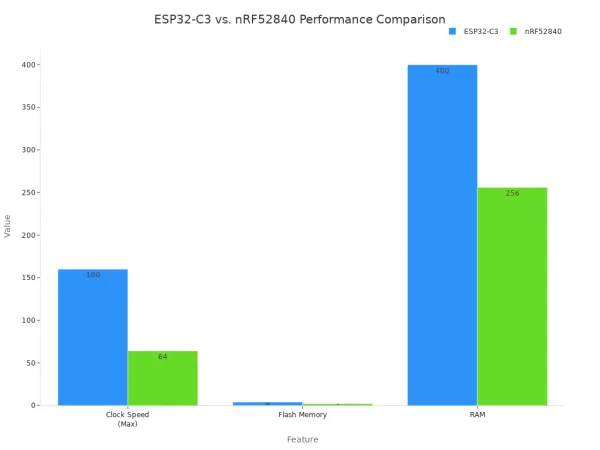
Comparison with nRF5340: The nRF52840 can be seen as the predecessor to the nRF5340. The nRF5340 offers more processing power with its dual-core design and supports newer features like LE Audio. However, the nRF52840 is often more than sufficient for many applications and comes at a lower price point. Its maturity means its development ecosystem is incredibly stable, a key factor for commercial products. Many end-to-end IoT platforms support this module.
Ideal Applications: The nRF52840 is a workhorse for a wide range of connected devices. It is suitable for advanced wearables, smart home hubs, and industrial mesh networks. Its multiprotocol support makes it great for devices that need to communicate across different IoT platforms.
5. Texas Instruments CC2640R2F
The Texas Instruments CC2640R2F is known for its stability and reliability, especially in long-term deployments. While not the newest chip on the block, its robust Bluetooth stack and predictable performance have made it a favorite in specific sectors of the Internet of Things. It provides dependable wireless connectivity for devices that need to stay connected.
This module focuses on delivering a solid and secure Bluetooth connection.
- MCU: A 48 MHz ARM Cortex-M3 core as the main processor.
- Memory: 128 KB of system programmable flash memory and up to 28 KB of SRAM.
- Bluetooth Stack: It supports both Bluetooth 4.2 and Bluetooth 5.0 protocols, with a highly optimized and stable stack that leaves ample memory for user applications.
Comparison with nRF5340: The CC2640R2F is a more modest solution compared to the nRF5340. It has a less powerful MCU and less memory. The nRF5340 is designed for cutting-edge, data-intensive applications, while the CC2640R2F is designed for reliability and ease of use in more straightforward Bluetooth applications. For devices where stability is more important than raw processing power, the CC2640R2F is a very strong contender. It is a trusted component in many established IoT solutions.
Ideal Applications: This module is an excellent choice for smart home products like connected lighting, simple sensors, and remote controls. Its stable performance and TI's strong support make it a safe bet for commercial products requiring dependable Bluetooth connectivity without the need for high performance data processing at the edge.
Best Bluetooth Modules by Specific Application
Selecting a module often comes down to the primary goal of your project. While some modules are great all-rounders, others are purpose-built to excel in one specific area. This section highlights the top solutions for four common IoT applications, helping you match the right hardware to your unique requirements for your connected devices. These specialized solutions power many of the best IoT devices on the market.
Best for Ultra-Low Power Internet of Things: Silicon Labs EFR32BG22
When battery life is the most critical metric, the Silicon Labs EFR32BG22 is the undisputed leader. This module is engineered from the ground up for endurance. It enables Internet of Things devices to operate for years on a single small battery. This capability is essential for deploy-and-forget IoT sensors in remote or inaccessible locations. The BG22 provides excellent Bluetooth connectivity for these scenarios.
The module's power efficiency is truly remarkable. The Silicon Labs EFR32BG22 SoC shows a deep-sleep current of just 1.40 µA. This measurement occurs while retaining 32 kB of RAM and running the clock. This incredibly low power draw allows some variants to achieve a 10-year coin-cell battery life. Such longevity makes it one of the best solutions for long-term IoT deployments. Its fast wake-up times ensure it can transmit data and return to sleep quickly, further preserving energy. For any battery-powered IoT project, this module offers top-tier performance.
Best for Smart Home Devices: Texas Instruments CC2640R2F
Stability is king in the smart home market. Users expect their connected devices to work flawlessly every time. The Texas Instruments CC2640R2F delivers this reliability. It has become a trusted choice for home automation products. Its mature and robust Bluetooth stack ensures dependable connectivity for devices that form the backbone of a modern connected home. Many developers choose these solutions for their smart home systems.
The CC2640R2F's design focuses on creating a strong and stable link. This makes it ideal for the crowded 2.4GHz environment of a typical home.
- It supports Bluetooth low energy 4.2 and 5 specifications for broad compatibility.
- The module has excellent receiver sensitivity (–97dBm), which helps it hear faint signals.
- It offers a programmable output power up to +5dBm to ensure its signal is heard.
- It supports Over-the-Air (OTA) updates, allowing for easy firmware upgrades on deployed devices.
This focus on reliable connectivity is why the CC2640R2F is found in commercial products like Bluetooth Low Energy smart locks. It provides the stable performance needed for essential home security and automation IoT devices. It is a key component for many IoT platforms.
Best for High-Fidelity Audio: Nordic nRF5340
The future of Bluetooth audio is wireless, high-fidelity, and low-latency. The Nordic nRF5340 is at the forefront of this revolution. Its powerful dual-core architecture and support for next-generation Bluetooth standards make it the best choice for high performance audio applications. This module can process large amounts of audio data with minimal delay. This capability is crucial for a premium listening experience. The nRF5340 provides the high performance needed for these advanced audio solutions.
The module's support for LE Audio and the LC3 codec is a game-changer. This technology allows it to stream high-quality audio using less power than classic Bluetooth audio. Its dual-core design dedicates one processor to managing the complex Bluetooth protocol, ensuring a stable connection while the main processor handles the audio data. This separation of tasks delivers impressive high performance for streaming data. The module's ability to handle complex data at the edge makes it perfect for advanced audio systems.
| Metric | Value |
|---|---|
| Total Throughput (Combined) | ~1160 kbps |
| Maximum Transport Latency | 10 ms |
This high throughput and low latency ensure that audio is synchronized and crystal clear. It is the top choice for developers building professional audio equipment, high-end earbuds, and other advanced audio devices. The nRF5340 is a key part of modern edge computing solutions.
Best for Cost-Effective Projects: Espressif ESP32-C3
Bringing an IoT product to market often involves a careful balance between features and cost. The Espressif ESP32-C3 excels in this area. It offers an unbeatable price-to-performance ratio. This makes it the go-to module for startups, hobbyists, and large-scale commercial deployments where budget is a key constraint. The module combines both Wi-Fi and Bluetooth connectivity, adding immense value. This dual-connectivity is a huge advantage for many Internet of Things projects.
The ESP32-C3 is not just cheap; it is also designed for mass production. Espressif ensures the module is readily available. The company also provides testing schemes specifically for factories. This simplifies RF performance testing and reduces hardware costs during manufacturing. Its efficient memory management provides developers with more usable space for their application code. This ease of integration and low cost make the ESP32-C3 one of the best IoT solutions for getting connected products to market quickly and affordably. It is a popular choice on many IoT platforms.
Key Decision Criteria for Your Module
Selecting the ideal Bluetooth module requires a careful analysis of technical specifications. Developers must match a module's capabilities with their project's specific needs. This checklist covers the essential criteria for making an informed decision for your Internet of Things devices. Evaluating these factors ensures the chosen solutions provide the right balance of performance, power, and price for any IoT application.
Bluetooth Version and Protocol Support
The Bluetooth specification directly impacts a device's capabilities. Different protocols serve different purposes. For example, Bluetooth Classic is for continuous data streaming, while Bluetooth Low Energy is for low-power, intermittent data transfers common in IoT. Bluetooth Mesh extends connectivity to large-scale networks.
| Feature | Bluetooth Classic | Bluetooth Low Energy (BLE) | Bluetooth Mesh (on BLE) |
|---|---|---|---|
| Primary Use | Continuous data streaming | Low-power, intermittent data | Large-scale device networks |
| Power Cons. | Higher | Ultra-low | Low (inherits from BLE) |
| Topology | Piconet (master-slave) | Flexible (point-to-point, broadcast) | Many-to-many, self-healing |
Newer Bluetooth versions also introduce critical features for modern IoT systems.
| Feature | Bluetooth 5.2 | Bluetooth 5.3 | Bluetooth 5.4 |
|---|---|---|---|
| Key Focus | LE Audio, LC3 codec | Efficiency, stability | PAwR (large networks), IoT |
| Target Use Cases | Audio-centric devices | General IoT applications | Sensor networks, smart retail |
Power Consumption Metrics
For battery-powered devices, power consumption is a top priority. Key metrics determine how long a device can operate.
- Sleep Current: The power used when the device is idle. A low sleep current (around 1 µA) is vital for long battery life.
- Active Current: The power used during data transmission (TX) or reception (RX).
- Advertising Interval: The frequency of sending out Bluetooth signals. A longer interval saves power but makes the device slower to discover.
Analyzing these metrics helps estimate the battery life of connected devices.
MCU Core and Performance
The microcontroller (MCU) core is the brain of the Bluetooth module. It runs the application code and manages connectivity. The two most common architectures are ARM Cortex-M and RISC-V. ARM offers a mature, high performance ecosystem. RISC-V is an open standard that allows for more customization, making it a strong choice for specialized edge computing tasks. The choice affects toolchain support and overall system performance for processing data at the edge.
Memory (Flash and RAM)
Memory determines the complexity of the application a module can run.
- Flash: Stores the firmware and application code. More Flash is needed for complex applications and to support Over-the-Air (OTA) firmware updates. A simple Bluetooth beacon might use 512KB of Flash.
- RAM: Holds temporary data during operation. More RAM is required for applications that handle large amounts of data or run complex algorithms. A wearable device might need 64KB of RAM.
Operating Temperature and Certifications
Modules are rated for specific temperature ranges.
- Commercial Grade: Typically 0°C to 70°C, suitable for most consumer devices.
- Industrial Grade: Typically -40°C to 85°C, required for devices in harsh environments.
Certifications like FCC (USA) and CE (Europe) are mandatory for selling products in those regions. Using a pre-certified Bluetooth module simplifies this process.
Development Ecosystem and Support
A strong development ecosystem accelerates project timelines. Top vendors like Nordic, Espressif, and Silicon Labs offer excellent documentation, software tools, and community forums. These resources are critical for troubleshooting and implementing advanced features. For highly specialized projects, developers may also turn to expert solutions partners. For instance, Nova Technology Company (HK) Limited is a HiSilicon-designated (authorized) solutions partner, providing deep technical support for complex IoT platforms and high performance systems. This kind of support is invaluable for bringing advanced IoT technology to market.
Price Range and Availability
The cost of a Bluetooth module directly affects the final product's price. For mass production, module prices can range from $6 to $15 per unit. Ordering in bulk quantities often reduces the unit cost significantly. Developers must also consider module availability to avoid production delays. Choosing a widely available module from a reputable supplier ensures a stable supply chain for your Internet of Things project. These solutions are vital for scaling IoT platforms.
The Nordic nRF5340 is one of the highly rated bluetooth solutions for embedded systems, offering top-tier high performance for complex Internet of Things (IoT) devices. Its ability to process bluetooth data at the edge makes it a leader. For specific needs, other bluetooth solutions excel. The Silicon Labs EFR32BG22 offers the best bluetooth low energy efficiency for connected devices. The Texas Instruments CC2640R2F provides stable bluetooth connectivity for smart home systems. The Espressif ESP32-C3 is the top bluetooth module for budget-friendly IoT projects. These IoT solutions power many connected IoT devices.
For your next IoT project, use the "Key Decision Criteria" checklist. This helps map your requirements to the best bluetooth solutions. It ensures your connected devices have the right high performance for handling bluetooth data. This process helps build better IoT systems and IoT platforms. Choosing the right bluetooth technology is key for all IoT data.
FAQ
What is the main benefit of a dual-core module for an iot device?
A dual-core module separates tasks. One core handles the application logic. The other core manages the wireless protocol. This design improves performance and reliability for a complex iot device. It is essential for advanced iot projects that process large amounts of data.
Should developers choose a module with both Wi-Fi and Bluetooth?
It depends on the project's needs.
- For a simple sensor-based iot device, Bluetooth Low Energy is often enough.
- For an iot device needing a direct internet connection, a combo chip is ideal.
- Many smart home iot products benefit from having both options.
Why is Bluetooth 5.x important for the future of iot?
Bluetooth 5.x introduces key features for the iot world. It offers longer range, higher speeds, and improved power efficiency. It also enables LE Audio and large-scale mesh networks. These advancements support the next generation of connected iot devices and complex iot applications.
How does memory size impact an iot project?
Memory size limits an application's complexity.
Flash memory stores the device's firmware. More flash allows for richer features and over-the-air updates. RAM holds operational data. More RAM is necessary for an iot device that performs real-time data analysis.