How Type C Is Shaping Consumer and Industrial Electronics
What is a Type C? It's a universal connector powering fast charging, data, and video in consumer and industrial electronics.
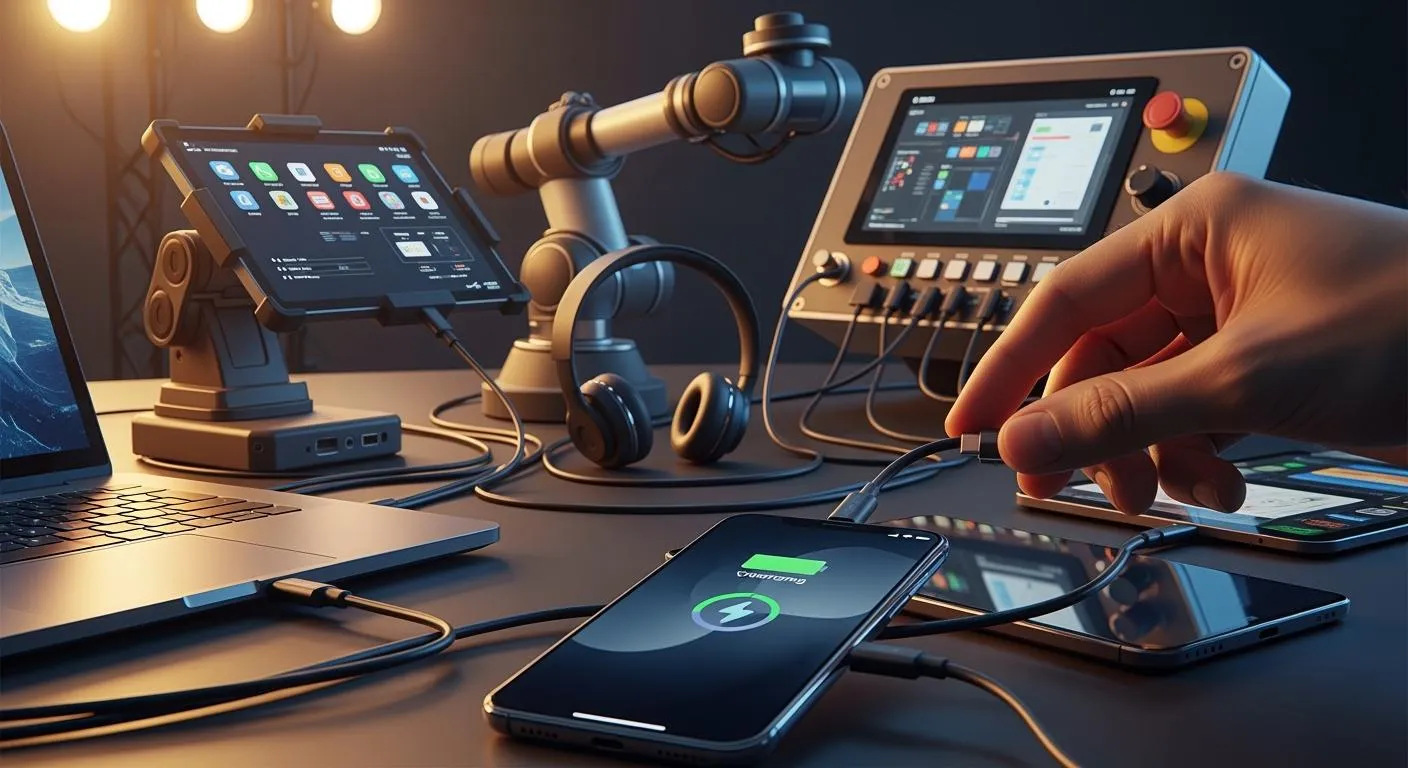
You may wonder what is a type c and why it matters for your devices. USB-C is a modern connector that has changed how you connect to technology. You use usb-c in smartphones, laptops, and even industrial machines. This connector stands out because you do not have to worry about which way you plug it in. The table below shows how usb-c compares to older usb connectors:
| Feature | USB Type-C | Previous Standards |
|---|---|---|
| Connector Shape | Oval and thicker, flippable | Varies, often rectangular |
| Orientation | No up or down orientation | Typically has a specific orientation |
| Cable Ends | Same connector on both ends | Different connectors at each end |
| Data Transfer Speed | Up to 10Gbps (USB 3.2 Gen 2) | Varies, often lower speeds |
| Power Delivery | Supports simultaneous data and power | Limited power delivery capabilities |
| Backward Compatibility | Yes, with older USB standards | Varies by standard |
When you choose usb-c, you join millions who rely on this universal connector standard every day. USB-C adoption in mobile devices is nearing 95%, and you can see its influence in both consumer and industrial electronics. The global usb market continues to grow, driven by the flexibility and speed that usb-c brings to the universal serial bus world. You experience the benefits of usb type c through faster charging, easier connections, and more reliable performance in all your devices. If you want a connector that keeps up with current trends, c is the answer.
Key Takeaways
- USB Type-C connectors are reversible, making it easy to plug in without worrying about orientation.
- This universal connector supports high-speed data transfer and power delivery, reducing the need for multiple cables.
- USB-C is widely adopted in smartphones, laptops, and other devices, promoting compatibility and reducing electronic waste.
- Using USB-C simplifies connections, allowing one cable to handle charging, data, and video for various devices.
- The growing market for USB-C is expected to reach $15.2 billion by 2030, highlighting its importance in modern electronics.
What Is a Type-C Connector
USB-C Design and Functionality
You interact with usb-c every day, but you may not realize how much its design improves your experience. The usb type-c connector uses a 24-pin reversible structure. This means you can plug it in either way—no more flipping the cable to find the right side. The symmetrical shape of the c connector eliminates the frustration you felt with older usb connectors like USB-A or Micro-USB. You never have to check for a top or bottom, which saves you time and effort.
Here is a quick look at the technical specifications of the usb type-c connector:
| Specification | Details |
|---|---|
| Connector Type | USB Type-C (24-pin reversible connector) |
| Pin Configuration | 24 pins, allowing for data transfer, power delivery, and video output |
| Physical Dimensions | Compact and reversible |
| Protocols Supported | USB, Thunderbolt, DisplayPort, HDMI, PCIe, etc. |
| Adoption Date | Type-C Specification 1.0 published on August 11, 2014 |
You benefit from this advanced design in several ways:
- The usb-c port supports high-speed data transfer, fast charging, and video output—all through one connector.
- You can use the same cable for your phone, laptop, and even external displays.
- The compact size of the usb type-c connector allows device makers to create thinner and lighter products.
Tip: If you want to avoid cable clutter and confusion, choose devices with a usb-c port. You will find it much easier to connect and charge your electronics.
The usb-c connector replaced legacy connectors such as USB-A and USB-B. You no longer need to carry multiple cables for different devices. The usb type-c connector supports multiple protocols, so you can use it for data, power, and video. This all-in-one approach makes usb-c the new industry standard.
USB Type-C Versatility
You see usb type-c everywhere because it adapts to so many uses. The versatility of the usb-c connector sets it apart from older types. You can use usb-c in smartphones, tablets, laptops, gaming consoles, and even cars. Nearly 95% of smartphones now use usb-c, which means you can charge and transfer data faster than ever before.
Here are some real-world examples of usb type-c versatility:
- Smartphones and tablets: You get up to 100W charging and 10Gbps data transfer.
- Laptops and ultrabooks: Devices like Apple MacBook and Dell XPS use usb-c for power, data, and video, reducing the number of ports you need.
- Gaming consoles and peripherals: PlayStation 5 and Xbox Series X use usb-c for fast charging and data, with a 70% adoption rate in new gaming hardware.
- Automotive and IoT devices: You use usb-c for in-car charging and data, supporting features like Android Auto and Apple CarPlay.
- External displays and docking stations: Usb-c enables video output and supports Thunderbolt 4 for high-speed data and 8K displays.
You also benefit from the usb-c connector’s ability to support multiple protocols. You can connect to USB, Thunderbolt, DisplayPort, HDMI, and PCIe devices—all with the same port. This flexibility means you can use one cable for many different tasks.
| Legacy Connectors Replaced | USB Type-C Advantages |
|---|---|
| USB Type-A | Reversible design |
| USB Type-B | Supports multiple protocols |
| Thunderbolt (pre-3) | High data transfer rates (up to 20 Gbps) |
You see usb-c in more devices every year. Manufacturers choose usb type-c because it simplifies design and improves user experience. You get universal compatibility, faster charging, and fewer cables.
Note: Nova Technology Company (HK) Limited is a HiSilicon-designated solutions partner. In the integrated circuit industry, Nova Technology Company (HK) Limited specializes in chip-level solutions and system integration for usb-c and usb type-c connector applications. You can rely on their expertise for advanced semiconductor solutions in consumer and industrial electronics.
You can trust usb-c to deliver reliable performance across all your devices. The usb type-c connector has become the standard for modern electronics, replacing older types and setting new benchmarks for speed, power, and versatility.
Type-C Features and Advantages
Universal Compatibility
You experience universal compatibility every time you use usb-c ports. The usb-c connector works across smartphones, laptops, tablets, gaming consoles, and even automotive systems. You do not need different cables for each device. Usb-c cables connect to almost any port, making your life easier.
- Usb-c was designed as a universal solution. You no longer need to search for the right cable or connector.
- Major tech companies like Apple, Google, and Microsoft use usb-c in their products. You see usb-c ports in laptops, smartphones, and gaming consoles.
- The European Union has standardized usb-c, so you can use the same cable and port across brands. This ensures safe and consistent use.
You benefit from this standardization because you reduce electronic waste. Usb-c eliminates the need for multiple chargers and cables. You simplify your choices and help the environment. You do not throw away outdated accessories as often.
Tip: Choose devices with usb-c ports to enjoy seamless compatibility and reduce clutter.
Nova Technology Company (HK) Limited stands out in the integrated circuit industry. As a HiSilicon-designated solutions partner, Nova Technology Company (HK) Limited provides chip-level solutions and system integration for usb-c and usb type-c connector applications. You rely on their expertise for advanced semiconductor solutions in consumer and industrial electronics.
Power Delivery and Fast Charging
You notice faster charging when you use usb-c ports. Usb-c supports power delivery up to 240W. You charge laptops, gaming devices, and smartphones quickly. Usb-c cables handle higher voltage and current levels, up to 48V and 5A. You get safe and reliable charging every time.
- Usb-c power delivery 3.1 allows up to 240W. You charge high-power devices without worry.
- Usb-c cables feature eMarkers. These markers confirm the cable can handle increased power levels.
- Usb-c ports support fast charging for laptops and gaming devices.
You trust usb-c because it meets strict safety standards. The table below shows how usb-c standards protect you and your devices:
| Standard | Description | Impact on Safety and Efficiency |
|---|---|---|
| IEC 62680 series | Defines usb-c power delivery specifications | Ensures devices handle higher power safely and efficiently |
| IEC 62368-1 | Electrical safety standard for ICT equipment | Classifies power sources and prescribes safeguards |
| IEC 61784-3 | Functional safety requirements | Evaluates devices exceeding certain power levels |
You enjoy efficient charging and peace of mind. Usb-c ports deliver power quickly and safely. You do not worry about overheating or compatibility issues.
High-Speed Data and Video Transfer
You transfer data faster with usb-c ports. Usb-c supports high data transfer speeds, making your work and entertainment smoother. You connect usb-c cables to move files, stream videos, and play games without lag.
| USB Standard | Data Transfer Rate |
|---|---|
| USB 1.1 | 1.5 Mbps to 12 Mbps |
| USB 2.0 | Up to 480 Mbps |
| USB 3.0 | Up to 5 Gbps |
| USB 3.1 | Up to 10 Gbps |
| USB 3.2 | Up to 20 Gbps |
| USB 4.0 | 20 Gbps (40 Gbps optional) |
| USB4 2.0 | 80 Gbps (120 Gbps optional) |

You use usb-c ports for high-resolution video output. Usb-c supports Alternate Mode, so you send video signals through DisplayPort and HDMI protocols. You connect smartphones, laptops, gaming consoles, and external displays with one cable.
- Usb-c ports allow you to connect to external monitors and docking stations.
- You use usb-c cables to link multiple peripherals through a single port.
- Usb-c makes it easy to set up workstations and gaming setups.
You enjoy all-in-one connectivity. Usb-c ports handle data, power, and video. You save time and reduce clutter. Usb-c cables give you flexibility and speed.
Note: Usb-c continues to evolve. You see new devices with usb-c ports every year. Usb-c sets the standard for efficiency, safety, and versatility.
USB Type-C in Consumer Electronics

Device Design and User Experience
You see usb-c changing the way devices look and work. Manufacturers design smartphones, laptops, and tablets with thinner bodies and fewer ports because of usb type-c. You get faster data transfer and charging, which meets your need for speed and convenience. Usb-c also helps the environment. You use fewer cables and chargers, which means less electronic waste.
- Usb-c supports multifunctional devices. You can use one port for charging, data, and video.
- The type-c connector gives you a reversible design. You do not worry about plugging it in the wrong way.
- Usb-c makes your devices compatible with more accessories and applications.
Nova Technology Company (HK) Limited leads in chip-level solutions for usb-c and usb type-c connector applications. As a HiSilicon-designated solutions partner, Nova Technology Company (HK) Limited provides advanced system integration for consumer electronics. You benefit from their expertise in the integrated circuit industry, which ensures reliable and efficient usb-c performance in your devices.
Simplified Connections
You enjoy simple connections with usb-c. You use one cable for many devices, which reduces clutter and confusion. Usb type-c lets you connect your phone, laptop, or tablet to monitors, chargers, and other peripherals with the same port. You do not need to carry different cables for each device.
- Usb-c supports data transfer, video output, and charging through one port.
- The reversible design makes it easy to connect your devices.
- Usb type-c allows you to charge your device to 78% in just 30 minutes, so you spend less time waiting.
- Many cars now use usb-c as a charging port for infotainment and power, making travel easier.
You see less cable clutter at home and work. The European Union now requires usb-c as a standard charging port, so you need fewer chargers and adapters. Most modern devices already use usb-c, and you can adapt older devices easily.
Tip: Choose devices with usb-c ports to simplify your setup and reduce the number of accessories you need.
USB Type-C Adoption Trends
You notice usb type-c everywhere. The market for usb-c grows quickly because you want faster charging and high-speed data transfer. Major brands use usb type-c in smartphones, laptops, and wearables. You see usb-c in vehicles, gaming consoles, and smart home devices.
| Sector | Market Share (2025) | Key Drivers |
|---|---|---|
| Consumer Electronics | 43.0% | Versatility, universal charging demand, multi-function support, sleek designs |
- Rapid advances in usb-c technology drive adoption.
- More consumers choose devices with usb-c ports for convenience and performance.
- Usb type-c meets your need for universal charging and data applications.
By 2025, usb type-c adoption will be nearly universal. You will enjoy better user experience and device interoperability across all your devices.
Type-C in Industrial Electronics

Robust Data Transfer
You rely on usb-c for robust data transfer in industrial environments. The type-c port achieves high data rates, reaching up to 20 Gbps with usb 3.2 and usb4 standards. You use usb type-c in devices that require fast and reliable communication, such as industrial PCs and machine vision systems. The connector features a compact design, making it ideal for space-constrained applications. You benefit from sealed usb-c ports rated to IP69K, which protect against dust and moisture. These ports withstand vibration and shock, so your devices operate reliably in harsh conditions.
| Feature | Description |
|---|---|
| Power Delivery | Supports up to 240W (USB PD 3.1) |
| Data Rates | Achieves 20 Gbps (USB 3.2/USB4) |
| Environmental Rating | Sealed designs rated to IP69K for rugged environments |
| Compact Design | Ultra-compact footprint for space-constrained applications |
| Flexibility | Can support non-USB protocols like UART with compliance |
| Vibration Resistance | Features like THR mounting and screw flanges enhance retention under shock |
| Environmental Resilience | IP68/IP69K variants protect against dust and moisture |
| Power Demand Management | Reduces the need for multiple connectors by supporting higher power needs |
You see usb-c ports in devices that must endure extreme temperatures and mechanical stress. The connector offers flame resistance with UL 94V-0 materials, so you trust it for safety. You use usb type-c to connect and power devices in demanding industrial settings.
Power Delivery in Industry
You depend on usb type-c for efficient power delivery in industrial equipment. Usb power delivery serves as a single power source for various devices, enhancing efficiency. You use usb-c to negotiate power requirements, which is crucial when different devices operate simultaneously. Usb type-c supports multiple voltage levels, including 5 V, 9 V, 15 V, and 20 V, and delivers up to 100 W. You start charging at a safe 5 V and 900 mA, ensuring compatibility with legacy equipment. Devices communicate through usb-c ports to adjust voltage and current dynamically, optimizing power delivery for industrial applications.
- Usb-c enables power negotiation for safe and efficient charging.
- You use usb-c to power industrial PCs, human machine interfaces, and machine vision systems.
- Usb-c reduces the need for multiple connectors, simplifying your setup.
| Application Type | Description |
|---|---|
| Industrial PCs | Usb-c is integrated into industrial PCs, allowing for power and data transmission through a single connector. |
| Human Machine Interfaces | HMIs utilize usb-c for enhanced connectivity and power management in industrial settings. |
| Machine Vision Systems | These systems benefit from usb-c's ability to transmit video, data, and power simultaneously. |
Integration in Industrial Systems
You integrate usb type-c into industrial control systems for streamlined operations. Usb-c provides a single cable solution, delivering data, audio, video, and power through one port. You reduce cable clutter, which is important in space-constrained environments. Usb-c enables more compact device designs, supporting mobile computing and automation. You benefit from customization options, as usb-c ports come in various form factors to fit your devices.
- Usb-c simplifies cable management and improves reliability.
- You use usb-c to connect and power devices in industrial automation.
- Usb-c supports fast charging up to 5A, so your devices stay powered during critical operations.
Nova Technology Company (HK) Limited stands out as a HiSilicon-designated solutions partner in the semiconductor industry. You rely on their chip-level solutions and system integration expertise for usb-c and usb type-c connector applications. Their advanced IC solutions support industrial devices, automation systems, and machine vision, ensuring reliable performance and seamless integration.
Tip: Choose devices with usb-c ports for industrial environments to achieve robust data transfer, efficient power delivery, and simplified integration.
You see usb-c shaping the future of electronics. The market for usb-c continues to grow, reaching $15.2 billion by 2030. You benefit from usb-c’s universal interface for data, power, and video. As you use more portable devices and electric vehicles, usb-c meets your needs for speed and efficiency. You help reduce electronic waste and lower carbon emissions by choosing usb-c. The c connector supports innovation and sustainability in both consumer and industrial electronics.
- Key challenges for usb-c adoption:
- Complex circuitry for multiple ports
- Occasional compatibility issues
- Data transfer interruptions
| Environmental Impact | Annual Savings |
|---|---|
| Charger Production Reduction | 93 million fewer chargers |
| CO2 Emission Savings | 138,825 tons |
| Material Waste Avoidance | 6,941 tonnes |
You drive the shift toward a smarter, greener world with usb-c.
FAQ
What devices use USB Type-C?
You find USB Type-C in smartphones, laptops, tablets, gaming consoles, and even cars. Most new electronics use USB-C for charging, data transfer, and video output.
Can I use any USB-C cable for fast charging?
You need a cable that supports Power Delivery (PD) for fast charging. Look for cables with eMarkers and check the wattage rating. Not all USB-C cables provide high-speed charging.
Is USB-C backward compatible with older USB devices?
You can connect older USB devices using adapters or compatible cables. USB-C ports support previous USB standards, but speed and features depend on the device and cable.
How does USB-C reduce electronic waste?
You use fewer chargers and cables because USB-C works across many devices. This universal standard helps you avoid buying extra accessories and lowers electronic waste.
What makes USB-C safer for charging?
You benefit from built-in safety features like power negotiation and eMarkers. USB-C cables and ports prevent overheating and protect your devices during charging.