Why Everything Electronic Uses DC Power
Have you ever wondered what is dc power and why your electronics need it? Your devices use dc power because their
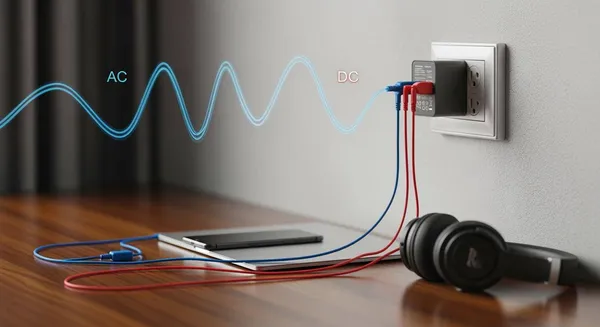
Have you ever wondered what is dc power and why your electronics need it? Your devices use dc power because their microchips contain tiny switches. These switches require a steady, one-way flow of electricity—a direct current—to process information correctly. This constant electric current is essential.
Think of dc as a calm, one-way river. The AC power from your wall outlet is more like a chaotic, back-and-forth tide.
This is why every charger has a power adapter. It converts the AC tide into the smooth dc river of dc power your device needs. This conversion is a massive industry, with the global AC-DC adapter market valued at over $10.15 billion in 2022. Your adapter makes the wall's electricity usable for all your electronics.
Key Takeaways
- Electronic devices use DC power. DC power flows in one steady direction. This helps microchips work correctly.
- Wall outlets provide AC power. AC power changes direction often. Power adapters change AC power into DC power for your devices.
- Microchips have tiny switches. These switches need steady DC power. This helps them process information accurately.
- Batteries naturally make DC power. Electric cars and solar panels also use DC power. This makes them more efficient.
What is DC Power? A Simple Definition

So, what is DC power? Think of it as the most straightforward form of electricity. The "DC" stands for direct current. This name tells you exactly how it works. The electric current flows in one single, continuous direction. It never changes course. This creates a stable and predictable power supply for your electronics.
The One-Way Street of Electricity
Imagine a one-way street where traffic flows smoothly without stopping. That is how DC power works. It provides a constant voltage, which is the "pressure" that pushes the current along. Your devices rely on this steady flow. You can see common DC voltage levels in many gadgets you own.
Note: Common DC voltages in consumer electronics include:
- 5V (for USB-powered devices)
- 12V (for computer components and car accessories)
- 24V (for some printers and industrial equipment)
- 48V (for telecom systems and some modern data centers)
This consistent delivery of power is exactly what is DC power's greatest strength for sensitive components.
AC vs. DC: A Quick Comparison
Your wall outlets provide Alternating Current (AC), not DC. The two types of electricity are fundamentally different. Understanding this difference is key to knowing what is DC power and why it matters.
- Direct Current (DC): Electrons flow consistently in one direction, like water moving through a pipe.
- Alternating Current (AC): The current rapidly changes direction, moving back and forth. This is like a wave traveling across a tub of water.
AC power is excellent for long-distance transmission. Transformers can easily change its voltage, reducing power loss over many miles. This is why AC won the "war of the currents" for building the power grid. However, this back-and-forth current is chaotic for electronics. The frequency of this change differs globally.
| Region | AC Frequency |
|---|---|
| North America | 60 Hz |
| Europe & Most of World | 50 Hz |
Your devices cannot use this alternating power directly. They need the steady, reliable river of DC power to function.
Why Electronics Demand Steady DC Power
You now know that AC power delivers electricity to your home and DC power runs your devices. But why is this conversion so critical? The answer lies deep inside the brain of your electronics: the microchip. These components have a strict requirement for the smooth, unwavering current that only dc power can provide.
The Role of Transistors and Microchips
At the heart of all modern electronics, you will find microchips. These chips contain billions of microscopic components called transistors. You can think of each transistor as a tiny, lightning-fast on/off switch. This simple function is the foundation of all digital computing.
Transistors work as electronic switches to process information. A sufficient voltage applied to the transistor turns it "on," which allows electric current to flow. The absence of this voltage keeps it "off," stopping the current. This on/off capability forms the basis for binary code, the language of computers.
- On State (Sufficient Voltage) = 1
- Off State (No Voltage) = 0
Your computer processes everything—from a mouse click to a complex video game—as a massive sequence of these 1s and 0s. To hold these switches reliably in either an "on" or "off" state, they need a constant and stable voltage. This is exactly what dc power delivers. The steady current ensures that a '1' stays a '1' and a '0' stays a '0', which is essential for the reliability of the systems.
Why AC Creates Digital Chaos
Now, imagine trying to run those billions of transistors with AC power. It would be a disaster for these delicate systems. The alternating current constantly changes direction, and its voltage rises and falls in a wave. This fluctuation would cause the transistor switches to flicker uncontrollably between on and off.
A computer cannot process information with this chaos. It would be impossible to hold a steady '1' or '0'. Computation would fail instantly. Even tiny fluctuations in a dc power supply, known as voltage ripple, can cause problems. Voltage ripple is essentially unwanted AC noise that gets mixed into a dc signal. Engineers work hard to filter this out because clean dc is crucial for reliability.
Analogy: Trying to run a microchip on AC power is like trying to write a letter during an earthquake. Your pen would move so erratically that you could not form a single clear letter. In the same way, AC's chaotic current makes it impossible to form a clear '1' or '0', destroying the integrity of the data.
This is why pure dc power is essential. Your devices need the calm, predictable flow of a direct current to perform calculations accurately and maintain system reliability. The entire world of digital electricity depends on this fundamental need for steady power.
From AC Wall Outlet to DC Power
Your wall outlet provides powerful AC electricity, but your electronics need gentle dc power. The bridge between these two worlds is the humble power adapter. This small box performs a critical series of transformations to make the electric energy from the grid safe and usable for your devices.
The Job of Your Power Adapter
You know that black brick on your laptop's charging cable or the small cube you plug your phone into? That is your AC-to-DC power adapter. Its one and only job is to take the high-voltage, alternating current from your wall and convert it into the low-voltage, direct current your device needs. Inside that plastic case, a team of electronic components works together. These include transformers, rectifiers, and capacitors, all essential for taming the raw power from the outlet. These components ensure your device gets the stable dc it requires to operate.
How Converters Make Power Usable
The conversion from AC to dc power happens in a few key steps. Each step brings the chaotic electricity closer to the smooth dc power your electronics crave.
- Transformation: First, a transformer steps down the high voltage from your wall (e.g., 120V) to a much lower, safer level.
- Rectification: Next, a rectifier redirects the current. It acts like a series of one-way gates, forcing the alternating current to flow in a single direction. This turns the AC wave into a bumpy, pulsating dc signal.
- Filtering: The signal is still too unstable for sensitive systems. A capacitor then smooths out these bumps. It stores energy when the voltage is high and releases it when the voltage drops, filling in the gaps. This action turns the pulsating signal into a much smoother stream of dc.
- Regulation: Finally, a voltage regulator provides the finishing touch. It guarantees the output voltage remains perfectly constant, protecting your device's delicate systems from any fluctuations.
This multi-stage process ensures the final dc power is clean and stable, allowing your digital world to function flawlessly. Without this conversion, modern electronics simply could not use the power from your wall.
Common DC Power Applications
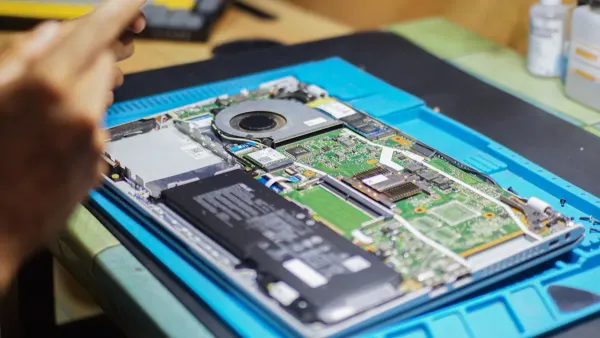
The need for dc power extends far beyond the microchips in your phone or computer. You can find numerous applications for direct current all around you, from the smallest batteries to large-scale industrial systems. Many modern technologies are either built on dc power or rely heavily on it for efficient operation.
Batteries: Naturally DC
The most common source of dc power you interact with daily is a battery. Batteries are electrochemical devices that naturally produce dc power through a one-way chemical reaction. Inside a lithium-ion battery, for instance, lithium ions flow from a negative anode to a positive cathode. This movement creates a steady, one-directional flow of electrons, which is the very definition of direct current.
This is why the batteries in your devices are inherently dc. They are a portable reservoir of the stable energy your electronics need.
You can see this principle in all types of batteries, from the small ones in a remote control to the advanced packs in laptops.
- Lithium-ion (Li-ion): These are the standard for smartphones and laptops. Their high energy density allows them to store a lot of power in a lightweight package, making them perfect for portable electronics.
- Alkaline: Common AA, AAA, and 9V batteries also provide a fixed dc voltage to power your toys and smoke detectors.
These batteries provide the clean dc power essential for countless residential applications.
Beyond Gadgets: EVs, LEDs, and Solar
The applications for dc power are rapidly expanding into high-power applications that shape our world. This technology is at the core of green energy and modern infrastructure.
Electric vehicles (EVs) are a prime example. The global market for electric vehicles is growing quickly, and their large battery packs store and use massive amounts of dc power. While you can charge an EV with AC at home, public DC fast charging stations deliver power much more quickly. These powerful charging stations bypass the car's internal converter and feed dc power directly to the battery, a process vital for long-distance travel.
This trend extends to other areas:
- LED Lighting: Holding over 58% of the lighting market, LEDs are semiconductor devices that run on dc power. They are far more efficient than old incandescent bulbs.
- Renewable Energy Sources: Solar panels are another native dc technology. The photovoltaic effect converts sunlight directly into dc electric current. An inverter then converts this dc energy into AC power for your home.
- Data Centers: To ensure reliability, data centers require uninterruptable power. Many modern data centers are now adopting dc power systems to increase efficiency and reduce energy loss from unnecessary AC-DC conversions. These advanced systems are critical for the technology that powers the internet.
From electric vehicles to large-scale energy storage and industrial applications, dc power is fundamental to building more efficient and sustainable systems.
Your electronics need the stable, one-way flow of direct current because their information-processing components require it to work correctly. While AC power is perfect for sending electricity over long distances to your home, every electronic device uses a power adapter to convert that AC into the usable dc power it needs.
From your phone's battery, which naturally provides dc power, to the electric car in your garage, this fundamental principle of converting electric power is what runs our modern world. Understanding what is dc power helps you see how this essential current powers your life with dc.
FAQ
Can I plug a DC device directly into a wall outlet?
No, you should never do this. The wall provides high-voltage AC power that will destroy your DC device. Your electronics require low-voltage DC power to operate safely.
Warning: Always use the specific AC-to-DC power adapter that came with your device to prevent damage and ensure safety. 🔌
Why did AC power win the "war of the currents"?
AC power won because it is much more efficient for long-distance transmission. Transformers can easily raise its voltage to reduce power loss over many miles. This made AC the practical choice for building the power grid that delivers electricity to our communities.
What is the future of dc power?
The future of dc power is expanding with the growth of solar panels, electric vehicles, and modern data centers. Using DC directly in these systems reduces energy lost during conversion from AC, creating more efficient and sustainable technology for our world.
Are all batteries DC?
Yes, all batteries are naturally DC. The chemical reaction inside a battery produces a steady, one-way flow of electrons. This makes batteries the perfect portable source of the stable power your gadgets need.