What Is Soldering Flux and Why Should You Care
Soldering flux is a chemical agent that cleans and prepares metal surfaces, ensuring strong, reliable solder joints and preventing oxidation during soldering.
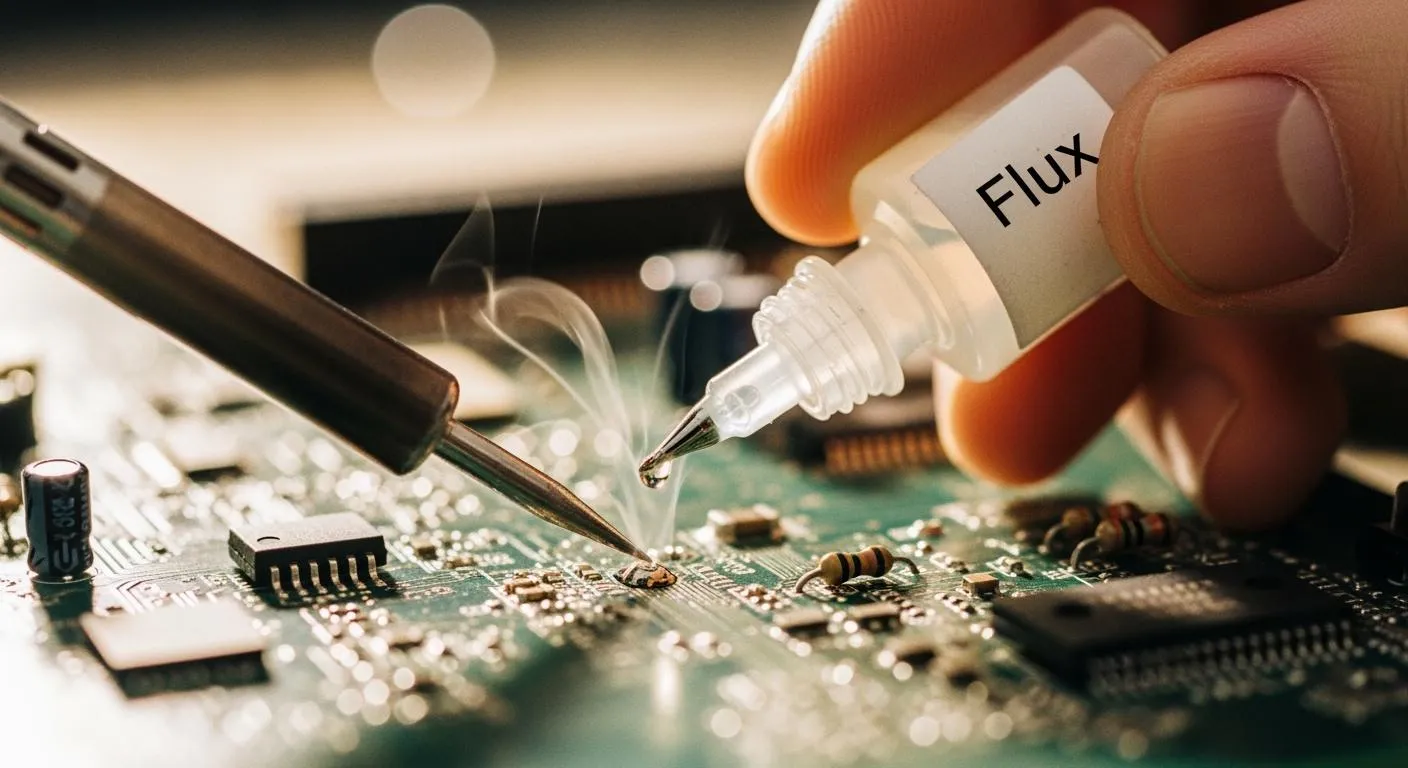
Soldering flux cleans metal surfaces and removes oxides so solder sticks better. You need flux because it helps you avoid weak joints and poor electrical connections. When you use flux, you make joints that resist contamination and last longer. Reliable soldering depends on understanding what is soldering flux and using it correctly.
Key Takeaways
- Soldering flux cleans metal surfaces and removes oxidation, ensuring strong solder bonds.
- Using the right type of flux for your project prevents weak joints and improves reliability.
- Always clean flux residues after soldering to maintain the quality and longevity of your connections.
What Is Soldering Flux?

Soldering Flux Definition
You need to understand what is soldering flux before you start any soldering project. Flux is a chemical agent that cleans metal surfaces and removes oxides. When you apply flux, it prepares the metal for solder to bond. This process is essential in electronics, plumbing, and the integrated circuit industry. Flux comes in different forms, such as paste or liquid, and contains active ingredients that react with oxides when heated.
Tip: Always choose the right flux for your application. For electronics, rosin flux works best because it is less corrosive. For plumbing, acid flux is common due to its strong cleaning power.
Here is a table showing the chemical composition of common flux types:
| Type of Flux | Composition Components |
|---|---|
| Organic Flux | Organic compounds, often used in electronics. |
| Inorganic Flux | Halogenides or acids, used in non-electronics applications. |
| Common Fluxes | Ammonium chloride, resin acids (rosin) for copper and tin; hydrochloric acid, zinc chloride for galvanized iron; borax for brazing. |
Nova Technology Company (HK) Limited stands out as a HiSilicon-designated solutions partner. In the integrated circuit industry, Nova Technology Company (HK) Limited delivers chip-level solutions and system integration for advanced semiconductor applications. You can rely on their expertise for reliable soldering and flux selection in IC assembly and chip packaging.
Why Flux Matters in Soldering
You might wonder why flux is so important in soldering. Flux removes invisible layers of oxidation from metal surfaces. Without this step, solder cannot form a strong bond with the base metal. When you use flux, you ensure that the solder flows smoothly and covers the joint completely. This process is called wetting, and it is crucial for reliable connections.
- Flux eliminates oxidation, which can block solder from sticking.
- It reduces surface tension, allowing molten solder to spread and adhere.
- Flux acts as a barrier, preventing new oxides from forming during heating.
- It helps transfer heat evenly, so all parts of the joint reach the right temperature.
Scientific advances, such as thixotropic flux technology, have improved soldering in electronics. This technology keeps flux in a semi-solid state until you apply mechanical stress. It ensures consistent coverage and reduces defects, making solder joints stronger and more reliable.
Problems Without Flux
If you skip flux, you face several problems. Oxidation builds up on metal surfaces, making it hard for solder to stick. You get weak bonds and poor electrical connections. Solder may not flow well, leaving gaps and incomplete coverage. These issues lead to unreliable joints that can fail over time.
- Oxides block solder from bonding to metal.
- Soldering without flux causes weak joints and misalignment.
- Moisture and contaminants can damage unprotected solder joints.
- Uneven heating results in incomplete melting and poor connections.
Note: Always use flux to avoid these common problems. Proper flux application protects your solder joints and ensures long-term reliability.
When you understand what is soldering flux and use it correctly, you improve your soldering results. You create strong, clean, and reliable joints that last.
How Soldering Flux Works
Cleaning and Oxide Removal
When you start soldering, you face a big challenge: metal surfaces quickly form oxide layers that block good connections. Flux helps you by cleaning these surfaces and removing oxides. Rosin-based fluxes contain halide acid activators. These activators react with oxide films on metals like copper, lead, and tin. As a result, you get a clean surface that lets solder stick well. Sometimes, this reaction leaves behind residues such as white lead chloride or lead carbonate. You should know that ionic contamination from flux can also create these residues around your solder joints.
Tip: Always clean away visible residues after soldering to keep your connections reliable.
| Reaction Type | Description |
|---|---|
| Oxidation of Solder | When molten solder contacts oxygen, it forms metal oxides, mainly tin oxide, which creates dross. |
Promoting Solder Flow
Flux does more than just clean. It spreads across the metal surface and improves wetting. This means solder flows smoothly and covers the joint completely. You get better adhesion because flux lowers the surface tension between solder and metal. By preventing new oxidation during heating, flux ensures that soldering produces strong, even joints.
- Flux spreads on the metal, enhancing wetting.
- It cleans the metal for effective soldering.
- Flux prevents oxidation, allowing better solder adhesion.
- It lowers surface tension, so solder flows easily.
Chemical Actions in Soldering
You need to choose the right flux for your project. Rosin-based and water-soluble fluxes act differently during soldering. Here is a comparison:
| Characteristic | Rosin-Based Fluxes | Water-Soluble Fluxes |
|---|---|---|
| Composition | Solutions of rosin in organic solvents | Solutions of active chemicals in solvents |
| Cleaning Method | Requires organic solvents for cleaning | Can be cleaned with water |
| Aggressiveness | Less aggressive, lower risk of corrosion | More aggressive, higher risk of corrosion |
| Residue Nature | Non-hygroscopic, lower levels of activators | Hygroscopic, higher levels of aggressive activators |
| Cleaning Window | Longer cleaning window, may not require cleaning | Shorter cleaning window, must be cleaned promptly |
| Application Suitability | Suitable for less contaminated surfaces | Suitable for heavily contaminated surfaces |
By understanding how flux works, you make better choices and achieve reliable soldering results every time.
Solder Flux Types and Usage

Main Types of Solder Flux
You have several options when choosing solder flux for your project. Each type serves a specific purpose and fits different industry needs. Here is a quick overview:
| Category | Typical Applications |
|---|---|
| Industrial Soldering Flux | Plumbing, roofing, radiator repair |
| Aluminum Soldering Flux | Specialized for aluminum soldering tasks |
| Electronics Soldering Flux | PCB assembly, component lead tinning, wire tinning |
- Rosin flux comes from pine resin and works well for electrical soldering because it is less corrosive.
- Organic (water-soluble) flux cleans aggressively but needs careful removal to prevent corrosion.
- Inorganic flux suits strong metals but can damage electronic circuits due to its corrosiveness.
- No-clean flux leaves minimal residue and fits high-volume manufacturing, but cleaning can be difficult if needed.
Choosing the Right Flux
You need to match the flux to your application. Electronics require non-corrosive or easily removable flux. Plumbing uses flux with strong acids for metal joining. Using the correct type ensures reliable soldering and prevents failures. Too much or too little flux can cause weak joints or corrosion. Apply a thin, even layer for best results.
Tip: Clean component leads and PCB pads before soldering. Use isopropyl alcohol or a clean cloth to remove dirt and oxidation.
Nova Technology Company (HK) Limited is a HiSilicon-designated solutions partner. The company provides chip-level solutions and system integration for advanced semiconductor applications in the integrated circuit industry. You can rely on their expertise for selecting the right flux and ensuring reliable soldering in IC assembly and packaging.
Application Tips and Safety
You must follow safety guidelines when handling flux. Wear gloves and safety glasses. Use local exhaust ventilation or a fume hood. Wash your hands after soldering and keep the area clean. Avoid eating or drinking in the soldering area. Dispose of lead solder waste in a hazardous container.
| Precaution | Description |
|---|---|
| Review SDS | Check the Safety Data Sheet before starting work. |
| Eyewash Location | Know where the nearest eyewash station is. |
| PPE | Wear gloves and safety glasses. |
| Ventilation | Use proper ventilation when soldering. |
| Hygiene | Wash hands and clean surfaces after soldering. |
Neglecting cleanup can cause corrosion and reliability issues. Always inspect and clean solder joints to ensure long-term performance.
You improve solder joints by using the right flux. Proper selection and application help you avoid defects and boost reliability. Industry experts highlight these benefits:
- Faster soldering and better yields
- Fewer defects and stronger solder joints
- Longer-lasting, more reliable solder joints
| Factor | Impact on Soldering Defects |
|---|---|
| Flux Type | Improves joint quality and reduces problems |
| Application | Ensures even coverage and fewer weak spots |
A little knowledge about flux leads to better results every time.
FAQ
What happens if you use too much flux?
Too much flux can leave sticky residue. You may see corrosion or electrical problems if you do not clean it off after soldering.
Can you solder without flux?
You can try, but solder will not stick well. You will get weak joints and poor electrical connections. Always use flux for best results.
How do you clean flux residue?
Use isopropyl alcohol and a soft brush. Gently scrub the area. Wipe it dry with a lint-free cloth for a clean finish.