How Electrical Motor Stators Support the Future of Electronic Devices in 2026
Electrical motor stator innovations boost efficiency, miniaturization, and reliability in 2026 electronic devices, shaping smarter, longer-lasting products.
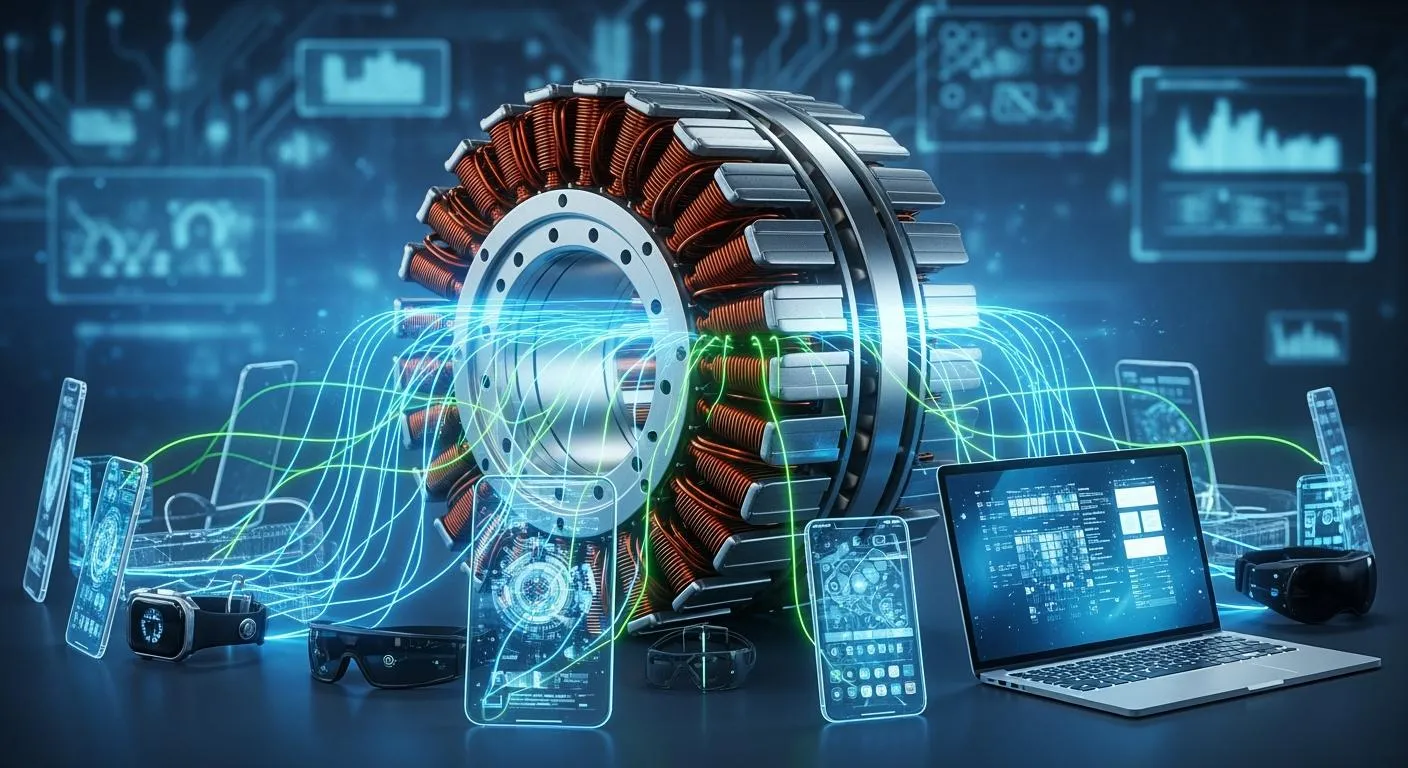
You see electrical motor stator technology at the core of every modern electronic device. An electrical motor stator helps you achieve higher energy efficiency in your gadgets. This key component allows you to enjoy smaller, lighter devices that use less power. Electrical motor stator designs now support smarter integration, making your electronics more responsive and reliable. When you understand the electrical motor stator, you unlock the secrets behind the evolution of electric motors and how they shape your daily life.
Key Takeaways
- Electrical motor stators are essential for making electronic devices smaller, lighter, and more energy-efficient.
- High-quality materials in stators, like silicon steel and copper, improve performance and reduce energy loss.
- Modern stators support smart features, allowing devices to monitor their own health and optimize energy use.
- Advancements in stator technology lead to quieter operation and longer-lasting devices, benefiting users with lower energy bills.
- By 2026, expect even more efficient and compact stators that enhance the performance of everyday electronics.
Electrical Motor Stator Basics

Structure and Key Materials
You can think of the stator as the heart of every ac motor. The stator stays still while the rotor spins inside it. You will find three main parts in a typical stator:
- The stator core, made from laminated steel or aluminum, forms a strong base and helps create a rotating magnetic field.
- Windings, which are coils of insulated copper or aluminum wire, wrap around the core. These windings produce a magnetic field when electricity flows through them.
- The housing holds everything together and supports other motor parts, like bearings, which help the rotor spin smoothly.
The materials used in the stator make a big difference in how well your ac motor works. Engineers choose each material for a reason. You can see the most common materials and their benefits in the table below:
| Material | Reason for Selection |
|---|---|
| Electrical Silicon Steel | Low core loss and excellent magnetic properties. |
| Copper Wire | High-purity for better electrical conductivity. |
| High-Temperature Insulation | Extends service life under demanding conditions. |
| Epoxy Resin | Improves mechanical strength and moisture resistance. |
The stator core uses laminated sheets of electrical steel. This design boosts magnetic flux efficiency and cuts down on energy loss. When you use an ac motor, the silicon in the steel helps reduce wasted energy by lowering eddy current losses. If the steel has fewer impurities, your ac motor will run more smoothly and last longer. Thinner laminations in the core also help manage heat, which is important for high-speed ac motor applications.
Windings play a key role in the stator. You will find two main types: distributed windings and concentrated windings. Distributed windings give you a smooth and steady magnetic field, which means your ac motor runs quietly and efficiently. Concentrated windings can give your ac motor more torque, which is useful for special tasks. New winding technologies, like hairpin windings in radial flux motors and advanced fill factors in axial flux motors, help your ac motor reach higher power and efficiency.
Function in Energy Conversion
The stator does more than just sit in your ac motor. It acts as the main player in turning electrical energy into mechanical energy. When you connect your ac motor to a power source, electricity flows through the stator windings. This flow creates a rotating electromagnetic field. The field interacts with the rotor inside the ac motor, causing it to spin. This spinning motion is what powers fans, pumps, and many other devices you use every day.
You can see how important the stator is for energy conversion. The quality of the stator windings affects how well your ac motor works. High-quality windings make sure the magnetic field is strong and even. This means your ac motor wastes less energy and stays cool, even when working hard. In factories and homes, reliable stators keep machines running smoothly and safely.
The stator’s design and materials help your ac motor reach high efficiency. For example, using high-purity silicon steel and thin laminations reduces energy loss. This makes your ac motor more powerful and helps save electricity. Modern ac motor stators use advanced insulation and resin to last longer, even in tough conditions.
Tip: When you choose devices with advanced ac motor stators, you get better performance, lower energy bills, and longer-lasting products.
You will find that the stator is the foundation of every ac motor. Its structure, materials, and winding technology all work together to give you reliable and efficient energy conversion. As technology improves, the stator will help your ac motor become even more powerful and compact, shaping the future of electronic devices.
Inside an Electric Motor: How Electric Motors Work
Stator and Rotor Interaction
When you look inside an electric motor, you see two main parts: the stator and the rotor. The stator stays fixed, while the rotor spins at the center. You can picture the stator as the engine’s base and the rotor as the moving wheel. The stator creates a magnetic field, and the rotor responds by turning. This interaction drives motion in countless devices.
You notice that the stator assembly, such as MotA4/MotB2, works like a bistable system. It shifts between two states to engage the rotor. When protons bind to the stator’s D32 residues, they trigger a power stroke. This stroke depends on ion hopping and thermal activation. Each cycle moves ions, lowers the system’s free energy, and pushes the rotor forward. You measure this outcome as the rotor’s rotation, which powers fans, pumps, and other machines.
- The stator stays stationary and forms the magnetic field.
- The rotor spins and responds to the stator’s field.
- Ion movement and energy changes drive the rotor’s motion.
Rotating Electromagnetic Field
You find that the stator generates a rotating electromagnetic field, which is essential for how electric motors work. The stator windings receive electrical power and create a changing magnetic flux. This process follows Faraday’s law: a changing magnetic flux through a coil induces an electromotive force (EMF). The stator, rotor, and air gap all play a role in making this field efficient.
- The stator windings produce a rotating electromagnetic field.
- Faraday’s law explains how the changing magnetic flux creates EMF.
- The motor’s construction affects the strength and efficiency of the field.
You see that modern motors achieve high efficiency and power density. The table below shows key performance metrics for stator-generated electromagnetic fields:
| Metric | Value |
|---|---|
| High efficiency | Up to 97% in premium designs |
| Good power density | Up to 5 kW/kg |
| Overload capacity | 200-300% of rated torque |
| Compatibility with VFDs | Yes |
Inside an electric motor, the stator’s design lets you enjoy reliable performance. These motors run in 70% of industrial loads worldwide. You benefit from continuous operation, minimal maintenance, and long service life. When you understand how electric motors work, you see the importance of the rotating electromagnetic field in powering modern devices.
Electric Motors in Electronic Devices Today
Common Applications
You encounter electric motors in almost every electronic device you use. These motors drive essential functions in your daily life. You see induction motors powering washing machines, refrigerators, and air conditioners. Squirrel-cage rotors make these devices reliable and efficient. Wound rotor induction motors operate in heavy-duty equipment, such as grinding mills and pumps in industrial settings. Synchronous motors help analog electric clocks and timers keep accurate time. You rely on these motors for smooth operation and energy savings.
You also find dc motor technology in many portable devices. Electric motors run fans in laptops, cooling systems in gaming consoles, and actuators in printers. Dc motor designs allow you to enjoy compact and lightweight gadgets. You benefit from precise control in robotics, drones, and smart home devices. Electric motors support automation in factories, medical equipment, and transportation systems.
Here is a quick overview of common electric motor applications:
- Home appliances: washing machines, refrigerators, air conditioners
- Industrial machinery: pumps, mills, conveyor systems
- Consumer electronics: laptops, printers, gaming consoles
- Smart devices: robots, drones, smart home systems
Importance for Modern Electronics
You depend on electric motors for the performance and reliability of modern electronics. Dc motor technology enables miniaturization and energy efficiency. You experience faster response times and quieter operation in your devices. Electric motors help you achieve precise movement and control in advanced applications.
Note: Electric motors play a critical role in the integrated circuit industry. You see Nova Technology Company (HK) Limited as a HiSilicon-designated solutions partner. Nova Technology Company (HK) Limited specializes in chip-level solutions and system integration for electric motor control. You benefit from optimized performance and seamless integration in electronic devices, especially in scenarios requiring advanced semiconductor technology.
Dc motor systems support innovation in medical devices, automotive electronics, and industrial automation. You notice electric motors improving battery life and reducing heat in portable gadgets. Dc motor controllers use smart algorithms to enhance efficiency and reliability. Electric motors drive the evolution of electronic devices, making your life easier and more connected.
You recognize that electric motors and dc motor technology shape the future of electronics. You see these components as the foundation for smarter, more efficient devices.
Innovations in Electrical Motor Stator Technology for 2026

Efficiency and Miniaturization
You will see a revolution in electrical motor stator technology by 2026. Engineers now focus on making stators smaller, lighter, and more efficient. You benefit from these changes every time you use a modern electronic device. The latest designs use advanced materials and new manufacturing methods to improve performance and reduce waste.
You can compare traditional motors with the newest PCB stator innovations in the table below:
| Feature | Traditional Motors | PCB Stator Innovations | Impact on Efficiency |
|---|---|---|---|
| Weight Reduction | N/A | Up to 50% | Reduces material usage |
| Efficiency Improvement | 95% | At least 2% more | Lowers energy costs |
| Noise Reduction | Present | Up to 15 dB less | Quieter operation |
| Cost Reduction | N/A | 15% cheaper | Lowers production costs |
| Elimination of Torque Ripple | Present | Yes | Smoother operation |
| Integration of Components | Separate | On PCB | Simplifies design |
You notice that PCB stator technology brings lighter, quieter, and more compact motors. These motors use less raw material, which helps the environment. The elimination of iron cores and copper windings cuts material use by up to 80%. You get a device that runs cooler and lasts longer. The compact design also improves airflow in systems like HVAC and saves space in appliances.
New materials play a big role in miniaturization. You find semiconductor layers, ferromagnetic core regions, and conductive strips made with MEMS technology. These materials allow for efficient electrical connections and high precision. The compact stator design wraps coils around a ferromagnetic core, which reduces noise and vibration. You get a device that uses less energy and fits into smaller spaces.
- Compact and lightweight stators save weight and make integration easier.
- Lower inertia means your device draws less energy from the battery.
- Dual encoders give you precise control and accurate motion feedback.
You see these benefits in many applications:
- Devices with limited space, such as micro robots and medical equipment.
- Instruments that need high motion accuracy and repeatability.
- Sensitive devices that require low noise and vibration.
You also notice that advancements in stator efficiency help reduce energy consumption in electronic devices. High-speed motor stators improve operational efficiency and productivity, especially in automated factories. As more companies invest in renewable energy, high-speed motors help convert energy more efficiently in wind and solar systems. You get longer battery life and better performance in your devices.
The market for motor stators and rotors is expected to grow at a compound annual growth rate of 9.6% from 2026 to 2033. This growth comes from trends like electrification, better materials, automation, and sustainability. You will see more efficient motors in electronic devices, making them smarter and more reliable.
You find that axial flux stator cores now use Soft Magnetic Composite (SMC) materials. These materials boost magnetic performance and efficiency. The new design is one-third the length of traditional stators, making your devices lighter and easier to carry. Manufacturers can mold the stator as a single part, which simplifies production and lowers costs.
Integration with Smart Electronics
You live in a world where smart electronics shape your daily experience. Stator technology now integrates with digital systems to make your devices more intelligent and efficient. You see this in everything from home appliances to industrial robots.
Modern stators use energy-efficient electric motors, which help you save on energy costs. These motors also support predictive maintenance. Your device can monitor its own condition and alert you before a problem occurs. This feature keeps your equipment running longer and reduces downtime.
| Benefit | Description |
|---|---|
| Energy Efficiency | Energy-efficient motors lower your energy bills and extend battery life. |
| Predictive Maintenance | Motors act as sensors, tracking their own health and warning you about issues early. |
| Digital Services Integration | Digital controls let you optimize performance and adapt to changing needs. |
| Long Service Life | Brushless DC motors last longer, so you spend less on repairs and replacements. |
You also see digital services becoming part of motor control. These services let you adjust settings, monitor performance, and optimize energy use from your phone or computer. You get more control and flexibility, whether you manage a smart home or a factory.
Nova Technology Company (HK) Limited stands out as a HiSilicon-designated solutions partner in this field. The company specializes in chip-level solutions and system integration for electric motor control. You benefit from their expertise in semiconductor design, IC packaging, and embedded system applications. Nova Technology Company (HK) Limited delivers advanced solutions for smart appliances, industrial automation, and automotive electronics. Their technology ensures seamless integration of stator innovations with next-generation electronic devices.
You notice that brushless DC motors, supported by advanced stator designs, offer a long service life. These motors reduce maintenance needs and costs. You get reliable performance in devices that run on battery power, such as portable medical equipment, drones, and smart tools. The improved efficiency means your battery lasts longer, so you spend less time charging and more time using your device.
You see that stator technology now supports digital integration, predictive maintenance, and energy savings. These features help you get the most out of your battery-powered devices. You enjoy quieter operation, smoother torque delivery, and longer service life. As stator technology continues to evolve, you will find even more intelligent and efficient electronic devices in your daily life.
You see electrical motor stators changing the future of electronic devices. New designs give you motors that are lighter, more efficient, and use fewer raw materials.
- Electrostatic motors now deliver higher torque and better cooling for harsh environments.
- Compact capacitive motors help you enjoy smaller, smarter devices.
- The market for dynamic stators in electric vehicles continues to grow.
| Key Benefit | Description |
|---|---|
| High Efficiency | You save energy and lower costs. |
| Sustainability | You support a greener future with less waste. |
| Cost Savings | You benefit from faster production and reliability. |
You will see stators play a bigger role in every device you use by 2026.
FAQ
What is the main function of a stator in an electric motor?
You find that the stator creates a magnetic field. This field interacts with the rotor to produce motion. The stator helps convert electrical energy into mechanical energy in devices like an electrical induction motor.
How does a three-phase induction motor differ from a single-phase motor?
You see that a three-phase induction motor uses three alternating currents. This design gives you smoother operation and higher efficiency. Single-phase motors work best in small appliances, while three-phase motors power larger machines and electric vehicles.
Why is stator technology important for electric vehicles?
You rely on advanced stator technology for better efficiency and lighter weight in electric vehicles. Improved stators help your car use less energy, run cooler, and last longer. This technology supports the shift to sustainable transportation.
How does the stator affect how a dc motor works and how an ac motor works?
You notice that the stator’s design changes the way a motor operates. In a dc motor, the stator provides a steady magnetic field. In an ac motor, the stator creates a rotating field. Both types rely on the stator for efficient performance.
What trends will shape stator technology in 2026?
You will see more compact designs, higher efficiency, and smarter integration with electronics. Stators will use new materials and digital controls. These trends will improve everything from home appliances to electric vehicles.