MC971 Obsolescence Risk Checklist: Verify Lifecycle Status Before You Request a Quote
Expert guide on MC971 Obsolescence Risk Checklist: Verify Lifecycle Status Before You Request a Quote. Technical specs, applications, sourcing tips for engineers and buyers.
Why the MC971’s Lifecycle Status Should Be the First Check in Your RFQ Process
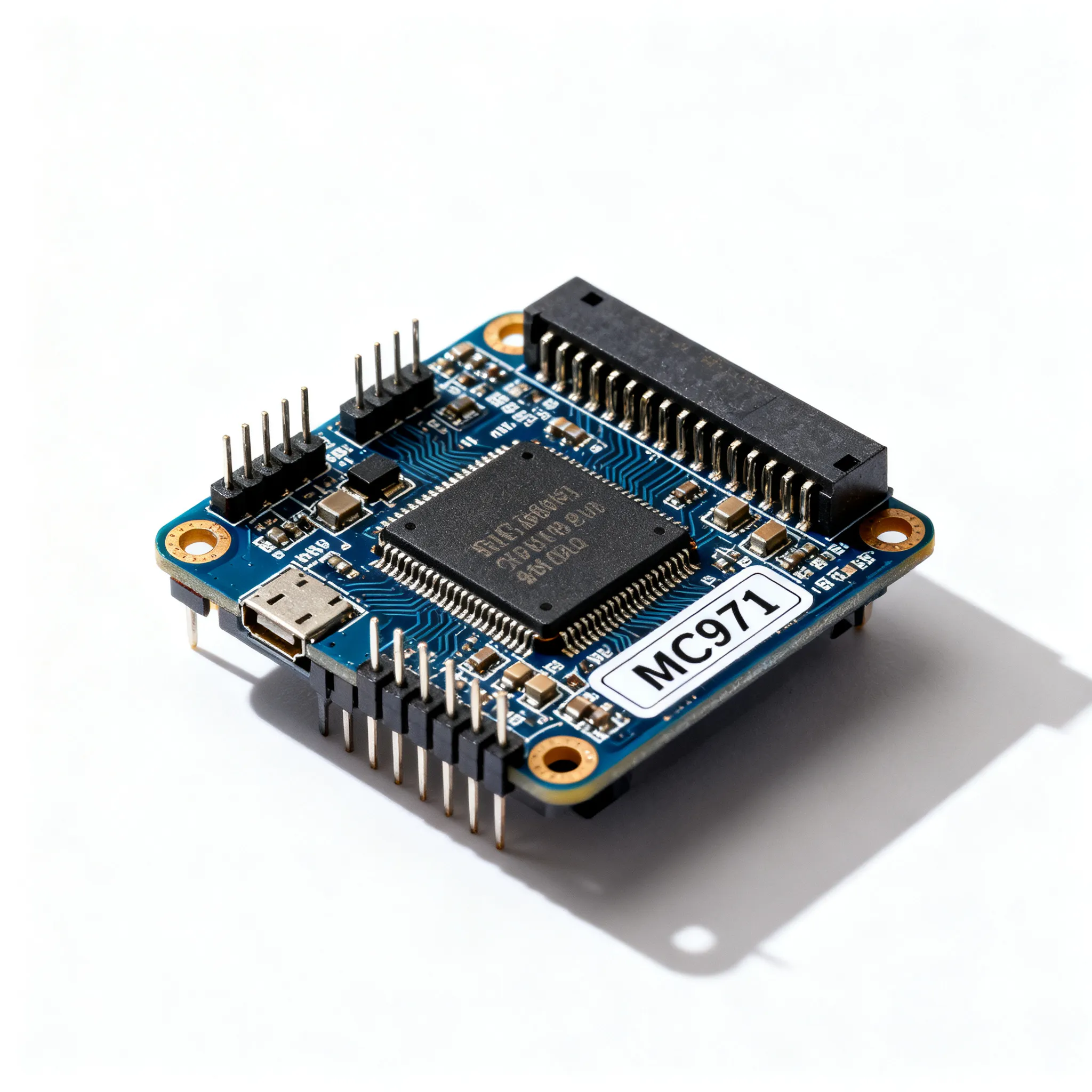
The MC971 is a legacy microcontroller that has quietly powered countless embedded systems for over a decade. Many procurement teams still treat it as a standard line item, firing off quote requests without a second thought. That habit is becoming dangerous. As EE Times has consistently reported, semiconductor obsolescence remains one of the most disruptive and costly risks in electronics manufacturing. A single last-time buy (LTB) notice can trigger emergency redesigns, production stoppages, and six-figure supply chain scrambles—all because someone didn’t verify the lifecycle status before sourcing.
For the MC971, the threat is real. The part sits in a twilight zone: it hasn’t been formally discontinued everywhere, but multiple manufacturer communication channels point to a maturing product that is no longer recommended for new designs. Failing to check the official lifecycle status before you request a quote means you could be committing to a design that has no future supply, or you could miss the final LTB window and be forced to buy from the grey market at inflated prices with no traceability.
The cost of ignoring lifecycle data is not hypothetical. Engineers who specify a part without verifying its status often discover too late that the production line is starved of components, forcing a rushed board respin and firmware migration. Buyers who order from the spot market after EOL may receive counterfeit or re-marked parts that fail IPC acceptance criteria. The first step in any RFQ for the MC971 must be a lifecycle audit—not a price check, not a lead-time inquiry, but a lifecycle status confirmation.
This article gives you a practical, no-hype checklist to de-risk your MC971 sourcing. You’ll learn how to decode official manufacturer alerts, what functional alternatives exist (and where they fall short), and a five-step verification process you can execute before you ever hit “send” on a quote request.
How to Decode the MC971’s Lifecycle Stage and Manufacturer Alerts
Semiconductor lifecycle stages follow a well-defined progression, but the terminology can vary slightly between manufacturers. For the MC971, understanding these stages is the difference between a smooth procurement cycle and a project-killing surprise. The four primary phases are:
- Active / Production: The part is fully supported, stocked, and recommended for new designs. There are no pending discontinuance notices.
- Not Recommended for New Designs (NRND): The manufacturer still produces the part, but it is intended only for existing designs. NRND is a strong signal that an End-of-Life (EOL) notice is likely within 12–24 months. For the MC971, many authorized distributors already flag this status.
- End-of-Life (EOL) Announcement / Last-Time Buy (LTB): A formal Product Discontinuance Notice (PDN) has been issued. The manufacturer sets a final order date and a last shipment date. After the LTB window closes, no more factory-new parts are available.
- Obsolete / Discontinued: The part is no longer manufactured. Any remaining stock is on the open market, with all the associated risks of counterfeits and date-code issues.
Manufacturers communicate lifecycle changes through Product Change Notifications (PCNs) and Product Discontinuance Notices (PDNs). PCNs may cover minor revisions, but they can also signal a die shrink, a fab relocation, or a package change that hints at aging tools. PDNs are the formal death knell. For the MC971, you should check the manufacturer’s PCN/PDN archive and sign up for alerts directly with the original component supplier. Even if you source through distributors, the manufacturer’s own portal is the source of truth.
The table below maps each lifecycle stage to concrete procurement and engineering actions. Use it as a quick-reference before you commit to a design or a purchase order.
| Lifecycle Stage | Manufacturer Signal | Recommended Procurement Action | Engineering Decision |
|---|---|---|---|
| Active | No PDN/PCN; production status “Active” | Standard sourcing; negotiate long-term agreements | Safe for new designs; no immediate migration needed |
| NRND | Product page marked “NRND”; may have PCN regarding fab move | Initiate qualification of alternatives; build buffer stock | Stop using in new designs; start migration plan |
| EOL / LTB | PDN issued with LTB and last shipment dates | Place final LTB order; secure non-cancellable, non-returnable (NCNR) order | Finalize migration; no new design use |
| Obsolete | Product page removed or marked “Discontinued” | Source only from authorized aftermarket or broker with testing | Complete redesign required; retire from BOM |
Tip: Even if the MC971 appears active on a distributor’s website, cross-check the manufacturer’s official product page. Distributor statuses can lag by weeks, and a sudden PDN may already be in effect.
Product change notices aren’t just legal formalities; they contain the exact dates that define your sourcing window. Ignoring an NRND flag on the MC971 means you could be 18 months into a production run when the EOL notice drops, leaving you with no time to redesign. The semiconductor industry has seen a sharp increase in discontinuance events as fabs retool for newer nodes, a trend that EE Times has covered extensively in the context of legacy MCU supply pressures.
Pin-Compatible or Drop-In Replacements for the MC971: What’s Really Available
The first question engineers ask when they spot an NRND or EOL flag is, “Is there a drop-in replacement?” For the MC971, the honest answer is that no verified pin-compatible, drop-in alternative exists from any major manufacturer. The MC971 uses a custom memory map and peripheral set that no modern MCU replicates exactly. While some parts share a similar package footprint, differences in pinout, supply voltage sequencing, and analog mux configurations make a drop-in swap impossible without a board redesign.
That doesn’t mean you’re stranded. There are functional alternatives that can achieve the same system capability, but they require firmware porting, PCB layout changes, and often a complete re-qualification cycle. The table below compares the MC971 with three candidate microcontrollers that are frequently discussed in migration discussions. None of these are pin-compatible, and all are presented as starting points for a migration project, not as guaranteed replacements.
| Parameter | MC971 (Original) | NXP LPC1114FN28 | Microchip PIC32MX150 | ST STM32F030K6T6 |
|---|---|---|---|---|
| Core Architecture | Proprietary 8-bit | ARM Cortex-M0 | MIPS M4K | ARM Cortex-M0 |
| Max Frequency | 20 MHz | 50 MHz | 40 MHz | 48 MHz |
| Flash (KB) | 32 | 32 | 128 | 32 |
| RAM (KB) | 2 | 8 | 32 | 4 |
| Package | DIP-28 | DIP-28 | QFN-28 | TSSOP-20 |
| Operating Voltage | 2.7–5.5 V | 1.8–3.6 V | 2.3–3.6 V | 2.4–3.6 V |
| Pin Compatibility | — | No (different pinout) | No (different package) | No (different package & pinout) |
| Lifecycle Status (as of knowledge cutoff) | NRND / EOL pending | Active | Active | Active |
| Typical Lead Time (verify) | Verify with distributor | Verify with distributor | Verify with distributor | Verify with distributor |
Key takeaway: The NXP LPC1114FN28 shares a DIP-28 package, which might tempt you into thinking it’s a quick swap. It is not. The pinout is completely different, and the ARM Cortex-M0 core requires a full firmware rewrite. The Microchip PIC32MX150 offers more flash and RAM but comes in a QFN package that demands a new PCB layout. The ST STM32F030K6T6 is in a smaller TSSOP-20 package and is suitable only if you can reduce I/O count. All three options are active, meaning they have stable supply chains, but the migration effort is substantial.
Before you invest in any alternative, verify the current lifecycle status of the candidate part directly with the manufacturer. An active part today can move to NRND tomorrow. Use the same checklist you would for the MC971 to ensure you aren’t jumping from one obsolescence trap into another.
A 5-Point Checklist to Verify MC971 Lifecycle Before You Request a Quote
You can’t afford to guess. Use this five-step verification process every time you plan to source the MC971. It’s designed to be completed in under 30 minutes and will save you from costly mistakes.
- Check the manufacturer’s official product page.
Start at the source. Navigate to the product page on the original component manufacturer’s website and look for explicit fields like “Product Status,” “Lifecycle,” or “Replacement Part.” Also scan the PCN/PDN archive for any recent notices related to the MC971. If the page is gone or the status is ambiguous, that’s a red flag. - Review authorized distributor inventory depth and LTB dates.
Log into your authorized distributor accounts (or use their public-facing tools) to see how the MC971 is listed. Authorized distributors will often display an LTB expiration date, factory stock status, and any NRND warnings. If multiple distributors show zero stock with no restock date, the part is likely in its final production phase. - Cross-reference with independent industry databases.
Several third-party services track semiconductor lifecycle changes. While you should always verify against the manufacturer, these databases can alert you to discontinuance trends before they become official PDNs. If the MC971 appears on multiple obsolescence watchlists, accelerate your migration timeline. - Identify whether a second source or authorized aftermarket supplier exists.
Some legacy parts are licensed to third-party manufacturers, or there are authorized aftermarket suppliers that continue production under license. Confirm whether the MC971 has any such arrangement. If not, you’re entirely dependent on the remaining factory stock and the open market. - Confirm with your contract manufacturer (CM) that the part can be procured and assembled to IPC standards.
Your CM’s procurement team will have on-the-ground insight into the MC971’s actual availability. They can also flag any process issues—such as moisture sensitivity, lead finish requirements, or testability concerns—that might affect assembly yield. Ensure they can source the part in the quantities you need and that the production line can handle the device in accordance with IPC-A-610 accept/reject criteria.
The table below summarizes the verification steps, the tools you need, and the risk each step mitigates.
| Step | Action | Verification Tool | Risk Mitigated |
|---|---|---|---|
| 1 | Check manufacturer product page for lifecycle status | Manufacturer website, PCN/PDN archive | Missing EOL announcement |
| 2 | Review distributor inventory and LTB dates | Authorized distributor portals | Supply depletion during production |
| 3 | Cross-reference obsolescence databases | IHS/ERAI/similar services | Delayed PDN awareness |
| 4 | Check for second-source or authorized aftermarket | Manufacturer licensing records | Single-source dependency |
| 5 | Confirm with CM on procurement and IPC assembly | CM procurement & quality teams | Manufacturing yield & counterfeit risk |
Practical tip on grey-market risks: If the MC971 is already in the obsolete stage, you may be tempted to buy from independent brokers. Understand that parts from the open market carry a higher probability of being reclaimed, re-marked, or counterfeit. If you must go this route, insist on a third-party test report from a lab that can perform decapsulation, X-ray, and electrical verification. Even then, traceability to the original wafer lot is rarely possible, and you should budget for a higher fallout rate during in-circuit testing.
Redesign lead times also deserve a hard look. Moving from the MC971 to a new microcontroller typically requires 6–18 months when you factor in firmware porting, PCB layout, prototyping, EMC testing, and regulatory re-certification. The moment you see an NRND flag, start that clock. Don’t wait for the LTB window to open; by then, you’re already racing against obsolescence.
MC971 Lifecycle and Sourcing: Answers to Your Toughest Questions
Q: How do I find the official lifecycle status of the MC971?
Go to the original manufacturer’s product page and look for ‘Product Status’ or ‘Lifecycle’ fields. Also check the PCN/PDN archive for any recent notices. If the MC971 is no longer listed, contact the manufacturer’s authorized distribution network for a formal status confirmation. Do not rely on third-party websites that may not update in real time.
Q: What is the difference between NRND and full EOL for the MC971?
NRND means the part is still available but not recommended for new designs, signaling that an EOL notice is likely within 12–24 months. EOL means the manufacturer has officially discontinued the part, and a last-time buy window is usually the only remaining procurement option. At NRND, you still have time to qualify a replacement; at EOL, you are on a countdown.
Q: If the MC971 is already end-of-life, can I still buy it?
Yes, during the last-time buy window you can place a final order through authorized distributors. After that window closes, any MC971 stock comes from the open market, which carries higher risks of counterfeits, date-code issues, and inflated pricing. Always verify the LTB expiration date before planning your purchase.
Q: What are the risks of using a grey-market MC971?
Grey-market MC971 parts may be used, re-marked, or counterfeit. They can fail electrical testing, exhibit latent defects, and lack traceability. Unless verified by a trusted third-party test house, they can compromise production reliability and violate traceability requirements. In regulated industries, using untraceable components can also create audit and compliance risks.
Q: How far in advance should I qualify a substitute for the MC971?
Start qualification as soon as you see an NRND notice. Ideally, you should have a fully validated alternative ready before the last-time buy window closes, which can take 6–18 months depending on firmware migration, PCB changes, and regulatory re-certification. Rushing qualification after EOL leads to shortcuts that can hurt field reliability.
Q: Can I extend the MC971’s lifecycle through a custom last-time buy agreement?
Some manufacturers offer extended production or custom last-time buy arrangements for high-volume buyers. Negotiate directly with the manufacturer or its authorized distributors before the official EOL date, and secure a non-cancellable, non-returnable purchase order to lock in supply. These agreements are typically available only to customers with a significant annual volume and a long-term relationship with the manufacturer.
References & Further Reading
- EE Times — Electronics Engineering News & Analysis
- IPC — Association Connecting Electronics Industries
- NXP LPC1100 Series Product Page
- Microchip PIC32MX150 Series
- ST STM32F030 Series
- ERAI — Component Obsolescence & Counterfeit Information
- ECIA — Electronic Components Industry Association
- IC-Online — Electronic Component Sourcing & RFQ Platform
Ready to secure your supply chain? Before you place your next order, run the MC971 through the five-point checklist. If you need to source verified stock, request a quote or upload your entire BOM through IC-Online—the platform supports mixed BOMs with flexible MOQ and can help you navigate lifecycle uncertainties without guesswork.