Shared Washer Control Boards: Motor Drivers, Payment Modules, and PCBA Supply
Shared Washer Control Boards: Motor Drivers, Payment Modules, and PCBA Supply
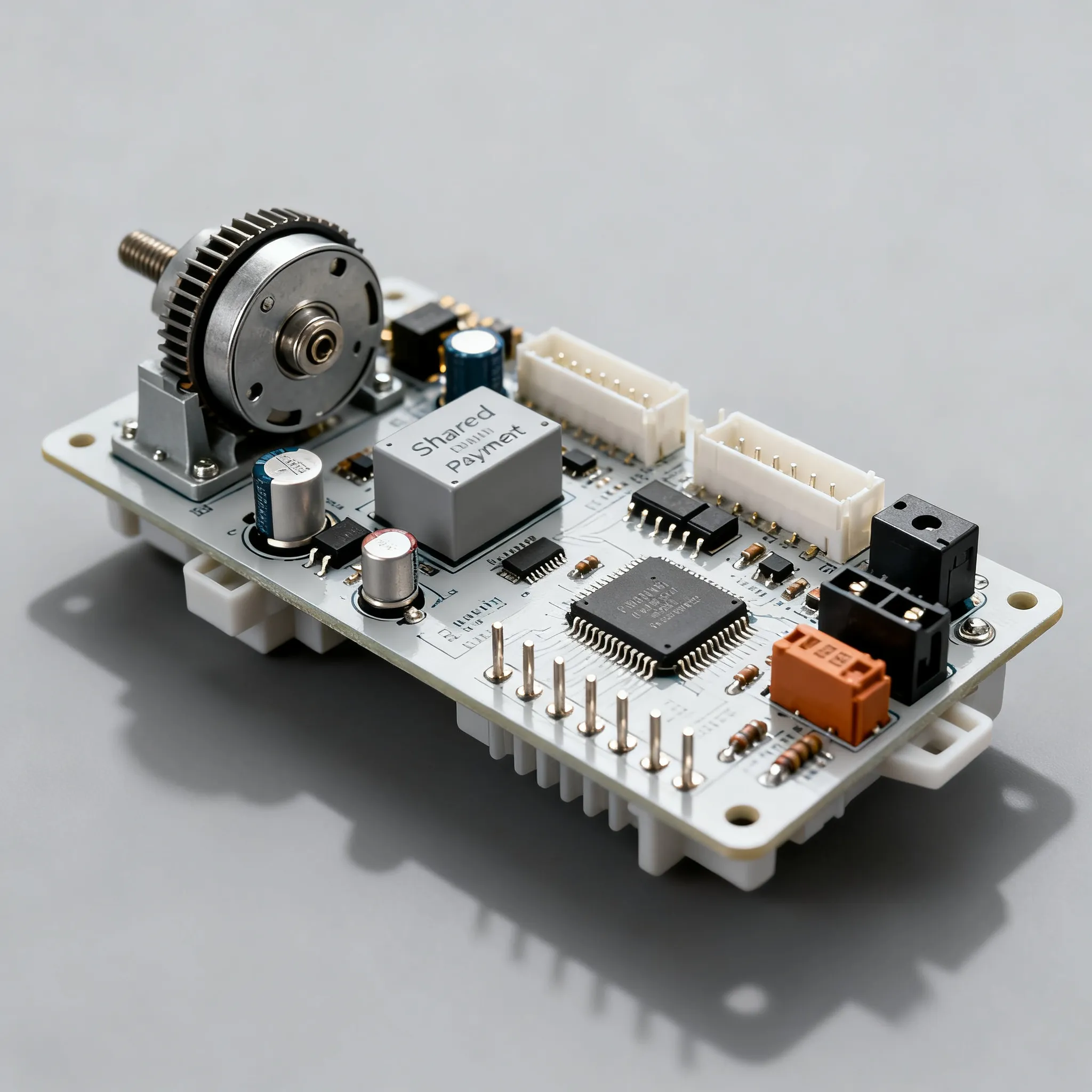
Shared Washer Control Boards: Sourcing Motor Drivers, Payment Modules, and Reliable PCBA Supply
When a Single PCB Failure Triggers a Recall: The Stakes for Shared Laundry
In high‑duty shared laundry environments—apartment complexes, dormitories, and laundromats—a washing machine control board is never just a component. It is the single point of trust that converts a user’s payment into a completed wash cycle. When that board fails, the entire revenue stream stops. The 2025 incident at Ford Motor Company, though from the automotive world, offers a stark parallel: a faulty transmission control module triggered an NHTSA Preliminary Evaluation, leading to a full recall notice (NHTSA recall report). In that case, a single PCB design flaw caused unintended downshifts—a safety risk that forced a massive logistics operation. The lesson for laundry operators is clear: control board reliability is a business‑continuity decision, not a commodity purchase.
Inside the appliance industry, the pattern is equally sobering. In March 2025, Whirlpool issued Technical Service Pointer #W11766193 for a persistent “F3E1 Pressure Sensor Error or Drain Pump Running Continuously” issue traced to a faulty control board in top‑load washers manufactured between January 2023 and January 2024 (Whirlpool technical service pointer). Community discussions on automaticwasher.org reveal that even units only a few weeks old have exhibited the continuous drain symptom, with some owners reporting that Whirlpool acknowledged the recall but that replacement boards were delayed for months (community reports). When a shared washer’s control board fails, it rarely produces a single, isolated error. As the FixAppLab guide notes, a failed board often affects several functions simultaneously—random error codes, unresponsive buttons, and interrupted wash cycles—making the diagnosis both urgent and expensive (FixAppLab guide).
For procurement and engineering teams spec’ing boards for shared laundry equipment, the stakes are compounded. You need a PCBA that survives high‑vibration, high‑humidity environments, integrates a motor driver capable of handling both AC induction and BLDC motors, and reliably interfaces with payment modules—all while meeting the cost pressures of a multi‑unit deployment. The recall and failure data from the past 12 months underscore that sourcing decisions must be grounded in real‑world failure patterns, not just datasheet promises.
What’s on the Board: Motor Drivers, Payment Interfaces, and the PCBA Ecosystem
A shared washer control board is a dense, multi‑domain PCB assembly. At its core, three functional blocks dominate the design: the motor driver stage, the payment/payment‑interface module, and the main microcontroller (MCU) that orchestrates cycles, safety interlocks, and user feedback. Understanding how these blocks interact—and how component choices affect field reliability—is essential before you write a single RFQ.
The motor driver stage is the most power‑hungry and thermally stressed section on the board. Washer motors can be single‑phase AC induction types, three‑phase AC induction motors with variable‑frequency drives, or increasingly, brushless DC (BLDC) motors. This means the driver must accommodate either a triac‑based phase‑control topology (for older AC motors) or a full inverter stage with six MOSFETs or IGBTs for BLDC machines. Many aftermarket and OEM boards rely on integrated motor driver modules that simplify design and certification. For example, the Pololu MAX14870 brushed DC motor driver is a compact, single‑channel module suitable for small pump motors, but it cannot handle the main drum motor. For higher‑power applications, Phoenix Contact’s ELR H5‑IES‑SC‑24DC/500AC‑9 interface module provides a solid‑state relay function that can switch AC loads up to 500 V, useful for controlling drain pumps or water inlet valves. The real heavy lifting, however, is done by servo‑grade drive modules like the Panasonic MDDLN45BE and MEDLN83BE A6 drives, which support EtherCAT communication and can drive both AC induction and BLDC motors with appropriate configuration. The table below compares typical motor driver options and their suitability for shared laundry applications.
| Motor Driver Module | Motor Type Supported | Key Specs | Built‑in Protection | Laundry Application Fit |
|---|---|---|---|---|
| Pololu MAX14870 (Brushed DC) | Brushed DC motors up to 1.5 A | 4.5–36 V, 1.5 A continuous, simple PWM interface | Over‑current, thermal shutdown | Small drain pumps, dispenser actuators. Not for drum motor. |
| Phoenix Contact ELR H5‑IES‑SC‑24DC/500AC‑9 | AC loads via solid‑state relay | 24 V DC control, 500 V AC / 9 A output | Zero‑cross switching, integrated snubber | Valves, AC pumps. Not a motor speed controller. |
| Panasonic A6 MDDLN45BE (EtherCAT) | AC servo, induction, BLDC with external encoder | 200 V AC, 450 W, EtherCAT, encoder feedback | Overload, overvoltage, stall detection | Main drum motor (high‑end commercial machines). |
| Panasonic A6 MEDLN83BE (EtherCAT) | AC servo, induction, BLDC | 200 V AC, 850 W, EtherCAT, multi‑turn encoder support | Regeneration, overheat, phase loss | Large‑capacity washers with high torque demands. |
Tip: For shared laundry control boards, the motor driver module must handle repeated start‑stop cycles under unbalanced load conditions. Look for modules with stall detection and over‑temperature protection, and verify that the communication protocol (EtherCAT, Modbus, or simple pulse/direction) matches your MCU’s capabilities. In many cases, a custom inverter board built around discrete IGBTs and gate drivers offers more flexibility, but the additional engineering and certification effort may outweigh the BOM cost savings for volumes below 5,000 units per year.
Beyond the motor driver, the payment interface is what turns a standard washer into a revenue‑generating asset. The interface can range from a simple coin‑pulse detector (a mechanical switch that generates a logic pulse for each coin inserted) to a full NFC/Bluetooth card reader module. In shared laundry, the trend is toward app‑based payment or contactless card systems, which require a secure element on the board and a reliable wireless connection inside a metal enclosure. The control board must decode the payment signals, authenticate the transaction, and activate the cycle—all while preventing fraudulent coin‑pulse injection or replay attacks. The integration of the payment module directly onto the PCBA adds a layer of security compliance that we will address in the sourcing guidance.
OEM, Aftermarket, or Bare Modules: Mapping the Sourcing Landscape
Procurement teams have three distinct paths to source a control board for a shared washer: buy a factory‑certified OEM board, purchase a validated aftermarket board from a specialist like HnKParts, or design a custom PCBA using generic motor driver modules from distributors such as DigiKey. Each path carries its own trade‑offs in lead time, form‑fit‑function compatibility, and long‑term reliability. The table below compares the three options across critical sourcing metrics.
| Comparison Metric | OEM Control Board (e.g., Maytag) | Aftermarket PCBA (e.g., HnKParts) | Generic Module + Custom Design | Selection Criteria & Failure Boundary |
|---|---|---|---|---|
| Lead Time | 1–2 weeks for current models; months for recalled/obsolete boards | 2–6 weeks, depending on stock and region | 8–16 weeks for custom PCBA fabrication and assembly | Choose OEM when uptime is critical and budget allows; aftermarket is a middle ground; custom is for high‑volume, long‑term deployments. |
| Form‑Fit‑Function | Exact drop‑in replacement; firmware matches washer model | Engineered to match OEM pinouts and mounting, but may require firmware tweaks | Full flexibility; must re‑design enclosure and harness; firmware written from scratch | OEM eliminates integration risk; aftermarket can work if the supplier provides test reports; custom only if you have an in‑house design team and can validate the entire system. |
| Cost per Unit | $120–$350 (varies by model and availability) | $60–$180, often with bulk discounts | BOM cost $35–$80, but NRE and certification add $15,000–$50,000 | Custom becomes cost‑effective at volumes above 3,000 units/year; below that, aftermarket offers a better return. |
| Firmware & Payment Integration | Pre‑certified for payment module (if equipped); secure bootloader usually present | Some boards include coin‑pulse interface; app‑based payment often requires a separate module | You control all firmware; payment security must be built from scratch or via a pre‑certified module | If your business model relies on app payment, OEM is often the safest path unless you can afford EMV certification for a custom board. |
| Counterfeit & Quality Risk | Low when sourced from authorized distributors (e.g., Maytag replacement parts) | Moderate; reputable suppliers like HnKParts provide warranty and test data; unknown vendors carry high risk | Depends on PCBA supplier vetting; risk of substandard components if not carefully managed | Always buy from a supplier that offers a full batch traceability report and at least a 12‑month warranty. |
Note: While aftermarket boards from HnKParts often include inverter boards, display modules, and wiring harness kits, they are designed for experienced technicians. You must verify that the board’s motor driver stage matches your washer’s exact motor type—an inverter board built for a 120 V AC induction motor will not work with a 240 V BLDC drum motor without substantial rework. Similarly, the generic motor driver modules available from DigiKey’s catalog are excellent for prototyping, but they lack the environmental sealing and conformal coating required for the damp, hot interior of a shared washer. A custom design must account for condensation, detergent vapors, and vibration from the spin cycle.
Buying Beyond the Datasheet: Failure Patterns, Batch Testing, and Supplier Vetting
Datasheets rarely tell the whole story, especially when the application puts a control board through 2,000–3,000 wash cycles per year in a high‑humidity enclosure. The Whirlpool F3E1 error—a continuous drain pump running—is a classic example of a failure that originated from a subtle board‑level defect, not a single component’s parametric drift. When you receive a batch of control boards, your incoming inspection should be designed to catch the same failure signatures that have plagued the industry. The table below lists common failure modes, their root causes, and the inspection methods that can weed out weak boards before they are installed.
| Failure Syndrome | Common Root Cause | Inspection / Testing Method | Preventive Action |
|---|---|---|---|
| Continuous drain pump operation (F3E1) | Faulty pressure sensor reading due to a cracked solder joint on the analog front‑end | Thermal cycling (−20 °C to +70 °C) with functional monitoring of all sensor inputs | Specify IPC‑A‑610 Class 2 soldering and use DAQ to log pressure sensor readings during cycling |
| Multiple random error codes and unresponsive buttons | Corrosion on the keypad connector or MCU I/O pins from condensation | Power‑on test under 85% RH, 40 °C for 48 hours; check for oxide growth | Require conformal coating (acrylic or silicone) on both sides of the PCB, with edge‑coating |
| Motor driver MOSFET/IGBT burn‑out | Insufficient gate drive or lack of dead‑time control in the inverter firmware | Run motor under full load, blocking the drum (locked‑rotor test) for 5 seconds; monitor phase currents | Use motor driver modules with built‑in cross‑conduction protection and verify firmware dead‑time parameters |
| Payment module communication drop‑out | EMI from the motor driver coupling into the serial lines | Conducted EMI test (150 kHz–30 MHz) while the motor is running at full speed; bit error rate test | Separate low‑level signal traces from power traces; use differential signaling (RS‑485) instead of single‑ended UART |
Key Takeaways: The most valuable test you can require from a PCBA supplier is a batch‑level, powered burn‑in that combines thermal cycling and vibration. For shared laundry boards, ask for a 48‑hour test that alternates between a cold soak at −10 °C and a heated chamber at 65 °C while the board is powered and running a full wash cycle simulation. The vibration table should replicate the spin‑cycle frequency spectrum (typically 10–200 Hz with a magnitude of 1.5 g RMS). Suppliers that cannot provide this data should be vetted with extreme caution.
When integrating a payment module onto the board, procurement must confront the hidden compliance costs. Even if you use a pre‑certified NFC reader module, the board itself must be designed to avoid tampering: the secure element should be protected by a tamper‑detection mesh, and the firmware must support secure boot and signed updates. Any custom board that processes payment card data must undergo EMV Level 1 and Level 2 certification, which can add 12–20 weeks and $30,000–$60,000 to the project. Many operators sidestep this by using a separate, off‑the‑shelf payment terminal that connects to the control board via a simple UART or I²C interface, transmitting only an “approved” command. This approach decouples the payment security lifecycle from the washer control board, allowing you to update the main board without re‑certifying the payment function.
Supplier vetting for a multi‑domain board like this requires a different lens than a standard consumer electronics PCBA. You need to verify that the supplier has experience with both industrial motor drives and secure payment hardware. Ask for case studies of similar multi‑function boards, check their in‑house testing capabilities (thermal chambers, vibration tables, ESD guns), and demand full supply chain transparency for long‑lead‑time MCUs and driver ICs. For payment modules, if you are not using a pre‑certified module, confirm that the supplier can handle secure key injection and firmware signing in a hardware security module (HSM) environment. Finally, always negotiate a minimum 12‑month warranty that covers field failures traced to board‑level defects, and include a clause that requires the supplier to provide failure analysis reports for any returned units.
Shared Washer Control Board Sourcing: Questions from Senior Engineers and Buyers
Q: What are the typical lead times for a custom shared washer control board PCBA versus an OEM replacement?
Custom PCBA runs 8–16 weeks, depending on design complexity and component availability—especially motor driver ICs and microcontrollers. OEM boards are often available within 1–2 weeks from distributors, but for older or recalled models (like the Whirlpool units affected by the F3E1 pointer), lead times can stretch to months if the board is on backorder. Always verify the OEM’s end‑of‑life timeline before committing to a custom build; if the washer model is approaching obsolescence, a custom board may be the only long‑term solution.
Q: How do I ensure the motor driver stage is compatible with both AC induction and BLDC washer motors?
Check the driver board’s output configuration: AC induction motors require a variable‑frequency drive (VFD) or triac‑based control, while BLDC motors need a dedicated inverter with Hall sensor or sensorless feedback. Some generic modules, such as the Panasonic A6 drives, support multiple motor types, but you must verify voltage, current, and communication protocol (EtherCAT, Modbus) match your motor specs. A custom PCBA can integrate a dual‑mode driver if needed, but be prepared to add isolation and additional firmware complexity to handle the transition between motor types on the same board.
Q: What field failure rates can I expect from aftermarket control boards, and how do they compare to OEM?
OEM boards typically exhibit a failure rate of 0.5–2% over the first three years. Aftermarket boards vary widely: well‑validated suppliers like HnKParts claim similar rates, but cheap generic boards can exceed 10% within the first year, often due to inadequate conformal coating, underrated capacitors, or poor thermal management. Always request a reliability report showing accelerated life testing data (e.g., 1,000‑hour HALT at 85 °C/85% RH) and field return statistics if available.
Q: What are the hidden costs of integrating a payment module directly onto the control board?
Beyond the module cost, you face certification (EMV Level 1/2), secure firmware development, and ongoing PCI compliance if handling card data. Even for coin‑only or app‑based payment, the board must reliably detect coin pulses or maintain Bluetooth/NFC connectivity in a metal enclosure. Many operators opt for a separate payment system that communicates with the control board via a simple serial interface to avoid re‑certification every time the board design changes. This separation also simplifies field upgrades and reduces the attack surface.
Q: How can I vet a PCBA supplier for shared laundry control boards when the project involves both motor control and payment security?
Look for suppliers with experience in both industrial motor drives and secure payment hardware. Request case studies of similar multi‑function boards, verify their testing capabilities (thermal chambers, vibration tables, ESD guns), and review their supply chain transparency for long‑lead‑time MCUs and driver ICs. For payment modules, confirm they can handle secure key injection and firmware signing if you’re not using a pre‑certified module. A supplier that has never built a board with a tamper‑detection mesh or conducted a side‑channel analysis is unlikely to deliver a secure payment‑integrated design.
As you weigh these sourcing decisions, the need for a flexible, mixed‑BOM supply chain becomes clear. Custom control boards often require a blend of high‑reliability motor drivers, certified payment modules, and commodity passives—all managed with the MOQ agility that shared laundry deployments demand. For engineers and buyers navigating this complexity, IC-Online provides a platform to source verified electronic components and PCBA partners, helping you balance performance, compliance, and cost across every revision of your washer control board.
Need components or PCBA support for Shared Washer products? IC-Online helps smart-device OEMs with sourcing and board-level supply — see our Smart Device Solutions or contact our team for a BOM review.
References & Further Reading
- NHTSA Recall Report – Ford Motor Company unintended downshift
- FixAppLab – Washing Machine Control Board Problems
- Whirlpool F3E1 Pressure Sensor Error Technical Service Pointer
- AutomaticWasher.org – Whirlpool Control Board Failure Reports
- HnKParts – Washer PCB Replacement Parts
- HnKParts – Washer Control Board Parts
- Maytag OEM Washing Machine Circuit Board & Timer Parts
- DigiKey – Motor Driver Boards and Modules
- Pololu MAX14870 Brushed DC Motor Driver Datasheet
- Phoenix Contact ELR H5‑IES‑SC‑24DC/500AC‑9 Interface Module
- Panasonic MDDLN45BE A6 Drive Datasheet
- Panasonic MEDLN83BE A6 Drive Datasheet