What is a Run Capacitor? Uses & Functions Explained
Run capacitors provide continuous electrical power and phase shift to motor windings, ensuring steady torque, voltage stability, and efficient AC motor operation.
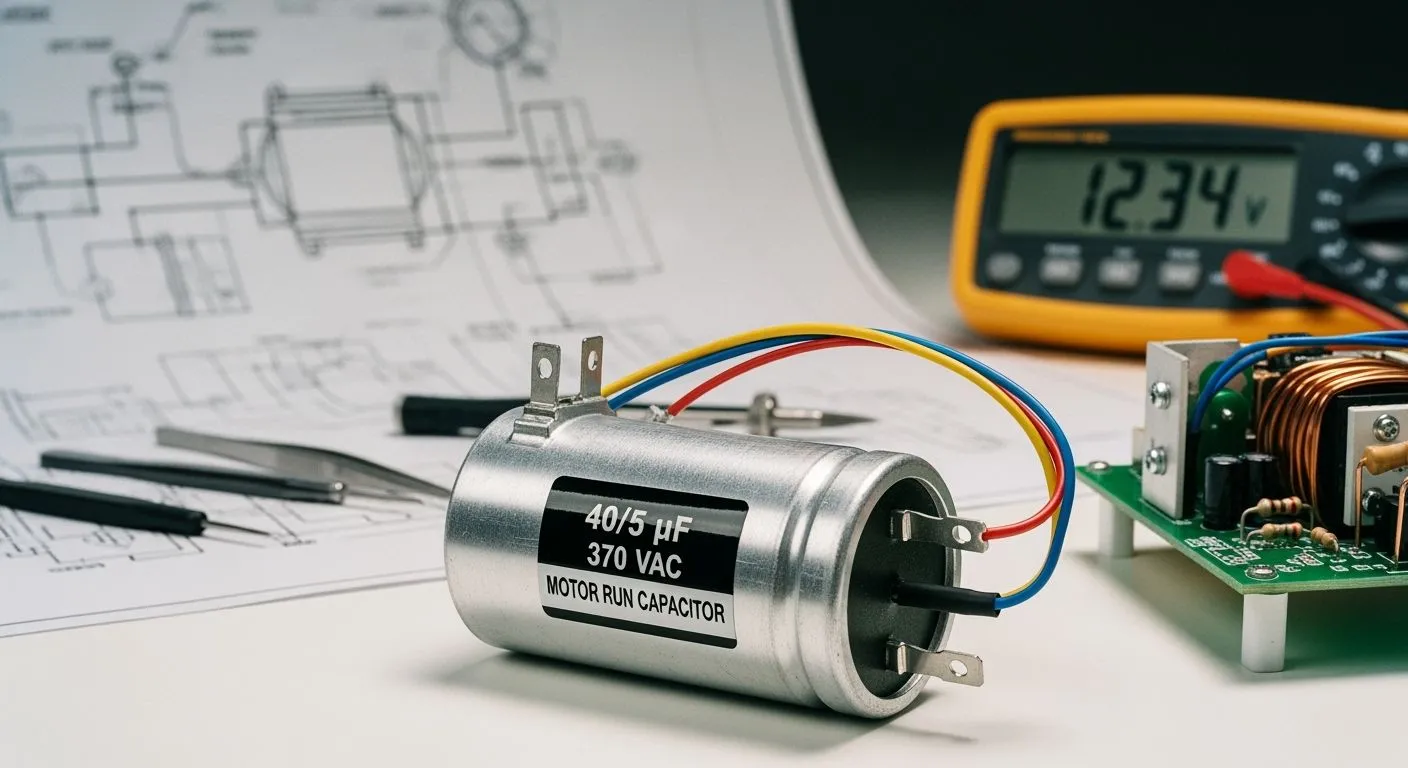
A capacitor functions as an energy storage component in alternating current motor circuits. You rely on this capacitor to supply continuous electrical power to auxiliary motor windings. This steady charge creates a constant phase shift during motor operation, maintaining a stable magnetic field and steady voltage across the motor circuit. Every primary capacitor protects your motor from performance drops.
The Department of Energy reports that high-quality AC capacitors can improve the energy efficiency of your HVAC system by up to 15%.
Nova Technology Company (HK) Limited, a HiSilicon-designated solutions partner, delivers advanced chip solutions. High-grade run capacitors ensure continuous system stability.
Key Takeaways
- Run capacitors supply continuous electrical power to keep motors running smoothly and efficiently.
- Run capacitors stay connected continuously, while start capacitors disconnect quickly after motor startup.
- Healthy capacitors reduce energy bills and protect your household appliances from sudden failure.
- Regular physical inspections and multimeter tests help you catch failing capacitors early.
Understanding How a Capacitor Works in Motors

You rely on electric motors to power many daily appliances. Understanding how a capacitor works in motors helps you maintain these machines efficiently. Electric motors need a rotating magnetic field to turn the internal rotor. Single-phase alternating current power cannot create this rotating field by itself. A run capacitor solves this problem by creating a continuous electrical phase shift.
Continuous Phase Shift and Energy Storage
You can learn how capacitors work by examining basic charge collection. Internal conductive plates store electrical charge when voltage applies across the terminals. The process of charging a capacitor creates an electrostatic field between these conductive plates. This field provides temporary energy storage and supply for the auxiliary motor winding. The continuous charging and discharging cycle pushes current through the auxiliary winding slightly ahead of the main winding current.
This deliberate time delay creates a sine wave phase displacement between the two windings. The resulting offset generates the necessary rotating magnetic field inside the motor frame. Learning how a capacitor works during continuous operation clarifies why motors keep running smoothly. Constant energy storage maintains this phase shift without interruption. Without a functional run capacitor, the motor loses its rotating magnetic field and stalls. Proper charging a capacitor ensures that the auxiliary circuit receives steady electrical push.
Current Smoothing and Power Factor Improvement
Every running motor experiences dynamic load changes and line fluctuations. A run capacitor acts as an energy reservoir to smooth voltage fluctuations and spikes. The physical mechanism behind how capacitors work involves absorbing peak power and releasing it during dips. This process provides power supply filtering for the entire motor circuit.
Run capacitors filter high-frequency electrical noise from motor operations in devices like brushless direct current motors, servo systems, and variable frequency drives. Connecting the device across motor terminals or between the motor and ground reduces voltage transients and electromagnetic interference. Incorporating a run capacitor yields clear operational advantages:
- Reduced electrical noise affecting nearby electronic devices
- Fewer voltage spikes on long electrical cable runs
- Stable motor speed and torque under varying load conditions
- Fewer controller faults or error codes during heavy usage
In addition to filtering, the run capacitor improves the overall system power factor. Alternating current motors normally draw inductive current, which lags behind the applied voltage. The run capacitor draws capacitive current, which leads the system voltage. These opposing currents cancel each other out in the main power lines. This balance lowers total line current while maintaining peak mechanical output. Understanding how capacitors work allows you to optimize energy efficiency, lower operating temperatures, and extend equipment lifespans.
Comparing Run Capacitors and Start Capacitors
Differences in Circuit Engagement and Duty Cycle
You must understand how different types of capacitors operate inside AC motor circuits. Standard motors rely on two major capacitor types to manage electrical flow. A start capacitor provides heavy energy for a short moment. A centrifugal switch disconnects this component when the motor reaches 75% of full speed. In contrast, continuous units stay connected continuously throughout the entire motor run cycle.
Replacing continuous units with temporary units creates severe operational risks. A start capacitor supports intermittent duty for less than one second to a few seconds. Installing the wrong component causes continuous overheating of motor windings. You will burn out internal motor windings and reduce overall machine reliability. You can categorize these components into distinct capacitor types based on duty cycle. | Capacitor Type | Circuit Engagement Mechanism | Duty Cycle | | --- | --- | --- | | Start Capacitor | Drops out via centrifugal switch at 75% speed | Intermittent (less than 1 second to a few seconds) | | Run Capacitor | Remains in circuit continuously | Continuous (entire motor run cycle) |
Capacitance Values and Voltage Rating Variations
The design parameters of these types of capacitors also show clear physical differences. A standard run capacitor features smaller capacitance values, usually ranging from 2.5 to 100 µF. Residential HVAC units typically utilize values between 5 and 80 µF. Conversely, a start capacitor supplies much higher microfarad numbers for temporary torque. For example, a 1 HP motor uses a 15–25 µF run capacitor but needs a 145–175 µF start capacitor. Each motor capacitor must match nameplate requirements.
Working voltage capacity marks another critical distinction between these units. Continuous electrical power requires a higher operational voltage limit to handle thermal stress safely.
Run capacitors are available in 250, 370, and 440 volts. Start capacitors use a lower voltage; their four major volt classifications are 125, 165, 250, and 330 volts.
Matching every voltage specification protects your equipment against premature component breakdown. Operating your motor at its designated voltage preserves system stability and prevents voltage fluctuations.
What Are Capacitors Used for in Common Electronics?
You encounter many common capacitor applications in modern home appliances and industrial electronic systems. Understanding what are capacitors used for helps you maintain critical household devices efficiently. Engineering firms like Nova Technology Company (HK) Limited, a HiSilicon-designated solutions partner, design advanced integrated circuit solutions and chip-level design for smart motor control. These system integration methods allow modern electronics to manage power smoothly across every motor application. Properly integrated controllers ensure that continuous power flows directly into auxiliary motor circuits. Smart controller circuits continuously manage phase displacement, optimize operating efficiency, and protect delicate semiconductor chips from line noise during daily operations.
HVAC Compressor Systems and Condenser Fans
Your central air conditioner relies on run capacitors to keep continuous cooling running during hot weather. You need to know what are capacitors used for in heavy HVAC machinery. The run capacitor stores and releases smaller, variable quantities of electricity to keep the compressor running smoothly after startup. Healthy components keep the air conditioning unit working efficiently. A failing capacitor requires more electricity, which increases your monthly energy bills. A fresh capacitor maintains optimal energy efficiency, prevents unnecessary electrical stress, and stops sudden system shutdowns during peak cooling demands. Proper energy storage protects your air conditioner from sudden power surges. Consistent electrical output maintains steady system pressure.
The outdoor condenser fan motor depends on continuous electrical support to manage line voltage. You should schedule annual AC maintenance before heavy summer use or the first heat wave. Regular inspections help you detect and prevent capacitor failures before severe damage happens. A damaged capacitor produces distinct warning signs in outdoor units:
- Humming noise from the fan or outdoor unit
- Fan not spinning or starting slowly
- Intermittent cooling and warm air from vents
- System struggling to start or shutting off after starting
- Circuit breaker trips during operational calls
Early detection saves expensive motor windings from heat damage and prevents sudden system failure. Experienced technicians check physical housing conditions and electrical output values during routine service calls.
Refrigerators, Ceiling Fans, and Blower Pumps
Refrigerators, ceiling fans, and blower pumps use a motor capacitor to manage torque and rotational speed. These household appliances require precise electrical management to run quiet motors. Ceiling fans in 120V AC systems across the US and Canada use specific microfarad values to change motor speeds safely. | Speed Setting | Capacitor Value (µF) | | --- | --- | | Low | 4 | | Medium | 5 | | High | 6 |
In 230V systems, required capacitance values are typically lower. Installing a larger capacitor than specified enhances phase shift and starting torque. This temporary speed gain causes higher current draw and increased power consumption, resulting in higher energy costs. Over-specifying capacitance causes motor overheating and reduced motor lifespan. However, a small capacitance increase up to 10-20% is generally safe and slightly alters speed or efficiency without destroying internal motor windings. Testing each capacitor ensures reliable system performance, prevents motor stalling, and preserves safe system voltage levels across every operating voltage range. Blower pumps and refrigerator motors maintain steady rotation when voltage remains within designed tolerances. Regular routine inspections protect home electronics and extend overall operational longevity.
Diagnostic Scenarios and Capacitor Failure
Identifying Physical Damage and Thermal Stress
You must inspect every running capacitor regularly to catch early component failure. Heat acts as the primary cause of performance degradation. The 10°C rule states that every 10°C rise above the operating temperature halves the expected life of your component. Excessive heat inside the enclosure destabilizes long-term energy storage. Sudden voltage spikes from power surges also trigger internal failure. Extended unused storage leads to gradual aging and electrolyte drying. A failing run capacitor creates major electrical issues over time.
Physical symptoms clearly reveal internal destruction. Overheating causes gas pressure that swells the top casing into a dome shape. You can also spot oily fluid leaking near the terminals. Dark burn marks indicate severe voltage stress and short circuits. Ignoring these physical warnings creates serious hazards. A degraded capacitor can ignite leaking dielectric oil, create shock risks, or force the motor into single-phase operation.
Testing Capacitance with a Multimeter
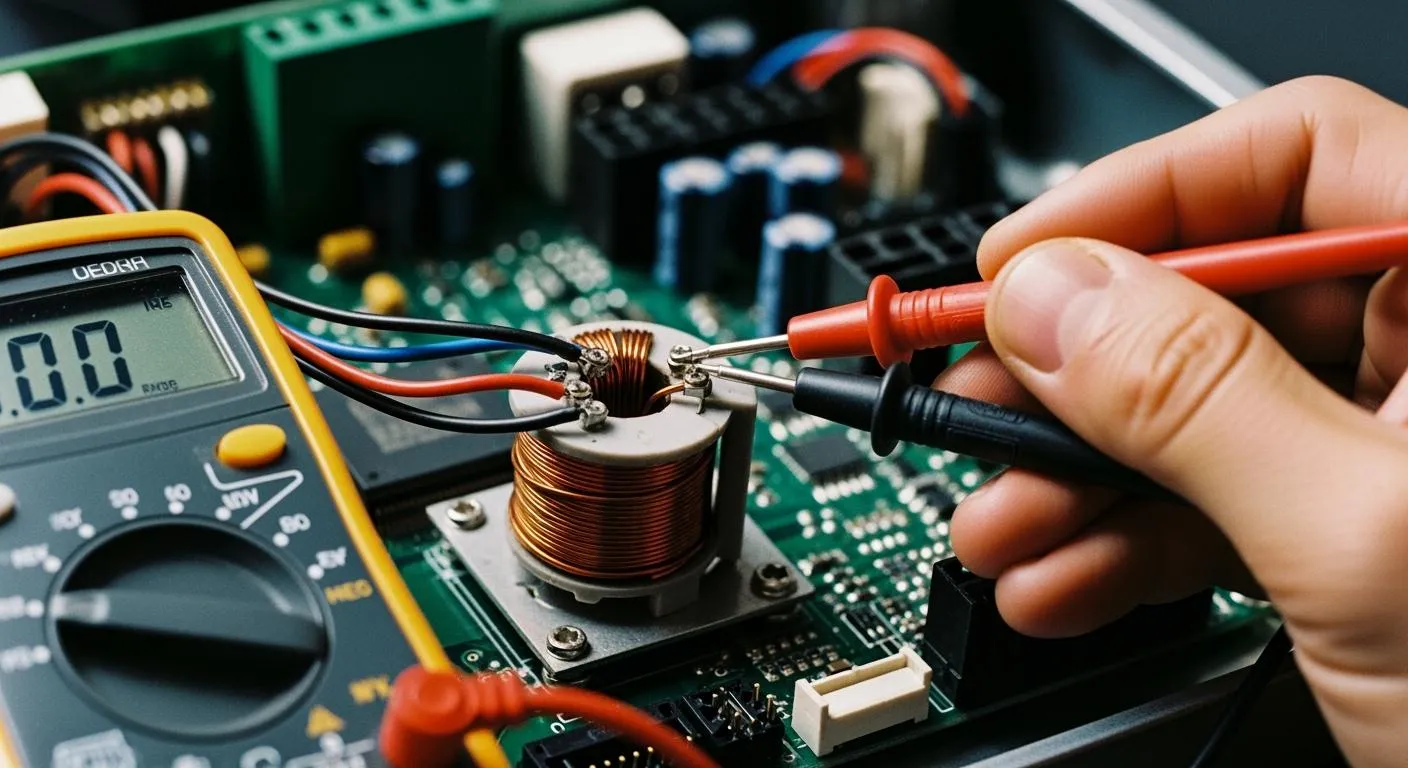
You must test electrical values safely before replacing any motor capacitor. Always disconnect power to the system at the main breaker switch. Bridging terminals with an insulated screwdriver safely discharges stored electricity. Wear safety glasses and insulated gloves throughout the entire procedure. You prevent shock hazards by avoiding charging a capacitor manually during safety checks. Verify zero residual voltage across the leads to handle the capacitor safely.
Set your digital multimeter to capacitance mode. Connect test leads to the terminals to measure microfarad output. A healthy capacitor typically operates within a tolerance of ±5% or ±10%. For example, a 15 µF capacitor with a ±5% rating must read between 14.25 µF and 15.75 µF. You need a new capacitor if the measured value falls outside this safe voltage range. Precise testing maintains proper circuit voltage and protects your capacitor circuit.
Run capacitors maintain energy efficiency, stabilize operational voltage, and protect motor windings from premature wear. You ensure smooth rotational torque during continuous motor operation by maintaining each capacitor properly. A start capacitor provides high torque briefly during startup, while a continuous unit stays engaged throughout the entire run cycle. Swapping these distinct component types damages internal motor windings and risks total system failure.
Proactive troubleshooting keeps your HVAC equipment and household systems running safely. You prevent costly emergency repairs by performing routine multimeter tests on every capacitor and inspecting physical housings regularly. Replacing a weak capacitor early guarantees long-term stability across all your motor-driven electronic appliances.
FAQ
How do you know if a run capacitor is bad?
You can inspect the capacitor for a bulged top or leaking fluid. Testing system voltage with a multimeter also reveals internal breakdown. A failing run capacitor reads outside its designated tolerance rating. This output drop harms overall motor performance.
What happens when a run capacitor voltage rating is too low?
You must select a replacement unit with an equal or higher voltage rating. Running a component below system voltage causes insulation breakdown. The capacitor fails rapidly and disrupts steady energy flow to auxiliary motor windings.
Can you swap different types of capacitors in a motor circuit?
You cannot substitute these components. Knowing how capacitors work helps you protect motor circuits from failure. A start capacitor operates temporarily during startup. In contrast, a run capacitor remains engaged to maintain continuous phase shift and motor torque.
How long does a typical motor capacitor last?
Most units operate reliably for several years under normal conditions. Excessive ambient heat and severe voltage spikes shorten component lifespan. Routine maintenance helps you spot a weak capacitor before complete motor shutdown occurs.