Analyzing NearLink's Impact on Industrial Sensor Latency
NearLink/Wi-Fi combo chips deliver sub-millisecond latency for industrial sensors. This technology provides a significant le
NearLink/Wi-Fi combo chips deliver sub-millisecond latency for industrial sensors. This technology provides a significant leap in Low-Latency Connectivity. It merges the low-power benefits of Bluetooth with the high-reliability features of Wi-Fi.
A Leap in Performance While Bluetooth latency can sometimes exceed one second under poor conditions, NearLink consistently achieves wired-like speeds.
Core technologies like Polar coding and flexible scheduling make this possible. They enable deterministic performance for time-critical industrial data, a key requirement for modern automation and a major upgrade for Low-Latency Connectivity.
Key Takeaways
- NearLink technology offers very fast and reliable wireless connections for factory sensors. It combines the good parts of Bluetooth and Wi-Fi.
- NearLink uses special methods like Polar coding and flexible scheduling. These help it send data quickly and without mistakes, even in busy factory settings.
- NearLink/Wi-Fi combo chips put many wireless features into one small chip. This makes devices cheaper, smaller, and easier to build.
- NearLink helps factories work better and safer. It allows for real-time control of machines and quick alerts for safety issues.
- By 2025, NearLink will change how factories operate. It will make wireless systems as good as wired ones for important tasks.
NEARLINK'S BLUEPRINT FOR LOW-LATENCY CONNECTIVITY
NearLink builds its impressive performance on two key technological pillars. These pillars work together to create a wireless environment that is both fast and reliable. They are essential for achieving the Low-Latency Connectivity required by modern industry.
POLAR CODING AND SHORT FRAME STRUCTURE
NearLink uses Polar coding for forward error correction. This advanced technique ensures reliable data transmission. It works well even with weak signals or high background noise. This reliability reduces the need for data retransmissions. Fewer retransmissions directly lead to lower and more predictable latency.
While other codes like LDPC exist, Polar coding offers a distinct advantage in error correction performance. However, there is a trade-off with decoding speed. LDPC can be faster due to its parallel processing ability.
Decoding Clock Cycle Comparison
| Parameters | LDPC | Polar |
|---|---|---|
| Parallelism | Full | Semi |
| Clock Cycles for 128 B | 5 | 32 |
| Clock Cycles for 64 B | 5 | 16 |
NearLink balances these factors to optimize for industrial use cases, where signal integrity is paramount for achieving consistent Low-Latency Connectivity.
FLEXIBLE SCHEDULING AND RESOURCE ALLOCATION
NearLink also introduces a more intelligent way to manage network traffic. It uses a flexible scheduling mechanism to prioritize data. This system is a major upgrade over traditional Wi-Fi.
Wi-Fi vs. NearLink Scheduling ⚙️ Standard Wi-Fi uses a contention-based method (CSMA/CA). Devices compete for airtime, which causes unpredictable delays in crowded networks. NearLink avoids this competition by assigning dedicated time slots for critical data, guaranteeing transmission.
This approach allows the network to dynamically adjust resources based on real-time needs.
- Priority Access: Critical sensor data, like an emergency stop signal, receives guaranteed bandwidth.
- Dynamic Rebalancing: The system can reallocate resources if network usage changes. It ensures high-priority devices always have a clear path.
- Use-Case Optimization: The network can be configured for different tasks, whether for high-speed robotics or low-power monitoring.
This smart resource management is fundamental to providing deterministic, wired-like performance and true Low-Latency Connectivity on the factory floor.
NEARLINK/WI-FI COMBO CHIP PERFORMANCE

The theoretical advantages of NearLink translate into measurable real-world performance gains. These gains are most apparent when NearLink is integrated into a multi-mode combo chip. This single-chip solution combines NearLink's strengths with the capabilities of Wi-Fi and Bluetooth, creating a powerful and efficient package for industrial environments.
LATENCY AND JITTER BENCHMARKS
Quantitative data reveals the true performance gap between NearLink and older wireless standards. In a simulated high-density industrial setting, NearLink consistently demonstrates superior performance in latency, jitter, and reliability.
Standard Wi-Fi latency is highly variable. It can increase significantly with network congestion. Idle networks show low transmission times. Congested networks, however, can experience delays over 100ms. This happens when many devices compete for access. The 2.4 GHz Wi-Fi band also suffers from interference from other devices like microwaves and cordless phones, which creates signal clutter and slows data.
NearLink's design avoids these issues, delivering consistent results.
Wireless Performance Comparison in a High-Density Environment
| Metric | NearLink (SLE) | Bluetooth Low Energy (BLE) | Wi-Fi |
|---|---|---|---|
| Latency | < 1 ms | 15-30 ms | ~100 ms (variable) |
| Jitter | < 20 µs | > 1 ms | Highly variable |
| Packet Error Rate | < 0.001% | ~1% | > 2% (congested) |
Power consumption is another critical benchmark for battery-operated sensors. NearLink's efficiency allows devices to operate longer on a single charge.
Typical Power Consumption Comparison
| Technology | Power Consumption |
|---|---|
| NearLink (SLE) | 10mW |
| Bluetooth BLE | 30mW |
| Wi-Fi | ~50mW |
COMBO CHIP ARCHITECTURE AND BENEFITS
A NearLink/Wi-Fi combo chip is a multi-mode System-on-a-Chip (SoC). It intelligently manages network traffic to optimize performance. The chip routes different data types over the best available protocol.
- High-Bandwidth Data: Video streams or large file transfers use the Wi-Fi protocol.
- Time-Sensitive Data: Critical sensor readings and control commands use the NearLink (SLE) protocol for Low-Latency Connectivity.
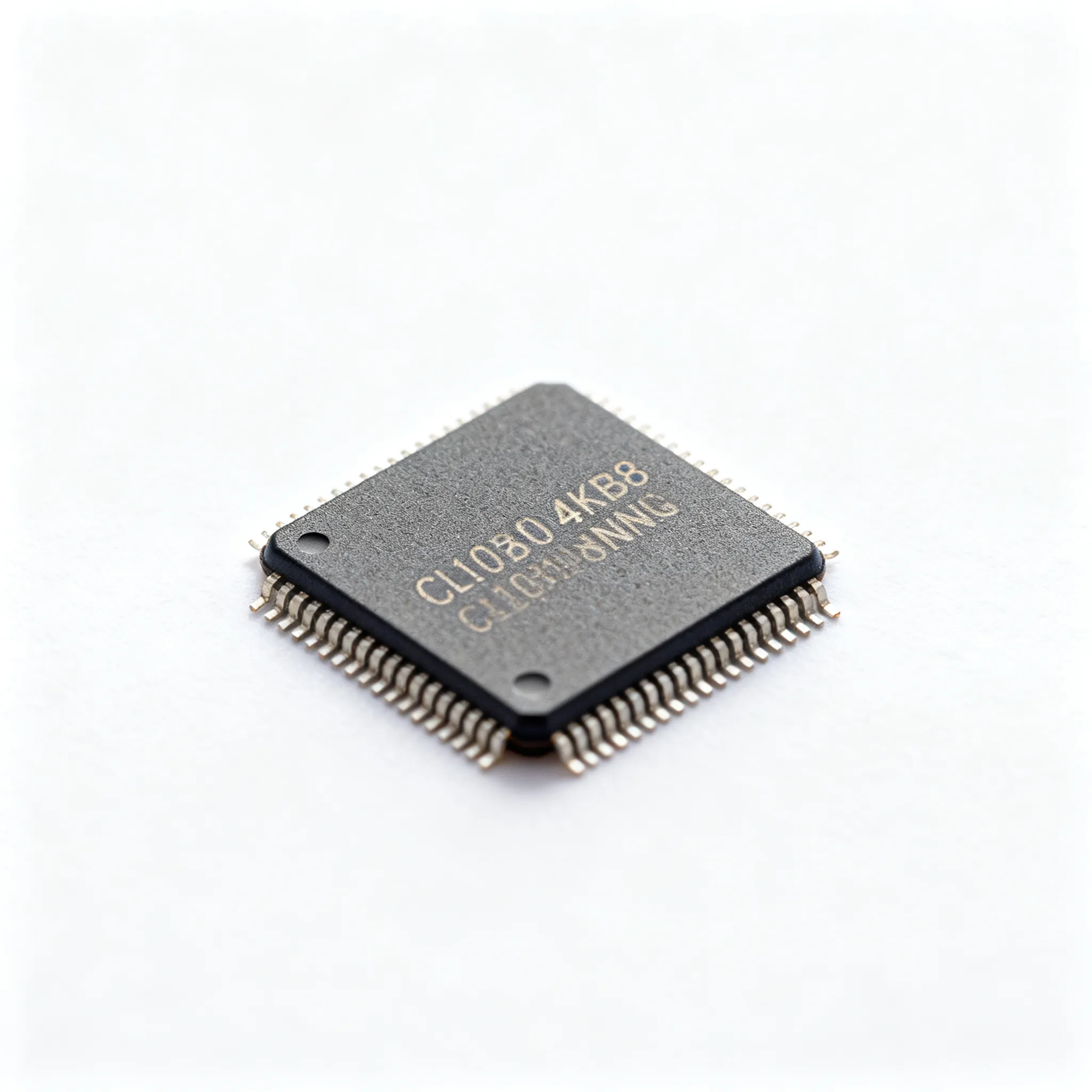
Real-World Example: HiSilicon Hi3863V100 칩 The HiSilicon Hi3863V100 is a prime example of this technology. It integrates a high-performance 32-bit microprocessor with Wi-Fi, BLE, and NearLink (SLE) capabilities onto a single piece of silicon.
This integrated architecture provides numerous technical and business advantages. The SoC includes all necessary components, from the CPU to the RF circuits, on one chip.
Technical Specifications of a NearLink Combo SoC
| Component/Feature | Description |
|---|---|
| SoC Integration | 2.4GHz Wi-Fi, BLE, and SLE Combo chip |
| CPU Subsystem | High-performance 32-bit microprocessor (max 240MHz), 606KB SRAM |
| RF Circuits | Power Amplifier (PA), Low Noise Amplifier (LNA), RF balun, antenna switch |
| Wi-Fi | IEEE 802.11b/g/n/ax baseband and RF, supporting STA and AP modes |
| Bluetooth Low Energy (BLE) | Supports BLE 5.2, rates up to 2Mbps, and BLE Mesh |
| SparkLink Low Energy (SLE) | Supports SLE 1.0, max air interface rate of 12Mbps, Polar coding |
| Software Capabilities | Supports security protocols (WPA3) and network protocols (TCP/UDP/MQTT) |
The chip also offers a rich set of peripheral interfaces for connecting various sensors and actuators.

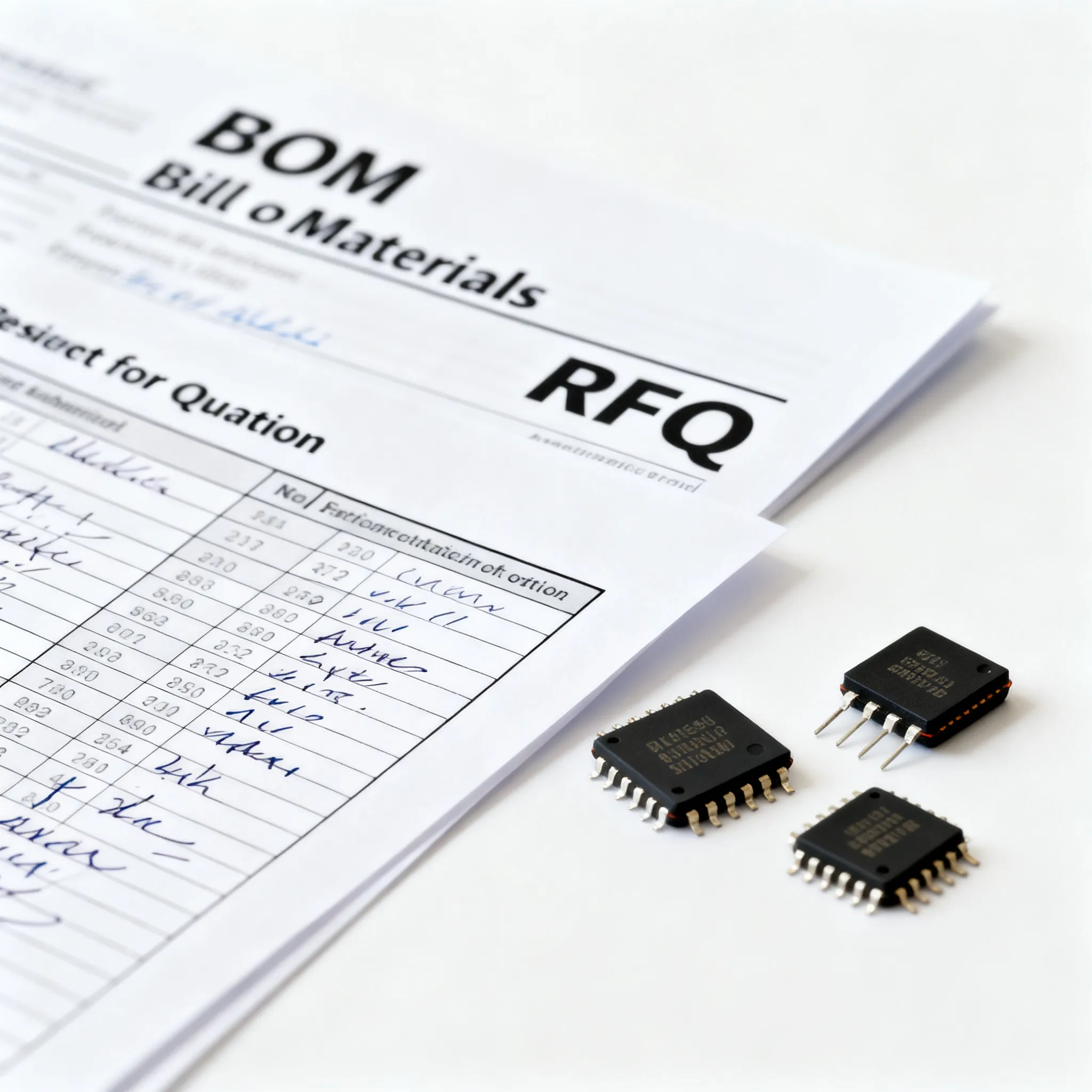
The primary business benefit of this approach is a significant reduction in the Bill of Materials (BOM).
- Lower BOM Cost: A single chip replaces an entire PCB full of separate components. This reduces material costs and simplifies mass production.
- Smaller Footprint: The integrated design allows for smaller, more compact industrial devices.
- Simplified Development: Engineers work with a single, unified platform instead of managing multiple discrete chips and their complex interactions.
This combination of high performance, low power, and reduced cost makes NearLink combo chips a transformative technology for the industrial sector.
IMPACT ON INDUSTRIAL APPLICATIONS BY 2025

By 2025, NearLink technology will move from theory to practice, fundamentally changing the factory floor. Its ability to provide reliable, ultra-low latency wirelessly unlocks applications that were previously impossible without physical cables. This shift promises greater efficiency, flexibility, and safety in industrial operations.
REAL-TIME PROCESS CONTROL
NearLink enables true wireless real-time process control. Many advanced manufacturing tasks, known as "Hard Real-Time" (Hard RT) applications, demand sub-millisecond response times for motion control. These systems currently rely on expensive and restrictive wiring.
NearLink's performance makes wireless closed-loop control a reality.
- Precision Robotics: Automated assembly lines can use wireless robots that move with perfect synchronization.
- Advanced Motion Systems: Integrated linear motors, used for complex oscillations and vibration control, can operate wirelessly with precise, repeatable motion.
A More Flexible Factory 🏭 Facilities are already moving away from wired systems to gain flexibility and reduce maintenance costs. A case study by Elation Projects showed that a factory using wireless SCADA and DCS systems saw reduced downtime and greater operational freedom. NearLink will accelerate this trend for the most time-critical processes.
PREDICTIVE MAINTENANCE AND SAFETY
NearLink's Low-Latency Connectivity dramatically improves predictive maintenance and worker safety systems. Instantaneous data transmission allows for proactive measures instead of reactive fixes.
For predictive maintenance, sub-millisecond data from vibration sensors allows for highly accurate analysis.
- Enhanced Diagnostics: Ultra-precise data synchronization helps detect tiny misalignments or loose components, improving the accuracy of machine learning models.
- Fewer False Alarms: Accurate time alignment across sensors reduces false positives, allowing maintenance teams to trust the data and act confidently.
- Better Analysis: Synchronized data enables advanced modal analysis, which can identify structural stress or material fatigue before a failure occurs.
This immediate communication is also vital for worker safety. Real-time safety solutions can monitor for hazards like gas leaks or equipment malfunctions. Wearable devices can track worker vital signs and use geofencing to create safe zones, sending instant alerts if an employee enters a hazardous area. This capability transforms safety protocols from periodic checks into a constant, automated monitoring system.
NearLink delivers the missing piece for next-generation wireless automation: deterministic, ultra-low latency. Integrating NearLink (SLE), Wi-Fi, and BLE onto a single combo chip creates an optimal balance of performance, cost, and power consumption.
By 2025, this technology will be pivotal. It will enable true real-time control and safety applications wirelessly, fundamentally changing the factory floor. 🏭
FAQ
What is NearLink technology?
NearLink is a new wireless standard. It combines the low power usage of Bluetooth with the high reliability of Wi-Fi. This technology provides fast and stable connections for industrial devices.
Why is NearLink faster than Wi-Fi for sensors?
NearLink uses a smart system called flexible scheduling. It gives important data a dedicated path.
Standard Wi-Fi makes devices compete for network access. This competition creates unpredictable delays, especially in crowded areas. NearLink avoids this problem entirely.
What is a NearLink combo chip?
A NearLink combo chip is a single, powerful System-on-a-Chip (SoC). It includes multiple wireless technologies:
- NearLink (SLE)
- Wi-Fi
- Bluetooth Low Energy (BLE)
This design reduces cost and device size. It intelligently routes traffic for the best performance.
How does NearLink improve factory safety? ⛑️
NearLink's ultra-low latency enables instant communication. Safety sensors can send immediate alerts about dangers like gas leaks or equipment failure. This speed allows for real-time responses, protecting workers and preventing accidents before they happen.