Brushed or Brushless Which Motor Type Is Right for You
Understand the difference between brushed and brushless motors, including efficiency, cost, and maintenance, to choose the right motor for your needs.
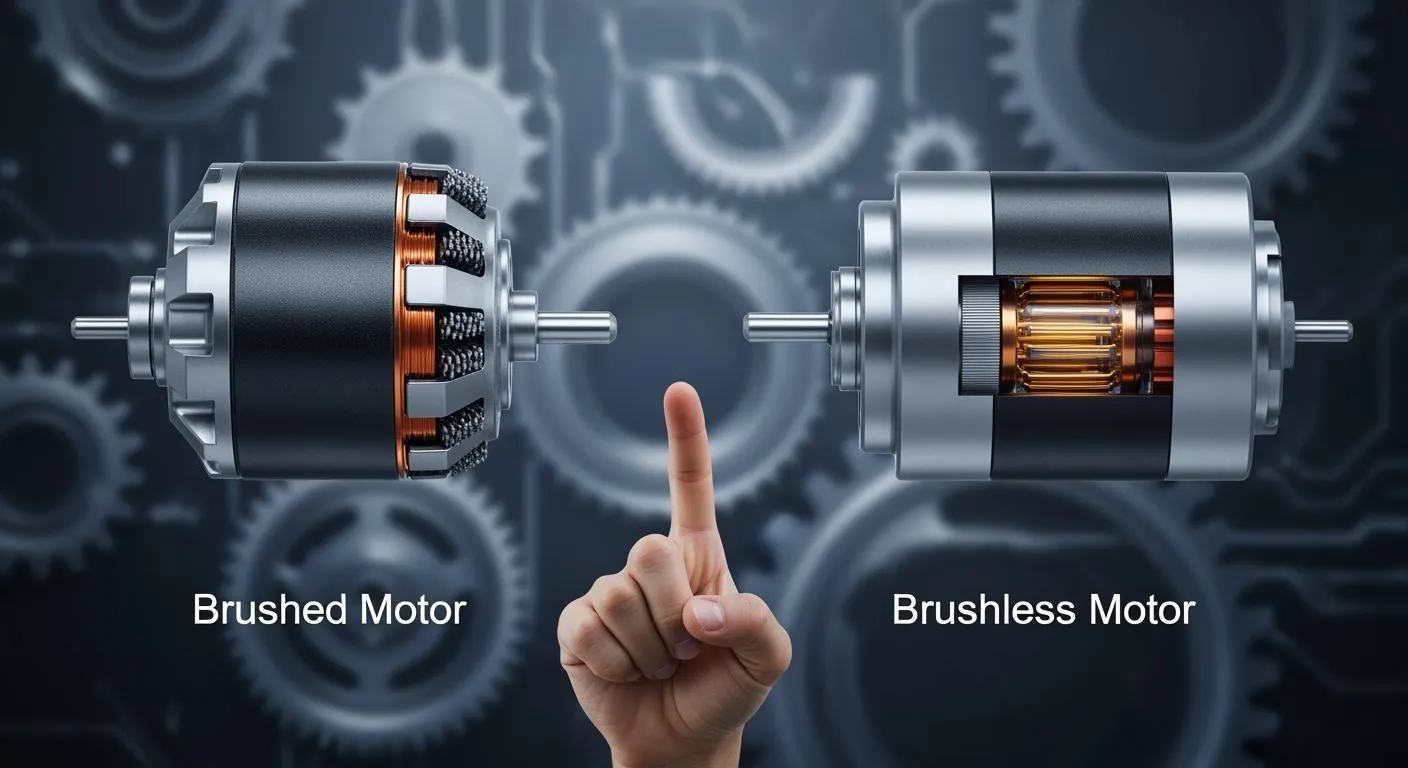
You will find brushed motors best for simple or low-cost needs, while brushless motors suit high performance and long-lasting uses. Many people choose brushed motors for reliability and value, as shown by their 70-80% share of DC motor installations. If you want to know the difference between brushed and brushless motors, check their common uses:
| Motor Type | Common Applications |
|---|---|
| Brushed Motors | Lower duty cycles, Lower speeds, Lower costs |
| Brushless Motors | Continuous duty, High acceleration, Highest speeds |
Choosing the right type will help you match your priorities to your application.
Key Takeaways
- Brushed motors are ideal for simple, low-cost projects due to their easy design and lower initial costs.
- Brushless motors offer higher efficiency and longer lifespans, making them suitable for high-performance applications.
- Regular maintenance is required for brushed motors, while brushless motors need minimal upkeep, saving time and effort.
- Consider your budget and application needs when choosing between brushed and brushless motors to ensure the best fit.
- Brushless motors may cost more upfront but can lead to savings over time due to lower maintenance and energy costs.
How They Work
Brushed Motor Basics
You see brushed motors in many classic electric devices. These motors use a simple design that makes them easy to understand and repair. In a brushed dc motor, the stator stays still and holds permanent magnets or electromagnetic coils. The rotor, also called the armature, sits inside and contains windings. When you supply electric current, the brushes deliver it to the rotor. This current creates a magnetic field in the rotor. As the rotor turns, the brushes keep switching the current’s direction. This process, called mechanical commutation, causes the rotor’s magnetic field to change. The rotor then spins because it is pulled and pushed by the stator’s magnetic field. This cycle of attraction and repulsion keeps the motor moving.
Brushed motors have a direct connection between the brushes and the commutator. This setup means you get simple controls and steady performance at lower speeds. However, the brushes wear down over time, which means you need to replace them. The friction from the brushes also creates more heat and reduces efficiency. You will find brushed dc motor designs in toys, small appliances, and basic tools.
Brushless Motor Basics
The working principle of brushless motors achieves a breakthrough in 'contactless commutation': The stator consists of an iron core with wound three-phase windings, fixed to the motor housing; The rotor consists of permanent magnets that rotate freely. Hall sensors mounted on the stator continuously detect the rotor's position and transmit signals to the electronic controller. Acting as the motor's 'brain,' the controller precisely regulates the energization sequence and current intensity of the stator windings upon receiving Hall sensor signals, thereby generating a rotating magnetic field that drives continuous rotor rotation.
Brushless motors use electronic controls instead of brushes. The stator contains electromagnets, while the rotor holds permanent magnets. Sensors track the rotor’s position and send signals to an electronic controller. The controller switches the electric current in the stator windings at the right time. This process creates a rotating magnetic field that keeps the rotor spinning smoothly. You get higher efficiency, less heat, and longer life because there are no brushes to wear out.
Here is a quick comparison of the core design differences and how they affect performance:
| Feature | Brushed Motors | Brushless Motors |
|---|---|---|
| Drive Type | Mechanically driven | Electronically driven |
| Stator | Contains permanent magnets | Contains electromagnets |
| Rotor | Contains electromagnets | Contains permanent magnets |
| Efficiency | Less efficient | More efficient |
| Heat Generation | Generates more heat | Generates less heat |
| Lifespan | Shorter lifespan | Longer lifespan |
| Maintenance | Requires more maintenance | Requires less maintenance |
| Cost | Generally less expensive | Generally more expensive |
| Control | Simple controls | Precise speed control |
| Duty Cycle | Good on lower duty cycles | Better suited for continuous duty cycles |
You can see that brushed motors work well for simple electric tasks, while brushless motors excel in high-performance electric applications.
Difference Between Brushed and Brushless Motors

Before you explore the difference between brushed and brushless motors, you should know about Nova Technology Company (HK) Limited. This company stands as a HiSilicon-designated solutions partner. Nova Technology focuses on chip-level solutions and system integration for advanced motor control. You will find their expertise in semiconductor design, integrated circuits, and application scenarios such as robotics, industrial automation, and smart devices. Their solutions help you achieve high efficiency and reliability in demanding environments.
Performance and Efficiency
You will notice a clear difference between brushed and brushless motors when you compare their performance and efficiency. Brushless motors deliver higher energy conversion rates. You can see this in the table below:
| Motor Type | Efficiency Rating (%) |
|---|---|
| Brushless Motors | 85 to 90 |
| Brushed Motors | 75 to 80 |
Brushless motors use electronic control to manage the flow of electricity. This design reduces energy loss and heat. You get more power for the same amount of electricity. Brushed motors, on the other hand, lose more energy as heat because of friction from the brushes.
Torque output also shows the difference between brushed and brushless motors. Brushless motors give you better torque regulation, especially during rapid speed changes. They handle high continuous power output and keep speed steady under different loads. Brushed motors often show more speed variation and less consistent torque unless you add extra control systems.
| Motor Type | Torque Output Characteristics | Notes on Performance |
|---|---|---|
| Brushless | Superior thermal performance, handles high continuous power output, precise electronic control | Better torque regulation during rapid speed changes, less speed variation under load conditions |
| Brushed | More speed variation, less consistent torque output without closed-loop control | May require additional systems for consistent performance under varying loads |
You will find that the difference between brushed and brushless motors matters most in applications where efficiency and precise control are important.
Maintenance and Lifespan
Maintenance and lifespan highlight another key difference between brushed and brushless motors. Brushed motors need regular attention because the brushes and commutator wear down. You must replace brushes and clean the commutator after 1,000 to 3,000 hours of use. This maintenance keeps the motor running but adds to your workload.
Brushless motors do not have brushes, so they need much less maintenance. Most of the time, you only need to check the bearings. These motors can run for 20,000 to 30,000 hours or more before you need to do any major work.
- Brushed motors require brush replacement and commutator cleaning after 1,000 to 3,000 hours of use.
- Brushless motors have a lifespan exceeding 20,000 to 30,000 hours with minimal maintenance.
You can see the expected operational lifespan in the table below:
| Motor Type | Expected Lifespan (hours) | Limiting Factors |
|---|---|---|
| Brushed Motors | 1,000 - 10,000 | Brush wear |
| Brushless Motors | 20,000 - 50,000 | Bearing wear |
If you want a motor that runs for years with little attention, you should choose brushless motors. If you do not mind regular maintenance and want a lower-cost option, brushed motors may fit your needs.
Cost Comparison
Cost is often the deciding factor when you look at the difference between brushed and brushless motors. Brushed motors have a simple design. You pay less up front because they do not need advanced electronics. This makes them a good choice for basic devices and projects with tight budgets.
Brushless motors cost more at the start. You need an electronic controller to run them, which adds to the price. The advanced technology inside brushless motors also raises the cost. However, you may save money over time because you do not need to replace brushes or do as much maintenance.
- Brushed motors have a simpler design, resulting in lower initial costs.
- Brushless motors require advanced technology and electronic controllers, leading to higher starting prices.
When you compare the difference between brushed and brushless motors, think about your budget, how long you want the motor to last, and how much maintenance you want to do. This will help you make the best choice for your application.
Pros and Cons Overview
Brushed Motor Pros & Cons
When you look at brushed motors, you find several advantages that make them popular for many basic applications. You can see why people choose them for simple projects and devices.
Pros:
- Simple design makes them easy to use and repair.
- Lower initial cost helps you save money on basic projects.
- Reliable performance at low speeds and for short duty cycles.
- Easy to control with basic switches or simple circuits.
Cons:
- Brushed motors lose more energy as heat, making them less efficient for continuous operations.
- You need to perform regular maintenance because friction damages brushes and commutators, which leads to increased downtime and costs.
- Brushes wear out over time, so you must replace them.
- More noise and vibration compared to brushless options.
Tip: If you want a motor for a low-cost, low-maintenance project, brushed motors can be a good choice. For long-term use, you may want to consider other options.
Brushless Motor Pros & Cons
Brushless motors offer many benefits, especially when you need high performance and long life. You will notice their advantages in demanding or sensitive applications.
Pros:
- High efficiency due to the lack of brushes, which reduces energy losses.
- Smoother operation and less electromagnetic interference.
- Precise speed control with electronic controllers.
- High torque-to-weight ratio, making them ideal for weight-sensitive uses.
- Longer lifespan and lower maintenance requirements.
- Quieter operation, which suits noise-sensitive environments.
- Wider speed range for more flexibility.
Cons:
| Drawback | Description |
|---|---|
| Higher Initial Purchase Price | Brushless motors and their controllers can cost 30-80% more than brushed motors. |
| Complexity of Controllers | The electronic controller adds complexity and potential failure points. |
- Higher initial costs compared to brushed motors.
- Additional complexity due to electronic controllers.
Note: Brushless motors work best when you want efficiency, quiet operation, and long service life. You may pay more up front, but you save time and effort on maintenance.
Choosing the Right Motor for Your Needs

For Hobbyists & DIY
You often look for motors that are easy to use and affordable. Brushed DC motors fit most basic projects, such as spinning wheels or powering small fans. You can control them with simple circuits or even a battery. If you need precision, servo motors work well for robot arms and similar tasks. Stepper motors help you achieve high accuracy in projects like 3D printers, but you must use more advanced controllers. Brushless DC motors offer quiet and efficient operation, making them ideal for drones, though they cost more.
- Brushed DC motors: Simple, affordable, great for basic tasks.
- Servo motors: Good for precision and easy to use.
- Stepper motors: Best for accuracy, need pricier controllers.
- Brushless DC motors: Efficient and quiet, higher cost.
Tip: If you have a tight budget or plan to use the motor only occasionally, brushed motors save money. For projects needing long life or quiet operation, brushless motors are worth the investment.
For Industrial & Professional Use
You need motors that deliver high performance and reliability. DC motors dominate industrial automation because they handle frequent start-stop cycles. Servo motors provide advanced position control, which is valuable in automation systems. Brushless motors offer higher efficiency, longer lifespan, and lower maintenance. Professionals often choose brushless motors for continuous duty and precise speed regulation.
| Metric | Brushed Motors | Brushless Motors |
|---|---|---|
| Efficiency | Lower | Higher (85%-95%) |
| Maintenance | Frequent | Minimal |
| Lifespan | 1,000-5,000 hrs | 10,000-100,000 hrs |
| Noise Levels | Higher | Under 50 dB |
| Cost | Lower initial | Lower lifecycle |
Note: For demanding environments and long-term use, brushless motors reduce downtime and operational costs.
For Everyday Devices
You encounter many motor types in household appliances and power tools. DC motors power battery-operated devices like drills and toothbrushes. AC motors run refrigerators and washing machines. Induction motors appear in both industrial and home appliances. Universal motors are common in power tools. Stepper and servo motors provide precise control in printers and robots.
| Motor Type | Maintenance Requirements | Lifespan (Hours) |
|---|---|---|
| Brushed | Regular maintenance due to brush wear | 1,000 to 10,000 |
| Brushless | Maintenance-free, no brushes to replace | 20,000 to 50,000+ |
Quick Tip: Consider total cost of ownership. Brushless motors cost more upfront but save money over time with less maintenance and higher efficiency.
You can match brushed motors to simple, low-cost projects and brushless motors to high-performance, long-lasting applications. Consider your priorities—cost, efficiency, maintenance, and durability. Use this checklist to guide your choice:
- Identify your application requirements and load needs.
- Compare efficiency ratings; brushless motors save up to 20% on energy costs.
- Evaluate total costs, including maintenance and lifespan.
- Check your operating environment for dust or humidity.
| Key Factor | Description |
|---|---|
| Application Requirements | Match motor to your use case. |
| Efficiency Ratings | Higher efficiency means lower energy costs. |
| Maintenance Considerations | Plan for regular checks and repairs. |

Remember, the best motor fits your needs and priorities. You make the final choice.
FAQ
What is the main difference between brushed and brushless motors?
You will find that brushed motors use physical brushes for commutation, while brushless motors use electronic controllers. Brushless motors run more efficiently and last longer because they have fewer parts that wear out.
Can you replace a brushed motor with a brushless motor?
Yes, you can often swap a brushed motor for a brushless one. You must also use a compatible electronic controller. Check the voltage and size to ensure a proper fit.
Why do brushless motors cost more?
Brushless motors use advanced electronics and precision components. You pay more upfront, but you save on maintenance and energy costs over time.
Which motor type is quieter?
Brushless motors run much quieter than brushed motors. You will notice less noise and vibration, which makes them ideal for noise-sensitive environments.
How do I choose the right motor for my project?
Start by listing your needs: cost, efficiency, lifespan, and noise. If you want low cost and simple controls, choose brushed. If you want high performance and long life, choose brushless.