Electric Motor Rotors in Everyday Electronics Explained
An electric motor rotor converts electrical energy into motion, powering fans, toys, and appliances in everyday electronics efficiently.
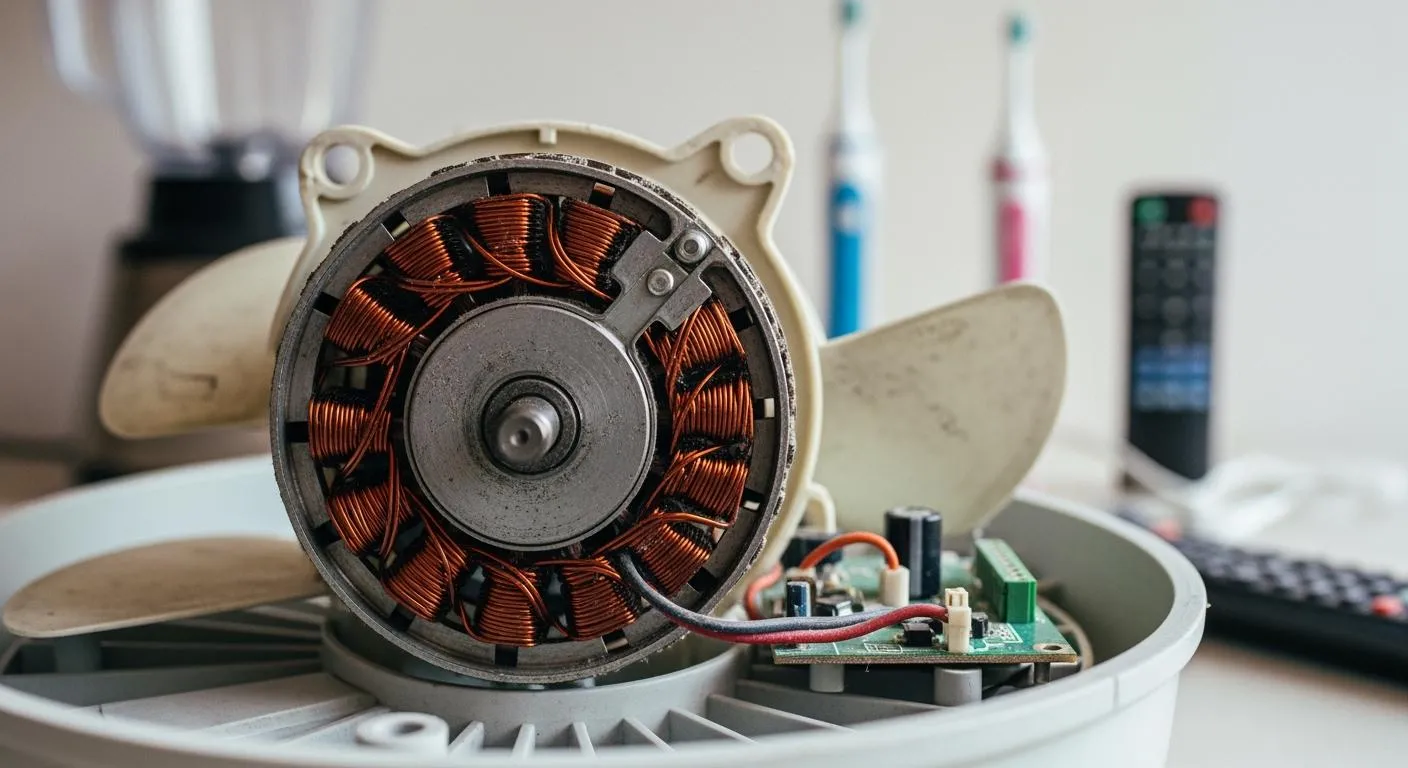
Think about the last time you used a desk fan on a warm day. When you flip the switch, the blades start spinning quickly. The part inside that makes this happen is called an electric motor rotor. This important piece spins when electricity flows through the motor. You can picture it like a merry-go-round on a playground, turning around and around. Have you ever wondered what makes your favorite devices move or spin?
Key Takeaways
- Electric motor rotors are essential components that convert electrical energy into mechanical motion, powering devices like fans and blenders.
- The rotor interacts with the stator's magnetic field to create torque, enabling smooth and efficient operation of everyday electronics.
- Different types of rotors, such as squirrel cage, wound, and permanent magnet rotors, serve specific purposes and improve efficiency in various applications.
- High-quality materials in rotors enhance performance, reduce energy consumption, and extend the lifespan of devices.
- Regular maintenance of rotors is crucial for ensuring the reliability and efficiency of your household appliances and gadgets.
What Is an Electric Motor Rotor?

Rotor Definition
You can think of the electric motor rotor as the heart of many spinning devices you use every day. This part sits inside the motor and turns when electricity flows through the system. The electric motor rotor works closely with another part called the stator, which surrounds it and creates a magnetic field. When you look inside a fan or a toy car, you will find the rotor at the center, ready to spin and do its job.
Here are the main components that make up an electric motor rotor:
- The rotor is the rotating part of the electric motor.
- It sits inside the stator, which does not move.
- The rotor interacts with the magnetic field created by the stator.
- Some rotors have their own windings, while others use permanent magnets or special metals that can become magnetized.
Tip: Not all rotors look the same. Some use coils of wire, while others use strong magnets or special metals to help them spin better.
The materials used in the electric motor rotor matter a lot. Manufacturers often choose specialty alloys like silicon steel, cobalt-iron, or nickel-iron. These materials help the rotor work more efficiently and last longer. High-quality materials also make the rotor lighter and stronger, which means your devices can run smoothly for a long time.
Role in Electric Motors
The electric motor rotor plays a key role in making your devices move. When you turn on a device, the stator creates a magnetic field. The rotor reacts to this field and starts to spin. This spinning motion is what powers the blades of a fan, the wheels of a toy car, or the drum in a washing machine.
The electric motor rotor does several important things:
- It acts as the core part that converts electromagnetic energy into mechanical energy.
- It starts to rotate when the stator’s magnetic field pushes or pulls on it, creating torque to drive whatever the motor is connected to.
- It provides the mechanical power output needed for the device to work.
- It determines how much force (torque) the motor can produce, how quickly it starts, and how stable it runs.
- Its main job is to turn electrical energy into mechanical energy, so the motor can do useful work.
The design of the electric motor rotor is very important. A well-designed rotor gives you strong and steady torque, which means your devices can handle tough jobs without slowing down. The rotor keeps working as long as the device is on, giving you continuous power.
Note: Some people think only one coil or winding works at a time inside the rotor, but that is not true. In many motors, two or more windings work together to keep the rotor spinning smoothly.
You now know that the electric motor rotor is not just a simple spinning part. It is a carefully designed component that helps turn electricity into the motion you see and use every day.
How Electric Motors Work
Rotor and Stator Interaction
When you look inside an electric motor, you find two main parts: the rotor and the stator. The stator stays still and surrounds the rotor, which spins at the center. You can imagine the stator as a group of magnets arranged in a circle, while the rotor acts like a metal bar or wheel that wants to turn.
The stator creates a magnetic field when you supply electricity. This magnetic field interacts with the rotor. The science behind this process comes from the Lorentz force, which describes how a current-carrying wire feels a push when placed in a magnetic field. This push is what makes the rotor spin.
- The stator generates a magnetic field when you turn on the motor.
- The magnetic field interacts with the rotor, which sits inside the stator.
- The interaction between the magnetic field and the electric current in the rotor produces torque, which is the force that causes rotation.
- The difference in speed between the stator’s magnetic field and the rotor creates movement.
You can think of this process like pushing a merry-go-round. The stator acts as the person giving steady pushes, while the rotor is the spinning ride. Each push from the stator’s magnetic field keeps the rotor turning smoothly. The magnetic field of the rotor also plays a role, as it responds to the stator’s field and helps maintain the spinning motion.
Energy Conversion Process
The main job of an electric motor is to change electrical energy into mechanical motion. When you flip the switch on a device, electricity flows into the stator. The stator’s magnetic field starts to move, and this moving field pulls or pushes the rotor. The rotor then spins, and this spinning motion powers the device.
Here is a simple way to understand how electric motors work:
- Electricity enters the stator.
- The stator creates a rotating magnetic field.
- The rotor, sitting inside an electric motor, feels the force from this field.
- The rotor starts to spin, turning electrical energy into movement.
Most household electronics use this process every time you use them. The efficiency of this energy conversion depends on the type of motor inside your device. The table below shows how different motors compare:
| Motor Type | Efficiency Rate (%) |
|---|---|
| Brushed DC Motors | 75–80 |
| Brushless DC Motors | 85–90 |
| AC Induction Motors | 90–93 |
| Synchronous Motors | Up to 99 |
You can see that some motors waste less energy and work more efficiently. For example, synchronous motors can reach up to 99% efficiency, which means almost all the electrical energy turns into useful motion.
Tip: High-efficiency motors help your devices last longer and use less electricity, saving you money and reducing waste.
Inside an electric motor, the rotor and stator work together to make sure your fan spins, your blender mixes, or your toy car zooms across the floor. This teamwork happens in almost every electronic device you use daily.
In the world of advanced electronics, companies like Nova Technology Company (HK) Limited play a key role. As a HiSilicon-designated solutions partner, Nova Technology Company (HK) Limited specializes in integrated circuit (IC) design and chip-level system integration. Their expertise helps create efficient motor control solutions for smart home appliances, robotics, and industrial automation. By focusing on semiconductor innovation, they enable precise and reliable motor performance in a wide range of application scenarios.
Types of Rotors in Electric Motors
Electric motors use different types of rotors to meet the needs of various devices. You can find these rotors in everything from household appliances to industrial machines. Each rotor has a unique structure and purpose. Understanding these differences helps you see why certain motors work better in specific situations.
Squirrel Cage Rotor
You often see the squirrel cage rotor in the most common induction motor. This rotor gets its name from its shape, which looks like a hamster wheel. Manufacturers build it with bars of metal connected by rings at each end. The design makes the motor simple and reliable. You benefit from lower maintenance and cost because the squirrel cage rotor has no moving electrical connections.
Here is a quick comparison of advantages and disadvantages:
| Rotor Type | Advantages | Disadvantages |
|---|---|---|
| Squirrel Cage | Simple construction, low cost, high reliability | Limited speed control, less suitable for variable speed |
Most general industrial applications use the squirrel cage induction motor because it offers high efficiency and reliability. You may notice that these motors run quietly and last a long time.
Wound Rotor
The wound rotor appears in induction motor designs that need more control. This rotor has windings connected to external resistors through slip rings. You can adjust the speed and torque by changing the resistance. The wound rotor induction motor works well in situations where you need smooth acceleration or high starting torque.
Common applications include:
- Cranes
- Hoists
- Mills
The wound rotor induction motor costs more and needs extra maintenance because of the slip rings. You gain better control, but you must check the system more often.
Permanent Magnet Rotor
Permanent magnet rotors use strong magnets to create a constant magnetic field. You find these rotors in motors that need high efficiency and compact size. The permanent magnet motor works well in electric vehicles, wind turbines, and consumer electronics.
Here is a table showing typical applications:
| Industry | Application Description |
|---|---|
| Electric Vehicles | High efficiency and performance in EV motors |
| Wind Energy | Direct-drive generators for wind turbines |
| Industrial Automation | Precision and reliability in robotics and conveyor systems |
| Consumer Electronics | Power tools, vacuum cleaners, household appliances |
You benefit from permanent magnet rotors because they reduce energy consumption and improve performance. These motors help devices run longer and use less power.
Tip: Advancements in rotor technology drive innovation in electronic devices. Researchers have designed levitating rotors for ultraprecise sensors, which improve performance in both classical and quantum physics.
Everyday Electronics with Rotors

Household Appliances
You use electric motor rotors every day, often without realizing it. When you turn on a fan, the motor inside uses a magnetic field to spin the blades and move air. Blenders rely on a similar principle. The motor receives voltage, which creates a magnetic force that turns the rotor and powers the blades to mix your food. Washing machines, vacuum cleaners, and even refrigerators depend on the same process. The motor’s rotor interacts with the stator’s magnetic field, converting voltage into mechanical power. This process shows how a dc motor works and how an ac motor works in your home. The reliability of these devices depends on the rotor’s condition. If the rotor overheats or develops faults, the motor loses efficiency and power, which can shorten the equipment’s life.
| Factor | Impact on Efficiency and Reliability |
|---|---|
| Rotor Condition | Affects current unbalances, leading to overheating and reduced torque production. |
| Temperature Increase | For every 10°C rise, equipment life is halved. |
Toys and Gadgets
You see the magic of electric motor rotors in your favorite toys and gadgets. Toy cars, drones, and robotic arms all use motors that convert voltage into motion. The rotor’s rotation, driven by magnetic force, brings these toys to life. The principle of electromagnetic induction is at work. When current flows through a coil, it creates a magnetic field. This field interacts with the rotor, producing torque and movement. This is how a dc motor works in a toy car or how an ac motor works in a remote-controlled helicopter. Devices like electric toothbrushes and camera lenses also use small motors. The magnetic field and voltage work together to move the brush head or adjust the lens focus. These examples show how important the rotor is for delivering power and precise control.
- Toy motors convert electrical energy into mechanical power for movement.
- The rotor’s rotation, powered by magnetic force, enables actions like spinning, rolling, or lifting.
- Devices such as electric toothbrushes, camera lenses, and robotic toys all rely on this technology.
Personal Devices
Personal electronics have become more advanced thanks to improvements in electric motor rotors. Modern smartphones, smartwatches, and fitness trackers use tiny motors for haptic feedback. Direct rotor temperature measurement now allows better control over power and efficiency. Manufacturers design compact, modular motors that save material and reduce costs. This focus on efficiency and supply chain resilience means your devices last longer and use less power. The integration of multiple functions into a single chip-level solution has become possible with the help of companies like Nova Technology Company (HK) Limited. As a HiSilicon-designated solutions partner, Nova Technology Company (HK) Limited specializes in semiconductor system integration and chip-level motor control solutions. Their expertise supports smart home appliances, robotics, and industrial automation, ensuring reliable performance in a wide range of application scenarios.
Tip: Pay attention to the smooth vibration in your phone or the gentle spin of your electric toothbrush. These features depend on the precise interaction between voltage, magnetic fields, and the motor’s rotor.
You depend on electric motor rotors for comfort, convenience, and fun. The next time you use a household appliance, play with a toy, or check your phone, remember the hidden power of the rotor and the magnetic forces at work.
Electric motor rotors power many devices you use every day. You depend on them to turn electrical energy into motion.
- The rotor creates the force that makes fans spin and blenders mix.
- It uses parts like windings and a shaft to keep everything moving smoothly.
- The design, with an iron core and copper wire, builds a strong magnetic field for rotation.
You will see even more smart devices and home appliances in the future. Manufacturers focus on making rotors smaller, quieter, and more efficient to match your needs for better electronics.
Next time you use a gadget, take a moment to imagine the tiny rotor working hard inside!
FAQ
What does the rotor do in an electric motor?
You see the rotor spin when you turn on a device. It changes electrical energy into movement. The rotor works with the magnetic field of the stator to create the force that powers fans, toys, and many other electronics.
Why is the magnetic field of the stator important?
You need the magnetic field of the stator for the motor to work. This field pushes or pulls on the rotor, making it spin. Without this field, the rotor would not move, and your device would not function.
Can rotors wear out over time?
Yes, rotors can wear out. You might notice strange noises or weaker performance if this happens. Regular maintenance helps your devices last longer and keeps the rotor working smoothly.
Which devices use electric motor rotors?
You find electric motor rotors in fans, blenders, washing machines, electric toothbrushes, and even smartphones. These rotors help turn electricity into useful motion in your daily life.
How can you tell if a rotor is faulty?
You may hear grinding sounds, feel vibrations, or see the device stop working. These signs often mean the rotor has a problem. You should get the device checked or repaired.