Exploring the Core Meaning of SMPS
A switched-mode power supply (SMPS) is a power unit that efficiently converts electrical power. It uses a high-frequency swi
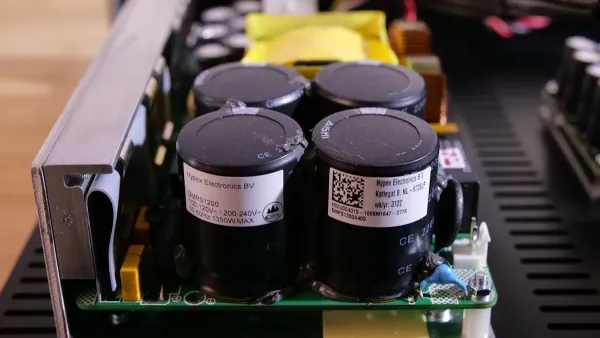
A switched-mode power supply (SMPS) is a power unit that efficiently converts electrical power. It uses a high-frequency switching regulator to achieve this. This design differs greatly from older linear power supplies. A switch mode power supply offers higher efficiency, a smaller size, and lighter weight. This efficiency is the core smps meaning. The compact design makes switched-mode power supplies the standard in modern electronics. They power everything from computers to phone chargers. In fact, consumer electronics represent a major market segment for this technology.
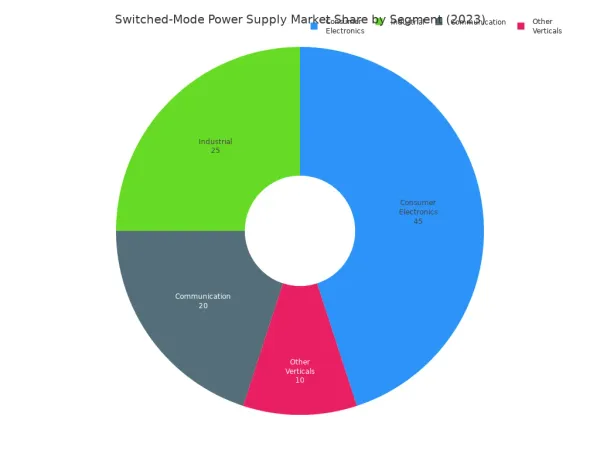
The global market for switched-mode power supplies reflects their importance. The market continues to grow steadily.
| Metric | Value |
|---|---|
| Market Size (2025) | USD 28,012.7 Million |
| Forecast (2035) | USD 40,284.9 Million |
| CAGR (2025 to 2035) | 3.7% |
This growth shows how the switch mode power supply is essential for today's technology.
Key Takeaways
- SMPS stands for Switched-Mode Power Supply. It changes electrical power very well. It is better than old power supplies because it is small, light, and saves energy.
- SMPS works by quickly turning power on and off. This method makes it very efficient. It creates less heat and uses smaller parts than older power supplies.
- SMPS uses a special control system. This system keeps the power steady. It makes sure devices get the right amount of power, even if their needs change.
- There are different types of SMPS. Some make voltage lower (buck). Some make voltage higher (boost). Others can do both (buck-boost).
- SMPS is very important for modern electronics. It powers things like phones and computers. It helps make our devices small and portable.
Understanding the SMPS Meaning
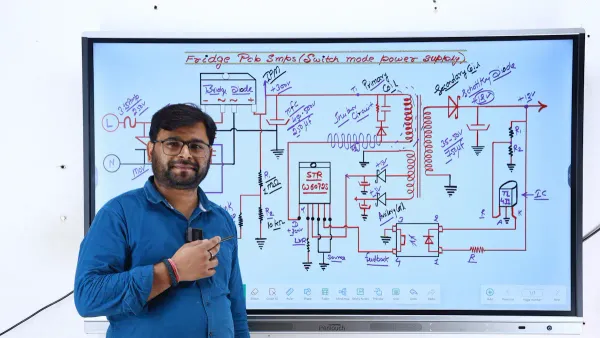
To grasp the core smps meaning, one must first look at the technology it replaced. Older power supply designs had significant limitations. The innovation of switched-mode power supplies solved these problems directly.
The Problem with Linear Supplies
Linear power supplies have a major flaw. They are not very efficient. Their energy efficiency often ranges from only 30% to 60%. This means a large portion of the electrical power they take in is wasted. The power supply design converts this wasted energy directly into heat. This creates a major heat management problem.
This constant heat generation required large metal components called heat sinks. Heat sinks draw warmth away from sensitive electronics. Their large size made linear power supplies big and heavy. Another key issue was their reliance on large, heavy transformers that operated at low frequencies (like 50/60 Hz).
Key Drawbacks of Linear Supplies:
- Low Efficiency: Wastes up to 70% of input power as heat.
- Large Size: Requires bulky transformers and large heat sinks.
- Heavy Weight: The massive components make the entire unit very heavy.
This inefficient and bulky design was not suitable for the compact, portable electronics of the future. A better solution was needed.
The High-Efficiency Advantage
A switch mode power supply offers a much smarter approach. The primary advantage is its high efficiency. Modern switched-mode power supplies operate with an efficiency between 80% and 95%. They waste very little energy. This high efficiency comes from the "switching" action. Instead of constantly resisting voltage and creating heat, a switch mode power supply rapidly turns the power on and off thousands of times per second.
This process dramatically reduces heat generation. Less heat means the power supply design needs smaller heat sinks, or sometimes none at all. This is a key factor that allows a switched-mode power supply to be so compact.
The other major factor is the use of a small, high-frequency transformer. A modern switch mode power supply can operate at frequencies from 20 kHz to several MHz. This high-frequency operation allows for the use of much smaller and lighter transformers and capacitors. The difference in physical size is significant.
| Feature | Switch Mode Power Supply (SMPS) | Linear Power Supply |
|---|---|---|
| Size and Weight | Smaller and lighter | Larger and heavier due to heat sinks |
| Efficiency | Typically 80-95% | Typically 30-60% |
| Heat Waste | Minimal | Significant |
Ultimately, the smps meaning is rooted in this intelligent conversion method. It achieves high performance in a small package, making it the standard for powering nearly all modern electronics.
The Core Conversion Process
The "switching" action is the heart of what makes these power supplies so efficient. The conversion process happens in several distinct stages. Each stage plays a critical role in transforming raw AC power from the wall outlet into the stable DC voltage that modern electronics need. This process is fundamental to the power supply design of all ac-dc switched-mode converters.
From AC Input to Unregulated DC
The journey begins when you plug the device into a wall outlet. The first stage of an ac to dc smps takes this high-voltage Alternating Current (AC) and prepares it for the main switching circuit.
First, the incoming AC power passes through an input filter. This filter is very important. It provides a shield against high-frequency noise from the mains input. It also prevents noise generated by the power supply from going back into the power lines and interfering with other devices. This stage is crucial for keeping the power system stable.
Next, the filtered AC voltage enters a rectifier circuit. The rectifier converts the AC power into Direct Current (DC). This DC is still at a high voltage and is not smooth. It has ripples, or small variations in voltage. The main components that perform this initial conversion include:
- Rectifier: A set of diodes that converts the AC sine wave into a pulsating DC signal.
- Smoothing Filter: A large capacitor that follows the rectifier. It smooths out the pulsations to create a more stable, high-voltage DC.
- Filter Sections: Circuits often use combinations of resistors, capacitors, and inductors (chokes) to further reduce ripple. Common designs include Pi filters (capacitor-choke-capacitor) and T filters (choke-capacitor-choke).
After this stage, the ac to dc smps has a high-voltage, unregulated DC bus, ready for the next step.
How a Switch Mode Power Supply Works
This stage is where the magic of the switch mode power supply happens. The high-voltage DC is chopped up into small packets of energy by a high-speed switch.
The Switch 💡 This switch is usually a power transistor, like a MOSFET. A MOSFET is ideal for this job because it has low resistance when on, switches extremely fast, and is easy to control.
A control circuit turns this switch on and off thousands of times per second. The technique used to control the switch is called Pulse Width Modulation (PWM). PWM adjusts the pulse width, or the amount of time the switch is "on" versus "off."
- Increasing the pulse width allows more energy to pass through. This action raises the output voltage.
- Decreasing the pulse width allows less energy to pass through. This action reduces the output voltage.
These high-frequency pulses of energy then go to a small, lightweight transformer. The transformer steps the voltage down to the required level (e.g., from 300V to 5V). Finally, another rectifier and filter on the output side smooth these pulses into a stable, low-voltage DC output. This efficient power supply design is what defines a modern switch mode power supply.
The Feedback and Control Loop
A switch mode power supply must provide a constant voltage, even when the power it needs to deliver changes. For example, a computer needs more power when running a game than when it is idle. The feedback and control loop manages this.
This loop constantly monitors the output voltage. It compares the actual output voltage to the desired voltage. If there is a difference, it sends a signal back to the PWM controller.
An optocoupler is often used to send this feedback signal. It uses light to transmit the signal, which electrically isolates the high-voltage input side from the low-voltage output side. If the output voltage drops, the optocoupler's internal LED turns off. This tells the controller to increase the output. When the voltage is correct, the LED turns on again, signaling stability.
The controller then adjusts the duty cycle of the switching transistor to correct the voltage. This closed-loop feedback control ensures the output remains stable under all conditions. There are two common methods for this control.
| Control Method | How It Adjusts the Duty Cycle |
|---|---|
| Voltage Mode Control | It adjusts the duty cycle based on the difference between the actual output voltage and the target voltage. |
| Current Mode Control | It uses the voltage difference to set a peak current limit for the inductor. The switch turns off when the current hits this limit, which adjusts the duty cycle. |
This intelligent control loop is the final piece of the puzzle. It makes switch mode power supplies reliable and precise, completing the advanced power supply design of an ac to dc smps.
Types of a Switched-Mode Power Supply

Not all electronic devices need the same voltage. A switched-mode power supply uses different designs, or topologies, to deliver the correct power. These topologies control how the internal switch, inductor, and capacitor work together. The three most common types are buck, boost, and buck-boost converters. Each type serves a unique purpose in power conversion.
Buck Converters (Step-Down)
A buck converter is a type of switch mode power supply that reduces voltage. It takes a higher DC input voltage and produces a lower DC output voltage. This is the most common type of DC-to-DC converter. Its widespread use is due to its high efficiency and simple design.
Analogy: The Water Faucet 💧 Imagine you are filling a bucket from a high-pressure faucet. To control the water level, you can quickly turn the faucet on and off. The amount of time the faucet is "on" versus "off" determines how fast the bucket fills. A buck converter does something similar with electricity, controlling the "on-time" of its switch to lower the average voltage.
This step-down function is essential for many modern electronics. Common applications include:
- Power management in laptops
- Low-power microprocessors
- Battery-powered devices where energy efficiency is critical
Boost Converters (Step-Up)
A boost converter does the opposite of a buck converter. This switched-mode power supply takes a lower DC input voltage and produces a higher DC output voltage. It "boosts" the voltage to the level a device requires.
Analogy: The Swing Set 🤸 Think about pushing someone on a swing. You give small, timed pushes to make the swing go higher. A boost converter works in a similar way. It stores energy in an inductor and then releases it in a burst, which adds to the input voltage and creates a higher output.
This type of switch mode power supply is useful in battery-powered devices where the battery voltage (e.g., 3.7V) needs to be increased to power components that require a higher voltage (e.g., 5V or 12V).
Buck-Boost Converters (Inverting)
A buck-boost converter is more versatile. This switched-mode power supply can produce an output voltage that is either higher or lower than the input voltage. However, its main characteristic is that it inverts the voltage polarity. For example, it can take a positive 12V input and convert it to a negative 5V or a negative 24V output. This makes the buck-boost converter a flexible switch mode power supply for specific applications, such as generating a negative voltage rail for operational amplifiers.
Pros and Cons of Switched-Mode Power Supplies
Switched-mode power supplies offer significant benefits over older technologies. However, their design also presents some challenges. Understanding these pros and cons is key to appreciating their role in modern electronics.
Key Advantages
The benefits of switched-mode power supplies make them the top choice for most applications. Their advanced power supply design provides several key advantages.
- Higher Efficiency: These units lose very little energy as heat. They achieve an energy efficiency of 80% to 95%. This efficiency directly lowers electricity consumption and reduces operational costs.
- Compact Design: Efficient operation means less heat and smaller components. This allows switched-mode power supplies to be much smaller and lighter, making them perfect for portable devices where space is limited.
- Stable Output: An SMPS delivers consistent power. It maintains a stable output voltage even if the input voltage fluctuates or the device's power needs change.
Efficiency Matters! 💡 A small loss in efficiency has a big impact. In a high-power system like a 350 kW DC fast charger, a 1% efficiency loss wastes 3.5 kW of power. This increases both energy costs and the heat that must be managed.
Inherent Disadvantages
Despite their advantages, these power supplies have some inherent drawbacks. The primary issues stem from their high-frequency switching action.
The main disadvantage is Electromagnetic Interference (EMI). The rapid switching of internal components generates high-frequency electrical noise. This noise can interfere with other nearby electronic devices. A proper power supply design must include features to manage this. Another issue is circuit complexity. An SMPS circuit is more complex than a linear supply, often requiring more components. This complexity can sometimes affect reliability and cost. Finally, the switching process creates small voltage variations on the output, known as ripple and noise.
| Disadvantage | Cause |
|---|---|
| Electromagnetic Interference (EMI) | The high-frequency switching of transistors generates electrical noise. |
| Circuit Complexity | Requires a control circuit, switching elements, and more filtering components. |
| Output Ripple & Noise | The switching action creates small, unwanted voltage spikes on the DC output. |
Engineers use filters, shielding, and careful component placement to minimize these issues. These solutions make modern switched-mode power supplies both powerful and reliable.
The core smps meaning is found in its "switching" method. This technique allows for highly efficient power conversion. It results in a compact and lightweight power supply design. This high efficiency is the main reason the SMPS became the standard for modern electronics. The technology is a cornerstone of the digital world. It enables the powerful and portable devices we use every day.
Enabled by SMPS Technology 💡
This efficient power conversion defines the modern smps meaning. It makes our connected lifestyle possible.
FAQ
What does SMPS stand for?
SMPS stands for Switched-Mode Power Supply. It is a type of power supply that uses a switching regulator. This method allows it to convert electrical power very efficiently from one voltage level to another.
Why is an SMPS better than a linear power supply?
An SMPS offers several key benefits. It is much more efficient, converting power with minimal waste. This efficiency allows for a smaller size and lighter weight. Linear supplies are larger, heavier, and produce much more heat.
What is PWM in an SMPS?
PWM stands for Pulse Width Modulation. It is the control technique used in an SMPS. A controller adjusts the "on-time" of a high-speed switch, like a
MOSFET, to regulate the output voltage precisely.
What causes noise in a switched-mode power supply?
The main cause of noise, or Electromagnetic Interference (EMI), is the high-speed switching action. The rapid on-and-off switching of the transistor creates high-frequency electrical noise. Engineers use filters and shielding to manage this interference.