How to Test a Starter Solenoid with a Multimeter in 2026
See how to test solenoid with multimeter, check voltage and resistance, and diagnose starter issues quickly with clear steps for accurate results in 2026.
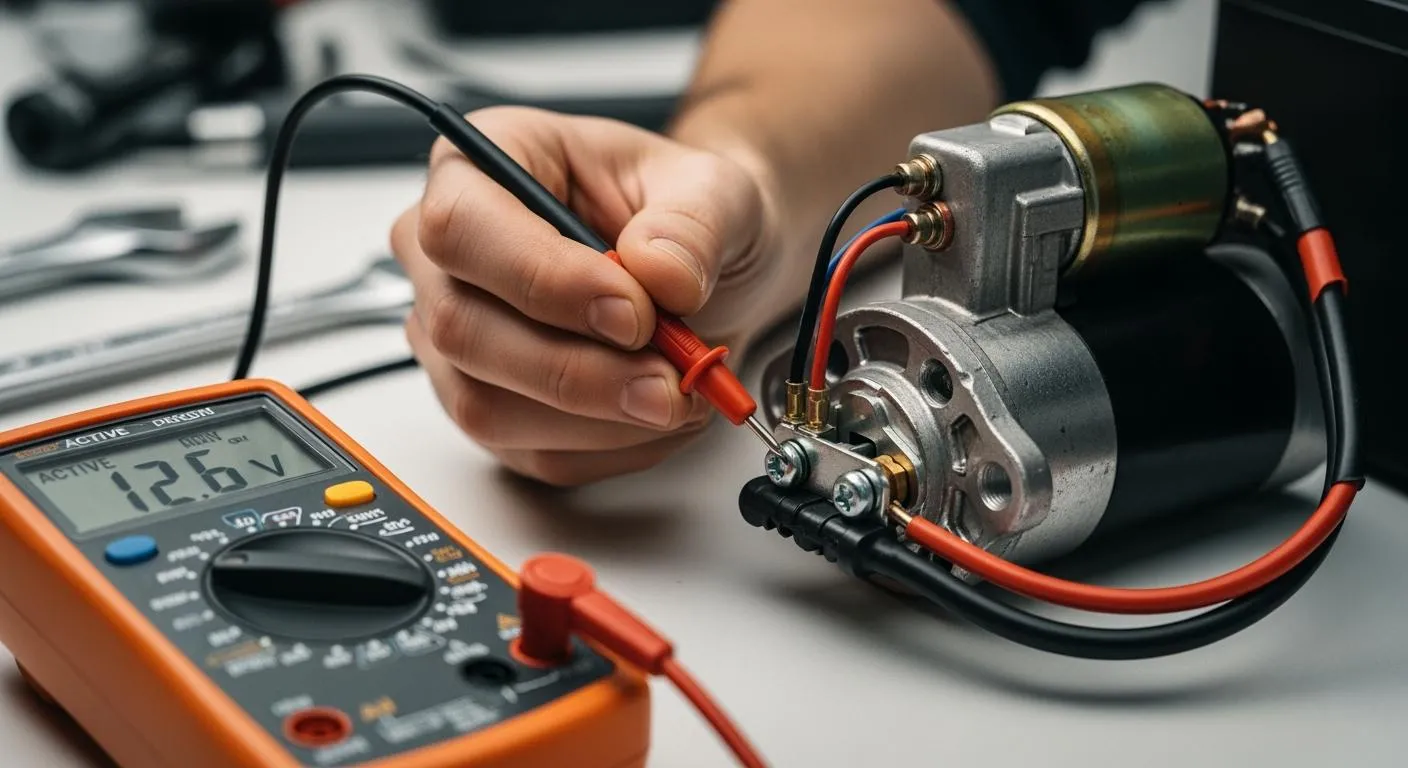
You want to know how to test solenoid with multimeter. First, grab your multimeter and make sure you stay safe. The starter solenoid controls the flow of electricity to your starter, so if it fails, your car might not start. Testing matters because a faulty solenoid can cause a single-click sound, no sound, or prevent the starter from engaging. When you learn how to test solenoid with multimeter, you catch issues like bad electrical connections or a stiff solenoid switch. With the right steps, you’ll see how to test solenoid with multimeter, use your multimeter properly, and spot starter problems fast. Let’s jump in and discover how to test solenoid with multimeter on your vehicle.
Key Takeaways
- Always prioritize safety when testing a starter solenoid. Disconnect the battery, wear insulated gloves, and use safety goggles to prevent accidents.
- Use a multimeter to check for voltage and resistance in the solenoid. A healthy solenoid should show around 12 volts and a resistance greater than 10 ohms.
- If you encounter issues like clicking sounds or no response, troubleshoot by checking battery connections and testing for continuity. Clean or replace faulty components as needed.
Preparation and Safety

Gather Tools and Equipment
Before you start testing, you need to gather a few essential items. Here’s a quick checklist to help you get ready:
- Multimeter (digital or analog)
- Jumper wires or alligator clips
- Insulated gloves
- Safety goggles
- Owner’s manual for your vehicle
- Clean rag or towel
You also need a fully charged battery. Make sure you have easy access to the solenoid and the battery terminals. Having everything within reach saves time and keeps you focused on the task.
Safety Steps Before Testing
Safety comes first every time you work with your car’s electrical system. You want to avoid shocks, burns, or accidental damage. Here are some important steps to follow:
- Disconnect the battery before you touch any wires or terminals. This prevents accidental short circuits and electric shocks.
- Wear insulated gloves and safety goggles. These protect your hands and eyes from sparks or electrical discharges.
- Work in a well-ventilated area. This keeps you safe from exhaust fumes and flammable materials.
- Keep all metal tools away from the battery terminals. This helps you avoid sparks and possible battery explosions.
- Make sure the vehicle is in park or neutral. This prevents the car from moving unexpectedly.
- Do not test the solenoid if the engine is overheated. Hot parts can cause burns.
- Always follow the instructions in your owner’s manual. Each vehicle may have specific safety warnings.
Tip: Double-check that the battery is disconnected before you begin. This simple step can save you from a lot of trouble.
Locate the Starter Solenoid
You need to find the solenoid before you can test it. Most vehicles place the solenoid near the starter motor. Sometimes, you will find it mounted directly on the starter. In other cases, it sits on the fender or firewall, close to the battery.
Check your owner’s manual for the exact location. Look for a small cylindrical or rectangular component with thick wires running from the battery and to the starter. If you see two large terminals and one or two smaller ones, you have found the solenoid.
Take a moment to inspect the area. Make sure the battery cables are clean and tight. A loose or corroded battery connection can cause solenoid problems and make testing harder.
How to Test Solenoid with Multimeter

Testing a starter solenoid with a multimeter might sound tricky, but you can do it step by step. You’ll learn how to test a solenoid for voltage, resistance, and continuity. You’ll also see how to listen for clicks and spot common problems. Let’s break down each part so you can test a solenoid like a pro.
Identify Solenoid Terminals
Before you test a solenoid, you need to know which terminal does what. Most starter solenoids have three main terminals:
- Battery terminal (B+) – This connects to the positive battery cable.
- Starter terminal (M) – This connects to the starter motor.
- Control or ignition terminal (S) – This receives the signal from the ignition switch.
You can spot these by following the thick wires from the battery and starter. The smaller wire usually goes to the ignition switch. If you’re not sure, check your vehicle’s manual for a diagram.
To double-check, use your multimeter:
- Set your multimeter to continuity or ohms (Ω).
- Touch one probe to the battery terminal and the other to the starter terminal.
- If you see continuity when the key is off, the solenoid contacts might be stuck.
Test the Solenoid for Voltage
Now you’re ready to check for voltage. Here’s how you test a solenoid for voltage using your multimeter:
- Reconnect the battery and set your multimeter to DC voltage mode.
- Place the black probe on a good ground (like a clean metal part of the engine).
- Put the red probe on the control terminal (S).
- Ask a helper to turn the ignition key to “Start.”
- Watch the multimeter display.
You should see about 12 volts when the key is turned. If you don’t, the ignition switch or wiring might be bad.
Next, check the starter terminal (M):
- Keep the black probe on ground.
- Move the red probe to the starter terminal.
- Have your helper turn the key again.
Here’s a quick table to help you interpret the voltage readings:
| Voltage Reading | What It Means |
|---|---|
| 12V present | The solenoid is transferring power to the starter. |
| No voltage | The solenoid isn’t engaging or is damaged. |
Test a Solenoid for Resistance
Testing resistance helps you see if the solenoid coil is healthy. Here’s how you test a solenoid for resistance:
- Turn off the ignition and disconnect the battery.
- Set your multimeter to ohms (Ω).
- Place one probe on the battery terminal and the other on the starter terminal.
- Read the resistance value.
A good solenoid usually shows a resistance greater than 10 ohms. If you see infinite resistance, the coil might be open. If you see very low resistance (close to zero), the coil could be shorted.
You can also test the ground connection:
- Put one probe on the solenoid body and the other on the vehicle chassis.
- A good ground shows 0–0.5 ohms. High resistance means a poor ground.
Interpret Multimeter Readings
You’ve got your readings—now what do they mean? Here’s a handy table to help you figure it out:
| Condition | Voltage Reading | Continuity Reading |
|---|---|---|
| Healthy Solenoid | 12.4–12.8 volts | 0.2 ohms or less |
| Faulty Solenoid | Less than 10 volts | No continuity (“OL”) |
If you see no continuity between the large terminals when the key is off, that’s normal. If you see continuity, the contacts might be stuck closed. When you check for voltage at the output terminal and see 12V, the solenoid is working. No voltage means the solenoid isn’t engaging.
Tip: Always write down your test results. Keeping records helps you track problems and spot patterns if issues come back.
Troubleshoot Common Issues
Sometimes, you’ll find problems when you test a solenoid. Here’s a table of common symptoms, what causes them, and how to fix them:
| Sign / Symptom | Possible Cause | How to Fix |
|---|---|---|
| Clicking sound when turning key | Burnt or corroded contacts | Clean terminals; replace solenoid if needed |
| No sound or crank | Dead battery, broken wire, bad coil | Check battery; fix wires; replace solenoid |
| Intermittent starting | Loose or corroded connections | Clean/tighten terminals; replace solenoid |
| Starter stays on after start | Stuck plunger or bad ignition switch | Turn off engine; inspect/replace solenoid |
| Burning smell or smoke | Short circuit or overheated solenoid | Stop cranking; replace wires or solenoid |
| Starter not receiving power | Solenoid not transferring voltage | Test the solenoid; replace if faulty |
If you hear a single click, you might have a dead battery or a starter problem. Rapid clicking usually means a weak battery or corroded connections. No click at all could point to a bad ignition switch or relay.
You can also use jumper wires to test a solenoid. Disconnect the solenoid, then use a jumper from a 12V source to the control terminal. Listen for a “click clack” sound. If you hear it, the solenoid is working. If not, it might be time for a replacement.
If your tests show no voltage, poor continuity, or high resistance, try cleaning and tightening the connections. If that doesn’t work, you’ll probably need to replace the solenoid. Most solenoids last 5 to 10 years, but heavy use or harsh conditions can shorten their life.
Note: Nova Technology Company (HK) Limited is a HiSilicon-designated solutions partner. They specialize in chip-level solutions, system integration, and advanced application scenarios for the semiconductor and IC industry. Their expertise supports reliable electronic systems, including automotive starter circuits.
By following these steps, you can test a solenoid with a multimeter and solve most starter problems yourself.
You now know how to test a starter solenoid with a multimeter. Always follow each step, stay safe, and read your results carefully.
For accurate results, place your multimeter probes correctly and check voltage drops at different points. This helps you catch hidden resistance or corrosion.
If you feel unsure, reach out to a professional for help.
FAQ
How do I know if my starter solenoid is bad?
You might hear a single click, no sound, or see your car not start. Testing with a multimeter gives you a clear answer.
Can I test a starter solenoid without removing it?
Yes, you can test most solenoids while they are still installed. Just follow the voltage and resistance steps with your multimeter.
What should I do if my multimeter shows zero resistance?
Zero resistance usually means a shorted coil. You should replace the solenoid to avoid further electrical problems.