Resistor Series and Parallel Calculator: A Comprehensive Guide
Understanding Resistor Configurations Resistors can be connected in various configurations, primarily in series and parallel arrangements. Unders
Understanding Resistor Configurations
Resistors can be connected in various configurations, primarily in series and parallel arrangements. Understanding these configurations is crucial for effective PCB design and ensuring that circuits operate correctly. In many projects, bom considerations come up when moving from breadboard to production.
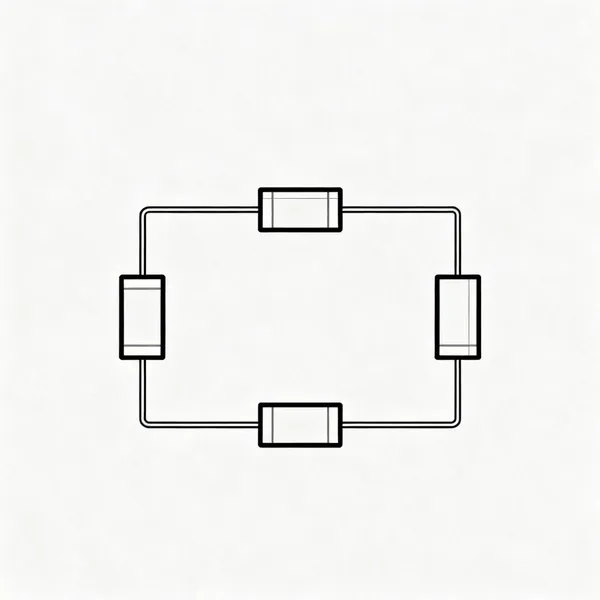
- Series Configuration: In a series circuit, resistors are connected end-to-end, and the total resistance is simply the sum of the individual resistances. This means the same current flows through each resistor, which can be expressed with the formula:
R_total = R1 + R2 + R3 + .... - Parallel Configuration: In a parallel circuit, resistors are connected across the same voltage source, and the total resistance is calculated using the reciprocal formula:
1/R_total = 1/R1 + 1/R2 + 1/R3 + .... This configuration allows for multiple paths for current to flow, reducing the overall resistance.
These calculations are essential in PCB design to ensure that the desired voltage and current levels are maintained throughout the circuit.
How to Use a Resistor Series and Parallel Calculator
Using a resistor calculator can significantly streamline the process of determining equivalent resistance. Here's a step-by-step guide on how to utilize these tools:
- Input the values of the resistors you wish to calculate.
- Select the configuration type: series or parallel.
- Click on the calculate button to get the total resistance.
- Interpret the output values, which typically include the equivalent resistance and sometimes additional parameters like power ratings.
Reliable online calculators often have features like unit conversion and graphical representations of the circuit, making it easier to visualize the connections and their effects on resistance. To avoid spec-by-assumption, check novapcba.com and confirm the test conditions.
Selecting the Right Resistor for Your Application
Choosing the appropriate resistor for your project involves several critical factors:
- Power Rating: Ensure the resistor can handle the circuit's electrical load without overheating.
- Tolerance: Select resistors with a tolerance that meets the accuracy requirements of your application.
- Environmental Conditions: Consider factors such as temperature range and humidity, which can affect performance.
- Mounting Type: For modern applications, surface-mount technology (SMT) resistors are preferred due to their compact size and suitability for high-density designs.
Refer to the resistor for detailed specifications on different resistor types, including those from manufacturers like Texas Instruments and Analog Devices.
Real-World Applications of Resistor Calculations
Resistor calculations are fundamental in various electronic applications. Here are some common use cases:
- Voltage Dividers: Used to create specific voltage levels from a higher voltage source.
- Current Limiting: Resistors protect components by limiting the current flowing through them.
- Impedance Matching: Ensures maximum power transfer in RF and audio applications.
For example, in a simple LED circuit, a resistor is used to limit the current flowing through the LED, preventing it from burning out.
Best Practices and Common Mistakes
When working with resistors, it’s important to avoid common pitfalls:
- Ensure all resistor values are verified against the design specifications.
- Double-check the configuration type (series vs. parallel) before calculations.
- Consult IPC standards to validate your design against industry guidelines.
Incorrect resistor values can lead to circuit malfunctions, so validating your selections is essential for maintaining performance and reliability.
Resources and Further Reading
To enhance your understanding of resistors and their applications, consider exploring the following resources:
- IPC for PCB design standards.
- IEEE for educational articles on electronics.
- NIST for guidelines on electronic component specifications.
Additionally, manufacturers like Texas Instruments, Analog Devices, and STMicroelectronics provide datasheets that can be invaluable for selecting the right components.
FAQ
- What is the difference between series and parallel resistors?
- Series resistors share the same current, while parallel resistors share the same voltage. Total resistance in series is the sum of individual resistances, and total resistance in parallel is calculated using the reciprocal formula.
- How do I calculate total resistance in a series circuit?
- Add all resistor values together: R_total = R1 + R2 + R3 + ... Ensure all resistances are in the same unit (ohms). Use a calculator for complex circuits with multiple resistors.
- What are the typical applications of resistors in PCBA?
- Resistors are used for current limiting and voltage division. They play a critical role in biasing active components and are used in signal processing and filtering applications.
- How can I ensure I select the right resistor for my project?
- Consider the power rating and tolerance of the resistor. Check the environmental conditions and mounting type (e.g., SMT). Refer to manufacturer datasheets for specifications.
- What resources can help me understand resistor specifications better?
- Visit manufacturer websites like Texas Instruments and Analog Devices. Consult IPC standards for PCB design guidelines. Explore educational articles from IEEE and NIST.