What is Latch Technology Used for in Real Electronic Devices
A latch is a circuit that stores one bit of data, used in memory, timing, and control functions in real electronic devices.
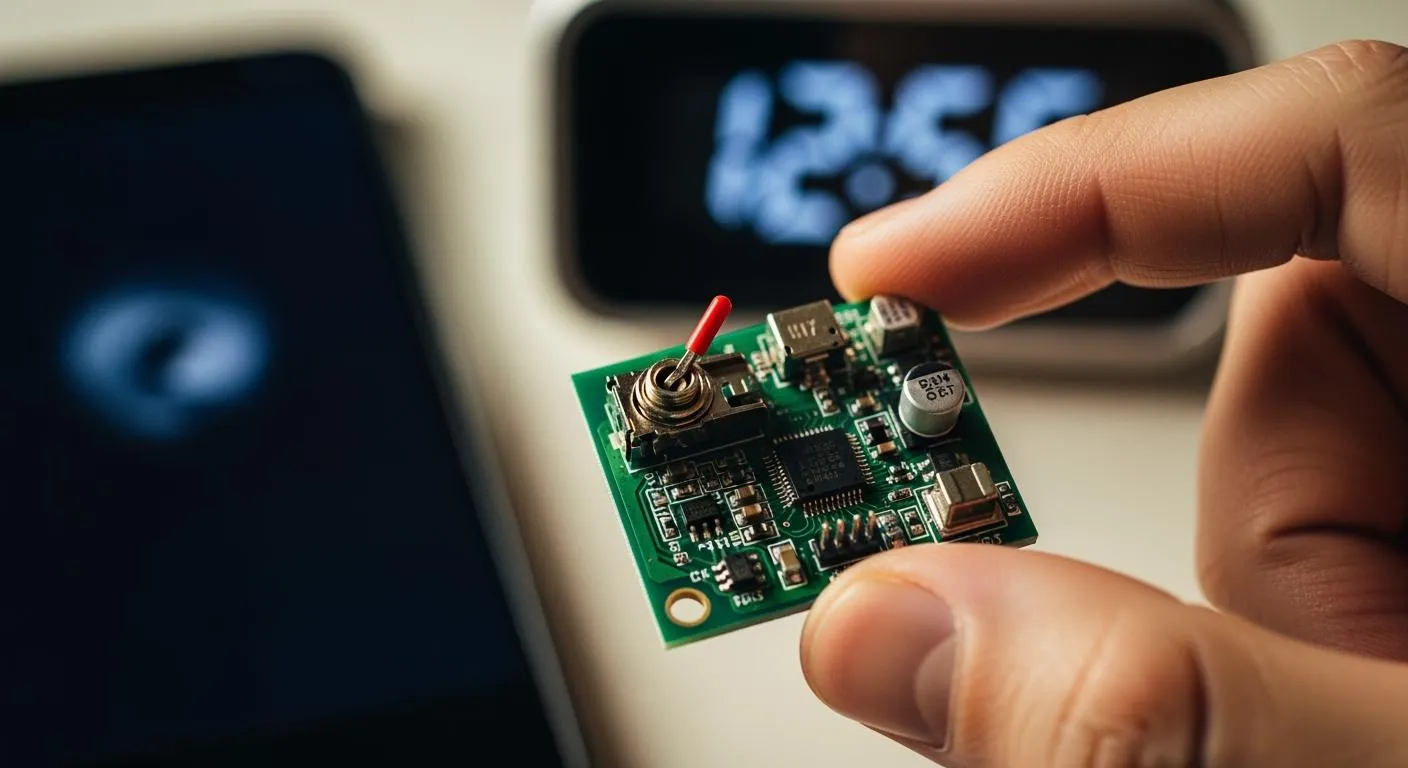
You encounter latch technology every time you use an electronic device that needs to remember information. In digital electronics, a latch works as a bistable multivibrator that stores a single bit of data. This means the latch keeps its state until you change it with a new input. You rely on latches for data storage, synchronization, and control in digital systems. If you wonder what is latch technology used for in real devices, you will find it everywhere, from memory chips to control panels.
Key Takeaways
- Latches are essential for storing a single bit of data in electronic devices, making them crucial for memory functions.
- Different types of latches, like SR, D, and JK latches, serve unique purposes in digital circuits, from simple memory to complex control systems.
- Latches help synchronize signals and manage data flow, ensuring stable operation in digital electronics.
- You encounter latch technology in everyday devices, such as computers, clocks, and smart locks, highlighting its importance in modern life.
- Understanding latch technology can enhance your knowledge of digital systems and improve your ability to design and troubleshoot electronic devices.
What is Latch: Definition and Function
Latch as a Bistable Multivibrator
When you ask what is latch in digital electronics, you discover that it is a basic building block for memory. A latch acts as a bistable multivibrator. This means it has two stable states. You can set it to one state or the other, and it will stay there until you change it. Each state represents a binary value—either 0 or 1. This property allows you to use a latch to store a single bit of information.
You find latches in many digital circuits because they can remember their state. The circuit holds its output steady, even if the input changes, until you give it a new command. This makes latches essential for holding data, controlling timing, and managing signals in electronic devices.
Here is a table that shows the main characteristics of a latch:
| Characteristic | Description |
|---|---|
| Storage | Latches can store 1-bit of digital information, represented as either logic 0 or logic 1. |
| Feedback | They have a feedback mechanism that maintains the current state until the next input is applied. |
| Control | Their operation is controlled by applied inputs, with output updating based on changes in input signals. |
You can see that a latch uses feedback to keep its state. This feedback loop is what makes the circuit stable and reliable for memory functions.
Tip: You often see latches used in low-power applications and systems that need simple memory elements. They are level-sensitive, which means their output can change as long as the enable signal is active.
How Latch Stores Data
You might wonder how a latch actually stores data. The answer lies in its feedback mechanism. When you set a latch, it uses positive feedback to lock in the output. This means that once you give it a command to store a value, the circuit reinforces that value and holds it steady. The latch will keep this value until you send a new input to change it.
For example, in a D latch, you have two main inputs: Data (D) and Enable (E). When you activate the enable signal, the output copies the data input. When you turn off the enable signal, the output stays the same, even if the data input changes. This shows how a latch can "remember" information.
You use latches in many parts of a digital system. They help synchronize signals, hold temporary data, and control the flow of information. You also find them in memory chips, registers, and control circuits.
If you compare latches to flip-flops, you notice some differences. Latches are level-sensitive, while flip-flops are edge-triggered. This means latches respond to the level of the enable signal, but flip-flops only change state at specific clock edges. Latches are common in low-power and two-phase systems, while flip-flops are standard in synchronous digital designs.
Note: The ability of a latch to store and maintain a single bit of data makes it a key part of modern electronics. You rely on this simple circuit for everything from basic memory to complex control logic.
If you want to understand what is latch and why it matters, remember that it is a simple, reliable way to store information in digital devices. You see its impact every time you use a computer, smartphone, or any device that needs to remember data.
Types of Latch Circuits

You will find several types of latch circuits in digital electronics. Each latch circuit has a unique way of storing and controlling data. Understanding these differences helps you choose the right latch for your application.
SR Latch
The SR latch, also called the set-reset latch, is one of the simplest latch circuits. You use two inputs: S (Set) and R (Reset). When you activate the set input, the output goes high. When you activate the reset input, the output goes low. The SR latch can hold its state until you change it. You often use this latch in memory and storage elements, state machines, and switch debouncing.
| Feature/Application | Description |
|---|---|
| Bistable Nature | The SR latch can hold a previous state indefinitely through positive feedback. |
| Memory and Storage Elements | Used in registers and register files, such as an 8-bit register built from eight SR latches. |
| State Machines | Remembers conditions, like exceeding a sensor threshold until reset. |
| Edge Detection and Pulse Conditioning | Produces controlled pulse widths for sensors and digital interfaces. |
| Switch Debouncing | Eliminates spurious transitions from mechanical bounce, ensuring single state changes per action. |
| Noise Filtering | Rejects short glitches that could affect combinational logic. |
You can build both active-high latch and active-low latch versions of the SR latch, depending on your circuit needs.
D Latch
The D latch, or data latch, uses a single data input and an enable input. When you turn on the enable signal, the output follows the data input. When you turn off the enable, the output holds the last value. This latch circuit is simple and avoids confusion with set and reset inputs. You often use D latches for temporary data storage and signal synchronization.
| Feature | Description |
|---|---|
| Operation | The D latch allows output to follow input when the timing control input is asserted. |
| Retention | When the timing control input is not asserted, the output retains the last input value. |
| Simplicity | It has a simpler input structure compared to SR latches, avoiding ambiguity with set/reset inputs. |
| Preferred Use | Useful for temporary storage in digital circuits and easier to use in various applications. |
You will see both active-high latch and active-low latch versions in modern circuits. D latches are often paired with d flip-flops for more complex memory functions.
JK Latch
The JK latch improves on the SR latch by removing the forbidden state. You use two inputs, J and K. When both inputs are high, the output toggles. This makes the JK latch flexible for counters and control systems. You can find both active-high latch and active-low latch types. JK latches are closely related to jk flip-flops, which are common in sequential logic.
Other Common Latch Types
You may also encounter T latches, which toggle their output when the T input is high. Other latch types include bolt latches, spring latches, slam latches, cam latches, compression latches, draw latches, rotary latches, and magnetic catches. These serve mechanical and electronic roles, such as securing doors, cabinets, and enclosures.
In the world of integrated circuits, you will find latch chips like the 74H-series and 74HC-series. These chips handle data storage, signal processing, and control in many devices.
Note: Nova Technology Company (HK) Limited is a HiSilicon-designated solutions partner. The company specializes in chip-level solutions, system integration, and advanced application scenarios for the semiconductor industry. You can rely on their expertise for latch circuit integration and other IC design needs.
Latch Operation in Electronics
Circuit Operation
You can understand the operation of electronic latches by looking at their basic structure. Most latch circuits use NAND or NOR gates. You will find two main inputs: Set (S) and Reset (R). These inputs control the outputs, labeled Q and Q' (the complement of Q). When you apply a signal to the Set input, the latch stores a logic "1". When you apply a signal to the Reset input, the latch stores a logic "0". The table below shows how the SR latch responds to different input combinations:
| State | S | R | Q | Q' | Description |
|---|---|---|---|---|---|
| Set | 1 | 0 | 1 | 0 | Q is set to 1 |
| Reset | 0 | 1 | 0 | 1 | Q is reset to 0 |
| No Change | 1 | 1 | Q | Q' | Output holds state |
| Invalid | 0 | 0 | ? | ? | Invalid condition |
You see that electronic latches maintain their state until you change the inputs. This property allows you to store a bit of information reliably. You can use latches in registers, memory units, and control circuits. The feedback loop inside the circuit keeps the output stable, even if the input changes or noise appears on the line.
Tip: Always avoid the invalid state (S = 0, R = 0) in SR latches. This state can cause unpredictable behavior in your circuit.
Timing and Control
You control electronic latches using timing signals. In digital systems, you often use clock signals or enable lines to decide when the latch should store new data. When the enable signal is active, the latch samples the input and updates its output. When the enable signal is inactive, the latch holds its last value. This timing control prevents glitches and ensures stable operation.
| Mechanism | Description |
|---|---|
| Clock Signals | Control when latches sample and hold data for predictable behavior. |
| Gating Mechanisms | Synchronize latches with clocks to avoid illegal states. |
| Timing Considerations | Include propagation delay and settling time to prevent glitches. |
You use latches to synchronize data in digital systems. Clocked latches sample input data on specific clock transitions and hold that value until the next event. This reduces timing issues and keeps your data stable. Electronic latches play a key role in registers, state machines, and memory units.
Environmental factors like electromagnetic interference can affect latch performance. You should design your circuits to resist noise and voltage spikes. If you do not, latch-up or data errors may occur.
Note: Proper timing and control make electronic latches reliable for data storage and synchronization in modern digital devices.
Real-World Applications of Latch Technology

You see latch technology at work in almost every modern electronic device. When you ask what is latch used for, you discover that it plays a key role in memory, control, timing, and even the devices you use every day. Let’s explore how latches shape the world of electronics.
Memory Storage
You rely on latches for basic memory storage in digital systems. A latch stores a single bit of information and holds it until you update it. This simple function forms the foundation of memory units in computers and microcontrollers. When you use a calculator or a digital clock, latches help the device remember numbers and settings. In computers, latches work inside registers and cache memory to store temporary data. They also help microprocessors keep track of instructions and results during calculations.
Modern advancements have made latches faster and more energy-efficient. For example, new D-latch designs use feedforward techniques to reduce delay and power consumption. These improvements allow memory chips to operate at higher speeds and lower voltages, which is important for smartphones and portable devices.
Control Circuits
You find latches in many control circuits, both in industrial and consumer electronics. Latches save the state of inputs, which is crucial when you need to remember which channel fired in a detector or which button was pressed in a control panel. In robotics, a bank of latches can hold state information for process sequences, making automation possible.
Here is a table that shows how latches work in different control circuit applications:
| Application Type | Description |
|---|---|
| Fault Detection | A momentary sensor trip can trigger a latch, keeping an alarm active until you reset it. |
| On/Off Control for Automotive | Latch circuits can toggle power to accessories with a single button press. |
| Basic Memory Elements in Robotics | Latches hold state information for automated process sequences. |
You also see latches in access control systems, such as keyless entry for homes and vehicles. In these systems, a latch remembers the last access command, allowing secure and convenient operation.
Tip: Latches are essential for retaining digital information, which helps computers and controllers remember computed numbers and system states.
Timing Functions
Latches play a critical role in timing functions for digital systems. They manage data storage and transfer in relation to clock signals. When you use a gated D latch, you can control exactly when data gets stored. The latch samples input data at specific clock transitions and holds that value until the next transition. This ensures data stability and prevents errors in synchronous circuits.
You depend on latches to align data storage with operational phases. For example, in a microprocessor, latches capture and hold data only when control signals allow it. This prevents glitches and keeps your system running smoothly. The ability to hold data until the right moment is vital for maintaining data integrity in high-speed electronics.
Everyday Device Examples
You interact with latch technology every day, often without realizing it. Here are some common devices and how they use latches:
| Device Type | Function of Latch Technology |
|---|---|
| Kitchens | Magnetic or push latches secure cabinets and drawers. |
| Offices | Roller or touch latches keep furniture looking neat. |
| Workshops | Compression latches protect tool storage. |
| Vehicles | Latches control doors, hoods, and tailgates. |
| Electronics | Latches store memory and control timing in computers. |
| Digital Devices | Latches help calculators and clocks remember data. |
You also see latch technology in smart residential security, automated industrial doors, vehicle access systems, hotel room entry, and public transportation gates. These applications use latches for keyless entry, remote access, and secure locking.
Note: The latest latch designs use advanced materials like nanocrystalline alloys to reduce energy loss and improve reliability. Latching relay cores now require only a pulsed current to maintain their state, which saves power in smart devices.
Nova Technology Company (HK) Limited: Your IC Solutions Partner
Nova Technology Company (HK) Limited stands as a HiSilicon-designated solutions partner in the integrated circuit industry. The company specializes in chip-level solutions, system integration, and advanced application scenarios for semiconductors. If you need expertise in latch circuit integration or custom IC design, Nova Technology provides professional support for high-speed, low-power, and reliable electronic systems.
If you want to understand what is latch and why it matters, look at the devices around you. From memory chips to smart locks, latches make modern electronics possible.
You have learned how different types of latches work and why they matter in electronics. The D latch stands out for its simple design and reliable data storage. You see it used everywhere because it keeps information safe, even when inputs change. Its standard use in memory and control systems shows how important it is for modern devices. If you want to build or understand digital systems, exploring latch technology will help you unlock new possibilities.
FAQ
What is the main difference between a latch and a flip-flop?
You will find that a latch is level-sensitive, so it changes output when the enable signal is active. A flip-flop is edge-triggered, so it only changes output at a clock edge.
Why do you need latches in digital circuits?
You use latches to store data, synchronize signals, and control timing. Latches help your devices remember information and keep operations stable.
Can you find latches in everyday electronics?
Yes! You see latches in computers, calculators, digital clocks, and even smart locks. Latches help these devices store and manage data.
How does a D latch work?
A D latch has a data input and an enable input. When you activate the enable signal, the output copies the data input. When you turn off enable, the output holds its last value.
Are latches important for memory chips?
Absolutely. You rely on latches as the basic building blocks for memory cells in registers, cache, and other storage elements inside chips.