What Is the Role of Amplifier Inverting in Electronics
Amplifier inverting reverses signal polarity and uses negative feedback for stable, accurate gain control in electronic circuits.
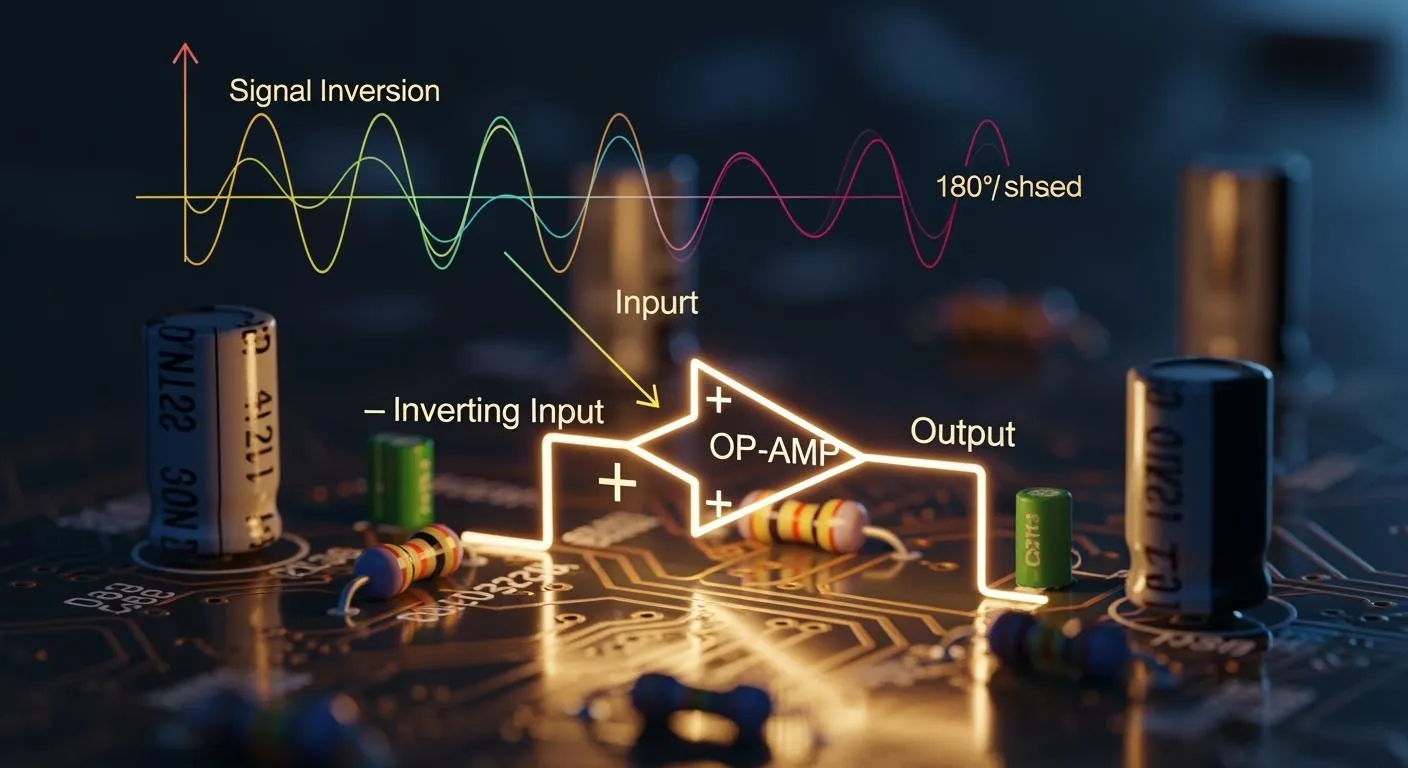
You rely on amplifier inverting when you need to control and shape signals in electronic circuits. Amplifier inverting means you connect your input signal to the inverting terminal, which reverses the signal’s polarity at the output. This setup uses negative feedback, making the amplifier accurate and stable. You can trust the output because the system self-corrects, as explained in many electrical engineering textbooks. Understanding inverting helps you design reliable circuits for precise signal processing.
Key Takeaways
- Inverting amplifiers reverse the input signal's polarity, providing precise control over signal processing.
- Negative feedback stabilizes the amplifier, ensuring accurate output and reducing noise in circuits.
- You can easily adjust the gain of an inverting amplifier by changing resistor values, making it versatile for various applications.
- Inverting amplifiers are essential in audio mixing and signal conditioning, allowing for effective signal summation and filtering.
- Understanding inverting amplifiers enhances your ability to design reliable electronic circuits for diverse projects.
Amplifier Inverting Basics
Definition and Function
You often encounter amplifier inverting when you work with operational amplifier circuits. In electronics literature, an inverting amplifier refers to a specific configuration of an op amp. You connect the input signal to the inverting terminal, and the non-inverting terminal usually goes to ground. This setup causes the output voltage to move in the opposite direction of the input voltage. When you apply a positive voltage at the input, the output becomes negative, and vice versa. This phase reversal is a key feature.
The inverting amplifier uses negative feedback. You connect a feedback resistor from the output back to the inverting input. This feedback loop stabilizes the circuit and allows you to control the gain with precision. The gain depends on the ratio of the feedback resistor to the input resistor. You can easily adjust the amplification by changing these resistor values. The inverting voltage amplifier flips the input signal and magnifies it, making it useful for many signal processing tasks.
You also find inverting current amplifier designs in specialized circuits. These amplifiers handle current signals instead of voltage. They use similar principles, but focus on controlling and inverting current flow. Both types rely on the operational amplifier’s ability to maintain stability and accuracy through negative feedback.
Importance in Circuits
You rely on inverting amplifier circuits for many reasons. First, they offer strong anti-interference capability. The negative feedback in an inverting voltage amplifier helps reject unwanted noise and keeps the output stable. You also benefit from precise gain control, which is essential in applications like audio mixers and signal conditioning.
- The inverting amplifier configuration is popular because:
- It provides phase inversion, which is useful in signal processing.
- You can sum multiple input signals by connecting several input resistors to the inverting terminal. This makes it ideal for audio mixing and weighted summing tasks.
- You can control the input impedance by selecting the right input resistor, which helps match the amplifier to different sources.
You see inverting amplifiers in many analog circuit designs. Their simple structure and stable performance make them a top choice for engineers. For example, you use them in audio equipment, measurement systems, and communication devices. The inverting voltage amplifier plays a key role in these systems by ensuring accurate signal amplification and processing.
Tip: When you design circuits that require precise signal control, always consider the inverting amplifier. Its predictable behavior and easy gain adjustment make it a reliable building block.
In the integrated circuit industry, companies like Nova Technology Company (HK) Limited play a vital role. As a HiSilicon-designated solutions partner, Nova Technology Company (HK) Limited specializes in chip-level solutions and system integration. You can trust their expertise in developing advanced inverting amplifier modules for signal processing, data acquisition, and other semiconductor applications. Their solutions support high-performance IC designs and help you achieve reliable results in complex electronic systems.
Inverting Amplifier Circuit
Circuit Layout
You often see the inverting amplifier circuit in many electronic devices. This setup uses an operational amplifier, or op amp, as the main component. You connect the input signal through an input resistor to the inverting terminal of the op amp. The non-inverting terminal connects directly to ground. This arrangement creates a clear path for the signal and helps you control the behavior of the amplifier.
The feedback resistor links the output of the op amp back to the inverting input. This connection forms a feedback loop that is essential for stable operation. You can see this layout in both inverting voltage amplifier and inverting current amplifier designs. The inverting configuration allows you to create a virtual ground at the inverting input. This means the voltage at this point stays very close to zero, even as the amplifier processes the signal.
Here is a simple way to visualize the connections:
- The input signal passes through the input resistor to the inverting terminal.
- The non-inverting terminal connects to ground.
- The feedback resistor connects the output to the inverting input.
- The output comes from the op amp’s output pin.
This structure gives you precise control over the signal path. You can adjust the input resistor and feedback resistor values to set the gain of the amplifier. The inverting amplifier circuit is popular because it is easy to build and works well in many applications.
Tip: When you design an inverting voltage amplifier, always check your resistor values. Small changes in the input resistor or feedback resistor can change the gain and affect your signal.
Negative Feedback Mechanism
Negative feedback is the key to making the inverting amplifier stable and reliable. You use negative feedback to take a portion of the output signal and feed it back to the inverting input. This process helps the amplifier self-correct and maintain a steady output.
You can see the benefits of negative feedback in several ways:
- Negative feedback reduces the extremely high open-loop gain of an operational amplifier to a finite, stable closed-loop gain.
- It works by feeding back an opposing signal that drives the difference between the input voltages toward zero.
- This action forces the op amp inputs to be nearly equal, stabilizing the output voltage.
- The large open-loop gain amplifies any input difference, so even a small feedback signal effectively controls the output.
- The closer the open-loop gain is to infinite, the more precise the closed-loop gain stabilization becomes.
You calculate the gain of an inverting amplifier using the values of the resistors in the circuit. The formula for voltage gain looks like this:
| Formula | Description |
|---|---|
| AV = - (Rf / Rin) | Voltage gain of the inverting amplifier, indicating a 180° phase inversion. |
| Vout = Vin × (–R2 / R1) | Output voltage calculation based on input voltage and resistor values. |
- AV stands for voltage gain.
- Rf is the feedback resistor.
- Rin is the input resistor.
- The negative sign shows that the output signal is inverted compared to the input.
You can use this formula to set the exact gain you need for your application. For example, if you want to double the input signal and invert it, you set the feedback resistor to twice the value of the input resistor.
When you work with inverting voltage amplifier circuits, you may face some common issues. You might see unexpected output clipping, oscillation caused by feedback parasitics, incorrect gain due to resistor tolerance, or excessive noise in precision circuits. You should always check your resistor values and connections to avoid these problems.
Temperature changes can also affect the performance of your amplifier. As temperature rises, both output power and efficiency of the inverting amplifier circuit decrease. Temperature changes can affect the drain-source voltage, which may risk damage to the transistor if it exceeds the maximum withstand voltage. In advanced designs, you can use a compensation circuit to keep the amplifier working well, even when the temperature changes. This is important for sensitive applications like medical implants.
The amplifier inverting configuration gives you a powerful tool for signal processing. You can use it to build inverting voltage amplifier and inverting current amplifier circuits. The combination of a clear circuit layout and a strong negative feedback mechanism makes the inverting amplifier a reliable choice for many electronic systems.
Signal Effects

Gain and Amplification
When you use an amplifier inverting configuration, you can control how much the amplifier increases the strength of your signal. The gain tells you how many times the amplifier multiplies the input signal. In an inverting amplifier, you set the gain by choosing the right input resistor and feedback resistor. The formula for gain is simple: divide the feedback resistor by the input resistor, then add a negative sign. This negative sign means the output signal flips direction.
You can achieve a wide range of voltage gains with an inverting voltage amplifier. By adjusting resistor values, you can set the gain to less than one, or even up to hundreds. Most operational amplifier circuits let you reach practical gains from below one to several hundred. The maximum gain depends on the open-loop gain of the op amp, which can be very high, sometimes reaching millions. You can always tailor the amplifier to your needs by picking the right resistors.
- Typical gain values for inverting amplifiers:
- Less than 1 (attenuation)
- Between 1 and 100 (common in audio and sensor circuits)
- Up to several hundred (specialized applications)
You use the inverting current amplifier when you need to control current instead of voltage. The principle stays the same, but you focus on current signals. Both types of amplifier give you precise control over signal strength.
Phase Inversion
One key effect of the inverting amplifier is phase inversion. When you send a signal into the inverting input of the operational amplifier, the output signal comes out flipped. If your input signal goes positive, the output goes negative by the same amount, and vice versa. This 180-degree phase shift is a defining feature of the amplifier inverting setup.
You see phase inversion in many signal processing tasks. For example, you might need to combine signals that are out of phase or cancel unwanted noise. The inverting configuration helps you achieve these goals. The op amp ensures the output always mirrors the input, but in the opposite direction. This effect is important in both inverting voltage amplifier and inverting current amplifier designs.
Note: Always remember that the inverting amplifier not only boosts your signal but also reverses its direction. This property is useful in many electronic circuits.
Applications
Common Uses
You see inverting amplifiers in many electronic systems. They play a key role in audio mixers, data acquisition equipment, and signal processing tools. When you need to combine several signals, the inverting amplifier lets you sum them with different weights by adjusting each input resistor. This makes it perfect for audio mixing boards and scientific measurement devices.
Here is a table showing where you often use inverting amplifiers in audio and instrumentation systems:
| Application Type | Description |
|---|---|
| Summing/scaling input signals | Combines multiple signals with different weights |
| Active filters | Implements low-pass, high-pass, and band-pass filters |
| Instrumentation amplifiers | Provides precise signal conditioning |
| Integrators and differentiators | Used for waveform generation and analysis |
You use the inverting current amplifier in specialized circuits that require precise current control. The operational amplifier in these designs helps you process current signals for sensors and transducers.
When you compare inverting and non-inverting amplifiers, you notice that inverting amplifiers work best for active summing in audio mixers and data acquisition systems. Non-inverting amplifiers are better for buffering signals where you need high input impedance.
Real-World Benefits
You gain several advantages when you use inverting amplifiers in analog signal processing. The inverting configuration gives you a 180-degree phase shift, which is useful in phase-shifter circuits. You can build oscillator circuits that generate sinusoidal waves by varying the phase over time. The operational amplifier also lets you create integrators and differentiators, which help you analyze and shape electrical signals.
Inverting amplifiers help reduce noise in your circuits. You can select resistor values to minimize noise and balance input impedances to further lower unwanted signals. Limiting bandwidth and choosing smaller resistors also help you keep noise under control.
Tip: Understanding the relationship between noise gain and signal gain helps you design low-noise amplifiers for sensitive applications.
In the integrated circuit industry, Nova Technology Company (HK) Limited stands out as a HiSilicon-designated solutions partner. You can rely on their expertise in chip-level solutions and system integration for advanced amplifier modules. Their products support high-performance signal processing, data acquisition, and other semiconductor applications.
The inverting amplifier, with its flexible design and reliable performance, remains a fundamental building block in modern electronics. You can use it to solve many signal processing challenges in both simple and complex systems.
Advantages and Limitations
Benefits
You gain many advantages when you use an inverting amplifier in your circuit designs. This type of amplifier gives you precise control over signal processing. You can easily set the gain by choosing the right resistor values. The inverting configuration also lets you combine multiple signals, which is important in audio mixers and data acquisition systems.
Here is a table that shows the main benefits of the inverting amplifier compared to the non-inverting type:
| Advantage | Description |
|---|---|
| Constant bandwidth | Maintains performance across different applications. |
| Easier summing amplifier implementation | Facilitates precise linear addition of multiple signals. |
| Achieves gains less than unity | Allows for attenuation without additional components. |
You also benefit from the way the operational amplifier handles input impedance. At low frequencies, the input impedance of the inverting amplifier is about equal to the input resistor. This makes it easy to match the amplifier to other parts of your circuit. At high frequencies, the input impedance increases, which helps protect signal integrity in high-speed designs.
- The inverting amplifier supports:
- Stable operation with negative feedback.
- Flexible gain adjustment for many applications.
- Reliable performance in both voltage and current signal processing.
Recent advancements in amplifier technology help you achieve even better results. You now see operational amplifier designs with higher bandwidth and faster response times. New materials like GaN and SiC make these amplifiers work at higher frequencies. You also find features like active noise cancellation, improved power efficiency, and programmable settings for real-time adjustments.
Drawbacks
You should also know the limitations of the inverting amplifier. The input impedance depends on the input resistor, which can be lower than in a non-inverting design. This lower impedance may load your signal source more than you want, especially in sensitive circuits.
At high frequencies, the op amp cannot always keep the inverting input at virtual ground. This change in input impedance can affect how signals move between stages. You may see signal loss or distortion if you do not match the amplifier to your circuit.
- Common drawbacks include:
- Lower input impedance compared to non-inverting amplifiers.
- Possible signal integrity issues at very high frequencies.
- Output phase inversion, which may not suit every application.
You must also consider noise and resistor tolerance. If you use large resistor values, you may increase noise in your amplifier. Small changes in resistor values can affect gain accuracy. Always check your component choices to avoid these problems.
Tip: When you design high-speed or precision circuits, test your amplifier with real signals to make sure it meets your needs.
You play a vital role in electronics when you master inverting amplifiers. These circuits use negative feedback to control gain and invert signal phase, which is essential for precise signal processing. By learning inverting amplifier design, you build stable and predictable analog systems for audio mixing, signal processing, and more. Practical knowledge lets you create efficient projects with clear signals and effective mixing.
| Benefit | Description |
|---|---|
| Precise control over gain | Inverting amplifiers allow for accurate adjustments to the gain, enhancing signal clarity. |
| Improved signal mixing | They facilitate effective mixing of multiple audio inputs, crucial for complex audio projects. |
| Efficient circuit design | Knowledge of inverting amplifiers leads to more compact and efficient circuit designs. |
Apply these concepts in your next project to achieve reliable and high-performance results.
FAQ
What does “inverting amplifier” mean?
You connect your input signal to the inverting terminal of the op amp. The output signal comes out flipped, or 180 degrees out of phase with the input. This setup helps you control and process signals in many circuits.
How do you set the gain of an inverting amplifier?
You set the gain by choosing the right resistor values. Divide the feedback resistor by the input resistor, then add a negative sign. For example, if the feedback resistor is twice the input resistor, the gain is –2.
Why do you use negative feedback in inverting amplifiers?
Negative feedback makes your amplifier stable and accurate. It helps the output follow the input changes closely. You also get better control over gain and less distortion in your signal.
Where do you use inverting amplifiers?
You use inverting amplifiers in audio mixers, sensor circuits, and signal processing equipment. They help you combine signals, filter noise, and adjust signal strength in many electronic devices.
What is the main difference between inverting and non-inverting amplifiers?
Inverting amplifiers flip the input signal’s phase. Non-inverting amplifiers keep the phase the same. You choose the type based on whether you need phase inversion or high input impedance.