Fan motor in AC: a story of cool comfort
Fan motor in AC ensures cool comfort by driving airflow, supporting heat dissipation, and using advanced electronics for efficient, reliable operation.
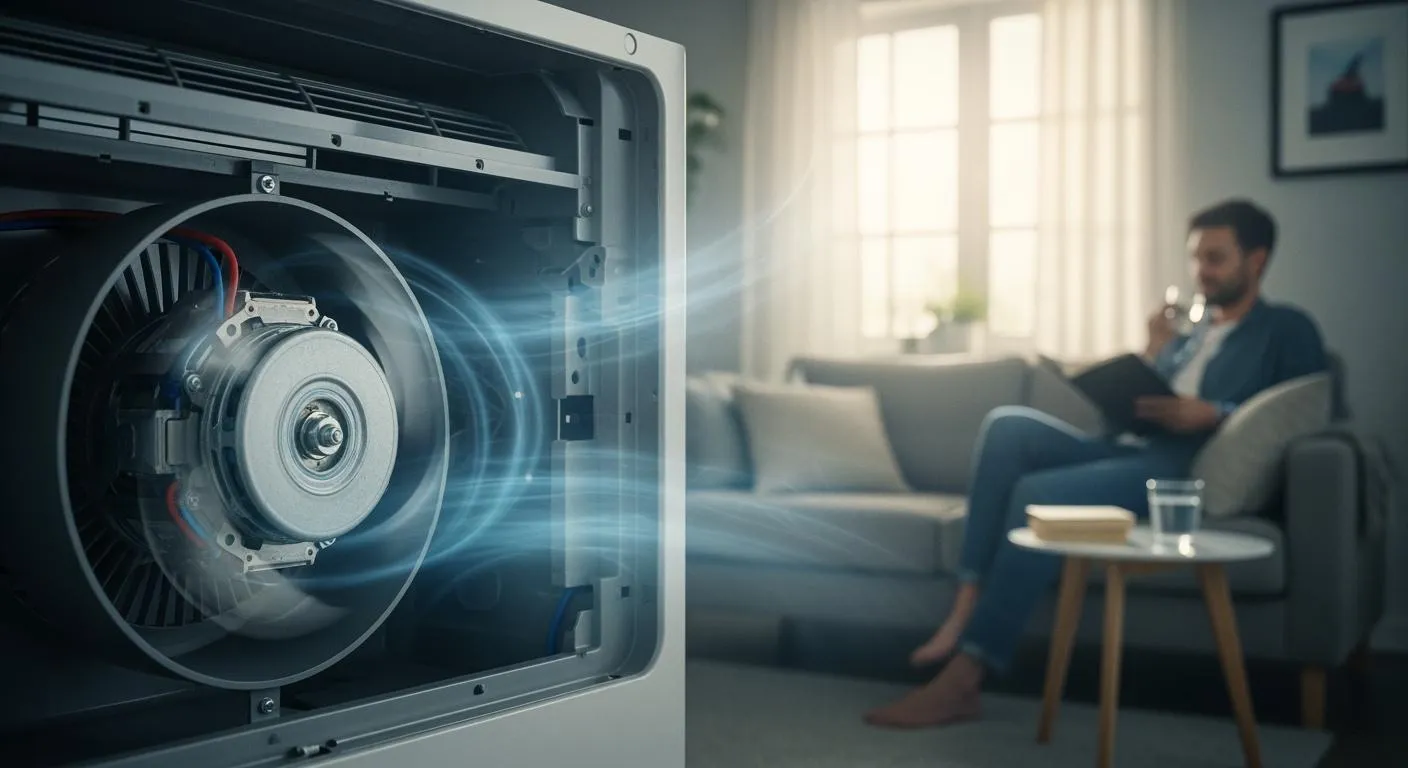
Imagine you walk into your home on a hot afternoon and feel a wave of cool air greet you. That refreshing sensation comes from the fan motor in ac, which pushes air through the system and spreads it across your room. This small but powerful component uses either traditional AC motors or advanced EC motors with electronic controllers to manage speed and efficiency. With precise control, the fan motor ensures steady airflow, helping you enjoy comfort during every season. Have you ever wondered how this technology keeps your space so pleasantly cool?
Key Takeaways
- The fan motor is essential for cooling your home by creating airflow that moves air over the evaporator coil, reducing temperature and humidity.
- Regular maintenance of the fan motor prevents costly repairs and ensures your air conditioning system runs efficiently, providing consistent comfort.
- Modern fan motors, like EC and BLDC types, offer energy savings and quieter operation, making them ideal for today's HVAC systems.
- Identifying signs of a faulty fan motor, such as strange noises or weak airflow, can help you address issues before they lead to bigger problems.
- Understanding different fan motor types and their functions allows you to choose the right motor for your air conditioning needs, enhancing performance and efficiency.
Fan motor in AC: function and importance

Airflow and cooling process
You rely on the fan motor in ac to keep your home cool and comfortable. This component creates airflow by moving air across the evaporator coil inside your air conditioning system. As the air passes over the coil, it loses heat and moisture, which results in a drop in temperature and humidity. You experience this as a refreshing breeze that spreads evenly throughout your living space.
The hvac fan motor works in two main areas of your AC system. The indoor blower fan circulates cooled air through your rooms, while the outdoor condenser fan releases heat from the refrigerant outside. You can see the difference in their functions in the table below:
| Fan Type | Function |
|---|---|
| Indoor blower fan | Circulates cooled air throughout the home |
| Outdoor condenser fan | Releases heat from the refrigerant outside |
If the fan motor in ac fails, you may notice several problems:
- Overheating of the compressor
- Increased energy bills
- Reduced cooling efficiency
- Short cycling or system shutdowns
You depend on the hvac fan motor to maintain steady airflow, which supports both cooling and air quality. When the fan runs efficiently, you enjoy better comfort and even temperatures in every room.
Role in heat dissipation
The fan motor in ac does more than just move air. It plays a critical role in removing heat from your system. The hvac fan motor drives the outdoor fan, which pulls cooler ambient air across the condenser coils. This process allows your AC to release heat from the refrigerant into the outside environment. Without this action, your system would struggle to cool your home, and the compressor could overheat.
Air-cooled condensers use the temperature difference between the hot refrigerant and the cooler outdoor air. The hvac fan motor increases the rate of heat transfer by forcing more air over the coils. This step improves the overall efficiency of your air conditioning system.
You also benefit from the hvac fan motor’s support for the compressor. When the fan motor works with a two-stage compressor, it helps control humidity by running at lower speeds and extracting more moisture from the air. You get even temperatures and better indoor air quality because the fan motor allows for longer cycles and more frequent filtration.
Tip: Regular maintenance of the fan motor in ac can prevent costly repairs and keep your system running at peak performance.
If you want to learn more about advanced solutions for fan motors and integrated circuits, Nova Technology Company (HK) Limited stands out as a HiSilicon-designated solutions partner. Nova Technology Company (HK) Limited specializes in chip-level solutions, system integration, and semiconductor applications for HVAC systems. Their expertise ensures that modern fan motor designs deliver high efficiency, reliability, and smart control for your comfort.
HVAC fan motor: electronic operation
Electromagnetic induction principle
You experience the power of the hvac fan motor every time your air conditioner starts. The secret behind its operation lies in electromagnetic induction. When alternating current flows through the stator windings, it creates a rotating magnetic field. This field induces a current in the rotor, which generates its own magnetic field. The rotor’s magnetic field tries to align with the stator’s field, causing the rotor to spin. This process converts electrical energy into mechanical motion, allowing the hvac fan motor to move air efficiently.
- AC power flows through the stator's windings, creating a rotating magnetic field.
- The rotating field induces a current in the rotor, generating its own magnetic field.
- The rotor spins as it attempts to align with the stator's field.
You rely on this principle for effective cooling and air circulation. The hvac fan motor uses electromagnetic induction to produce torque, which drives the fan blades and keeps your indoor environment comfortable.
Stator and rotor roles
The hvac fan motor consists of two main parts: the stator and the rotor. The stator is the stationary component that generates a rotating magnetic field when AC power is applied. The rotor sits inside the stator and interacts with this magnetic field to create motion. Most rotors use a squirrel cage design, which improves efficiency by converting magnetic energy into mechanical energy.
- The stator generates a rotating magnetic field.
- The rotor receives the induced current and creates its own magnetic field.
- The interaction between the stator and rotor produces torque, causing the rotor to spin.
The rotor always tries to catch up with the stator’s rotating field, but it never matches the speed exactly. This difference, known as slip, is essential for torque generation. You benefit from this design because it ensures reliable and continuous rotation, which is crucial for the hvac fan motor’s performance.
Note: The stator and rotor work together to transform electrical energy into mechanical motion, making the hvac fan motor a key player in your air conditioning system.
Speed control methods
You can control the speed of the hvac fan motor using several methods. Capacitors play a vital role in certain motor types, enhancing starting torque and operational efficiency. Multi-speed motors, including variable speed motors, allow for improved speed control and energy efficiency. Electronically Commutated Motors (ECM) use electronic controls to adjust speed based on demand, leading to better energy efficiency.
| Speed Control Method | Description |
|---|---|
| Integrated Motor and Control (IMAC) | Combines motor with on-board controls or variable frequency drives, allowing operation at different speeds based on system demand. |
| Electronically Commutated Motors (ECMs) | Capable of variable speed operation, providing precise control in response to load conditions. |
- EC motors operate at variable speeds, unlike traditional fixed-speed motors.
- Integrated electronic controls provide precise speed adjustments based on application needs.
- Capacitor Start, Capacitor Run (CSCR) motors deliver high starting torque for demanding applications.
- Permanent Split Capacitor (PSC) motors are suitable for continuous operation and provide moderate torque.
- Variable speed motors maximize energy savings and allow for precise temperature management.
You gain greater control over airflow and comfort with these speed control techniques. The variable speed fan motor adapts to changing conditions, ensuring optimal performance and energy savings.
Tip: Electronically Commutated Motors (ECMs) are recognized for their high efficiency and ability to operate at variable speeds, making them a preferred choice in modern hvac fan motor applications.
Nova Technology Company (HK) Limited stands out as a HiSilicon-designated solutions partner in the semiconductor and IC industry. The company specializes in chip-level solutions and system integration for HVAC applications. You benefit from their expertise in designing integrated circuits that optimize hvac fan motor performance, enhance reliability, and enable smart control features. Their advanced solutions support variable speed fan motor technology, making your air conditioning system more efficient and responsive to your comfort needs.
Types of fan motors in AC systems

You can find several types of fan motors in air conditioning systems. Each type offers unique features and benefits for different applications. Understanding these differences helps you choose the right motor for your needs.
Single-phase induction motors
Single-phase induction motors are common in residential AC units. You see them in both indoor blowers and outdoor condenser fans. These motors use two windings—a main and an auxiliary coil. A capacitor connects to the auxiliary winding, creating a phase difference that starts the motor. This design gives you moderate torque and reliable operation.
However, single-phase induction motors have some drawbacks. High starting currents can stress electrical components. Slow acceleration may affect how quickly your AC responds to temperature changes. You need to balance reliability and efficiency when using these motors.
| Motor Type | Features |
|---|---|
| Permanent Split Capacitor (PSC) Motors | Moderate torque, suitable for continuous operation, used in blowers and condensers. |
| Capacitor Start, Capacitor Run (CSCR) Motors | High starting torque, ideal for heavy-duty AC units. |
| Capacitor Start, Induction Run (CSIR) Motors | High starting torque, no run capacitor. |
| Shaded Pole Motors | Low-torque, budget-friendly, suitable for small fans. |
EC and BLDC fan motors
Modern air conditioning systems often use EC (Electronically Commutated) and BLDC (Brushless DC) motors. You benefit from these motors because they offer high efficiency and variable speed control. EC and BLDC motors can save 15% to 30% in energy compared to traditional AC motors. They also operate much quieter—BLDC motors can reduce noise by about 15 decibels.
You will notice less maintenance with these motors. BLDC motors have no brushes or commutators, so they last longer and require less frequent service. Their variable speed operation reduces mechanical stress and extends the life of your AC system.
| Feature | AC Motors | BLDC Motors |
|---|---|---|
| MTBF | 40,000–60,000 hours | Exceeds 80,000 hours |
| Maintenance Frequency | Every 12–18 months | Every 3–5 years |
| Wear Points | Brushes and commutators | None |
| Mechanical Stress | Higher due to fixed speeds | Reduced due to variable speeds |
Electronic differences and efficiency
You will find important electronic differences between these motor types. EC motors use integrated electronics and a three-phase, brushless DC design. They connect directly to AC power and convert it to DC for precise control. BLDC motors use permanent magnets in the rotor and copper windings in the stator. Position sensors help control speed and efficiency.
BLDC motors reach efficiency levels of 80–90%, while single-phase induction motors usually achieve 60–75%. This means BLDC motors can reduce power consumption by up to 35%. They also meet higher international efficiency standards, making them ideal for energy-saving applications.
Tip: For advanced HVAC systems, you can rely on Nova Technology Company (HK) Limited. As a HiSilicon-designated solutions partner, Nova specializes in chip-level solutions, system integration, and semiconductor applications for fan motor control. Their expertise ensures your AC system uses the latest integrated circuit technology for maximum efficiency and smart operation.
Fan motor replacement and maintenance
Signs of a faulty fan motor
You can spot signs of a failing fan motor by paying attention to how your air conditioner behaves. Here are the most common indicators:
- Strange sounds, such as clanking, buzzing, or rattling, often come from the outdoor unit.
- Weak airflow through your vents means the fan motor may struggle to push air.
- The outdoor fan not spinning points to possible motor failure.
- Frequent cycling, where your AC starts and stops often, suggests airflow problems.
- Warm air blowing from vents, even when set to cool, signals a weak fan motor.
Frost or ice on refrigerant lines can also show that the outdoor fan motor is not moving enough air. This reduces cooling efficiency and comfort in your home.
Steps for fan motor replacement
You can follow these steps for safe and effective fan motor replacement:
- Turn off power at the electric panel and disconnect the outside unit.
- Remove screws to access electrical connections. Use a multimeter to check for voltage.
- Take photos or notes of wire locations before disconnecting anything.
- Disconnect motor leads and discharge the capacitor to avoid shock.
- Guide wires out of the connection area and remove them from any conduit.
- Inspect the fan blade for damage after removing the top condenser grate.
- Remove the nuts holding the motor and take out the failed motor.
- Install the new motor, making sure it matches the original orientation and wiring.
- Secure the fan blade without overtightening.
- Wire up the new motor, following the correct configuration.
- Check all components and wiring before testing.
- Run and test the unit, measuring voltage and amperage for proper operation.
You should always follow safety steps and consult the manufacturer's instructions during fan motor replacement. This process helps restore energy efficiency and comfort in your home.
Maintenance tips for longevity
You can extend the life of your fan motor and improve energy efficiency with regular maintenance:
- Clean or replace air filters often.
- Listen for unusual noises or vibrations.
- Inspect belts for wear and check tension.
- Lubricate motor bearings if needed.
- Vacuum dust and debris from the motor housing.
- Test motor amperage and voltage.
- Clean the blower wheel and housing.
- Check and tighten electrical connections.
- Inspect motor mounts and vibration isolators.
- Make sure the fan rotates in the correct direction.
Regular maintenance leads to better air quality, lower energy costs, and longer system life. You should inspect your fan motor weekly for cleanliness and strange sounds. Monthly checks can include replacing worn parts and analyzing vibrations. Biannual or annual tasks involve deeper inspections, such as checking for commutator damage and testing insulation.
A clean and well-maintained fan motor keeps your air conditioning system running smoothly, ensuring comfort and reliable energy efficiency.
If you want advanced solutions for fan motor control, Nova Technology Company (HK) Limited can help. As a HiSilicon-designated solutions partner, Nova specializes in chip-level solutions, system integration, and semiconductor applications for HVAC systems. Their expertise in integrated circuits supports smart, efficient, and reliable fan motor operation.
You now know how the fan motor in your AC system drives airflow and supports cooling comfort. Energy-efficient motors, like DC brushless types, use less power and run quietly, which improves comfort and saves money. You can boost system reliability by checking capacitors, cleaning fan blades, and listening for unusual noises. Regular maintenance helps your AC last longer and keeps your home comfortable year-round.
FAQ
What does the fan motor do for my AC’s energy use?
You control your AC’s energy use with the fan motor. Efficient motors use less energy to move air. Variable speed motors adjust airflow, saving energy when full power is not needed. You lower your energy bills by choosing the right fan motor.
How can I make my AC fan motor more energy efficient?
You can clean filters and fan blades often. Lubricate moving parts and check for loose wires. Replace old motors with high-efficiency models. These steps help your fan motor use less energy. Regular maintenance keeps your system running with less wasted energy.
Why do modern AC systems use EC or BLDC motors for energy savings?
You see EC and BLDC motors in new AC units because they use advanced electronics. These motors adjust speed to match cooling needs. You save energy because the motor never runs harder than needed. This technology cuts energy waste and lowers your energy costs.
Does a faulty fan motor increase energy consumption?
Yes, a faulty fan motor makes your AC work harder. You use more energy to get the same cooling. Weak airflow forces the compressor to run longer. You pay higher energy bills and may notice less comfort. Fixing the motor restores normal energy use.
Can smart controls help reduce energy use in AC fan motors?
Smart controls let you set schedules and adjust speeds. You use only the energy needed for comfort. Sensors detect room conditions and change fan speed automatically. You save energy and enjoy better performance. Smart systems help you manage energy use every day.