AC Run Capacitor Function in Modern Electronic Systems
The primary function of a capacitor in an AC motor is to continuously provide a necessary phase-shifted AC current
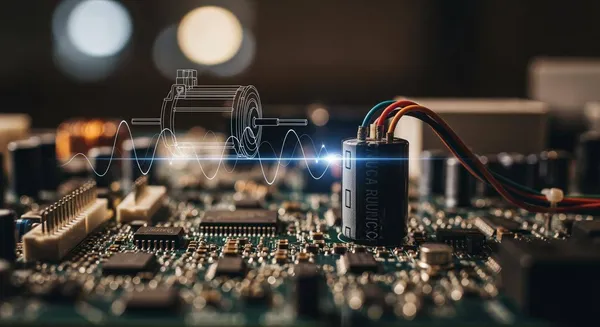
The primary function of a capacitor in an AC motor is to continuously provide a necessary phase-shifted AC current to a motor's auxiliary winding. This specific capacitor is what allows the AC motor to operate correctly. The ac run capacitor is a key component for the motor.
Think of a person giving a steady push to a spinning merry-go-round. This action keeps it rotating smoothly. Run capacitors perform a similar job, providing a constant electrical push to the motor.
Without these essential ac capacitors, many single-phase motors would fail. The motor would run inefficiently or burn out quickly. Run capacitors and similar ac capacitors are vital; the motor depends on this capacitor.
Key Takeaways
- AC run capacitors help motors start and run smoothly. They create a special electrical push for the motor.
- Run capacitors are different from start capacitors. Run capacitors work all the time, but start capacitors only work for a short time.
- Check your capacitor for problems. Look for bulging or leaks. These signs mean it is broken.
- A bad capacitor makes your motor work harder. This can damage the motor and use more electricity.
- Always match the capacitor's numbers. Use the correct microfarad (µF) and voltage (VAC) ratings for replacement.
Understanding the AC Run Capacitor
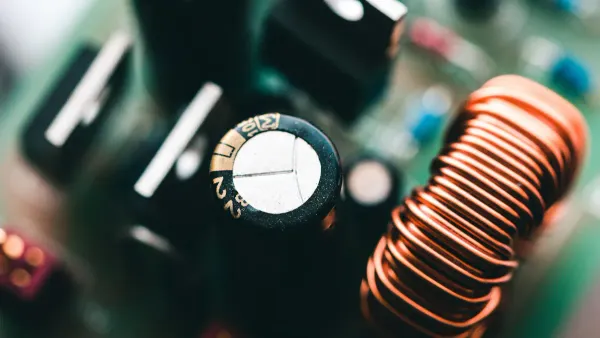
To grasp the function of an AC run capacitor, we must look at the electrical principles that make a motor turn. A single-phase AC motor has a fundamental problem. The alternating current (AC) in its main winding creates a pulsating magnetic field, not a rotating one. This pulsating field can keep a motor spinning, but it cannot start it from a standstill. The motor needs an electrical "push" in a second direction to begin turning. This is where the capacitor becomes critical.
Creating a Phase Shift for Motor Torque
The capacitor solves the starting problem by creating a two-phase system from a single-phase power source. It is placed in series with the motor's auxiliary (or start) winding.
Think of two people pushing a swing. If they both push forward at the exact same time, their efforts are inefficient. But if one person pushes slightly after the other, they create a smooth, continuous motion. The capacitor makes the current in the auxiliary winding "push" out of sync with the main winding.
This process creates an electrical phase shift of approximately 90 degrees between the two windings. The capacitor induces a voltage that is offset from the current's sine wave, effectively delaying it. This 90-degree offset generates a rotating magnetic field, similar to what happens in a three-phase motor. This rotating field from the stator induces currents in the rotor. The interaction between these two magnetic fields produces the torque needed to start and run the motor efficiently.
Capacitor Impedance and Current Regulation
A capacitor does more than just shift the phase; it also regulates the amount of current flowing to the auxiliary winding. It achieves this through a property called capacitor impedance. In an AC circuit, impedance is the total opposition to current flow. The importance of capacitor impedance is that it ensures the auxiliary winding receives the correct amount of current to operate smoothly without overheating.
The specific impedance of a capacitor is called capacitive reactance ((X_C)) and is measured in ohms (Ω). You can calculate capacitor impedance using a simple formula.
- The formula for capacitive reactance is:
XC = 1 / (2 × π × f × C) - Where:
- XC is the capacitive reactance in Ohms (Ω).
- π (pi) is approximately 3.14159.
- f is the AC frequency in Hertz (Hz), typically 60Hz in the US.
- C is the capacitance in Farads (F).
The importance of capacitor impedance cannot be overstated. By making the auxiliary winding's impedance capacitive, the capacitor limits the current, acting like a gatekeeper. This regulation is essential for the continuous operation of run capacitors, preventing the auxiliary winding from drawing too much power and burning out. This is a key difference from components used only for motor starting circuits. The capacitor impedance is precisely chosen by engineers to optimize the motor's performance and efficiency.
Run vs. Start: A Key Distinction for AC Capacitors
It is crucial to distinguish between run capacitors and start capacitors. While both are AC capacitors used with motors, their jobs and construction are very different. Start capacitors provide a powerful but brief boost to get a motor spinning, while run capacitors are designed for continuous duty to keep it running efficiently.
The primary differences are summarized below:
| Feature | Start Capacitors | Run Capacitors |
|---|---|---|
| Purpose | Provide high starting torque for a very short time (1-3 seconds). | Improve running efficiency and provide continuous torque. |
| Duty Cycle | Intermittent. They are switched out of the circuit once the motor reaches ~75% of its speed. | Continuous. They remain in the circuit the entire time the motor is running. |
| Capacitance (µF) | High capacitance, typically 70 µF to over 1,200 µF. | Low capacitance, typically 3 µF to 80 µF. |
| Construction | Dry, electrolytic type in a plastic case. Not designed for constant energy storage. | Oil-filled in a metal case. Designed for constant duty and better heat dissipation. |
Using the wrong type of capacitor will lead to poor performance or catastrophic failure. Installing one of the high-capacitance start capacitors in place of an ac run capacitor would cause the motor's auxiliary winding to quickly overheat and fail due to excessive current. Conversely, using one of the low-capacitance run capacitors in a starting circuit would not provide enough torque to get the motor spinning. This highlights why understanding the role of each capacitor is vital for motor maintenance and repair.
The Role of Run Capacitors in Modern Systems
Run capacitors are unsung heroes in many systems we use daily. Their primary role is to ensure single-phase motors run smoothly and efficiently. You can find these components inside countless devices, from household appliances to industrial machinery. Their presence is critical for the longevity and performance of any AC motor they support.
Applications in HVAC Systems and Fans
The most common application for an AC run capacitor is within an HVAC system. Your home's air conditioner, furnace blower, and outdoor condenser fan all rely on a capacitor to function. In an HVAC unit, the motor must run for long periods. The capacitor makes this possible. A healthy capacitor in an HVAC system provides several key benefits:
- It improves the motor's power factor, reducing wasted energy.
- It helps the motor run cooler and extends its lifespan.
- It maintains a steady flow of electricity for smooth motor operation.
- It keeps the AC system from working harder, which lowers electricity bills.
Without the right capacitor, the HVAC motor would struggle, consume more power, and eventually fail. This makes run capacitors essential for reliable home heating and AC.
Use in Single-Phase Induction Motors
Run capacitors are specifically used with a type of motor called a Permanent Split Capacitor (PSC) motor. These motors are common in HVAC fans, pool pumps, and other devices that need to run continuously. A PSC motor uses the capacitor to create a rotating magnetic field, which is necessary for the motor to start and operate efficiently.
The capacitor also improves the motor's power factor. A better power factor means the motor uses electrical power more effectively, converting more energy into useful work. This correction reduces the total current drawn from the power line. As a result, the motor runs with greater efficiency, consumes less energy, and has lower operating costs compared to a motor without one of the AC capacitors.
Integration with Electronic Controls
Modern technology is changing motor design. Newer systems often use Electronically Commutated Motors (ECMs) instead of older PSC motor designs. ECMs are a type of brushless DC motor that includes built-in electronic controls to manage speed and torque. A key difference is that ECMs do not require external AC capacitors to run. The advanced internal electronics handle the motor's operation directly.
The development of these sophisticated motor controls involves deep integration at the chip level. This is a domain where HiSilicon-designated solutions partners, such as Nova Technology Company (HK) Limited, provide critical system-level expertise for advanced electronic systems. While run capacitors remain vital for millions of existing HVAC units and other AC motor applications, the industry trend is moving toward integrated electronic solutions.
Reading Capacitor Specifications
Choosing the correct replacement capacitor is essential for any motor repair. The specifications printed on the side of the capacitor provide all the necessary information. Understanding these ratings ensures proper motor function and safety. Proper capacitor sizing is a critical step.
Capacitance (µF) and Voltage (VAC) Ratings
Every capacitor has two primary ratings: capacitance and voltage. Correct capacitor sizing depends on these values.
- Capacitance (µF or MFD): This value, measured in microfarads, indicates the capacitor's ability to store a charge. You must match this rating exactly. A common tolerance for run capacitors is +/- 5% to 10%. Many technicians use a 10% rule for capacitor sizing; if a capacitor tests outside this range, it needs replacement. This sizing ensures the motor receives the correct current.
- Voltage (VAC): This rating indicates the maximum AC voltage the capacitor can handle safely. You can use a capacitor with an equal or higher voltage rating, but never a lower one. For example, you can replace a 370VAC capacitor with a 440VAC capacitor. Using an under-rated capacitor can cause it to fail quickly and damage the motor. Proper capacitor sizing for voltage provides a safety margin against AC voltage spikes.
Physical Shape, Size, and Terminals
The physical characteristics of a capacitor are also important for installation. The sizing of the component must allow it to fit securely.
Run capacitors come in round or oval shapes. The shape does not affect performance; the choice depends on the mounting bracket in the unit. The physical sizing of a capacitor does not relate to its electrical ratings. The main consideration for sizing is ensuring the new capacitor fits in the available space.
Terminals are where wires connect to the capacitor. Most AC capacitors use spade connectors.
A tight connection is crucial. Always check for bent or corroded spade connectors on the capacitor and replace them if necessary to ensure good contact for the motor.
Dual-Run Capacitors Explained
Some HVAC systems use dual-run capacitors. These clever components are essentially two run capacitors built into a single case. A dual-run capacitor saves space and simplifies wiring by serving two different motors, typically the compressor motor and the fan motor. This capacitor sizing is very efficient.
Dual-run capacitors have three terminals, usually labeled:
- C or COM: The common terminal, which connects to the main AC power line.
- HERM: The hermetic terminal, which connects to the compressor motor.
- FAN: The fan terminal, which connects to the fan motor.
The capacitor will have two capacitance ratings, such as 40+5 µF. The larger value (40 µF) is for the compressor motor, and the smaller value (5 µF) is for the fan motor. This capacitor sizing makes dual-run capacitors a compact solution for complex AC systems.
Diagnosing a Failing Capacitor

A run capacitor does not last forever. Over time, factors like heat and electrical stress cause it to degrade. Recognizing the signs of a failing capacitor is a critical part of system maintenance. Early detection can prevent motor damage and save you from a more expensive repair. A timely replacement is often a simple fix that restores performance.
Common Symptoms of Failure
Often, the first clues of a failing capacitor are things you can hear or see. Paying attention to changes in your AC unit's behavior is the first step in diagnosis. A motor may give clear signals that its capacitor is struggling.
One of the most common symptoms is unusual noise coming from the unit. A healthy AC system should operate with a consistent, smooth sound. When a capacitor begins to fail, it can create audible electrical disturbances.
- Humming: You might hear a persistent humming sound. This often means the capacitor is not sending enough electrical charge to the motor. The motor is trying to start or run but lacks the power, which can cause it to overheat.
- Buzzing: A distinct buzzing noise points to an electrical issue inside the unit. This is a clear sign that the capacitor is malfunctioning and needs attention.
Another key symptom is the motor's inability to start or run properly. A failing run capacitor deprives the motor of the voltage needed for smooth operation. This can lead to the motor not starting at all, vibrating excessively, or running very slowly. If you notice the fan blades are slow to spin up, a weak capacitor is a likely cause. This is a crucial maintenance check.
Visual Signs: Bulging and Leaking
A visual inspection is one of the most reliable ways to confirm a bad capacitor. For any maintenance or inspection, safety is the top priority.
Safety First! ⚠️ Before you inspect or touch any electrical components, you MUST turn off all power to the unit at the breaker box. Capacitors can store a dangerous electrical charge even when the power is off. Professional capacitor replacement is always the safest option.
Once the power is off, look closely at the capacitor itself. Two visual signs indicate immediate failure:
- Bulging or Swelling: Run capacitors are typically flat on top. If you see a swollen or bulging end, the capacitor has failed internally. This swelling is caused by the expansion of the dielectric fluid inside as the internal parts break down under pressure. This is a clear signal for replacement.
- Leaking Fluid: AC run capacitors are filled with a thin, oil-like dielectric fluid. If the internal seal is broken, this fluid can leak out. You may see small wet spots, drips, or a crusty, powdery residue around the terminals. Any sign of leakage from the capacitor means it is compromised and requires replacement.
If you see either of these signs, the diagnosis is complete. The capacitor is bad, and a capacitor replacement is necessary.
How a Weak Capacitor Impacts Performance
A weak capacitor does more than just prevent a motor from starting. Even if the motor runs, a failing capacitor forces it to operate inefficiently, leading to a cascade of problems. This decline in performance underscores the importance of proactive maintenance and timely replacement of ac capacitors.
A weak capacitor fails to provide the correct electrical boost. This forces the motor to strain and work much harder to perform its job. This extra strain has two major consequences:
- Motor Overheating: The added stress on the compressor and fan motors causes them to run at higher temperatures. Continuous overheating can cause permanent damage to the motor windings, turning a simple capacitor replacement into a costly motor replacement.
- Increased Energy Consumption: To compensate for the weak capacitor, the AC system must draw more electrical current from the power line. This inefficiency directly translates to higher electricity bills. A weak ac run capacitor can cause a motor's efficiency to drop significantly, increasing energy use by 15-30%.
Ultimately, a failing capacitor puts the entire AC system at risk. Replacing a weak capacitor is not just a repair; it is a crucial maintenance step that protects the motor, restores efficiency, and lowers your energy costs.
The ac run capacitor is an active and essential component. This capacitor is not a passive part of an AC motor. The capacitor has three main jobs for the AC motor.
- The capacitor enables the motor to run.
- The capacitor ensures the AC motor has energy efficiency.
- The capacitor protects the motor's longevity.
Run capacitors are durable; the average lifespan of a capacitor is 20 years. This small capacitor is a linchpin for the function of countless modern AC systems. The AC motor in your air conditioner and the motor in your refrigerator depend on this capacitor.
FAQ
Can I use a capacitor with a different µF rating?
No, you must match the microfarad (µF) rating exactly. The motor's design depends on the correct capacitance. Incorrect capacitor sizing will cause poor performance or damage the motor. Proper capacitor sizing is essential for the health of the component. This capacitor must be the right one.
Why did my new HVAC capacitor fail so quickly?
A new HVAC capacitor can fail early for several reasons.
- An incorrect voltage rating.
- Poor capacitor sizing for the application.
- Extreme heat or a bad motor.
A failing motor can destroy a new capacitor. Always check the motor if a replacement capacitor fails. Proper HVAC maintenance is key.
Is a higher voltage capacitor better?
You can safely replace a capacitor with one of an equal or higher voltage rating. For example, a 440VAC capacitor can replace a 370VAC capacitor. This provides a better safety margin against voltage spikes. Never use a capacitor with a lower voltage rating. This sizing rule is important.
What happens if I ignore a bad capacitor?
Ignoring a bad capacitor is risky. The motor will struggle, overheat, and consume more energy. This strain can lead to permanent motor damage, turning a simple capacitor replacement into a costly repair. A weak capacitor in an HVAC unit also raises electricity bills. Proper capacitor sizing and maintenance are vital.