Understanding the Basics of Induction Motors
An induction motor is an AC electric machine. This motor uses the principle of induction to convert electrical power into me

An induction motor is an AC electric machine. This motor uses the principle of induction to convert electrical power into mechanical motion. The induction motor is a workhorse in the modern industry.
The success of induction motors comes from key benefits:
- Excellent motor starting performance and reliability.
- High efficiency and simple protection.
- Great safety and power for many applications.
This induction motor's design and easy motor starting make it the most common motor. The induction process is core to its function. Induction motors are everywhere.
Key Takeaways
- Induction motors turn electricity into motion. They are common in homes and factories because they are reliable and work well.
- These motors have two main parts: a still part called the stator and a spinning part called the rotor. The stator creates a spinning magnetic field that makes the rotor turn.
- Induction motors are popular because they need little care, last a long time, and cost less to make. They power many things, from fans to factory machines.
- There are different types of induction motors. Some use single-phase power for homes, and others use three-phase power for big industries. They also differ in how their spinning part is built.
How an Induction Motor Works
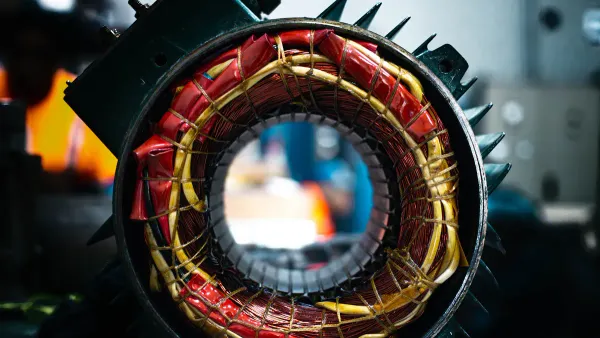
An induction motor operates on the principle of electromagnetic induction. It generates torque without any direct electrical connections to its moving part. This ingenious design is the key to its excellent performance and reliability. The process begins when the motor connects to a power system.
The Stator and Rotor
Every induction motor has two primary components: the stator and the rotor.
- The Stator: This is the stationary part of the motor. It is a hollow cylinder made of stacked metal sheets. These sheets, or laminations, provide protection against energy loss and overheating. Coils of insulated wire are placed inside the stator.
- The Rotor: This is the rotating part of the motor. It sits inside the stator but does not touch it. The rotor also has a core of laminated steel.
The materials for each part are chosen for optimal performance. The table below shows the typical materials used in an induction motor.
| Component | Stator Materials | Rotor Materials |
|---|---|---|
| Core | Laminated steel or iron | Thin laminations of steel |
| Windings/Bars | Copper or aluminum wire | Aluminum or copper (conductive bars) |
| Insulation | Specialized polymers or varnishes | N/A |
| Bearings | N/A | Steel or ceramic |
Why use laminations? Both the stator and rotor cores use thin, stacked metal sheets called laminations. This construction is vital for efficiency and safety. It minimizes circulating currents (eddy currents) that waste power and generate excess heat. This design offers better protection for the motor's internal components.
The Rotating Magnetic Field
The magic of an induction motor happens when it connects to a three-phase AC power system. The alternating current flows through the stator windings. These windings are arranged in a specific way to create a rotating magnetic field (RMF).
- The stator has coils for each phase of the AC supply.
- These coils are physically placed 120 degrees apart around the stator core.
- The three-phase power system supplies currents that are also 120 degrees out of phase with each other.
This combination of spaced-out coils and timed currents produces a magnetic field that rotates smoothly around the stator. The field's magnitude remains constant, and its speed is called the synchronous speed. This speed depends on the frequency of the power supply and the number of poles in the motor. For example, a 2-pole induction motor running on a 60 Hz power supply has a synchronous speed of 3600 revolutions per minute (rpm). This rotating field is essential for the motor starting process.
Understanding Slip
The rotating magnetic field from the stator passes through the rotor. This changing magnetic field induces a current in the rotor's conductive bars. This process is electromagnetic induction. The induced current creates the rotor's own magnetic field.
According to Lenz's Law, the rotor's magnetic field opposes the change that created it. To do this, the rotor begins to chase the stator's rotating magnetic field. This chase generates the turning force, or torque, that makes the motor shaft spin and deliver power. An induction motor can produce high torque for demanding jobs.
For induction to continue, the rotor must always spin slightly slower than the magnetic field. If the rotor reached the same speed, there would be no relative motion, and no current would be induced.
This difference between the synchronous speed of the magnetic field and the actual speed of the rotor is called slip.
Slip is usually expressed as a percentage. Under a normal load, the slip for most induction motors is very small, typically between 2% and 6%. This small amount of slip is crucial. It allows the induction motor to generate the necessary torque to power machinery effectively. The simple principle of induction makes these motors a reliable choice for many applications.
Why Induction Motors are a Top Choice
The induction motor is a cornerstone of modern technology. Its widespread adoption stems from a combination of excellent performance, high efficiency, and unmatched durability. The simple principle of induction gives this motor a powerful edge in countless applications, making it a top choice for engineers and designers. The operational efficiency of an induction motor is a key factor in its success.
Core Advantages
The design of an induction motor is its greatest strength. Its simple and robust construction provides exceptional reliability and a long service life. This durability makes the induction motor a workhorse.
- Low Maintenance: An induction motor has no brushes or commutators. This brushless design eliminates parts that wear out from friction, which significantly reduces maintenance needs and improves operational efficiency.
- High Reliability: The rugged build allows induction motors to operate reliably in harsh environments. This construction ensures consistent, reliable performance and protection for the power system.
- Cost-Effectiveness: The simple design not only enhances durability but also makes the induction motor less expensive to manufacture. Lower maintenance needs further reduce the total cost of ownership over the motor's lifespan.
This combination of features ensures high operational efficiency and makes the induction motor a smart investment for any power system.
Widespread Applications
Induction motors are found everywhere, from homes to heavy industry. Their versatility allows them to power a vast range of devices and machinery. In households, these motors drive fans, blowers, and refrigerators.
In the industrial sector, the impact of induction motors is even greater. They are essential for a wide array of industrial applications.
An induction motor is the driving force behind pumps, compressors, conveyor belts, lathes, and textile machinery. The reliable performance of this motor is critical for industrial equipment.
The dominance of the induction motor in the industry is clear. Induction motors account for approximately 55% of all industrial energy consumption. This massive energy consumption highlights their central role in the global economy. The high efficiency of an induction motor helps manage this energy consumption. This widespread use in industrial equipment means a robust ecosystem of technology providers exists. For instance, companies like Nova Technology Company (HK) Limited, a HiSilicon-designated solutions partner, work with advanced industrial technologies that power such machinery, contributing to sustainable energy solutions. The induction principle is vital for these applications.
Key Types of Induction Motors
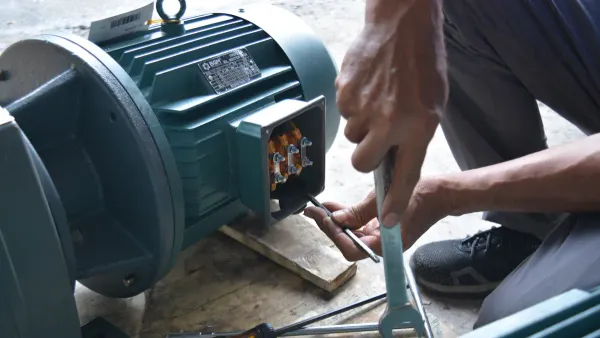
Induction motors come in several types. Engineers classify them based on their power supply and rotor design. Understanding these types helps in choosing the right motor for a specific job, ensuring both performance and safety. The principle of induction remains central to every induction motor.
Single-Phase vs. Three-Phase
The most common classification for induction motors is based on their power source.
-
Single-Phase Induction Motors: These motors run on a single-phase power supply. This is the standard power available in homes and small commercial buildings. A single-phase induction motor is not self-starting. It produces a pulsating magnetic field, not a rotating one, which creates zero starting torque. Therefore, it needs an extra component, like a capacitor, to start the induction process. These induction motors are perfect for equipment needing moderate power.
-
Three-Phase Induction Motors: These motors use a three-phase power supply, common in industrial settings. The three currents create a naturally rotating magnetic field. This makes the three-phase induction motor self-starting. This motor provides smooth operation and higher power output.
The table below compares the two main types of induction motors.
| Feature | Single-Phase Induction Motor | Three-Phase Induction Motor |
|---|---|---|
| Self-Starting | No; needs a starting mechanism | Yes; naturally self-starting |
| Efficiency | Lower | Higher |
| Power Rating | Low power (below 5kW) | High power (above 5kW) |
| Starting Torque | Low | High |
| Applications | Household appliances, fans, pumps | Heavy industrial machinery |
Squirrel Cage vs. Wound Rotor
Induction motors are also categorized by the construction of their rotor. This design choice affects the motor's performance, especially its starting torque and speed control.
A Squirrel Cage Induction Motor has a very simple and rugged rotor. The rotor contains conductive bars shorted by end rings, resembling a squirrel cage. This simple design requires very little maintenance and offers excellent protection from wear. It is the most common type of induction motor due to its reliability and low cost.
A Wound Rotor Induction Motor has a more complex design. Its rotor has windings connected to slip rings and brushes. This setup allows for connecting external resistors to the rotor circuit. Adding resistance provides powerful control over the motor's speed and starting torque. This feature offers great protection for the power system by limiting the initial current.
Wound rotor induction motors are preferred for specific heavy-duty jobs, such as:
- Cranes and hoists
- Elevators and mills
- Machines requiring high starting torque and variable speed
The ability to control the induction process so precisely makes this motor ideal for demanding industrial tasks.
The induction motor's success comes from its ingenious induction design. A magnetic field provides power without direct rotor connections. This core induction principle makes the induction motor a reliable workhorse for modern industry. Induction motors deliver excellent performance and efficiency for countless applications. The motor's simple design ensures safety and reliability. Future induction motors will offer even greater protection and performance. The induction motor powers everything from home devices to critical industrial equipment. This motor's principle of induction solidifies its role in technology. The induction motor is vital for all industrial equipment. The induction process in this motor is key. Many induction motors power our world's industrial equipment.
FAQ
What is the core principle of an induction motor?
An induction motor operates on the principle of electromagnetic induction. A rotating magnetic field in the stator induces a current in the rotor. This induction creates a second magnetic field. The interaction between fields makes the motor shaft turn, generating mechanical power. This induction process is highly efficient.
Why is motor starting a concern for a power system?
The motor starting process can draw a large amount of current from the power system. This high initial power demand can cause voltage drops. The sudden impact on power systems may affect other connected equipment. Proper design mitigates this issue for every induction motor.
How can users ensure the safety of induction motors?
Proper safety measures are essential.
- Regular monitoring helps detect any potential hazard.
- Correct installation provides protection for the motor and the power system.
- Following manufacturer guidelines ensures the long-term safety of the induction motor. Effective monitoring is key for every induction motor.
Online monitoring provides real-time data about the motor's condition. This continuous monitoring allows for early detection of faults. It helps prevent failures, enhances safety, and ensures the induction motor uses power efficiently. This is a vital part of managing induction motors in any power system.