Harnessing Sensor Operations for Smarter Manufacturing
Your smart manufacturing operations rely on strong sensor and data operations. You must turn raw manufacturing data into act
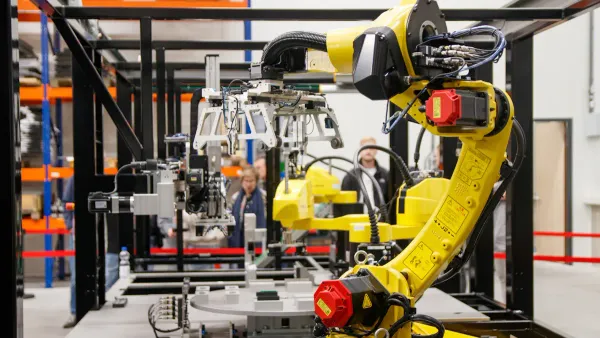
Your smart manufacturing operations rely on strong sensor and data operations. You must turn raw manufacturing data into actionable intelligence for a competitive advantage in manufacturing. This approach delivers enhanced efficiency and proactive maintenance. Smart manufacturing gives you superior quality control. Smart manufacturing provides this level of data control. Better control helps your entire manufacturing process. Smart manufacturing is the future of manufacturing.
Key Takeaways
- Smart manufacturing uses sensors to collect data. This data helps factories work better and fix problems before they happen.
- Using sensor data makes factories more efficient. It helps them prevent machine breakdowns and improve product quality.
- Start your smart manufacturing journey with a small, clear goal. Pick one problem to solve first, like reducing machine downtime.
- Connect all your factory devices using IoT. Use AI to make smart decisions and cloud computing to handle large amounts of data.
- Protect your factory's computer systems from cyberattacks. This keeps your operations safe and running smoothly.
The Foundation of Smart Manufacturing: Sensor Data

Your journey into smart manufacturing begins with data. Effective sensor and data operations form the bedrock of Industry 4.0. You must first gather raw signals from the factory floor. Then you can transform them into valuable intelligence. This process gives you the control needed for modern manufacturing.
From Raw Signals to Real-Time Insights
Raw data from sensors is unstructured. It lacks the context needed for proper analysis. Your first step is data collection and interpretation. You clean the data and add metadata like machine IDs and timestamps. This step prevents false alarms in your smart manufacturing systems. After cleaning, you use real-time data streaming for a continuous flow of information. This automation enables immediate fault detection. You can see minute-by-minute insights on production dashboards. This gives you precise control over your manufacturing operations.
The Modern Data-Rich Factory
Your factory floor is a source of immense data. Smart manufacturing uses various sensors to capture this information. These devices are the eyes and ears of your smart factories. Key sensors include:
- Temperature and Vibration Sensors: You can monitor motor health and predict failures.
- Pressure Sensors: You can track fluid and gas levels for process control.
- Vision Sensors: You can use image capture for quality control and inspection automation.
- Position Sensors: You can measure the movement of objects for precise automation.
Implementing such systems requires expertise. A solutions partner like Nova Technology Company (HK) Limited, a HiSilicon-designated partner, can help you build the infrastructure for your smart manufacturing goals.
Turning Data into Actionable Intelligence
Collecting data is not enough. You must turn that data into action. Data analytics helps you improve key performance indicators (KPIs). You can enhance Overall Equipment Effectiveness (OEE) by maximizing equipment availability and performance. Better data analysis also boosts First Pass Yield (FPY). This means more products meet quality standards on the first run. This level of control is central to smart manufacturing and Industry 4.0.
Your goal is to use real-time data to make faster, smarter decisions. This transforms your manufacturing operations from reactive to proactive, giving you a significant competitive edge in Industry 4.0.
Mastering Sensor and Data Operations for Key Benefits
Effective sensor and data operations translate directly into major competitive advantages for your manufacturing business. You can transform your factory by focusing on three key areas: efficiency, maintenance, and quality. This shift moves your smart manufacturing strategy from theory into practice, delivering measurable results for your production line.
Achieving Enhanced Efficiency
You can significantly boost your factory's productivity with real-time data. This information allows you to pinpoint the exact sources of delays and waste in your production process. Strong sensor and data operations give you the control to make immediate improvements. This approach boosts your overall operational efficiency.
- Identify Bottlenecks: Real-time monitoring helps you see when one machine slows down an entire production line. You can identify if a machine is starved for materials or blocked by a slower downstream process.
- Optimize Resources: With clear data, you can reallocate staff, adjust machine speeds, or manage buffer sizes to improve throughput.
- Reduce Waste: Better process control minimizes material waste and energy consumption, leading to lower production costs and greater efficiency.
Enabling Predictive Maintenance
You can prevent equipment failures before they happen. Predictive maintenance uses sensor data and analytics to schedule repairs proactively. This strategy is central to modern smart manufacturing. You analyze data from temperature and vibration sensors using machine learning algorithms like Random Forest or LSTM networks. This analysis predicts when a part is likely to fail.
Smart manufacturing with predictive maintenance can reduce unplanned machine downtime by 30% to 70%. This shift eliminates most asset breakdowns, keeping your operations running smoothly and maximizing production capacity.
This level of control turns your maintenance from a reactive cost into a proactive advantage for your manufacturing operations.
Enhancing Quality Control
Your smart manufacturing efforts can achieve near-perfect quality control. Manual inspection is often inconsistent and slow. Automated inspection systems, powered by vision sensors and AI, provide superior accuracy and speed. This automation ensures every product meets your standards. The data shows a clear difference in performance.
| Feature | Automated Inspection | Manual Inspection |
|---|---|---|
| Accuracy | Exceeds 99% | Often below 80% |
| Consistency | Uniform 24/7 | Varies by person and fatigue |
| Speed | High-speed, real-time | Slow, creates bottlenecks |
This advanced monitoring gives you total control over your production quality. It reduces defects, minimizes rework, and builds a reputation for excellence in manufacturing.
Essential Technologies for Industrial Automation
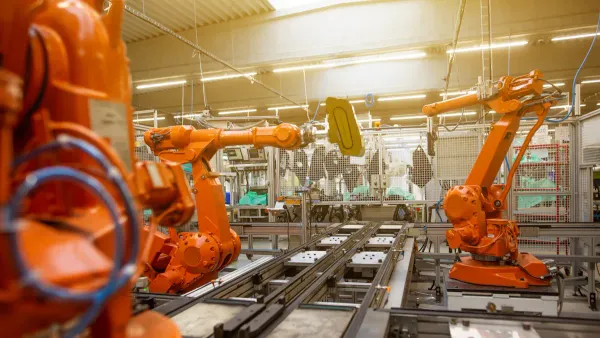
You need the right technologies to power your industrial automation strategy. These tools form the technical backbone of smart manufacturing. They connect your equipment, analyze your data, and provide the power for your operations. Mastering these technologies gives you complete control over your manufacturing processes and is essential for success in Industry 4.0.
IoT: Connecting the Factory Floor
Your first step in industrial automation is connecting everything. The Internet of Things (IoT) creates a network of sensors and devices across your manufacturing floor. This network allows your industrial control systems to communicate seamlessly. You can use various protocols to build this connected environment.
- Wireless Options: Your factory can use 5G, Wi-Fi, Bluetooth, and LoRaWAN for flexible connectivity.
- Communication Protocols: You can implement protocols like MQTT for lightweight messaging or Zigbee for creating secure mesh networks. These standards ensure your industrial control systems share data reliably.
This level of automation and data exchange gives you precise control over your manufacturing environment.
AI and Machine Learning: The Brains of the Operation
Your smart manufacturing system needs intelligence. Artificial Intelligence (AI) and Machine Learning (ML) act as the brains of your industrial automation. These technologies analyze sensor data to find patterns and make smart decisions. AI helps your industrial control systems optimize production schedules and predict equipment needs. It enables your industrial control systems to perform intelligent scheduling by analyzing demand, material availability, and equipment status. This automation and data analysis turns your manufacturing operations proactive. This is a core principle of Industry 4.0.
Cloud Computing: The Engine for Data Processing
Your smart manufacturing efforts generate massive amounts of data. You need a powerful engine to process it all. Cloud computing provides the scalable storage and processing power required for modern manufacturing. It allows your industrial control systems to run complex data analytics without needing large on-site servers. The cloud supports your data analytics and reporting, giving you insights from anywhere. This technology is vital for managing the data that drives your industrial control systems and your entire automation strategy. It gives you the control to scale your Industry 4.0 initiatives effectively.
A Practical Roadmap to Implementation
Transitioning to a smart factory requires a clear plan. You can achieve a successful transformation by following a structured roadmap. This approach breaks the journey into manageable steps. It ensures your investment in sensor and data operations delivers tangible value for your manufacturing business. Your path to smart manufacturing begins with a single, well-defined step.
Define a Clear, Problem-Focused Goal
You should not try to overhaul your entire factory at once. Your first project must be a specific, solvable problem. Start with a clear problem statement. For example, state, "We need to reduce unplanned downtime on our primary CNC machine by 30%." This goal-oriented approach ensures technology serves a real business need. It provides clear direction for your team and sets you up for a measurable win.
Tip: Use a Value vs. Effort Matrix to find the best starting point. This framework helps you prioritize problems that offer the highest impact with the lowest complexity.
You can use this simple process to identify your first project:
- Assign a 'Value' Score: Rate each potential problem based on its impact on your production goals.
- Assign an 'Effort' Score: Rate each problem based on the complexity and resources needed to solve it.
- Prioritize Quick Wins: Focus first on problems with high value and low effort. These early successes build momentum for your larger smart manufacturing initiatives.
Select and Deploy the Right Sensors
Your ability to make data-driven decisions depends on the quality of your data. Selecting the right sensors is a critical step in your automation journey. You must choose devices that meet the specific demands of your manufacturing environment and your defined goal. A solutions partner like Nova Technology Company (HK) Limited, a HiSilicon-designated partner, can help you navigate this selection and deployment process.
Consider these key criteria for your sensors:
| Criteria | Description | Why It Matters for Manufacturing |
|---|---|---|
| Accuracy & Sensitivity | The sensor's ability to provide precise measurements and detect small changes. | Ensures your analysis is based on correct information, preventing false alarms in production. |
| Environmental Durability | The sensor's resistance to heat, vibration, moisture, and chemicals. | Guarantees reliable performance and longevity on the demanding factory floor. |
| Connectivity & Compatibility | How the sensor communicates with your existing industrial control systems (e.g., MQTT, Modbus). | Ensures seamless data flow into your MES or ERP systems for unified analysis. |
| Response Speed | The time it takes for the sensor to react to a change and report it. | Critical for real-time monitoring and immediate control adjustments to maintain production efficiency. |
Integrate Data Streams for a Unified View
Your new sensors will generate valuable data. You must integrate this information with your existing systems to gain a complete operational picture. Many factories struggle with legacy equipment and separate data silos. Integrating data from new sensors with your Manufacturing Execution System (MES) and Enterprise Resource Planning (ERP) system is essential. This integration creates a single source of truth for your entire production process.
This unified view gives you powerful control. You can:
- Connect shop floor events directly to business outcomes.
- Automate data collection to improve accuracy.
- Enable real-time data analysis across different departments.
This step breaks down barriers between operations and IT. It builds the foundation for true data-driven decision-making in your manufacturing operations.
Analyze Data and Empower Team Decisions
Collecting integrated data is only half the battle. The next step is to perform analysis and turn that data into action. You can use data analytics platforms to process information and uncover hidden patterns. These insights help you understand the root causes of inefficiency or quality issues in your production line.
Your goal is to empower your teams with this information. Provide your operators, engineers, and managers with easy-to-understand dashboards and reports. This access allows them to make faster, smarter decisions on the factory floor. When your team can see the impact of their actions in real time, they gain ownership over the production process. This shift from top-down commands to team-led improvements fosters a culture of continuous improvement and boosts overall efficiency. Good analysis leads to better decisions.
Implement Robust Cybersecurity
Your connected manufacturing environment creates new entry points for cyberattacks. Protecting your operational technology (OT) is no longer optional. Threats like ransomware, intellectual property theft, and equipment sabotage can halt your production and cause significant financial damage. You must build a strong cybersecurity defense to protect your assets and maintain control.
A robust security strategy follows established frameworks like the IEC 62443 standard. This standard provides a roadmap for securing industrial automation and control systems. Its foundational requirements offer a clear path to better security:
- Identification and Authentication Control: Ensure only authorized users and devices can access your systems.
- Use Control: Grant users permissions only for the tasks they need to perform.
- System Integrity: Protect your systems from unauthorized changes.
- Data Confidentiality: Encrypt sensitive data to prevent theft.
- Restricted Data Flow: Segment your network to stop threats from spreading.
- Timely Response to Events: Develop a plan to respond quickly to security incidents.
- Resource Availability: Ensure your critical systems remain operational during an attack.
Implementing these measures gives you the control needed to run your manufacturing operations safely and securely.
Overcoming Common Challenges
Your journey to smart manufacturing will have obstacles. You can overcome these common challenges with the right strategy. Addressing issues like data silos, scalability, and skills gaps is essential. This proactive approach gives you the control needed to succeed in your manufacturing transformation.
Breaking Down Data Silos
Your factory likely has data trapped in separate systems. Information Technology (IT) and Operational Technology (OT) departments often work in isolation. This creates data silos that prevent a unified view of your production. You must break down these barriers to gain full control.
You can bridge this gap by creating cross-functional teams. These teams should include members from IT, OT, and business units. This collaboration ensures technical solutions meet real-world production needs. You can also implement a robust data governance framework to ensure data quality and security, building trust across departments.
Your goal is to create a single source of truth for your operations. Integrating data from different systems allows you to connect shop floor events directly to business outcomes.
Consider these integration approaches for your manufacturing environment:
| Integration Approach | Key Benefit | Application Scenario |
|---|---|---|
| API-based frameworks | Secure connections between systems | Connecting modern equipment to enterprise systems |
| Data lake architectures | Centralized information in native formats | Preserving context while enabling analytics |
| Middleware solutions | Bridging legacy systems with digital platforms | Extending the useful life of existing investments |
Solving Scalability Issues
Your smart manufacturing platform must grow with your business. A system designed for one machine may fail when expanded to an entire factory. You need an architecture that can scale to handle increasing data from your production lines. This ensures you maintain control as your operations expand.
You can use proven architectural patterns to build a scalable system.
- Lambda Architecture: This approach combines batch processing for historical data with stream processing for real-time updates. It offers both deep analysis and immediate production insights.
- Data Lakehouse Pattern: This model integrates the flexibility of a data lake with the performance of a data warehouse. It organizes data into stages (Bronze for raw, Silver for cleaned, and Gold for analytics-ready) to support various manufacturing analyses.
Choosing the right architecture ensures your platform remains reliable and flexible. It allows you to support spikes in data and adapt to new production demands.
Closing the Data Skills Gap
You may find it difficult to hire people with both manufacturing and data skills. A recent Deloitte study found that 69% of manufacturers face this challenge. This skills gap can slow down your smart manufacturing initiatives. You must empower your existing workforce with new data literacy skills.
You can close this gap by investing in targeted training.
- Align Training with Goals: Your training programs should focus on skills that directly support your production and business objectives.
- Go Beyond Technical Skills: Build data literacy across all teams. This enables everyone to make informed decisions and contribute to a data-driven culture.
- Use Relevant Case Studies: Tailor coursework with your company's own data and production challenges. This makes learning more engaging and impactful.
Upskilling your team gives you the internal expertise needed to drive innovation and maintain control over your manufacturing processes.
You can master your smart manufacturing future. This path gives you control over your entire manufacturing process. You will see better production efficiency and proactive maintenance. Your smart manufacturing efforts secure your competitive edge in manufacturing. Take the first step in your smart manufacturing transformation.
- Assess your current manufacturing needs to define clear goals.
- Start with simple sensors for proactive maintenance and production control.
This is the future of smart manufacturing and modern manufacturing.
FAQ
How do I start my smart manufacturing journey?
You should begin with a single, clear problem. Focus on a high-impact area like reducing downtime on one critical machine. This approach delivers a quick win. It also builds momentum for larger projects and demonstrates value to your team.
Is implementing smart manufacturing expensive?
The cost varies based on your project's scope. You can start with affordable, high-impact projects. For example, you can monitor a single machine's health to prevent failures. This strategy provides a strong return on investment and minimizes initial spending.
Can I use smart manufacturing with my old equipment?
Yes, you can. You do not need to replace all your machinery. You can retrofit older equipment with modern sensors to collect valuable data. This process, known as "brownfield" implementation, allows you to upgrade your factory's capabilities without a complete overhaul.
What is the main goal of using sensor data?
Your primary goal is to transform your operations from reactive to proactive. Sensor data gives you the insights to anticipate problems before they occur. This shift helps you:
- Prevent equipment failures.
- Improve product quality.
- Optimize production flow.