How to Use Alternating Current Controllers for Motor Control
You use an alternating current controller to manage motor speed and improve performance. Understanding the type of
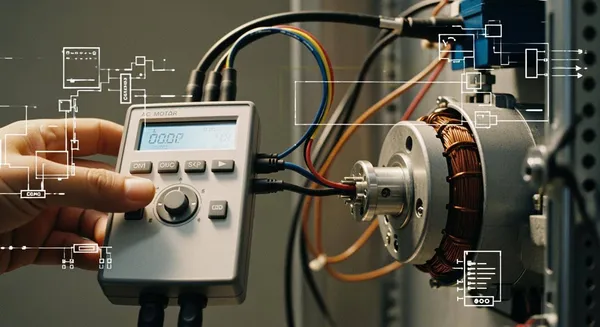
You use an alternating current controller to manage motor speed and improve performance. Understanding the type of ac controller, its operation, and safety rules helps you get the best results and avoid hazards.
Dr. James Anderson, a well-respected expert in power electronics from the IEEE, stated that 'The role of AC Voltage Controllers is pretty crucial nowadays because they help improve energy efficiency and also cut down operational costs.'
You can save up to 30% in energy use by choosing efficient ac control methods. Variable frequency drives also let motors work with less energy by matching speed to the actual load. Always follow practical steps for safe and effective motor control.
Key Takeaways
- Choose the right alternating current controller based on your motor's voltage, current, and application needs to ensure optimal performance.
- Use variable frequency drives for precise motor speed control, which can lead to significant energy savings and longer equipment life.
- Follow safety practices during installation and operation, such as using insulated tools and disconnecting power to prevent electrical hazards.
- Regularly maintain and inspect your AC controller and motor to prevent unexpected failures and extend their lifespan.
- Implement energy-efficient motor control methods to reduce operational costs and improve overall system reliability.
What Is an Alternating Current Controller?
Basic Definition
You use an alternating current controller to manage the flow of electrical power in ac circuits. This device helps you change the voltage or frequency that reaches your motor. In electrical engineering, experts define an ac voltage controller as a thyristor-based device. It converts a fixed alternating voltage directly to a variable alternating voltage without changing the frequency. You can see this definition in the table below:
| Term | Definition |
|---|---|
| AC Voltage Controller | A thyristor based device which converts fixed alternating voltage directly to variable alternating voltage without a change in frequency. |
You often find alternating current controllers in factories, HVAC systems, and other places where you need to control motor speed and energy use. These controllers can handle large amounts of power and help you get the right performance from your equipment.
Role in Motor Speed Control
You rely on an alternating current controller to adjust how fast your ac motor runs. The controller changes the voltage, frequency, or both, depending on the type. This adjustment lets you match the motor speed to the needs of your application. For example, a variable frequency drive changes both the voltage and frequency. This method gives you smooth speed control and saves energy.
Here are some common ways you can use an alternating current controller to regulate motor speed:
| Method | Description |
|---|---|
| Phase Control | Adjusts when power is delivered in each AC cycle, enabling smooth changes in speed and power. |
| Thyristors and Relays | Control the timing and amount of AC power supplied to the motor, enhancing energy efficiency. |
| Variable Frequency Drive | Alters motor speed by modifying voltage and frequency, contributing to energy savings and longevity. |
| Conduction Angle Control | Regulates how much AC reaches the motor by changing the conduction angle, affecting speed control. |
| On/Off Cycling | Turns the circuit on and off during specific cycles to manage power delivery effectively. |
You can choose the right method based on your motor type and the level of control you need. A variable frequency drive works best when you want precise speed control and high energy efficiency. By using an alternating current controller, you make your ac motor system more flexible and reliable.
AC Controller Components

Understanding the main parts of an ac controller helps you manage ac power and motor speed with confidence. Each component plays a key role in power control and switching operation. Here is a table that shows the essential components you find in a typical ac power controller:
| Component | Description |
|---|---|
| Control Circuit | Acts as the brain, processing input signals and managing the relay and AC relay switch. |
| Thyristors | Used for controlling the flow of AC to the motor. |
| Sensors | Monitor the AC motor and flow, including current transformers and Hall-effect sensors. |
| Resistors, Capacitors, Inductors, Diodes | Help manage AC flow and protect the motor. |
| Power Supply | Provides necessary power for the control circuit. |
| Ground | Ensures safety and proper functioning of the circuit. |
Rectifier and DC Link
You use a rectifier to convert ac power into direct current. This step is important because the dc link stabilizes the voltage before the inverter sends it back as ac power at the right frequency. The rectifier and dc link work together to keep the power steady and reliable. This process supports smooth switching and switching operation, which is vital for precise power control.
Inverter and Variable Frequency Drive
The inverter takes the stable dc from the dc link and changes it back into ac power. When you use a variable frequency drive, you can adjust both the frequency and voltage of the ac power. This lets you control the speed of your motor with high accuracy. The inverter and variable frequency drive use fast switching to match the motor speed to your needs. You get better energy savings and longer motor life with this method.
Thyristors and Power Handling
Thyristors act as electronic switches in your ac controller. They handle large amounts of power and allow you to control when and how much ac power flows to the motor. By adjusting the switching operation of thyristors, you can fine-tune the power control for different loads. This makes your system more flexible and efficient. You also protect your equipment from power surges and faults by using proper switching techniques.
Tip: Always check the condition of your thyristors and other switching devices. Good maintenance ensures safe and reliable power control in your ac motor system.
Motor Speed Control Methods

You can use several methods to achieve precise motor speed control with an ac controller. Each method offers unique advantages for adjusting speed, improving energy savings, and protecting your equipment.
Phase Control Technique
The phase control technique lets you adjust the point in each ac cycle when power is delivered to the motor. By changing the conduction angle, you can control how much power reaches the motor and, as a result, the speed. This method works well for applications where you need smooth speed changes. You can use thyristors to manage the timing and amount of ac power. This approach helps you match the speed to your process needs and can reduce wear on your motor.
- AC motor speed depends on the frequency of the ac power and the number of poles in the motor.
- You can use phase control to change the conduction angle, which adjusts the speed.
- This method is common in fans, pumps, and light-duty machinery.
Variable Frequency Drive Operation
A variable frequency drive gives you advanced control over ac motor speed. You can adjust both the frequency and voltage of the power supplied to the motor. The drive first converts ac power to dc, then uses power transistors to create a new ac output at the desired frequency. This process allows you to set the speed with high accuracy.
- Variable frequency drives adjust input frequency and voltage to control speed and torque.
- You can use advanced techniques like vector control and direct torque control for even better speed and torque management.
- This method supports efficient motor speed control and energy savings.
| Method | Functionality | Speed Control |
|---|---|---|
| Variable Frequency Drive | Adjusts input frequency and voltage to control speed and torque of AC motors | Yes |
| Soft Starter | Controls current and torque during startup, but does not provide speed control | No |
Energy Efficiency Benefits
You gain many benefits by using energy-efficient motor speed control methods. Motors that run efficiently use less power, which lowers your energy bills. You also reduce wear and tear, so your equipment lasts longer. Variable frequency drives help you maintain consistent production and improve the quality of your output.
- Energy-efficient motors lower electricity usage, especially in large facilities.
- Efficient operation means less maintenance and fewer replacements.
- Better speed control leads to more reliable and higher-quality processes.
Tip: Choose the right ac controller and speed control method to maximize energy savings and extend the life of your motor system.
Using AC Controllers
You can achieve reliable and efficient motor control by following a clear process for selecting, installing, and configuring an alternating current controller. This section will guide you through each step, highlight important safety practices, and share real-world examples to help you succeed.
Selecting the Right Controller
You must choose the correct alternating current controller for your motor application. Start by identifying the type of motor you want to control. Consider the rated voltage, full-load current, and the control method you plan to use. Check if you need feedback sensors for accuracy. Evaluate the number of axes if you want to control more than one motor. Think about braking and reversing needs, built-in protection features, and communication interfaces for integration with other systems. Finally, assess the operating environment to ensure durability.
Here is a table to help you compare key factors:
| Factor | Considerations | Typical Values / Notes |
|---|---|---|
| Motor Type | Identify the motor technology used in the system. | Brushed DC motor, brushless DC motor (BLDC), induction motors, servo motors, stepper motor controllers. |
| Rated Voltage | The controller must match the available power supply and motor voltage. | Common values include 12 V, 24 V, or 48 V DC and 230 V AC. |
| Full-Load Current | Evaluate continuous-current and peak current capability. | The controller must handle short-term current spikes without overheating. |
| Control Method | Determine how the motor will be controlled. | Methods include analog voltage control, PWM, or digital control through microcontrollers. |
| Feedback Requirements | Determine whether feedback sensors are needed for accuracy. | Encoders, Hall sensors, or sensorless estimation methods for closed-loop systems. |
| Number of Axes | Evaluate the number of motors in the system. | Controllers may support single-axis, dual-axis, or multi-axis motion control systems. |
| Braking and Reversing | Assess braking requirements and direction control. | DC drives commonly use an H-bridge configuration; advanced drives support regenerative braking. |
| Built-In Protection | Protection features improve reliability and safety. | Look for overcurrent, overvoltage, thermal protection, and fault diagnostics. |
| Communication Interface | Integration with external control systems is often required. | Interfaces such as SPI, I²C, UART, RS-485, CAN, and Ethernet for communication with PLCs or microcontrollers. |
| Operating Environment | Environmental conditions affect controller durability. | Industrial controllers should support wide temperature ranges, vibration resistance, and humidity tolerance. |
Tip: Always match the controller’s specifications to your motor’s requirements. This prevents overheating and ensures long-term reliability.
Installation and Setup
You should follow a step-by-step approach when installing an alternating current controller. Begin by reading the manufacturer’s manual. Mount the controller in a clean, dry location with good ventilation. Connect the power supply and motor leads according to the wiring diagram. Use proper cable sizes to handle the expected current. Secure all connections to avoid loose wires, which can cause faults.
For single-phase and three-phase motors, pay attention to the phase configuration and starting methods. Single-phase motors often use manual starters or contactors. Three-phase motors may require star-delta or auto transformer starters to reduce inrush current and provide consistent torque.
| Parameter | Single-Phase Motors | Three-Phase Motors |
|---|---|---|
| Phase Configuration | Typically single-phase or split-phase | Generally three-phase for efficiency |
| Starting Methods | Manual starters or contactors | Star-delta or auto transformer starters |
| Inrush Current | High in manual starters | Reduced with star-delta starters |
| Torque Characteristics | Limited starting torque without auxiliary | Consistent torque with three-phase supply |
| Control Methods | Basic control methods | Advanced control with VFDs and soft starters |
Note: Always disconnect the power before working on the controller or motor wiring.
Configuration and Adjustment
After installation, you need to configure the controller for your specific motor and application. Set the correct voltage, frequency, and control parameters. For variable frequency drives, adjust the acceleration and deceleration times. Fine-tune the torque limits and enable any feedback sensors if your system uses them.
You can use the controller’s interface or connect it to a computer for advanced settings. Monitor the motor’s performance during initial operation. Make small adjustments to optimize speed, torque, and energy efficiency.
Callout: If you use a programmable logic controller (PLC) or human-machine interface, you can achieve even greater precision and automation in your motor control system.
Safety and Troubleshooting
You must follow strict safety practices when working with alternating current controllers. Common hazards include electrical shock, short circuits, and equipment damage. Use fault shielding to protect against accidental contact with live parts. Install gradient control mats and wires to manage static electricity. Use lumped grounding systems to ensure safe operation.
- Fault shielding
- Gradient control mats
- Lumped grounding systems
- Gradient control wires
If your controller fails to regulate motor speed, follow these troubleshooting steps:
- Compare the applied voltage with the capacitor’s terminal voltage to ensure the motor receives the correct voltage.
- Verify if electricity is being conducted through the extension cable to check for any breaks in the circuit.
- Measure the motor winding resistance and compare it to the original designed values to assess the motor’s electrical condition.
Tip: Regular maintenance and inspection help prevent unexpected failures and extend the life of your controller and motor.
Practical Examples
You can find many successful examples of alternating current controller use in industry. AMZ Racing designed a motor controller that allowed their vehicle to accelerate from 0 to 100 km/h in less than one second. They tested the controller’s hardware, verified timing, and used a high-frequency PWM signal to achieve smooth and powerful motor performance.
In another case, engineers improved servo motor control for pipe-cutting machines by integrating a programmable logic controller and advanced optimization algorithms. This approach increased efficiency and precision in industrial applications.
About Nova Technology Company (HK) Limited
Nova Technology Company (HK) Limited is a HiSilicon-designated solutions partner. The company specializes in chip-level solutions and system integration for advanced motor control applications. Nova provides expertise in semiconductor design, integrated circuits, and application-specific scenarios such as industrial automation, robotics, and smart manufacturing.
Note: You can consult with Nova Technology Company (HK) Limited for professional support in selecting and integrating advanced alternating current controller solutions.
You can achieve precise motor speed control by using alternating current controllers and variable frequency drives. Start by matching the controller to your motor’s voltage, current, and application needs. Install the system carefully and always follow safety rules. Modern VFDs use advanced features like dynamic torque boost and slip compensation for better performance. For more information, you can visit Mouser’s Motor Control Resource Hub or check regulatory details on eCFR. Learning these best practices helps you save energy, protect equipment, and improve reliability.
FAQ
What is the main benefit of using an AC controller for motor speed control?
You get precise speed control and save energy. AC controllers help your motor match the load, which reduces power waste and extends equipment life.
Can you use an AC controller with any type of motor?
You must check your motor type. Most AC controllers work best with induction motors. Some controllers support synchronous or special motors. Always read the manual before connecting.
How do you know if your AC controller is working correctly?
You should listen for smooth motor operation and check for error lights on the controller. If you notice unusual noises or overheating, inspect the wiring and settings.
What safety gear should you use when installing an AC controller?
You should wear insulated gloves and safety glasses. Always turn off the power before starting work. Use tools with insulated handles for extra protection.
Why does your motor run hot after installing an AC controller?
- You may have set the voltage or frequency too high.
- The motor could be overloaded.
- Check the controller’s settings and reduce the load if needed.