Cost-Effective Sourcing Strategies for RF Modules in Your Projects
Expert guide on Cost-Effective Sourcing Strategies for RF Modules in Your Projects. Technical specs, applications, sourcing tips for engineers and buyers.
Introduction
In the rapidly evolving electronics industry, sourcing cost-effective RF modules is critical for maintaining competitive advantage. RF modules are integral in a wide range of applications, from consumer electronics to industrial automation. As the global semiconductor revenue is projected to reach $595.2 billion by 2026, understanding the nuances of sourcing strategies becomes increasingly important. This article will delve into the technical parameters, design guidelines, and best practices for sourcing RF modules, providing a comprehensive framework for electronics engineers.
Technical Overview
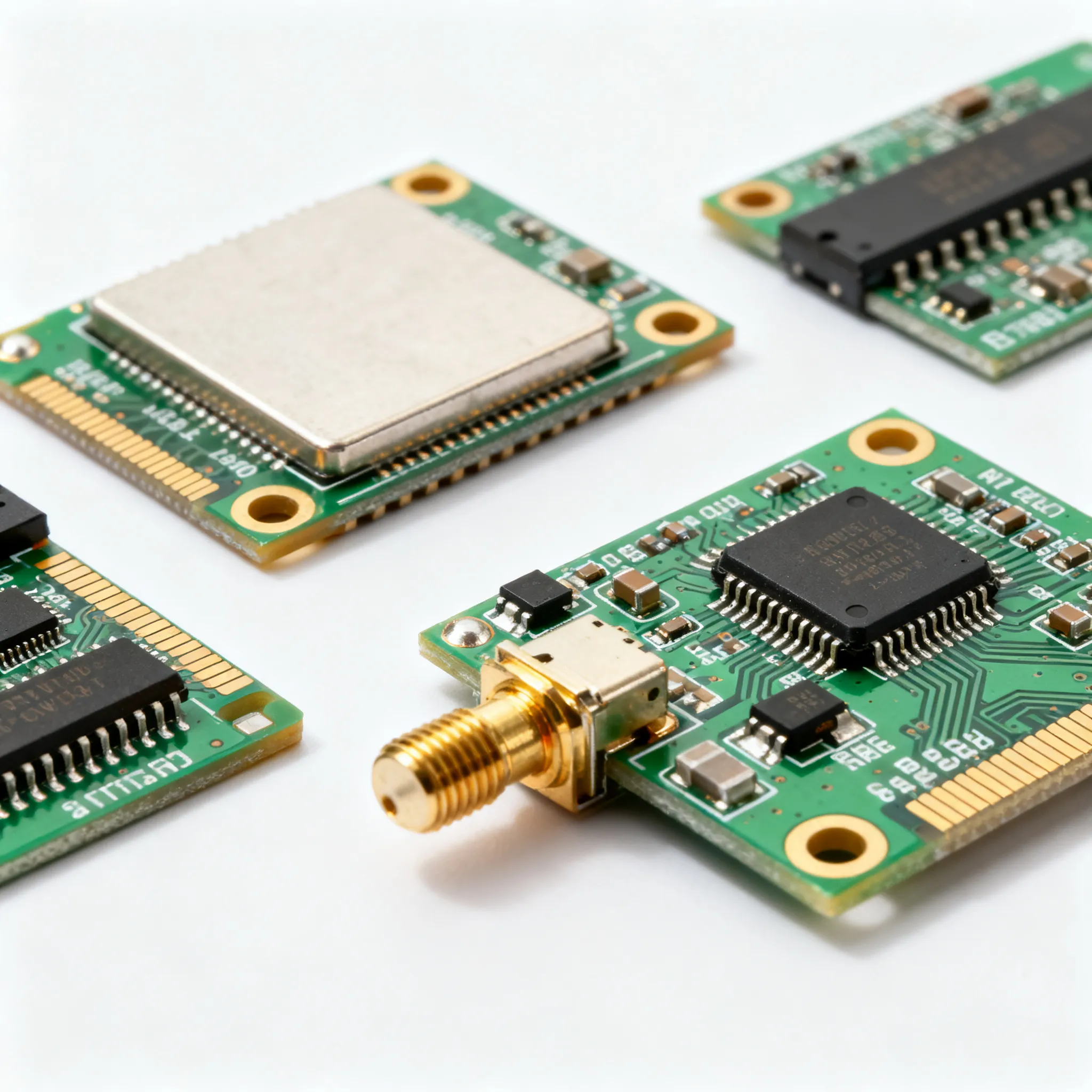
RF modules are essential components used to transmit and receive radio signals in various applications. These modules can operate within different frequency bands and are characterized by parameters such as modulation type, output power, sensitivity, and data rate. Understanding these parameters is crucial for selecting the right module for your project.
Modulation types such as ASK, FSK, and QPSK influence the data transmission quality and efficiency. Output power, measured in dBm, determines the range of the RF module, while sensitivity, expressed in dBm, affects the module's ability to receive weak signals. Data rate, typically measured in kbps, defines the speed of data transmission.
In addition to these core parameters, factors like power consumption, operating temperature, and interface compatibility are vital considerations. By comprehensively understanding these technical aspects, engineers can make informed decisions that balance performance and cost.
Detailed Specifications
| Parameter | Value | Units | Notes |
|---|---|---|---|
| Frequency Range | 2.4 - 2.5 | GHz | Common for WiFi and Bluetooth |
| Modulation Type | FSK | - | Frequency Shift Keying |
| Output Power | 20 | dBm | Max output for long range |
| Sensitivity | -100 | dBm | Lower value indicates better sensitivity |
| Data Rate | 250 | kbps | Suitable for low-power applications |
| Power Consumption | 50 | mA | During transmission |
| Operating Temperature | -40 to 85 | °C | Industrial standard range |
| Interface | SPI | - | Serial Peripheral Interface |
| Antenna Type | PCB Trace | - | Integrated on module |
| Certification | FCC, CE | - | Ensures compliance with standards |
Design Guidelines
| Guideline | Description | Notes |
|---|---|---|
| Select Appropriate Frequency Band | Choose a band that is free from interference in your region. | Consider regulatory restrictions. |
| Ensure Proper Antenna Design | Optimize antenna layout for maximum efficiency. | Use simulation tools for design validation. |
| Match Impedance | Ensure impedance matching between module and antenna. | Reduces signal reflection and loss. |
| Optimize Power Supply | Use low-dropout regulators for stable power supply. | Improves module performance and reliability. |
| Consider Thermal Management | Implement heat sinks if necessary to maintain temperature. | Prevents overheating and failure. |
| Minimize Signal Path Length | Shorter paths reduce signal loss and interference. | Avoid unnecessary bends in PCB traces. |
| Implement Proper Grounding | Ensure a solid ground plane for the RF module. | Reduces noise and enhances signal integrity. |
| Use Shielding | Shield sensitive components to prevent EMI. | Essential in high-frequency applications. |
Best Practices Checklist
| Best Practice | Description | Notes |
|---|---|---|
| Conduct Thorough Testing | Test RF modules under various conditions. | Ensure performance meets project requirements. |
| Maintain Documentation | Keep detailed records of module specifications and tests. | Facilitates troubleshooting and future upgrades. |
| Stay Updated with Standards | Ensure compliance with the latest industry standards. | Avoids legal and operational issues. |
| Evaluate Multiple Suppliers | Compare offerings from different suppliers for cost-effectiveness. | Consider lead times and support services. |
| Leverage Community Knowledge | Participate in forums and groups for insights and advice. | Shared experiences can highlight potential pitfalls. |
| Plan for Scalability | Choose modules that allow for future expansion. | Reduces redesign costs in the long term. |
Design Considerations
Designing with RF modules requires meticulous attention to detail to ensure optimal performance. A key consideration is the selection of the appropriate frequency band. This decision should take into account regional regulations and potential sources of interference. For instance, the 2.4 GHz band is widely used but can be crowded, leading to interference issues.
Antenna design is another critical factor. Whether using a PCB trace antenna or an external whip antenna, the design must be optimized for efficiency and range. Tools like CST Microwave Studio can aid in simulation and validation of antenna designs. Additionally, impedance matching between the RF module and antenna is crucial to minimize signal reflection and loss.
Power supply considerations are also paramount. Using low-dropout regulators can provide a stable power supply, which is essential for maintaining consistent performance. Furthermore, thermal management strategies, such as the use of heat sinks, can prevent overheating, especially in high-power applications.
Signal integrity can be preserved by minimizing the length of signal paths and avoiding unnecessary bends in PCB traces. A solid ground plane and proper shielding can further enhance signal quality by reducing electromagnetic interference (EMI).
Step-by-Step Guide
Implementing RF modules in a project involves several critical steps:
- Define Requirements: Clearly outline the project's RF requirements, including range, data rate, and power consumption. This will guide the selection of appropriate modules.
- Select the Right Module: Use parametric search tools from distributors like DigiKey to find modules that meet your specifications. Consider modules with proven performance records.
- Design the PCB Layout: Incorporate best practices for RF design, such as impedance matching and proper grounding. Use software tools for simulation and validation.
- Prototype and Test: Build a prototype and conduct thorough testing under various conditions to ensure the module performs as expected. Adjust the design as necessary based on test results.
- Optimize Power Management: Implement efficient power management strategies to ensure the module operates within its specified power consumption range.
- Conduct Compliance Testing: Ensure the module complies with relevant standards and certifications, such as FCC and CE, to avoid regulatory issues.
- Finalize Design for Production: Once testing and compliance are confirmed, finalize the design for mass production. Ensure all documentation is complete and up to date.
- Monitor and Iterate: After deployment, monitor the module's performance and gather feedback. Use this information to make iterative improvements in future designs.
Common Issues & Solutions
While working with RF modules, engineers may encounter several common challenges:
- Interference: External RF interference can degrade performance. Solution: Implement shielding and choose frequency bands with minimal interference.
- Impedance Mismatch: Can cause signal loss. Solution: Use impedance matching techniques and tools to ensure optimal performance.
- Overheating: High power modules may overheat. Solution: Incorporate thermal management strategies like heat sinks and ventilation.
- Regulatory Compliance: Non-compliance can lead to legal issues. Solution: Stay updated with standards and conduct pre-compliance testing.
- Signal Path Length: Long paths can increase signal loss. Solution: Minimize trace lengths and avoid unnecessary bends in PCB design.
Applications & Use Cases
RF modules find applications in a multitude of fields. In consumer electronics, they are used in wireless keyboards, mice, and gaming controllers, where low power consumption and short-range communication are critical. In industrial settings, RF modules enable remote monitoring and control of machinery, enhancing operational efficiency and safety.
The automotive industry also leverages RF technology for keyless entry systems and tire pressure monitoring systems (TPMS). These applications demand robust performance and reliability under varying environmental conditions. In healthcare, RF modules are used in wireless medical devices, allowing for real-time patient monitoring and data transmission.
Selection & Sourcing Guide
Selecting and sourcing the right RF module requires a strategic approach. Start by defining the technical requirements of your project. Use parametric search tools available on distributor websites like IC Online to compare features and prices across different manufacturers. Consider factors like lead times, support services, and total cost of ownership when making your decision.
FAQ
-
What is the typical range of an RF module?
Range can vary from a few meters to several kilometers depending on the power output and frequency band used.
-
How do I choose the right frequency band?
Consider regulatory restrictions and potential sources of interference in your region. Common bands include 433 MHz, 868 MHz, and 2.4 GHz.
-
What certifications should I look for in an RF module?
Ensure the module is certified for FCC, CE, or other relevant standards to ensure compliance and reliability.
-
How can I improve the range of my RF module?
Optimize the antenna design, increase output power, and ensure proper impedance matching to enhance range.
-
What tools can assist in RF design?
Software like CST Microwave Studio and ADS can aid in simulation and optimization of RF designs.
-
Is it possible to use multiple RF modules in a single project?
Yes, but ensure they operate on different frequency bands to avoid interference.
-
What is the impact of temperature on RF module performance?
Extreme temperatures can affect performance. Consider modules with a wide operating temperature range.
-
How do I ensure the security of data transmitted by RF modules?
Implement encryption protocols and secure authentication methods to protect data integrity.
-
Can RF modules be used in outdoor applications?
Yes, but ensure they are housed in weatherproof enclosures and comply with environmental standards.
Conclusion
Sourcing cost-effective RF modules requires a comprehensive understanding of technical parameters, design guidelines, and industry best practices. By carefully considering these factors, engineers can optimize module performance while maintaining cost-efficiency. As the demand for RF-enabled devices continues to grow, staying informed about the latest developments and standards is crucial for success.