igbt module
Expert guide on igbt module. Technical specs, applications, sourcing tips for engineers and buyers.
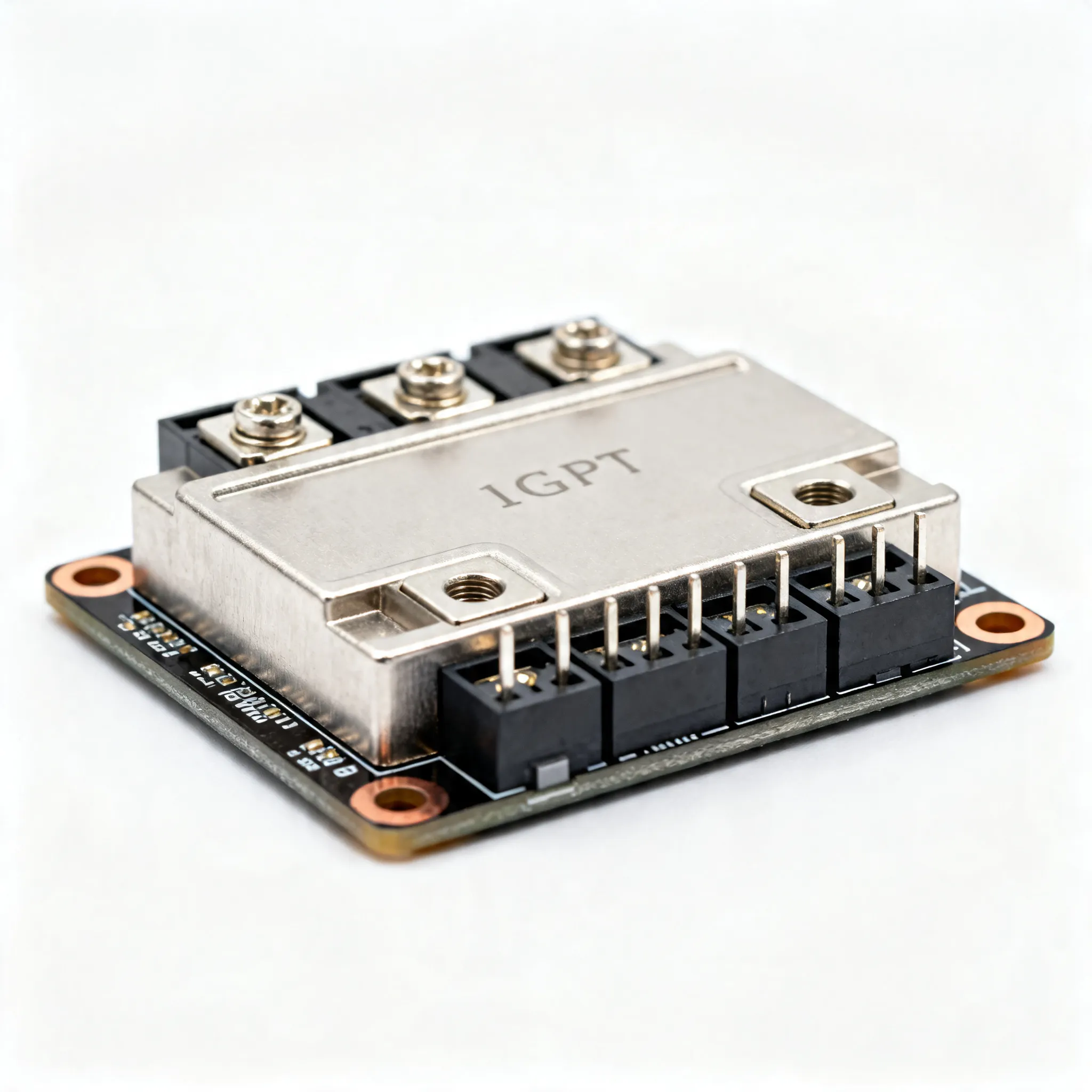
Introduction
The Insulated Gate Bipolar Transistor (IGBT) module is a critical component in modern power electronics, offering the advantages of both MOSFETs and BJTs. It is widely used in applications such as motor drives, renewable energy systems, and electric vehicles due to its high efficiency and fast switching capabilities. The global semiconductor industry's rapid growth, as highlighted by the Semiconductor Industry Association, underscores the increasing demand for efficient power management solutions. Understanding the technical parameters, design guidelines, and best practices for IGBT modules is essential for engineers to optimize performance and reliability in their applications.
Technical Overview
IGBT modules are semiconductor devices that combine the high input impedance and fast switching of MOSFETs with the high current and low saturation voltage capability of BJTs. They are commonly used in high-voltage and high-current applications because they can efficiently handle large power loads. The core principle of an IGBT involves using a gate-controlled MOS structure to control the conductivity of a bipolar transistor. This unique configuration allows the IGBT to operate efficiently in a wide range of power applications, from industrial motor drives to renewable energy systems.
The IGBT module's structure typically consists of multiple IGBT chips and freewheeling diodes connected in parallel or series within a single package. This configuration enhances the module's current-carrying capability and voltage handling capacity. Key parameters such as collector-emitter voltage (VCE), collector current (IC), and gate-emitter voltage (VGE) are crucial for ensuring optimal performance and reliability. Understanding these parameters helps engineers design systems that can withstand the electrical stresses encountered in real-world applications.
Detailed Specifications
| Parameter | Value | Units | Notes |
|---|---|---|---|
| Collector-Emitter Voltage (VCE) | 1200 | V | Maximum voltage the IGBT can block |
| Collector Current (IC) | 100 | A | Maximum continuous current |
| Gate-Emitter Voltage (VGE) | ±20 | V | Maximum gate-emitter voltage range |
| Switching Frequency | 20 | kHz | Typical operating frequency |
| Turn-on Time (ton) | 1.0 | µs | Typical time to turn on the device |
| Turn-off Time (toff) | 2.0 | µs | Typical time to turn off the device |
| Thermal Resistance (RthJC) | 0.15 | °C/W | Junction-to-case thermal resistance |
| Power Dissipation (PD) | 300 | W | Maximum allowable power dissipation |
| Short Circuit Withstand Time | 10 | µs | Time duration the IGBT can withstand a short circuit |
| Reverse Recovery Time | 0.5 | µs | Typical time for diode recovery |
Design Considerations
Designing with IGBT modules requires careful consideration of several factors to ensure optimal performance and reliability. Engineers must evaluate parameters such as voltage ratings, current capacity, and thermal management to match the application's requirements. The IGBT's voltage and current ratings must exceed the maximum expected levels in the application to provide a margin of safety and prevent failure. Additionally, the switching frequency should be selected based on the application's power efficiency and thermal constraints.
Thermal management is a critical aspect of IGBT design. Proper heat dissipation is necessary to maintain the device within its safe operating temperature range. This can be achieved through the use of heat sinks, cooling fans, or liquid cooling systems, depending on the application's power level. Engineers should also consider the module's thermal resistance and ensure that the heat dissipation method is capable of handling the generated heat.
| Guideline | Description |
|---|---|
| Voltage Margin | Ensure the IGBT's voltage rating exceeds the maximum system voltage by at least 20%. |
| Current Margin | Select an IGBT with a current rating 30% higher than the maximum load current. |
| Switching Frequency | Choose a frequency that balances efficiency and thermal performance. |
| Thermal Management | Implement effective cooling solutions to maintain junction temperature below 125°C. |
| Gate Drive Circuit | Design the gate drive to provide sufficient current for fast switching. |
| Snubber Circuit | Use snubber circuits to protect against voltage spikes during switching. |
| Parasitic Inductance | Minimize parasitic inductance in PCB layout to reduce switching losses. |
| EMI Considerations | Design to minimize electromagnetic interference in sensitive applications. |
Step-by-Step Guide
Designing and implementing an IGBT module in a power electronics system requires a systematic approach. The following steps outline the process:
- Define Application Requirements: Start by understanding the application's power, voltage, and current requirements. This includes determining the maximum voltage and current levels, as well as the operating frequency.
- Select the Appropriate IGBT Module: Use a parametric search tool, such as DigiKey Electronics, to find an IGBT module that meets the defined requirements. Consider parameters such as IGBT1200V100A for a high-voltage application.
- Design the Gate Drive Circuit: Ensure the gate drive circuit can provide sufficient current for fast switching and includes protection features like desaturation detection.
- Implement Thermal Management: Design a cooling system using heat sinks or fans to dissipate heat and maintain the IGBT within its safe operating temperature range.
- Develop the PCB Layout: Minimize parasitic inductance by optimizing the PCB layout. Keep traces short and use wide copper areas for power connections.
- Test and Validate the Design: Conduct thorough testing under various load conditions to validate the design's performance and reliability. Monitor key parameters such as temperature and switching losses.
- Optimize for EMI: Implement EMI suppression techniques, such as adding filter components, to ensure compliance with regulatory standards.
Common Issues & Solutions
Despite careful design, engineers may encounter several common issues when working with IGBT modules. Here are some typical problems and their solutions:
- Overheating: This can occur due to inadequate thermal management. Solution: Improve the cooling system by using larger heat sinks or more efficient fans.
- Switching Losses: High switching losses can reduce efficiency. Solution: Optimize the gate drive circuit to ensure fast and efficient switching.
- Voltage Spikes: Inductive loads can cause voltage spikes. Solution: Implement snubber circuits to absorb these spikes and protect the IGBT.
- Parasitic Oscillations: These can occur due to poor PCB layout. Solution: Minimize loop areas and use proper decoupling techniques.
- EMI Interference: High-frequency switching can cause EMI. Solution: Use EMI filters and shielding to reduce interference.
- Short Circuit Failure: IGBTs can fail during short circuits. Solution: Incorporate fast-acting protection circuits to detect and mitigate short circuits quickly.
Applications & Use Cases
IGBT modules are versatile and find applications across various industries. In renewable energy systems, they are used in inverters for solar and wind power installations, providing efficient conversion of DC to AC power. In the automotive industry, IGBTs are integral to electric vehicles, controlling the power flow to the motor and enabling efficient energy use. Industrial motor drives also rely on IGBT modules for precise speed and torque control, enhancing productivity and energy efficiency.
Selection & Sourcing Guide
Selecting the right IGBT module involves evaluating various parameters to ensure it meets the application's needs. Engineers can utilize resources like IC Online for sourcing components, offering a wide range of IGBT modules with competitive pricing and fast delivery. Ensure to cross-reference datasheets to verify the specifications align with the design requirements.
FAQ
- What is an IGBT module? An IGBT module is a semiconductor device that combines the features of MOSFETs and BJTs, used in high-power applications.
- How do I select the right IGBT module? Consider the application's voltage, current, and thermal requirements, and use parametric search tools to find suitable options.
- What are the common applications of IGBT modules? They are used in renewable energy systems, electric vehicles, and industrial motor drives.
- How can I manage heat in an IGBT module? Use heat sinks, fans, or liquid cooling to dissipate heat and maintain safe operating temperatures.
- What causes voltage spikes in IGBT circuits? Inductive loads can cause voltage spikes; use snubber circuits to mitigate this issue.
- How can I reduce EMI in my design? Implement EMI filters and shielding techniques to minimize electromagnetic interference.
- What is the role of a gate drive circuit? The gate drive circuit provides the necessary current to switch the IGBT on and off efficiently.
- Why is thermal resistance important? It determines how effectively the device can dissipate heat, impacting reliability and performance.
- Can IGBT modules be used in low-power applications? While possible, IGBTs are typically used in high-power scenarios where their advantages are most beneficial.
- What are the benefits of using IGBT modules? They offer high efficiency, fast switching, and the ability to handle large power loads.
Conclusion
IGBT modules play a crucial role in modern power electronics, offering efficiency and reliability in high-power applications. By understanding their technical parameters, design guidelines, and best practices, engineers can optimize their systems for performance and longevity. As the demand for efficient power management solutions continues to grow, mastering IGBT module design will be increasingly important in meeting industry needs.