IGBT vs MOSFET: A Practical Guide to Choosing the Right Power Transistor for Your Application
Expert guide on IGBT vs MOSFET: A Practical Guide to Choosing the Right Power Transistor for Your Application. Technical specs, applications, sourcing tips for engineers and buyers.
Introduction
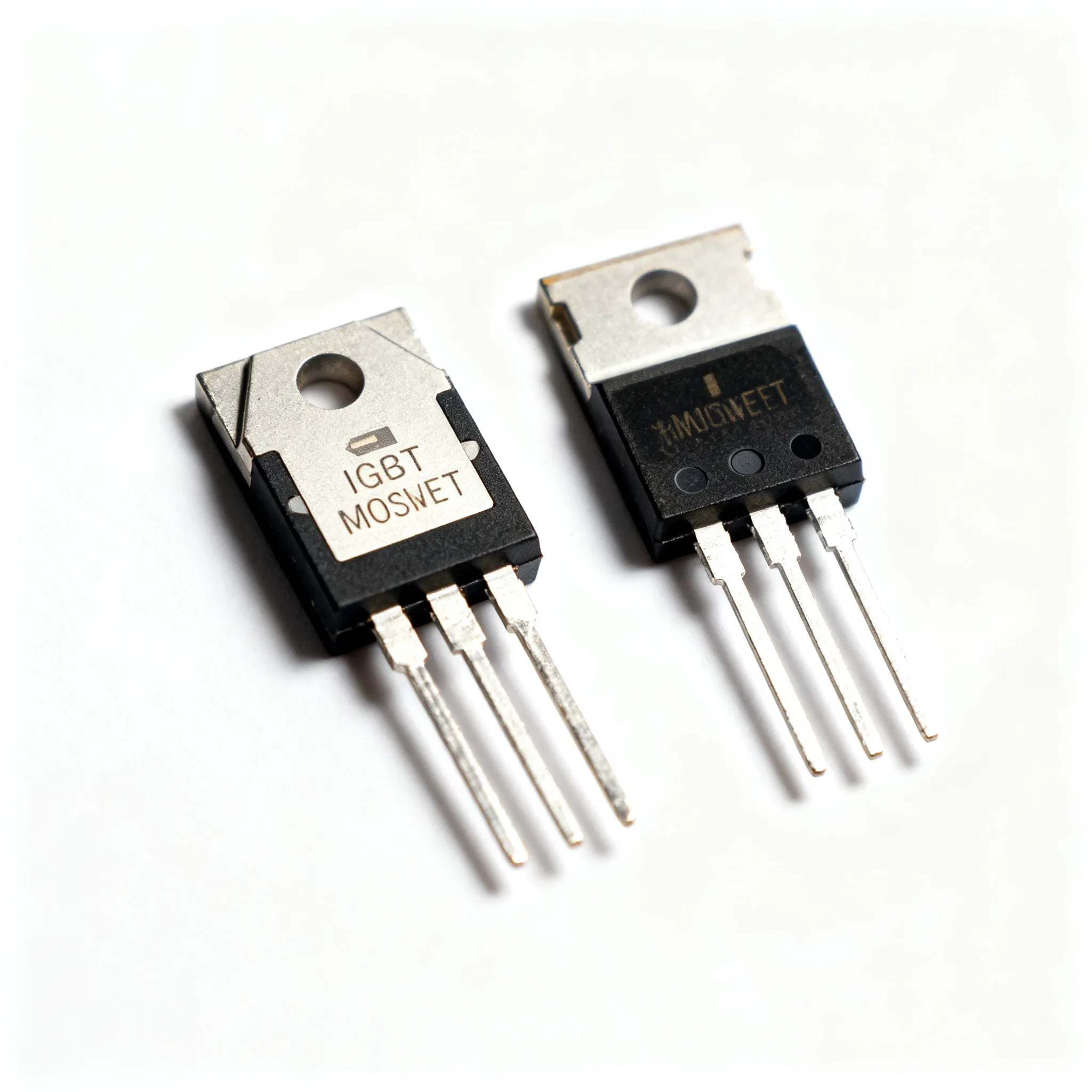
In the rapidly evolving world of electronics, choosing the right power transistor is crucial for the efficiency and reliability of your application. Among the many options available, Insulated Gate Bipolar Transistors (IGBTs) and Metal-Oxide-Semiconductor Field-Effect Transistors (MOSFETs) are two of the most popular choices for power electronics. Both components have unique characteristics that make them suitable for different applications. Understanding the specifications and applications of IGBTs and MOSFETs can greatly impact the performance and cost-effectiveness of your designs. This article provides a comprehensive guide to help you select the right power transistor for your specific needs, backed by detailed specifications, application circuits, and practical guidelines.
Technical Overview
IGBTs and MOSFETs are both crucial components in power electronics. MOSFETs are voltage-controlled devices known for their high switching speeds and efficiency at low voltages, making them ideal for applications like power supplies and motor drives. IGBTs, on the other hand, combine the best features of BJTs and MOSFETs, offering high efficiency and fast switching capabilities in high-voltage applications such as inverters and electric vehicles.
The key to choosing between an IGBT and a MOSFET lies in understanding their core principles. IGBTs are characterized by their high voltage and current handling capabilities, making them suitable for applications where efficiency and thermal management are critical. MOSFETs are preferred in scenarios where fast switching and low conduction losses are paramount. By examining the electrical, thermal, and mechanical specifications of these devices, engineers can make informed decisions that align with their project's requirements.
Detailed Specifications
| Specification | MOSFET | IGBT | Units | Notes |
|---|---|---|---|---|
| Max Drain-Source Voltage (VDS) | 600 | 1200 | V | - |
| Max Collector-Emitter Voltage (VCE) | N/A | 1200 | V | - |
| Continuous Drain Current (ID) | 50 | 30 | A | - |
| Continuous Collector Current (IC) | N/A | 50 | A | - |
| Gate-Source Voltage (VGS) | ±20 | ±20 | V | - |
| Threshold Voltage (VGS(th)) | 2.1 | 5.5 | V | - |
| Turn-on Delay Time (td(on)) | 12 | 20 | ns | - |
| Turn-off Delay Time (td(off)) | 45 | 100 | ns | - |
| On-state Resistance (RDS(on)) | 0.02 | 0.1 | Ω | At 25°C |
| Off-state Leakage Current | 10 | 100 | µA | At 25°C |
| Specification | MOSFET | IGBT | Units | Notes |
|---|---|---|---|---|
| Thermal Resistance (Junction to Case) | 0.5 | 0.3 | °C/W | - |
| Max Junction Temperature | 150 | 175 | °C | - |
| Package Type | TO-220 | TO-247 | - | - |
| Weight | 2.5 | 4.5 | g | - |
| Mounting Type | Through Hole | Through Hole | - | - |
| Lead Count | 3 | 3 | - | - |
| Dielectric Isolation | 2.5 | 3.5 | kV | - |
| Case Material | Plastic | Plastic | - | Flame Retardant |
| Application | MOSFET | IGBT | Notes |
|---|---|---|---|
| Switching Power Supplies | Yes | No | Fast switching preferred |
| Motor Drives | Yes | Yes | Depends on power level |
| Inverters | No | Yes | High voltage required |
| Electric Vehicles | No | Yes | High efficiency needed |
| Audio Amplifiers | Yes | No | Low noise operation |
The tables above provide detailed specifications for both MOSFETs and IGBTs. The electrical specifications highlight the differences in voltage and current handling capabilities, with IGBTs generally supporting higher voltages, while MOSFETs excel in applications requiring fast switching speeds. The thermal and mechanical specifications underscore the importance of thermal management in power electronics, where IGBTs typically offer better thermal performance. The application comparison table provides insights into the suitability of each device for various applications, emphasizing the importance of choosing the right component based on specific needs.
Design Considerations
When designing a circuit, the choice between an IGBT and a MOSFET should be guided by several key factors. Firstly, consider the voltage and current requirements of your application. IGBTs are generally more suitable for high-voltage applications, while MOSFETs are preferred for low to medium voltage scenarios.
Switching frequency is another critical consideration. MOSFETs are ideal for high-frequency applications due to their low switching losses. In contrast, IGBTs are better suited for applications with lower switching frequencies but higher power requirements.
Thermal management is a crucial aspect of power electronics design. IGBTs typically have better thermal performance, making them a better choice for applications with high power dissipation. Ensure that your design includes adequate heat sinking and consider the thermal resistance specifications provided in the datasheets.
The cost of components can also influence your decision. While MOSFETs are generally less expensive than IGBTs, the overall cost must consider the efficiency and performance benefits of each device. Additionally, the availability of components and lead times from suppliers like IC Online can impact your choice.
Finally, consider the reliability and longevity of the components. Analyze the failure rates and robustness under different operating conditions to ensure the long-term success of your application. By weighing these factors carefully, you can make a well-informed decision that optimizes performance and cost-effectiveness.
Step-by-Step Guide
- Identify Application Requirements: Define the voltage, current, and switching frequency needed for your application. This will help you narrow down the choice between IGBTs and MOSFETs.
- Consult Datasheets: Review the datasheets of potential components, focusing on electrical and thermal specifications. Pay attention to parameters like VDS, ID, and thermal resistance.
- Evaluate Thermal Management: Determine the thermal management requirements based on power dissipation. Consider the use of heat sinks or cooling systems to manage the thermal load.
- Consider Switching Speeds: If your application requires high-speed switching, prioritize MOSFETs. For applications with lower switching frequencies, IGBTs may be more suitable.
- Assess Cost and Availability: Compare the cost of IGBTs and MOSFETs, taking into account the overall impact on your project budget. Check availability and lead times from suppliers like IC Online.
- Prototype and Test: Build a prototype using the selected components to validate the design. Test the circuit under different conditions to ensure it meets performance and reliability requirements.
- Optimize Design: Based on test results, make necessary adjustments to optimize the design. This may involve changing component values or improving thermal management.
- Finalize and Document: Once satisfied with the performance, finalize the design and document all specifications and decisions for future reference.
Common Issues & Solutions
In power electronics, several common issues can arise when working with IGBTs and MOSFETs. Here are some real-world problems and their solutions:
- Overheating: Ensure adequate heat sinking and consider using thermal interface materials to improve heat dissipation.
- Gate Drive Issues: Use appropriate gate drive circuits to ensure proper switching and avoid excessive voltage spikes.
- Switching Losses: Minimize parasitic inductance in the circuit layout and consider using snubber circuits to reduce switching losses.
- EMI Interference: Implement proper filtering and shielding techniques to mitigate electromagnetic interference in sensitive applications.
- Component Failure: Choose components with suitable voltage and current ratings to prevent overstressing and premature failure.
- Oscillations: Use gate resistors and decoupling capacitors to dampen oscillations and stabilize the circuit.
Applications & Use Cases
IGBTs and MOSFETs are used in a wide range of applications across various industries. Here are some real-world examples:
- Renewable Energy Systems: IGBTs are commonly used in solar inverters and wind turbine converters due to their high efficiency and voltage handling capabilities.
- Automotive Industry: Electric vehicles rely on IGBTs for efficient power conversion in traction inverters and DC-DC converters.
- Consumer Electronics: MOSFETs are widely used in power supplies for computers and audio amplifiers due to their fast switching and low conduction losses.
- Industrial Automation: Both IGBTs and MOSFETs are used in motor drives and control systems, depending on the power and speed requirements.
Selection & Sourcing Guide
When selecting IGBTs and MOSFETs for your project, it's essential to source components from reliable suppliers. IC Online offers a wide range of electronic components with competitive pricing and fast delivery. Utilize their parametric search tools to find components that meet your specific requirements. Ensure that you review datasheets and technical documentation to verify compatibility and performance before making a purchase.
FAQ
- What is the main difference between IGBTs and MOSFETs? IGBTs are better suited for high-voltage applications, while MOSFETs are preferred for low-voltage, high-speed switching applications.
- Can I use MOSFETs in place of IGBTs? It depends on the application requirements. MOSFETs can replace IGBTs in low-voltage applications but may not handle high power as efficiently.
- What factors should I consider when choosing between an IGBT and a MOSFET? Consider voltage and current ratings, switching speed, thermal management, cost, and application requirements.
- How do I manage thermal issues in power transistors? Use heat sinks, thermal interface materials, and ensure proper circuit layout to manage thermal dissipation effectively.
- What are common applications for IGBTs? IGBTs are commonly used in inverters, electric vehicle converters, and industrial motor drives.
- Are there any drawbacks to using MOSFETs? MOSFETs have higher conduction losses at high voltages and may not be as efficient as IGBTs in such applications.
- What is the typical lifespan of a power transistor? Lifespan varies based on usage conditions, but proper thermal management and design can extend the lifespan significantly.
- How do I prevent EMI interference in power electronics? Use filtering, shielding, and proper circuit design to minimize electromagnetic interference.
- Can I use both IGBTs and MOSFETs in the same circuit? Yes, hybrid designs can leverage the strengths of both devices for optimized performance.
- Where can I find reliable datasheets for IGBTs and MOSFETs? Reliable datasheets can be accessed through distributors like DigiKey Electronics.
Conclusion
Choosing the right power transistor is a critical decision that can significantly impact the performance and efficiency of your electronic application. By understanding the specifications, design considerations, and practical applications of IGBTs and MOSFETs, you can make informed decisions that align with your project goals. Utilize resources like IC Online for sourcing components and ensuring the success of your designs.