Unlock How DC Voltage Powers Your Modern Life
DC voltage is the steady, one-way flow of electrical energy. This DC power is the lifeblood for all modern digital
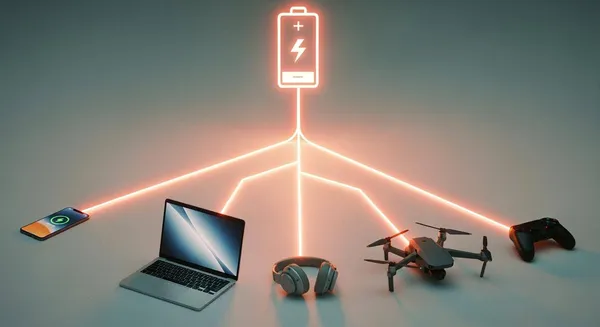
DC voltage is the steady, one-way flow of electrical energy. This DC power is the lifeblood for all modern digital electronics.
Think of DC voltage like a calm, steady river. This constant voltage provides the stable power sensitive components need. AC power is like a tide, with energy constantly changing direction.
Without this steady DC flow, your electronics simply could not work. The correct DC voltage and DC power are fundamental requirements.
Key Takeaways
- DC voltage is a steady flow of electricity. It powers all modern digital electronics.
- Batteries provide DC power directly. Power adapters change AC from wall outlets into DC for your devices.
- DC-to-DC power supplies change DC voltage levels. This allows different parts of a device to get the exact power they need.
- High-voltage DC is becoming more common. It helps electric vehicles charge faster and makes data centers more energy efficient.
Understanding DC Voltage in Electronics
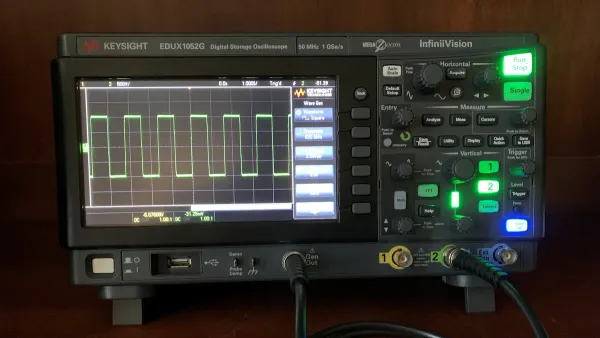
Your gadgets need a steady supply of direct current (DC) to function. This power comes from two primary sources: batteries that provide it naturally and power adapters that create it from the alternating current (AC) in your walls. Understanding both is key to seeing how DC voltage powers your world.
How Batteries Provide Native DC Power
Batteries are the most direct source of DC power. They are essentially small, self-contained chemical reactors. A chemical reaction inside the battery creates a surplus of electrons at one terminal (the negative side) and a deficit at the other (the positive side). When you connect a device, you complete a circuit. This allows the electrons to flow in a single, constant direction from negative to positive, delivering a steady stream of energy.
This inherent ability to provide a constant, unidirectional flow of energy is why batteries can directly power portable electronics without needing complex external conversion. The device is designed to run on the specific DC voltage the battery provides.
For example, common household batteries provide a set DC voltage. A standard AA or AAA battery provides 1.5V, while a rectangular 9V battery provides a nominal voltage of 9 volts. This stable DC voltage is exactly what the sensitive circuits inside your remote control or smoke detector need to operate reliably.
AC to DC Conversion Explained
Your wall outlets provide a different kind of power: alternating current (AC). In AC, the flow of electrons rapidly changes direction, oscillating back and forth. This type of power is great for long-distance transmission but is completely incompatible with the delicate components in your electronics. Your phone's processor cannot run on an energy source that is constantly reversing.
This is where your charger, or power adapter, becomes essential. It performs the critical task of AC to DC conversion. This process transforms the high-voltage, oscillating AC from the wall into the stable, low-voltage DC your device requires.
| Feature | Direct Current (DC) | Alternating Current (AC) |
|---|---|---|
| Electron Flow | Flows in a single, steady direction. | Constantly switches direction, flowing back and forth. |
| Voltage | Appears as a straight, flat line over time. | Appears as a smooth, repeating sine wave. |
| Use in Devices | Powers all digital electronics. | Powers home appliances and is delivered by wall outlets. |
The conversion from AC to DC power inside an adapter generally involves two main steps:
- Rectification: The adapter first uses a component called a rectifier, typically made of four diodes in a bridge configuration. Diodes act like one-way gates for electricity. They let the current pass through in one direction but block it from flowing backward. This circuit effectively flips the negative half of the AC wave into a positive one, resulting in a bumpy but one-directional current called "pulsating DC."
- Filtering: This pulsating DC energy is still too unstable for modern electronics. To fix this, the power flows through a capacitor. The capacitor acts like a small, fast-charging battery. It stores energy when the voltage pulses to a peak and releases that energy when the voltage drops. This action smooths out the bumps, filling in the gaps to create a much more stable DC voltage.
After these steps, a final regulation circuit ensures the output is a precise DC voltage, like the 5V needed for a standard USB connection. This entire conversion process is the hidden magic that lets you safely power and charge all your favorite electronics from any wall outlet.
The Critical Role of a DC-to-DC Power Supply
You now know that your electronics need DC power. However, a single DC voltage is not enough. A modern device like a laptop might receive 20V from its charger, but its internal parts require a variety of much lower voltages to operate. This is where the DC-to-DC power supply comes in. A DC-to-DC power supply is a circuit that converts one level of DC voltage into another.
These converters are essential for managing power efficiently inside your electronics. They are a type of switched-mode power supply, which means they switch on and off very quickly to regulate voltage. This method is highly efficient, with modern converters achieving over 95% efficiency. This prevents wasting energy as heat. There are two main types:
- Buck Converter (Step-Down): This DC-to-DC power supply decreases voltage while increasing current. It takes a higher input voltage and "bucks" it down to a lower level.
- Boost Converter (Step-Up): This DC-to-DC power supply increases voltage while decreasing current. It takes a lower input voltage and "boosts" it to a higher level.
This ability to precisely change a DC voltage is critical for both charging devices and powering their internal components.
The USB Standard: From 5V to Higher Voltages
The Universal Serial Bus (USB) port is a perfect example of DC power evolution. It started as a data interface with a very limited power supply. Today, it is a primary source of power for countless devices. This change was driven by the USB Power Delivery (USB-PD) specification.
USB-PD allows a single USB-C cable to deliver much more power alongside data. The system is intelligent. A device and a charger "negotiate" the best voltage and current for safe and fast charging. This negotiation follows a clear process:
- Capabilities Message: The charger (source) tells the device (sink) what power levels it can provide. It sends a list of its available DC voltage and current options.
- Request: The device reviews the options. It then requests the specific DC voltage and power it needs.
- Acceptance: The charger accepts the request. It adjusts its output to the agreed-upon voltage.
- Power Delivery: The charger sends a "ready" signal. The device then begins to draw the negotiated power.
This smart system allows a single charger to provide the right DC power for many different electronics. The latest USB-PD 3.1 standard has dramatically increased these capabilities.
The USB-PD 3.1 specification introduced an Extended Power Range (EPR). This update boosted the maximum power from 100W to an incredible 240W. This allows USB-C to power even demanding electronics like gaming laptops and large monitors.
The new standard introduced higher fixed voltage options to deliver more power.
| Voltage (V) | Maximum Wattage (W) |
|---|---|
| 28 | 140 |
| 36 | 180 |
| 48 | 240 |
This flexibility makes USB-C a truly universal power solution, all thanks to its advanced control over DC voltage.
Powering Internal Components: 3.3V, 1.8V, and 1.2V
The journey of DC power does not stop at the charging port. Inside your computer or smartphone, a complex network of components requires a wide range of precise DC voltage levels. The main 12V or 5V DC from the power supply is not suitable for delicate microchips. A motherboard contains multiple small DC-to-DC power supply circuits to handle these final conversions.
These converters are a critical part of the system's design. A DC-to-DC power supply will take the main system voltage and step it down. For example, a computer's 12V DC rail is converted to the different voltages needed across the board.
- 3.3V DC: Powers components like M.2 SSDs, the motherboard chipset, and some RAM modules.
- 1.8V DC: Often used for the core logic of the CPU and other sensitive integrated circuits.
- 1.2V DC: A common voltage for modern CPU cores and graphics processors.
Each of these conversions requires a dedicated DC-to-DC power supply, often a highly efficient buck converter. Managing these multiple voltage rails is a sophisticated engineering challenge. It requires deep expertise in integrated circuit (IC) design and system integration. Companies like Nova Technology Company (HK) Limited, a HiSilicon-authorized solutions partner, specialize in this area. They provide the advanced chip-level solutions needed to build the complex DC-to-DC power supply systems that manage these precise voltage conversions, ensuring all electronics function reliably. Without this final, crucial step of DC-to-DC conversion, no modern digital device could operate.
The Future is High-Voltage DC
The world is shifting towards more powerful and efficient DC applications. This trend is not just about small electronics. High-voltage DC is reshaping major industries, from transportation to data infrastructure. This move promises greater energy efficiency and performance. The market for high-voltage DC power is growing rapidly, showing its increasing importance.
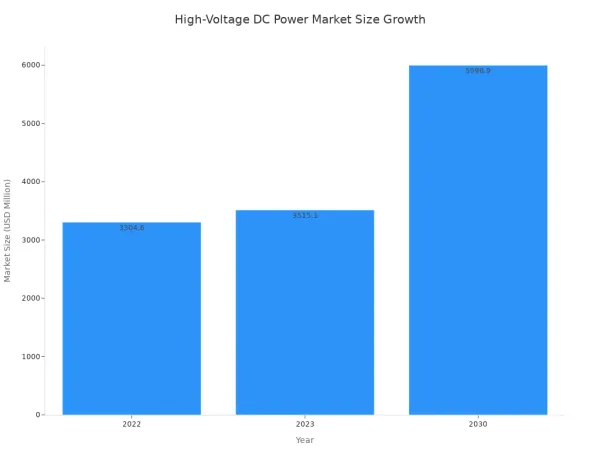
This growth is driven by the need for better energy efficiency in high-power applications.
Powering EVs with High-Voltage DC Charging
The rise of electric vehicles (EVs) highlights the power of high DC voltage. Early electric vehicles used 400V battery systems. Now, many new models use an 800V architecture. This higher voltage is key to faster charging. The basic formula is Power = Voltage × Current. By doubling the voltage, a car can receive the same amount of power with half the current. This reduces heat and improves charging efficiency.
For example, an 800V car like the Porsche Taycan can add 100 kilometers of range in just 5 minutes using a 350kW DC fast charger. A 400V car would need much more time. This high efficiency is a major benefit for EV owners.
These advanced applications rely on powerful Level 3 DC chargers. These chargers can deliver from 50kW to over 350kW of DC power. The 800V systems in modern electric vehicles can take full advantage of this high-power energy transfer. Optimizing energy efficiency is a primary goal in these applications.
Improving Data Center Energy Efficiency
Data centers are the backbone of the internet. They consume enormous amounts of energy. Traditionally, they use AC power, which requires multiple conversions to DC. Each conversion step wastes energy as heat. These losses can account for 10% to 20% of the total energy used. Optimizing energy efficiency is critical for these facilities.
A new solution is to use a high DC voltage, like 380V DC, for power distribution. This approach dramatically improves energy efficiency. It eliminates several wasteful AC-to-DC conversion steps. This direct use of DC power reduces energy losses by 8% to 10%. This boosts the overall system efficiency. This method of optimizing energy efficiency also reduces the need for cooling, further saving energy.
This shift is possible due to new technologies. Advancements in power electronics, such as the Modular Multilevel Converter (MMC), make high-voltage DC applications more practical. These innovations are key to building a future with better energy efficiency. Optimizing energy efficiency in these large-scale applications has a global impact. The high efficiency of DC power makes it ideal for these demanding applications.
DC voltage is the unifying power behind all modern electronics. This DC power connects the low 1.2V voltage on a chip to the high 800V DC voltage in an electric vehicle. The steady, unidirectional flow of DC is a non-negotiable requirement for our digital lives.
This constant DC voltage ensures all electronics can function, store energy, and charge reliably. The stable nature of DC is fundamental.
Every time you use a battery-powered device or plug in a charger, you are tapping into the silent, steady DC voltage that drives our digital world. This DC is essential.
FAQ
What are DC voltage controllers?
DC voltage controllers are circuits that manage DC power. These controllers ensure a stable DC voltage output. They are essential for reliable power management. Key functions of these controllers include voltage regulation and system protection. The controllers are vital for circuit performance and overall system reliability.
Why is voltage regulation so important?
Proper voltage regulation is critical for electronics. It maintains a constant DC voltage, which protects sensitive components from damage. This regulation ensures high reliability and optimal circuit performance. Good voltage regulation is the foundation for the reliable operation of critical equipment and achieving reliable power management.
Stable voltage regulation prevents errors and improves device longevity. This reliability is a core part of modern power management solutions. The controllers' regulation function is key to circuit performance.
What are common applications for DC voltage?
Common applications for DC voltage are everywhere. They power everything from your phone to electric vehicles. The steady DC energy is perfect for digital circuits. Advanced DC voltage controllers enable new applications in high voltage microelectronics. These power management solutions are built on the reliability of DC power.
How do controllers provide protection?
Controllers offer system protection by monitoring the DC voltage and current. If they detect a dangerous condition, they shut down the power. This includes short-circuit protection. This protection feature is crucial for safety, reliability, and good circuit performance. These advanced dc voltage controllers ensure reliable power management.
| Protection Type | Function |
|---|---|
| Over-Voltage Protection | Prevents damage from an excessive input voltage. |
| Short-Circuit Protection | Stops current flow during a circuit fault. |
| Thermal Shutdown | Disables the device if it gets too hot. |
These features from the controllers guarantee better circuit performance and reliability. The voltage control and regulation from DC voltage controllers provide reliable power management. Common applications depend on this DC voltage reliability.