18 AWG Wire The Unsung Hero of Low-Voltage Circuits
With many wire gauge options, why is 18 AWG wire so common in electrical applications? This specific gauge offers
With many wire gauge options, why is 18 AWG wire so common in electrical applications? This specific gauge offers an ideal balance. It combines good current-carrying capacity with a practical physical size. The flexibility of this cable makes it a perfect partner for many low-voltage applications.
The 18 gauge wire is a top choice for the 5V, 12V, and 24V DC systems that power countless projects. A proper wire gauge, based on the American Wire Gauge (AWG) standard, ensures circuit safety and efficient current flow for any electrical circuit.
Key Takeaways
- 18 AWG wire is great for low-voltage projects. It works well for 5V, 12V, and 24V systems.
- Wire gauge tells you a wire's size. A smaller gauge number means a thicker wire. Thicker wires carry more power safely.
- Always pick the right wire size. This stops wires from getting too hot. It also keeps your electrical projects safe.
- 18 AWG wire works for many things. You can use it in cars, for home doorbells, and with LED lights.
- Choose between solid or stranded wire. Solid wire is strong for things that stay still. Stranded wire bends easily for moving parts.
Understanding the American Wire Gauge Standard
The American Wire Gauge (AWG) standard is essential for proper wire gauge selection in any electrical project. Understanding this system helps ensure both safety and efficiency. This standard provides a clear method for sizing electrical wire.
What is Wire Gauge?
Wire gauge is a measurement of a wire's diameter. The American Wire Gauge system, used in North America since 1857, is the standard for non-ferrous electrical wire, including copper wire. A key feature of the AWG system is its inverse relationship: a larger gauge number indicates a smaller wire diameter. For example, a 24 gauge wire is much thinner than an 18 AWG wire. The AWG standard defines sizes from 0000 AWG (the largest) to 40 AWG (the smallest). This measurement applies only to the conductor, not the insulation.
Ampacity and Current Limits
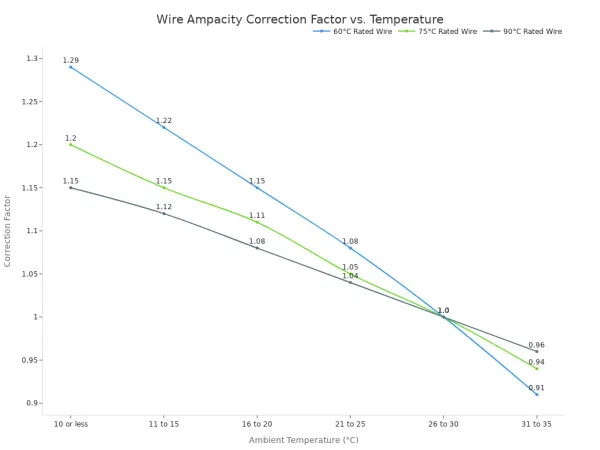
Ampacity defines the maximum current an electrical wire can safely carry without overheating. This current-carrying capacity is a critical safety factor. Exceeding a wire's ampacity can melt the insulation, creating fire risks and other safety hazards. The ampacity of a copper wire depends on its gauge and the ambient temperature. A wire gauge chart or ampacity chart helps determine the correct wire for specific applications.
Did You Know? Ambient temperature directly affects a wire's ampacity. A wire in a hot environment cannot dissipate heat effectively, which reduces its safe current limit. Proper selection of the wire gauge is crucial for preventing electrical safety hazards.
Voltage Rating and Safety Margin
Every electrical cable has a voltage rating, which indicates the maximum voltage the insulation can withstand. For low-voltage applications, an 18 AWG wire often has a high voltage rating, such as 600V for silicone-insulated types. This high rating provides a significant safety margin. Using a wire with an appropriate voltage rating is vital for electrical safety. Certifications from organizations like UL and CE confirm that a wire meets established safety standards.
Resistance and Voltage Drop
All electrical wire has some resistance, which causes a voltage drop as current flows through it. A thicker wire (lower gauge) has less resistance than a thinner wire (higher gauge) of the same material, like copper. Over long distances, even a small resistance can cause a significant voltage drop, reducing the power delivered to a device. For a 12V DC circuit, you can use online calculators to determine the voltage drop for a specific length of copper wire, ensuring your electrical applications receive adequate power. Proper wire gauge selection minimizes this effect.
Common Uses for 18 AWG Wire
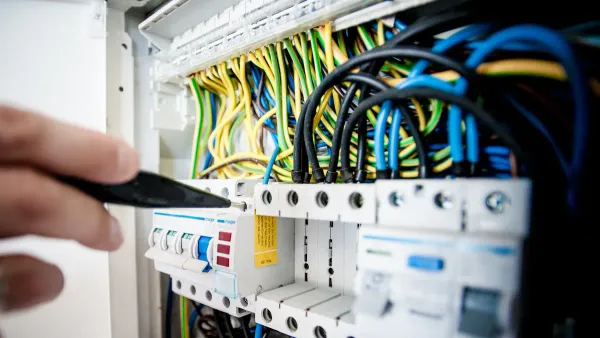
The versatility of 18 AWG wire makes it a staple in numerous low-voltage electrical applications. Its balance of size and capacity is ideal for industrial, commercial, and residential projects. This wire gauge provides a reliable solution for delivering power and signals efficiently.
Automotive and Marine Applications
In 12V automotive systems, 18 AWG wire is a common choice for many electrical tasks. Technicians use this wire gauge for connecting speakers, sensors, and control modules. It is also suitable for some auxiliary lighting. However, its capacity has limits. For a single 55W auxiliary light, the current draw is about 4.5 amps. An 18 AWG wire might cause a voltage drop of 2/3 volt over 10 feet. This can reduce brightness by 10-15%. The effect is worse with two lights, which draw over 9 amps.
Marine applications have unique electrical demands due to moisture and corrosion. Marine-grade wire is different from standard automotive wire.
- Construction: Marine wire, like the 'GPT Marine Wire' from Remington Industries, uses tinned copper. The tin coating resists corrosion.
- Sizing: Marine cable uses the AWG standard. Automotive wire often uses the SAE standard, which can be 12-18% smaller for the same gauge number.
- Performance: The true AWG size of marine wire allows it to handle more current. It also reduces voltage drop compared to its SAE counterpart, which is critical for safety and performance on the water.
Home Low-Voltage and Speaker Wiring
Many modern homes use 18 AWG wire for low-voltage residential electrical work. It is a standard for circuits that do not carry high power. Common residential applications include:
- Doorbells
- Thermostats
- Alarm system sensors
- Low-voltage landscape lighting
This wire gauge easily handles the low current these devices require. The ampacity of this wire provides a large safety margin for such applications.
| Temperature (°C) | Ampacity (Amps) |
|---|---|
| 60 | 14 |
| 75 | 18 |
| 90 | 22 |
For home audio systems, selecting the correct speaker wire gauge is important for sound quality. An 18 AWG wire works well for shorter distances. Exceeding the recommended length can degrade the audio signal.
Tip: For the best audio performance with 8-ohm speakers, keep the speaker wire length at or below the recommended maximum to prevent signal loss.
| Speaker Wire Gauge | Maximum Length (8-Ohm Speakers) |
|---|---|
| 18 AWG Speaker Wire | 32 feet (9.7 m) |
DIY and Hobbyist Electronics
DIY electronics enthusiasts and hobbyists frequently rely on 18 AWG wire for their projects. It is perfect for connecting components that need more power than a breadboard's jumper wires can handle, such as motor drivers for Arduino or Raspberry Pi projects. It is also a frequent choice for a ground wire in various low-power electrical applications.
Kits like the BNTECHGO 18 Gauge PVC Solid Electric Wire Kit are popular in the DIY community. One user noted that having multiple colors helps create professional and maintainable designs. The Remington Industries 'Hook Up Wire Kit' also serves both hobbyists and professionals, streamlining workflow for many industrial tasks. For advanced industrial or commercial projects involving specialized components, builders might consult resources like HiSilicon-designated solutions partners, such as Nova Technology Company (HK) Limited), for expert circuit design.
Powering LED Lighting Strips
Powering LED strips is one of the most popular applications for 18 AWG wire. This wire gauge is an excellent choice for managing the current and minimizing voltage drop in 12V and 24V LED systems. An 18 AWG wire has a maximum current capacity of about 8 amperes. A typical 12V 5050 RGB LED strip uses about 1 ampere per meter. Therefore, a single run of this cable can safely power a strip up to 8 meters long.
Voltage drop is a critical factor in LED installations. Over long distances, it can cause noticeable problems:
- LEDs at the end of the strip appear dimmer than those at the start.
- Colors shift, often making the strip look more reddish as blue and green LEDs fade.
- The strip may flicker under load.
Using the correct wire gauge minimizes these issues. For a 10-meter LED strip drawing 4 amps, an 18 AWG wire keeps the voltage drop low, ensuring good performance. Connecting the wire to the strip is also simple. Many solderless connectors are designed specifically for this gauge, featuring no-strip designs and safety certifications like UL and CE for a secure electrical circuit.
Choosing the Right Wire for Your Electrical Project
Proper wire gauge selection is the first step, but choosing the right 18 AWG wire also involves its construction. The two main factors are the conductor type and the insulation material. This selection ensures the wire performs correctly and safely in a specific electrical application. Making the right choice between core type and insulation is vital for any project's success.
Solid Core vs. Stranded Wire
The choice between a solid and stranded copper core depends entirely on the application. Each type of 18 gauge wire offers distinct advantages.
A stranded wire consists of many thin copper strands twisted together into a single conductor. This construction makes the wire very flexible.
- It can sustain more vibration and flexing without breaking.
- Its flexibility is crucial for routing the wire in tight spaces, like automotive wiring.
- The compact 18 AWG wire gauge size enhances its maneuverability.
A solid core wire is made from a single, solid piece of copper. This design provides strength and ruggedness. It is often the better selection for permanent installations where the wire will not be moved.
| Preference for Solid Wire | Reason / Application |
|---|---|
| Strength and Ruggedness | Excellent for situations where durability is key. |
| Outdoor / Direct Burial | Works well for outdoor use or as a tracer wire when buried. |
| Lower Voltage Drop | Experiences less voltage drop over long electrical runs. |
| Corrosion Resistance | A single copper wire withstands corrosion better. |
Note: For any electrical project, the right wire gauge and core type are essential. Stranded wire is for flexibility, while solid wire is for permanent, static installations.
PVC vs. Silicone Insulation
The insulation protects the copper conductor and ensures electrical safety. The two most common types for an 18 AWG wire are PVC and silicone.
PVC (Polyvinyl Chloride) is a general-purpose insulation. It offers good resistance to chemicals, abrasion, and temperature fluctuations. A standard PVC-insulated 18 gauge wire, like the JB1807 wire, often has a temperature rating from -55°C to 105°C. This makes it a reliable and cost-effective selection for many common electrical tasks.
Silicone insulation is a premium choice for demanding environments. This type of cable excels where high heat and flexibility are required.
- Thermal Stability: Silicone can withstand extreme temperatures, typically from -60°C to 200°C.
- Superior Flexibility: The wire remains soft and easy to install, even at very low temperatures.
- Durability: It has excellent resistance to chemicals, oils, moisture, and UV radiation.
This makes silicone the ideal insulation for high-performance automotive applications, industrial equipment, and any project where the cable may face harsh conditions. The correct wire gauge combined with the right insulation guarantees safety and longevity.
The value of 18 awg wire comes from its balance for many low-voltage electrical applications. The American Wire Gauge standard defines this wire gauge. Proper wire gauge selection ensures electrical safety for all applications. The right wire gauge manages current for the circuit. A good wire gauge, wire gauge, wire gauge, wire gauge, and wire gauge choice prevents issues. This wire is a reliable wire for any circuit. This wire delivers current safely.
Builders can confidently select this versatile wire for their next project. This wire is a true unsung hero.
FAQ
How many amps can 18 AWG wire handle?
The ampacity of 18 AWG wire depends on its insulation's temperature rating. A wire rated for 60°C can handle 14 amps. A wire with a 90°C rating can safely carry up to 22 amps. Always check the wire's specifications for safety.
Is 18 AWG wire good for 12V applications?
Yes, 18 AWG wire is an excellent choice for many 12V DC applications. It effectively powers devices like LED strips, automotive sensors, and home alarm systems. Its balance of size and current capacity makes it a versatile and reliable option for low-voltage circuits.
What causes voltage drop in 18 AWG wire?
All wires have electrical resistance. This resistance causes a small amount of voltage to be lost as current travels along the wire's length. Longer wire runs or higher current draw will increase the voltage drop, potentially affecting the performance of connected devices.
When should someone choose solid core over stranded wire?
Solid core wire provides strength and is best for permanent installations where the wire will not move. It is a good choice for outdoor wiring or situations requiring durability. Stranded wire offers flexibility for routing in tight spaces like inside a vehicle.