74AHC1G08GW vs U74AHC1G08: Are They Drop-In Compatible?
You want to know if you can swap the 74AHC1G08GW with the U74AHC1G08 without trouble. The answer is yes—these chips are Drop-In Compatible in most des

You want to know if you can swap the 74AHC1G08GW with the U74AHC1G08 without trouble. The answer is yes—these chips are Drop-In Compatible in most designs. Both share the same pin layout and package size, so you can fit either part into your circuit. You should always check your specific needs, but for most projects, you can substitute one for the other with confidence.
Key Takeaways
You can swap the 74AHC1G08GW and U74AHC1G08 in most designs without issues. They share the same pin layout and package size.
Always check the package type before replacing chips. The 74AHC1G08GW uses SOT353-1, while the U74AHC1G08 may use SOT353-1 or SOT753.
Both chips operate within the same voltage range of 2.0 to 5.5 volts. This makes them suitable for circuits using 3.3V or 5V logic.
Review the logic levels in your circuit. The 74AHC1G08GW uses CMOS levels, while the U74AHC1G08 uses TTL levels, which may affect performance.
Always test the new chip in your circuit before full production. This helps ensure compatibility and performance.
Drop-In Compatible: Pinout & Package
Pin Configuration
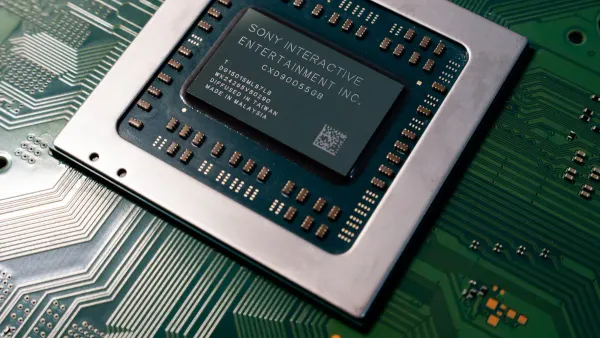
You want to make sure the pin layout matches when you swap chips. Both the 74AHC1G08GW and U74AHC1G08 use the same basic pin configuration. Each pin on one chip connects to the same function on the other. This means you do not need to change your printed circuit board (PCB) design. You can place either chip in the same socket or solder pad, and the circuit will work the same way. This is one reason why these two chips are considered Drop-In Compatible.
Package Types
You need to check the package type before you swap any chip. The 74AHC1G08GW and U74AHC1G08 come in small surface-mount packages. The most common package for the 74AHC1G08GW is TSSOP5, also known as SOT353-1. The U74AHC1G08 is often found in SOT353-1 or SOT753 packages. These packages have different sizes, so you should compare them.
Here is a table that shows the package types and their dimensions:
Package Type | Dimensions (mm) |
|---|---|
SOT353-1 | |
SOT753 | 2.9 x 1.5 x 1 |
You see that SOT353-1 is smaller than SOT753. If your board uses the SOT353-1 footprint, you must use a chip with the same package. If your board uses SOT753, you need to match that as well. Always check the package code on your chip and your PCB.
Physical Fit
You want to avoid problems when you place a new chip on your board. The physical fit depends on the package type. If you use SOT353-1 for both chips, they will fit perfectly. The pins line up, and the body size matches. This makes the chips Drop-In Compatible for most boards.
If you try to use a SOT753 chip on a SOT353-1 footprint, it will not fit. The larger body and different pin spacing will cause problems. You must match the package type to your board layout. You can find more details about the SOT353-1 package in the manufacturer's datasheet.
Tip: Always double-check the package code before ordering or replacing a chip. This helps you avoid mistakes and keeps your project running smoothly.
When you match the pin configuration and package type, you can swap the 74AHC1G08GW and U74AHC1G08 with confidence. This makes them Drop-In Compatible for most designs.
Electrical Characteristics
Voltage Range
You need to know if both chips work with the same supply voltage. The 74AHC1G08GW and U74AHC1G08 both operate from 2.0 volts to 5.5 volts. This means you can use either chip in circuits that run on 3.3V or 5V logic. Here is a table that shows the voltage range for each part:
Component | Minimum Voltage (V) | Maximum Voltage (V) |
|---|---|---|
74AHC1G08GW | 2.0 | 5.5 |
U74AHC1G08 | 2.0 | 5.5 |
You do not need to change your power supply when you swap these chips. This makes them easy to use as Drop-In Compatible parts in most designs.
Logic Levels
You want your logic gates to understand the signals in your circuit. Both chips use standard CMOS logic levels. When you use a 5V supply, a voltage above 3.5V counts as a logic “high.” A voltage below 1.5V counts as a logic “low.” If you use a lower supply voltage, the thresholds change, but both chips follow the same rules. This means your circuit will work the same way with either chip.
Current Ratings
You should check how much current each chip can handle. The 74AHC1G08GW and U74AHC1G08 both have strong output drive. Each output can source or sink up to 8mA. This is enough for most logic circuits and small loads. The table below shows the current ratings:
Component | Input Leakage Current | Output Drive Capability |
|---|---|---|
74AHC1G08GW | ±8mA | |
U74AHC1G08 | N/A | ±8mA |
You see that the input leakage for the 74AHC1G08GW is very low. The U74AHC1G08 does not list this value, but it is usually similar for chips in this family. Both chips can drive the same loads without problems.
Overvoltage Tolerance
You may worry about connecting signals from different voltage levels. Both chips have inputs that tolerate overvoltage. You can connect a higher voltage signal to the input without damaging the chip. This feature helps when you mix 3.3V and 5V logic in one system. You do not find any warnings about overvoltage in the datasheets. You can use these chips in mixed-voltage environments with confidence.
Note: Overvoltage tolerance makes these chips flexible for many designs. You do not need extra protection for the inputs in most cases.
When you compare voltage range, logic levels, current ratings, and overvoltage tolerance, you see that the 74AHC1G08GW and U74AHC1G08 match very closely. You can swap them in most circuits without worry.
Manufacturer & Part Number
Manufacturer Differences
The 74AHC1G08GW and U74AHC1G08 are made by different companies. Nexperia makes the 74AHC1G08GW. Nexperia is known for making good semiconductors. People trust Nexperia because their parts work well and last long. The U74AHC1G08 does not show a clear maker in most places. This makes it harder to check if the chip is high quality. It is also harder to get help if you need it. If you want a chip from a famous company, you might pick the 74AHC1G08GW.
Some things these chips can do are:
Do a 2-input AND logic function
Work with many supply voltages (2V to 5.5V)
Block noise well
Use little power
Keep signal timing steady
Both chips follow RoHS and REACH rules. This means they are safe for the environment.
Part Numbering
The part numbers are not the same. Each part number gives clues about the chip’s series and package. Here is a table to help you see what they mean:
Part Number | Prefix | Suffix | What It Means |
|---|---|---|---|
74AHC1G08GW | 74 | GW | Series and package from Nexperia |
U74AHC1G08 | U | Different manufacturer or variant |
The “74” prefix shows the chip is in a standard logic family. The “GW” at the end of 74AHC1G08GW means a special package type. The “U” in U74AHC1G08 means it is from a different maker or is a special kind. Always look at the full part number before you buy. This helps you get the right chip for your board.
Documentation
You need good documents to use these chips the right way. Both chips have data sheets, application notes, and block diagrams. These papers help you learn how the chip works and how to use it. You can also find 3D models and package drawings to help with your design.
Documentation Type | Description |
|---|---|
Data Sheet | Shows all the chip’s features and specs |
Application Notes | Gives tips for using the chip in real circuits |
Block Diagrams | Simple pictures of how the chip works inside |
Design Support Models | 3D models and package info for your PCB design |
You can ask Nexperia for help on their website. They have a program that keeps the chip available for many years. If you use U74AHC1G08, you may need to look harder for help or extra papers.
Tip: Always get the newest data sheet before you start your project. This helps you avoid mistakes and keeps your design current.
Caveats & Recommendations
Minor Differences
You may notice small differences between the 74AHC1G08GW and U74AHC1G08. These differences do not affect most projects, but you should know about them:
The 74AHC1G08GW uses CMOS input switching levels. This means it works well with signals that reach close to the supply voltage.
The U74AHC1G08 uses TTL input switching levels. This chip can detect lower voltage signals as "high."
The 74AHC1G08GW works from 2V to 5.5V. The U74AHC1G08 works best from 4.5V to 5.5V.
You should check your circuit’s voltage and signal levels before swapping these chips.
Application Risks
You may face problems if you use the wrong chip in a sensitive design. Here are some situations where you should not substitute:
Your circuit uses a supply voltage below 4.5V. The U74AHC1G08 may not work well here.
Your design depends on CMOS input levels. The U74AHC1G08 may not detect signals as expected.
Your project needs the lowest possible power use. Small differences in chip design can affect power.
Note: Always review your circuit’s voltage and logic requirements before making a swap.
Substitution Tips
You can follow these tips to make safe substitutions:
Check the supply voltage on your board. Make sure it matches the chip’s range.
Review the logic levels in your circuit. Match CMOS or TTL as needed.
Read the latest datasheet for both chips. Look for any special features or warnings.
Test the new chip in your circuit before making many boards.
Keep extra chips on hand in case you need to switch back.
If you follow these steps, you can swap the 74AHC1G08GW and U74AHC1G08 with confidence in most designs.
You can swap the 74AHC1G08GW and U74AHC1G08 in most projects without issues. Both chips match in pinout, package, and electrical specs. For best results, always:
Check your board’s voltage and logic levels.
Match the package type to your PCB.
Tip: Test the new chip in your circuit before full production. Some designs may need extra care with voltage or logic thresholds.
You can trust these chips as drop-in replacements for most uses.
FAQ
Can you use the 74AHC1G08GW and U74AHC1G08 in the same circuit?
Yes, you can use both chips in the same circuit if the package and voltage match. Always check your board and datasheet before mixing parts.
What happens if you use the wrong package type?
The chip will not fit or may not work. You must match the package type to your PCB footprint. Check the package code before you order or install a chip.
Do these chips need special handling for static electricity?
Yes. Both chips use CMOS technology. You should wear an anti-static wrist strap and work on an ESD-safe surface to protect the chips from damage.
Where can you find datasheets for these parts?
You can find datasheets on the manufacturer’s website.
Search for “74AHC1G08GW datasheet” or “U74AHC1G08 datasheet” online.
Always use the latest version for your project.