A Developer's Guide to Embedded Bluetooth Technology
You face a complex market when choosing Bluetooth solutions for your project. The demand for Bluetooth technology in embedded systems is rapidly growi

You face a complex market when choosing Bluetooth solutions for your project. The demand for Bluetooth technology in embedded systems is rapidly growing, with the market projected to expand significantly.
Attribute | Details |
|---|---|
Forecast Period | 2024 – 2030 |
Market Size Value in 2024 | |
Revenue Forecast in 2030 | USD 24.8 Billion |
Overall Growth Rate (CAGR) | 11.8% (2024 – 2030) |
This guide cuts through the noise. We focus on technical facts to help you find the best bluetooth solutions for embedded systems. As a HiSilicon-designated solutions partner, Nova Technology Company (HK) Limited offers this framework to empower your decisions. Our goal is to help you select the optimal Bluetooth solutions for your unique application needs.
Key Takeaways
Choose your Bluetooth solution based on what your project needs most, like long battery life, fast data speed, or a large network.
Think about power use, how fast data moves, and the type of Bluetooth (Classic, LE, or Mesh) that fits your device.
Decide between using a ready-made Bluetooth module for quick setup or a System-on-Chip (SoC) for cheaper costs in very large product amounts.
Always include strong security features to keep your Bluetooth devices safe from unwanted access.
Look for Bluetooth solutions that offer good software tools and support to make your development process easier.
Core Evaluation Criteria for Bluetooth
Choosing the right Bluetooth solution requires a clear evaluation of your project's needs. You must balance performance, cost, and development time. This section breaks down the core criteria to guide your decision.
Power Consumption and Battery Life
For battery-powered devices, power is a critical metric. You need to examine a component's power draw in different states.
Active Mode: The radio is transmitting or receiving. An Arm Cortex-M33 CPU might consume around 37 µA/MHz.
Sleep Mode: The CPU is off, but memory is retained for a quick wakeup. Current draw is often between 1 µA to 10 µA.
Deep Sleep Mode: Most components are off. A device might draw as little as 1.4 µA.
Your battery choice also matters. Coin cells offer a stable voltage but struggle with high current spikes from Bluetooth transmissions. Li-ion batteries handle higher currents better, making them suitable for more demanding applications. This is a key consideration for low power modules.
Data Throughput vs. Range
You must understand the trade-off between data speed and distance. While Bluetooth 5.0 radios can transmit at 2 Mbps, real-world data throughput is lower, around 1400 kbps, due to protocol overhead. For long-range applications, the Coded PHY feature extends your range but reduces the data rate to 125 kbps or 500 kbps. This slower transmission increases the radio's on-air time, consuming more power.
Protocol Flavors: Classic, LE, and Mesh
The Bluetooth standard has several flavors, each for different uses.
Bluetooth Classic: Best for high-throughput tasks like streaming audio. Bluetooth Low Energy (BLE): Ideal for sending small amounts of data periodically. It is perfect for sensors and wearables. Bluetooth Mesh: Operates on Bluetooth Low Energy to create large networks of devices, like in smart lighting.
Bluetooth Modules vs. SoCs
You can build your product using pre-certified Bluetooth modules or a discrete System-on-Chip (SoC).
Bluetooth modules offer faster time-to-market and ease of integration. They are ideal for lower-volume production. A Bluetooth module handles the complex RF design and certification for you.
SoCs are more cost-effective at high volumes (over 100k units) but require significant RF engineering expertise and a longer development cycle.
Choosing between Bluetooth modules and SoCs depends on your team's expertise, budget, and production scale. The compatibility and features of Bluetooth modules can greatly simplify your project.
Essential Security Protocols
Security is not optional in wireless connectivity. Your chosen solution must support modern security features. Look for Bluetooth components that offer LE Secure Connections, AES-128 encryption for data protection, and secure pairing processes. These features protect your devices from eavesdropping and unauthorized access.
Software and Ecosystem Support
A strong software ecosystem accelerates development. Quality Software Development Kits (SDKs), clear documentation, and active community support are invaluable. Vendors like Espressif and Nordic provide robust tools and forums. This support system helps you solve problems quickly, ensuring a smooth integration of low-power wireless communication into your product. Good compatibility with existing tools is also a plus.
Best Bluetooth Solutions for Embedded Systems by Application
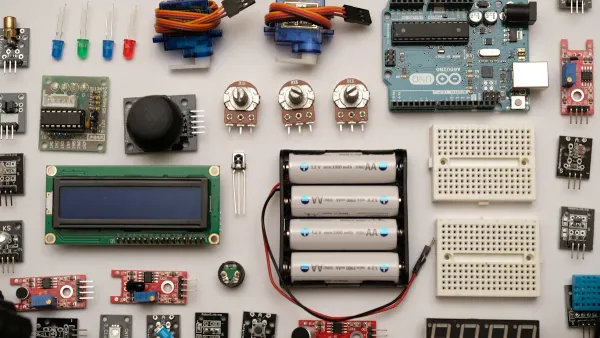
Matching a Bluetooth solution to your application is the most critical step. Your choice determines the end-user experience, product cost, and development timeline. As a HiSilicon-designated solutions partner, Nova Technology Company (HK) Limited provides the expertise to navigate these choices. This section explores the best bluetooth solutions for embedded systems across common use cases, helping you select the right components from leading vendors.
Ultra-Low-Power Wearables and Sensors
For wearables, medical monitors, and remote sensors, battery life is everything. You need a solution that sips power, spending most of its time in a deep sleep state and waking only briefly to transmit small packets of data. Bluetooth Low Energy is the protocol of choice here. Your focus should be on SoCs with extremely low active and sleep current draws.
Leading vendors like Nordic Semiconductor and Silicon Labs specialize in this area. When evaluating options, look for components optimized for minimal power consumption.
Silicon Labs BG22L and BG24L "Lite" SoCs are excellent examples. They deliver application-optimized, ultra-low power Bluetooth connectivity, making them a strong fit for battery-dependent devices.
These low power modules enable you to build products that can run for months or even years on a single coin cell battery. The best bluetooth solutions for embedded systems in this category prioritize efficiency above all else.
High-Throughput Audio and Multimedia
When your application involves streaming audio or other multimedia, data throughput becomes the priority. Classic Bluetooth was the original standard for this, but modern solutions leverage Bluetooth 5.0+ capabilities and advanced audio codecs to deliver high-fidelity sound wirelessly.
You will need solutions that support high data rates. For example, the Qualcomm QCC5100 series offers ultra-low power, premium-tier SoCs designed for wireless earbuds and speakers. These chips can reduce power consumption by up to 65% during voice calls and music streaming. Many high-performance bluetooth modules, such as those from Murata, integrate Qualcomm chipsets to deliver robust Wi-Fi and Bluetooth connectivity.
The audio codec your solution supports directly impacts sound quality. A codec compresses and decompresses audio data. Different codecs offer trade-offs between data rate, quality, and latency.
Understanding Audio Terms:
Sample Rate (Hz): The number of times per second the audio is sampled. Higher rates capture more detail.
Bit Depth (bits): The amount of data in each sample. Common values are 16-bit and 24-bit.
Bit Rate (kbps): The amount of data processed per second. Higher bit rates generally mean better audio quality.
The table below compares popular Bluetooth audio codecs. Solutions supporting codecs like LDAC or aptX HD are necessary for high-fidelity audio products.
Codec | Data Rate (kbps) | High-Fidelity Support |
|---|---|---|
SBC | 192-320 | Basic quality, noticeable data loss |
aptX | 352 | CD-like quality (16-bit/48kHz) |
aptX HD | 576 | Better-than-CD quality (24-bit/48kHz) |
LHDC | Up to 900 | High-resolution audio support (24-bit/96kHz) |
LC3 | Up to 345 | Efficient codec for LE Audio, high quality at low bit rates |
LDAC | Up to 990 | High-resolution audio, common in Android devices |
AAC | ~250 | Good quality, popular on Apple devices |
Robust Industrial and Mesh Networks
Industrial environments demand robust and reliable connectivity. You need Bluetooth solutions that can operate in harsh conditions, resist RF interference, and scale to hundreds or thousands of nodes. Bluetooth Mesh is designed for these large-scale networks, enabling applications like factory automation, asset tracking, and smart building control.
Key features to look for in industrial-grade Bluetooth solutions include:
An extended operating temperature range (e.g., up to 105 °C).
Strong RF performance to overcome interference.
Support for large, scalable mesh network topologies.
Low power consumption for battery-operated industrial sensors.
Vendors like Texas Instruments (TI) and STMicroelectronics offer powerful microcontrollers for this space.
TI's CC2640R2F is a popular Bluetooth Low Energy SoC ideal for stable connections in factory sensors.
ST's STM32WB55 is a dual-core wireless MCU supporting Bluetooth, Zigbee, Thread, and Matter, making it perfect for complex building automation.
Additionally, NXP is a key player offering comprehensive wireless MCUs. Their RW610 and RW612 series integrate Wi-Fi 6, Bluetooth 5.4, and 802.15.4 radios, providing a single-chip solution for advanced industrial IoT and smart home devices requiring multi-protocol integration.
Cost-Sensitive and Rapid Prototyping
When time-to-market and budget are your main constraints, your focus shifts to ease of use and affordability. For this, pre-certified bluetooth modules are the best choice. They handle the RF design complexity and regulatory hurdles, allowing you to concentrate on your application software. Vendors like Espressif and EBYTE excel in this category.
Espressif's ESP32 is famous among hobbyists and professionals for its powerful dual-core MCU with integrated Wi-Fi and Bluetooth. EBYTE offers a wide range of cost-effective bluetooth modules and development tools designed to accelerate your prototyping phase.
EBYTE provides a strong advantage with its focus on cost-effectiveness and rapid development. Their solutions offer 30%-50% lower costs than major international brands and come with excellent local service and support, including AT command sets and open-source SDKs to speed up development.
Choosing the right bluetooth module depends on your project's specific balance of cost and performance. EBYTE provides clear options for different needs.
Cost Sensitivity | Recommended EBYTE Module | Price Range (1k MOQ) | Use Case |
|---|---|---|---|
Extreme Cost Savings | E104-BT07 | $3.5–$4.5 | Basic data transmission |
Balanced Performance & Cost | E104-BT11G | $6–$8 | Small-to-medium mesh networks |
High-End Custom Needs | E105-BS21 | $12–$15 | Medical/industrial devices |
These accessible and well-supported bluetooth modules provide some of the best bluetooth solutions for embedded systems when you need to get your product to market quickly and affordably.
Key Technology Trends for 2025 and Beyond
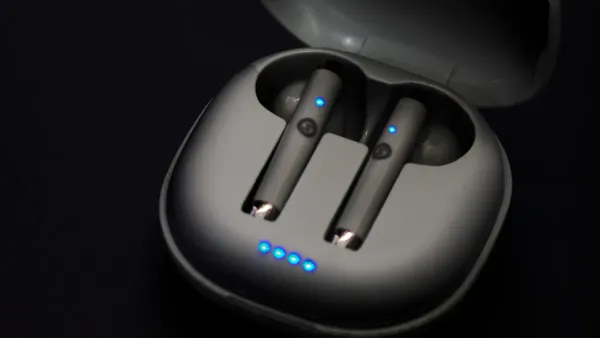
The world of wireless technology moves fast. You must watch future trends to keep your products competitive. The Bluetooth standard is evolving with new features that will unlock powerful capabilities for connected devices. Understanding these changes helps you build for tomorrow.
The Rise of LE Audio and Auracast
You will soon see a major shift in wireless audio with LE Audio. This new standard operates on Bluetooth Low Energy, offering higher quality audio with less power. It introduces the efficient LC3 codec, which delivers clear sound even at low data rates. A key feature is Auracast™ broadcast audio.
Auracast allows a single source, like a TV in an airport or a speaker in a lecture hall, to broadcast audio to an unlimited number of receivers. You can simply scan for broadcasts and connect your earbuds or hearing aids, creating new possibilities for personal and shared listening.
High-Accuracy Positioning with Channel Sounding
Future Bluetooth specifications will enable high-accuracy distance measurement. This feature, called Channel Sounding, uses techniques like Phase-Based Ranging (PBR) and Round-Trip Time (RTT). It calculates the distance between two devices with centimeter-level precision. This opens up secure applications like digital car keys, where your car knows exactly how close you are.
Enhanced Security and Data Rates
Security remains a top priority. Upcoming Bluetooth versions will improve device privacy and security. The high-accuracy positioning from Channel Sounding also adds a layer of physical security, ensuring only devices within a specific range can gain access. You can also expect continued improvements in data transfer speeds.
AI/ML on Edge Devices
Artificial intelligence is coming to small, battery-powered devices. New SoCs from vendors like Alif Semiconductor and Silicon Labs now include dedicated hardware accelerators (NPUs). This allows you to run AI/ML models for tasks like voice recognition or anomaly detection directly on your device. This on-device processing reduces latency and enhances privacy by keeping data local.
Integration with IoT Ecosystems like Matter
Matter is simplifying the smart home by creating a unified standard. Bluetooth plays a crucial role in this ecosystem. You will use Bluetooth Low Energy primarily for the initial setup, or "commissioning," of new Matter devices. This allows a smartphone to securely add a new lightbulb or thermostat to a Wi-Fi or Thread network. This seamless integration ensures better compatibility across brands.
Focus on Sustainability and Low Power
The drive for lower power consumption continues. Advances in semiconductor manufacturing, such as moving to 22nm process nodes, drastically reduce energy use. Smarter protocol design in Bluetooth Low Energy allows devices to spend more time in deep sleep modes, extending battery life for years. This focus ensures that the growing number of connected devices remains sustainable.
Selecting the right embedded Bluetooth solution is a strategic decision. You must methodically evaluate technical trade-offs. The process begins when you define your application's priorities, whether it is power consumption, data rate, or network topology. Use this guide's framework to balance performance, development cost, and future-proofing. This approach helps you find the best bluetooth solutions for embedded systems, ensuring your products remain competitive and robust.
FAQ
How do I choose between a Bluetooth module and an SoC?
You should choose a module for faster development and lower initial costs. Modules handle RF design and certifications for you. Select an SoC for high-volume products (over 100k units) to reduce per-unit cost, but be prepared for a longer, more complex engineering cycle.
Is Bluetooth 5 sufficient for new designs?
Yes, Bluetooth 5 is a strong choice for most current applications. It offers good speed, range, and low-power options. However, you should consider solutions supporting newer features like LE Audio or Channel Sounding if your product needs advanced audio or high-accuracy positioning capabilities.
What is the real-world range I can expect?
Your actual range depends on many factors.
Environment: Walls and RF interference reduce range.
Antenna: A well-designed antenna is critical.
PHY Mode: Using the Coded PHY extends range but lowers data speed.
In open spaces, you might achieve over 100 meters, but expect less indoors.
Can one device handle audio and sensor data simultaneously?
Yes, many modern SoCs support this. You can use a dual-mode chip that runs Bluetooth Classic for audio streaming and Bluetooth Low Energy for sensor data. This allows you to build versatile products like smartwatches that play music and track your heart rate.